Topic 7.7 Notes – Imperialism’s Global Effects
How Imperialism Reshaped Colonized Societies
This topic is about what imperialism did after conquest, not why Europeans wanted colonies or what technology let them win.
By 1914, most of Africa had been divided among European empires, which helps show the scale of the political and economic changes that followed.
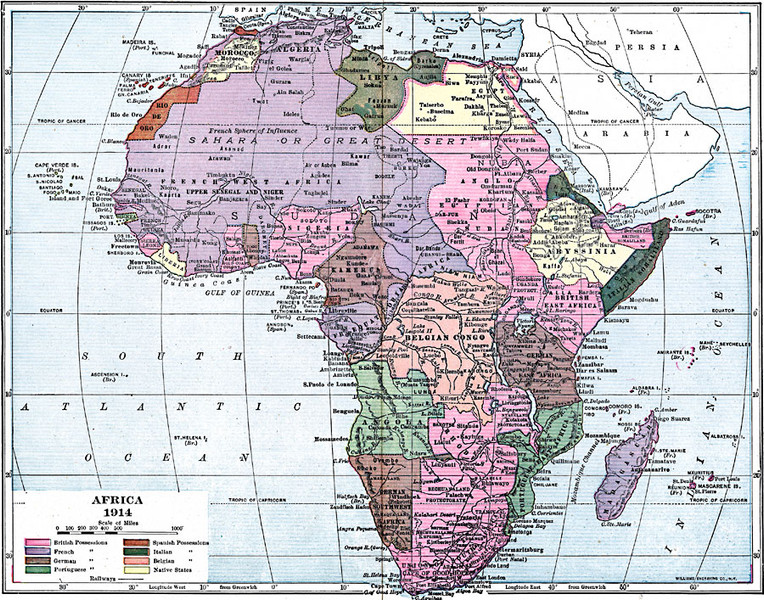
Africa under imperial control, c. 1914
European rule reorganized colonized societies for imperial benefit.
Political changes
Different colonies were controlled in different ways:
- Direct rule meant Europeans governed themselves through colonial officials.
- Indirect rule meant Europeans ruled through local leaders they approved of.
- Protectorates kept local rulers in place on paper, but Europeans controlled foreign policy and real power.
- Spheres of influence gave one power special economic or political control without full annexation.
European borders often ignored ethnic, language, and religious divisions. That mattered later because one colony might force rival groups together, or split one people across several colonies. Colonial governments also favored some groups over others, which deepened future tensions.
Economic changes
Colonies were pushed into producing raw materials and cash crops for industrial Europe.
- Common exports included cotton, rubber, palm oil, tea, coffee, cocoa, and minerals.
- Taxes had to be paid in money, so people had to enter wage labor or grow crops for sale.
- Railroads, ports, roads, and telegraphs were built mainly to move troops and ship resources out, not to build balanced local economies.
Social and cultural changes
Imperial rule also changed education and culture:
- Missionary schools, European languages, Western law, medicine, and bureaucratic systems spread.
- These schools produced Western-educated elites such as clerks, lawyers, teachers, journalists, and civil servants.
- Those same elites often noticed the hypocrisy. Europe talked about liberty and civilization while denying colonized people equality and self-rule.
Human costs
Conquest brought forced labor, repression, famine, displacement, and violence.
The clearest atrocity case is the Congo Free State under Leopold II, where rubber extraction was enforced through extreme brutality. E. D. Morel and Roger Casement later exposed these abuses.
How Non-European Peoples Resisted and Adapted
Resistance took three main forms. Some fought, some built nationalist movements, and some modernized to avoid conquest.
Rebellion against imperial control
- Indian Rebellion of 1857 began with sepoys angered by rifle cartridges rumored to use cow and pig fat, offending Hindu and Muslim beliefs. Deeper causes included annexation, taxes, discrimination, and fears of Christianization. It ended East India Company rule and began the British Raj.
- Zulu resistance under King Cetshwayo challenged British expansion. The Zulu victory at Isandlwana showed Europeans were beatable, but Britain later crushed them at Ulundi.
- Boxer Rebellion in China was anti-foreign and anti-Christian. Parts of the Qing court, including Empress Dowager Cixi, backed it. The Eight-Nation Alliance crushed it, and the Boxer Protocol increased foreign control.
- Ethiopia was the big exception. Menelik II defeated Italy at Adwa in 1896. Ethiopia and Liberia remained independent.
Organized nationalism
The Indian National Congress was founded in 1885. Western-educated elites used petitions, meetings, reform demands, and nationalist language to challenge racism and the drain of wealth from India to Britain.
Modernization as defense
Japan is the clearest example here. In portraits of Emperor Meiji, the Western-style military uniform itself reflects how deliberately Japan borrowed foreign institutions to strengthen the state.
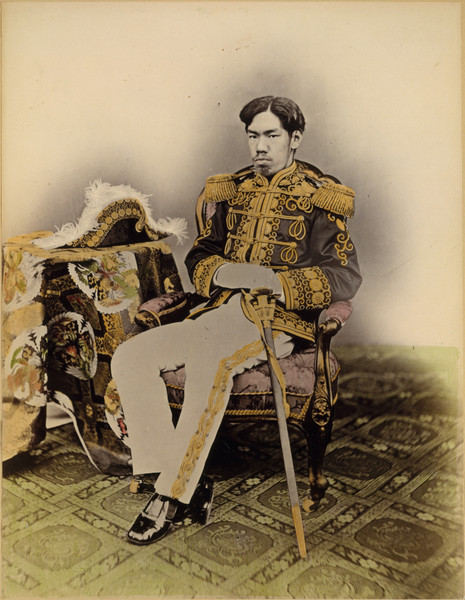
Emperor Meiji of Japan
After Perry forced Japan open, the Meiji Restoration created a centralized state, conscription, schools, railroads, industry, and the Meiji Constitution. Japan avoided colonization, defeated China and Russia, and then became imperial itself. That last part gets tested a lot.
How Imperialism Increased Tensions Among European Powers
Colonial rivalry strained diplomacy, but it did not automatically cause war. Sometimes it pushed powers toward compromise.
Berlin Conference
In 1884 to 1885, Bismarck gathered European powers to set rules for African claims. The key idea was effective occupation, meaning a claim had to be backed by real control. Africans were excluded. The conference sped up the Scramble for Africa.
Fashoda crisis
In 1898, Britain and France nearly clashed in Sudan at Fashoda. France backed down. In the long run, this actually helped clear the way for the Entente Cordiale in 1904.
Moroccan crises
Germany challenged French influence in Morocco in 1905 and 1911. Kaiser Wilhelm II visited Tangier, and later Germany sent a gunboat during the Agadir Crisis. Germany ended up more isolated, and Anglo-French ties grew stronger.
How Imperialism Shaped European Debate, Art, and Literature
Empire also changed the societies doing the ruling. It entered politics, culture, and everyday ideas about national power.
- The Pan-German League pushed expansion, naval power, and Germany’s “place in the sun.”
- Supporters said colonies brought prestige, markets, and strategic power.
- Rudyard Kipling’s The White Man’s Burden presented empire as a civilizing duty.
That civilizing-language shows up clearly in political cartoons from the period.
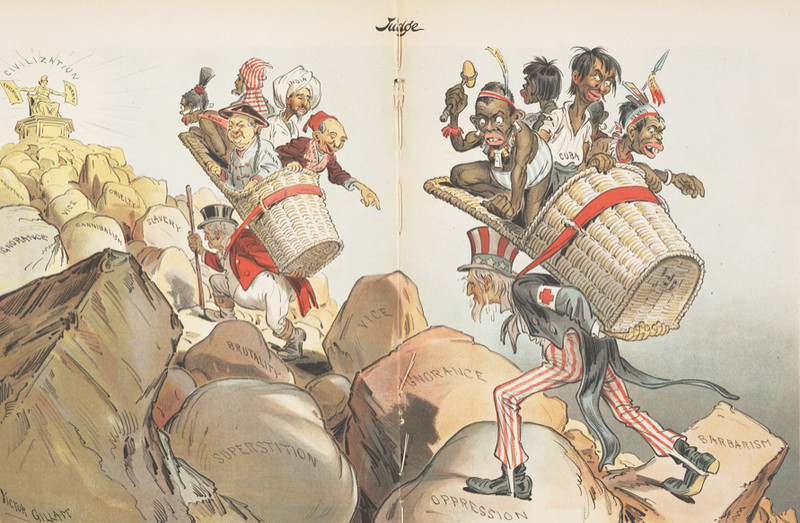
“The White Man’s Burden” cartoon, 1899
Critics answered in different ways:
- J. A. Hobson argued imperialism mainly served investors and financiers.
- Vladimir Lenin argued imperialism was the monopoly-capitalist stage of capitalism.
- The Congo Reform Association attacked atrocities in the Congo.
Imperial encounters also shaped art and literature:
- Orientalism exoticized non-European peoples.
- Japonisme influenced European artists through Japanese prints.
- African sculpture influenced modernist experimentation.
- Joseph Conrad’s Heart of Darkness exposed the brutality and hypocrisy of empire.
Key Takeaways
Indian Rebellion of 1857–1858 / Sepoy Mutiny / First War of Indian Independence
Broad uprising against East India Company rule sparked by cartridge rumors and deeper political, economic, military, and religious grievances; its defeat ended company government
British Raj
Direct British Crown rule over India established after the Indian Rebellion and the end of East India Company government in 1858
Zulu Resistance / Anglo-Zulu War
King Cetshwayo’s Zulu Kingdom defeated the British at Isandlwana in 1879 but was later conquered and broken apart by reinforced British forces
Boxer Rebellion
Anti-foreign uprising in China from 1899 to 1901 that was suppressed by an international alliance; the resulting Boxer Protocol deepened China’s foreign subordination
Battle of Adwa
Ethiopian victory over Italy in 1896 under Menelik II that preserved Ethiopian independence during the European partition of Africa
Indian National Congress
Western-educated political organization founded in 1885 that used petitions, meetings, and reform demands to develop organized Indian nationalism
Drain of Wealth
Indian nationalist argument that colonial salaries, profits, debts, military costs, and trade arrangements transferred wealth from India to Britain
Meiji Restoration
Formal restoration of imperial rule in Japan in 1868 followed by state-led military, educational, political, and industrial modernization that preserved independence and helped make Japan an imperial power
Berlin Conference
1884–1885 meeting that set rules for European claims in Africa, promoted effective occupation, and recognized Leopold II’s Congo Free State without African participation
Effective Occupation
Berlin Conference principle that a European territorial claim in Africa required the exercise of actual authority there
Congo Free State
Leopold II’s personal possession in central Africa, notorious for violent forced labor in rubber production before Belgium annexed it in 1908
Fashoda Crisis
1898 confrontation between British and French forces in Sudan; France withdrew, and the settlement later encouraged Anglo-French reconciliation
First Moroccan Crisis
Germany’s 1905–1906 challenge to French influence in Morocco that ended with France strengthened, Britain supporting France, and Germany largely isolated
Second Moroccan Crisis / Agadir Crisis
1911 crisis caused by Germany sending the gunboat Panther to Agadir; Germany accepted compensation while France established a Moroccan protectorate
Civilizing Mission
Paternalistic claim that imperial powers had a duty to spread European civilization, Christianity, education, and government to colonized peoples
Pan-German League
Nationalist pressure group founded in 1891 that promoted German colonial expansion, naval power, and an aggressive world policy
Congo Reform Association
International humanitarian campaign founded in 1904 that publicized forced labor and atrocities in the Congo and helped pressure Belgium to take control
Orientalism
European portrayal of North Africa, the Middle East, and Asia as exotic, sensual, irrational, and timeless in contrast to a supposedly modern Europe
Primitivism
European artistic use of forms associated with non-European cultures, often shaped by assumptions that those cultures were undeveloped or instinctive
Japonisme
European fashion for Japanese art, especially woodblock prints, that influenced composition, color, and perspective
J. A. Hobson’s Imperialism: A Study
1902 liberal critique arguing that unequal wealth distribution led investors to promote imperial expansion for narrow profits at public expense
Vladimir Lenin’s Imperialism, the Highest Stage of Capitalism
Marxist argument that monopolies and finance capital drove states to divide and redivide the world, making conflict among imperial powers increasingly likely
Rudyard Kipling’s The White Man’s Burden
1899 poem portraying imperial rule as a civilizing duty of allegedly advanced peoples toward supposedly dependent and uncivilized peoples
Joseph Conrad’s Heart of Darkness
1899 novella depicting the greed, brutality, and moral corruption concealed behind European claims to bring civilization to the Congo
Notes
Indian Rebellion of 1857–1858 / Sepoy Mutiny / First War of Indian Independence
Broad uprising against East India Company rule sparked by cartridge rumors and deeper political, economic, military, and religious grievances; its defeat ended company government
British Raj
Direct British Crown rule over India established after the Indian Rebellion and the end of East India Company government in 1858
Zulu Resistance / Anglo-Zulu War
King Cetshwayo’s Zulu Kingdom defeated the British at Isandlwana in 1879 but was later conquered and broken apart by reinforced British forces
Boxer Rebellion
Anti-foreign uprising in China from 1899 to 1901 that was suppressed by an international alliance; the resulting Boxer Protocol deepened China’s foreign subordination
Battle of Adwa
Ethiopian victory over Italy in 1896 under Menelik II that preserved Ethiopian independence during the European partition of Africa
Indian National Congress
Western-educated political organization founded in 1885 that used petitions, meetings, and reform demands to develop organized Indian nationalism
Drain of Wealth
Indian nationalist argument that colonial salaries, profits, debts, military costs, and trade arrangements transferred wealth from India to Britain
Meiji Restoration
Formal restoration of imperial rule in Japan in 1868 followed by state-led military, educational, political, and industrial modernization that preserved independence and helped make Japan an imperial power
Berlin Conference
1884–1885 meeting that set rules for European claims in Africa, promoted effective occupation, and recognized Leopold II’s Congo Free State without African participation
Effective Occupation
Berlin Conference principle that a European territorial claim in Africa required the exercise of actual authority there
Congo Free State
Leopold II’s personal possession in central Africa, notorious for violent forced labor in rubber production before Belgium annexed it in 1908
Fashoda Crisis
1898 confrontation between British and French forces in Sudan; France withdrew, and the settlement later encouraged Anglo-French reconciliation
First Moroccan Crisis
Germany’s 1905–1906 challenge to French influence in Morocco that ended with France strengthened, Britain supporting France, and Germany largely isolated
Second Moroccan Crisis / Agadir Crisis
1911 crisis caused by Germany sending the gunboat Panther to Agadir; Germany accepted compensation while France established a Moroccan protectorate
Civilizing Mission
Paternalistic claim that imperial powers had a duty to spread European civilization, Christianity, education, and government to colonized peoples
Pan-German League
Nationalist pressure group founded in 1891 that promoted German colonial expansion, naval power, and an aggressive world policy
Congo Reform Association
International humanitarian campaign founded in 1904 that publicized forced labor and atrocities in the Congo and helped pressure Belgium to take control
Orientalism
European portrayal of North Africa, the Middle East, and Asia as exotic, sensual, irrational, and timeless in contrast to a supposedly modern Europe
Primitivism
European artistic use of forms associated with non-European cultures, often shaped by assumptions that those cultures were undeveloped or instinctive
Japonisme
European fashion for Japanese art, especially woodblock prints, that influenced composition, color, and perspective
J. A. Hobson’s Imperialism: A Study
1902 liberal critique arguing that unequal wealth distribution led investors to promote imperial expansion for narrow profits at public expense
Vladimir Lenin’s Imperialism, the Highest Stage of Capitalism
Marxist argument that monopolies and finance capital drove states to divide and redivide the world, making conflict among imperial powers increasingly likely
Rudyard Kipling’s The White Man’s Burden
1899 poem portraying imperial rule as a civilizing duty of allegedly advanced peoples toward supposedly dependent and uncivilized peoples
Joseph Conrad’s Heart of Darkness
1899 novella depicting the greed, brutality, and moral corruption concealed behind European claims to bring civilization to the Congo
