Topic 9.6 Notes – Contemporary Western Democracies
What the Postwar Welfare State Was
Western Europe after 1945 did not become communist. That contrast matters. In the West, countries kept private property, competitive elections, and market exchange. What changed was that governments intervened much more actively in the economy.
The standard phrase is mixed economy. Capitalism stayed, but the state tried to make capitalism more stable and less harsh.
- Keynesian thinking shaped this system. Governments used spending and taxation to manage demand, reduce unemployment, and prevent another Depression-style collapse.
- The welfare state meant government accepted responsibility for people’s social and economic security.
“Cradle-to-grave” benefits usually included:
- health care
- unemployment insurance
- pensions
- family allowances
- education support
- housing assistance
- disability and sickness benefits
- labor protections
These programs were paid for through high taxes, payroll contributions, and employer payments.
What made this popular?
- The Great Depression and interwar instability convinced many people that old laissez-faire systems had failed.
- Wartime mobilization showed that states could organize economies on a huge scale.
- The Cold War pushed Western democracies to prove they could deliver prosperity and fairness better than communism.
- Support came from more than one party family. Social democrats, Christian democrats, and many moderate conservatives accepted welfare expansion.
Why Welfare States Expanded After 1945
The welfare state grew because postwar Europe got richer fast. Reconstruction came first, and then long growth made expansion affordable.
The Marshall Plan helped rebuild infrastructure, restore production, and restart trade across much of Western Europe. That fed into the 1950s and 1960s postwar boom or economic miracle.
The boom and the fiscal logic
This pattern is one AP loves to test because it links economics to politics:
- high growth increased state revenue
- low unemployment reduced immediate welfare costs
- rising wages expanded the tax base
- consumerism reflected higher living standards and more taxable spending
That made it easier for governments to expand services. Welfare benefits stopped looking like charity and started looking like social rights of democratic citizenship. This became the postwar consensus that government should protect people from poverty, illness, unemployment, and old age.
National Models of the Postwar Settlement
Different countries built similar systems in different ways.
| Country | Main features |
|---|---|
| Britain | Clement Attlee’s Labour government used the Beveridge Report as a blueprint, created the NHS in 1948, expanded public housing, and nationalized coal, railways, and electricity. Conservatives mostly accepted this settlement. |
| France | Built a social-security system with health insurance, pensions, and family allowances. Practiced dirigisme, meaning state-guided economic planning plus some nationalization, but markets remained. |
| West Germany | Created a social market economy tied to Ludwig Erhard and Christian Democrats. It mixed competition, regulation, and social insurance. The Wirtschaftswunder brought in revenue for welfare growth. |
| Sweden | Strongest social democratic model. Folkhemmet or “People’s Home” emphasized universal benefits across classes, financed by high taxation. |
The comparison point is simple. Same broad welfare-state trend, different national paths.
Why the Welfare State Came Under Pressure After the 1970s
The whole system worked best during fast growth. When growth slowed, the math changed.
The economic pattern of the 1970s and early 1980s helps explain why. Growth was weaker, inflation spiked, and unemployment stayed high.
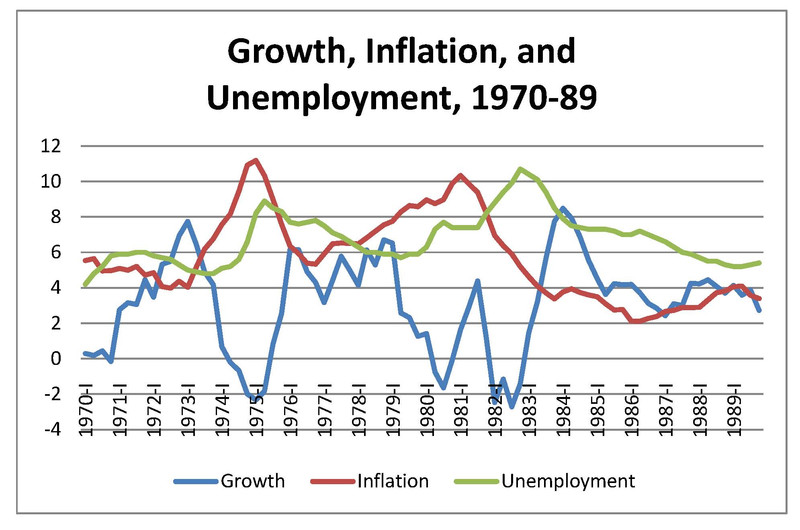
Growth, inflation, and unemployment, 1970-89
The 1973 oil crisis and 1979 oil shock raised energy costs. At the same time, deindustrialization and foreign competition hurt older industries like coal, steel, shipbuilding, and textiles.
This produced stagflation, which means weak growth plus high inflation.
Why budgets got squeezed
- Slower growth meant less tax revenue
- Higher unemployment meant more benefit claims
- Inflation made government programs more expensive
- Aging populations increased pension and health-care costs
Critics said high taxes, regulation, and nationalized industries hurt growth, and generous benefits created dependency. Defenders answered that unemployment came from structural economic change, not laziness, and that cuts would hit the poor, elderly, and sick hardest.
Reform, Neoliberalism, and What Survived
The main reaction was neoliberalism, which pushed:
- privatization
- deregulation
- lower direct taxes
- reduced union power
- inflation control
- limits on public spending
Britain
Margaret Thatcher became the clearest symbol of this shift. Thatcherism challenged the postwar consensus, privatized state industries, and fought union power. The miners’ strike of 1984-1985 became the best symbol of that fight. Even so, the NHS and core welfare programs survived.
France
François Mitterrand first tried more state control and spending, then turned to austerity in 1983. That reversal showed how hard it had become for even left-wing governments to keep expanding the state.
The 1990s
The Third Way accepted markets and tighter budgets while keeping core welfare protections. Tony Blair is the standard example.
The final point is the one to remember on a test. The welfare state was reformed and limited, not destroyed. Democratic politics kept arguing over the balance between market efficiency, taxes, and social security.
Key Takeaways
Mixed Economy
An economy combining private property and markets with government regulation, some state ownership, economic management, and extensive social services
Keynesian Economics
The view that governments can stabilize capitalism and reduce unemployment through public spending, taxation, and management of aggregate demand
Postwar Economic Miracle
The rapid Western and Central European growth of the 1950s and 1960s, marked by rising production, productivity, wages, and employment
Wirtschaftswunder
West Germany’s exceptionally rapid postwar economic recovery, or “economic miracle,” which generated employment and revenue for social benefits
Welfare State
A government that assumes substantial responsibility for citizens’ social and economic well-being through benefits, insurance, and public services
Cradle-to-Grave Welfare
Broad government protection throughout the life cycle, including health care, education, unemployment aid, family benefits, and old-age pensions
Clement Attlee
British Labour prime minister from 1945 to 1951 whose government created the NHS, expanded social insurance and housing, and nationalized major industries
Beveridge Report
The 1942 British report proposing comprehensive social insurance against poverty, disease, unemployment, and other forms of insecurity
National Health Service (NHS)
Britain’s tax-financed health-care system, established in 1948 to provide care generally free at the point of use
British Postwar Consensus
The broad Labour and Conservative acceptance of the mixed economy, NHS, social insurance, and a government commitment to employment
Dirigisme
French state direction of investment and modernization through planning and nationalized enterprises without eliminating private ownership or markets
Social Market Economy
West Germany’s combination of competitive private markets with government regulation, social insurance, and responsibility for economic security
Folkhemmet (People’s Home)
The Swedish ideal of society as a community providing economic security and broadly accessible social services to all its members
Scandinavian Model
A universalist welfare system providing extensive benefits across social classes as rights, financed through relatively high taxation
Social Citizenship
The principle that democratic citizenship includes economic security and social rights as well as formal political freedoms
1973 Oil Crisis
The oil embargo and sharp price increase that raised European costs, slowed growth, and helped end the favorable conditions supporting welfare expansion
Stagflation
Economic stagnation or weak growth occurring together with high inflation, often accompanied by rising unemployment
Neoliberalism
A market-oriented program favoring privatization, deregulation, lower direct taxes, weaker unions, inflation control, and limits on public spending
Monetarism
An economic approach prioritizing control of the money supply and inflation over government spending to guarantee full employment
François Mitterrand
French Socialist president who began with nationalization and higher social spending in 1981 but adopted austerity in 1983 under economic pressure
Third Way
A 1990s center-left approach accepting markets, privatization, and fiscal restraint while preserving public investment and core social protections
Margaret Thatcher
British Conservative prime minister from 1979 to 1990 whose market-oriented reforms challenged the postwar consensus but did not abolish the welfare state
Thatcherism
Britain’s market-oriented program of privatization, deregulation, lower direct taxes, reduced trade-union power, and limits on public spending
Notes
Mixed Economy
An economy combining private property and markets with government regulation, some state ownership, economic management, and extensive social services
Keynesian Economics
The view that governments can stabilize capitalism and reduce unemployment through public spending, taxation, and management of aggregate demand
Postwar Economic Miracle
The rapid Western and Central European growth of the 1950s and 1960s, marked by rising production, productivity, wages, and employment
Wirtschaftswunder
West Germany’s exceptionally rapid postwar economic recovery, or “economic miracle,” which generated employment and revenue for social benefits
Welfare State
A government that assumes substantial responsibility for citizens’ social and economic well-being through benefits, insurance, and public services
Cradle-to-Grave Welfare
Broad government protection throughout the life cycle, including health care, education, unemployment aid, family benefits, and old-age pensions
Clement Attlee
British Labour prime minister from 1945 to 1951 whose government created the NHS, expanded social insurance and housing, and nationalized major industries
Beveridge Report
The 1942 British report proposing comprehensive social insurance against poverty, disease, unemployment, and other forms of insecurity
National Health Service (NHS)
Britain’s tax-financed health-care system, established in 1948 to provide care generally free at the point of use
British Postwar Consensus
The broad Labour and Conservative acceptance of the mixed economy, NHS, social insurance, and a government commitment to employment
Dirigisme
French state direction of investment and modernization through planning and nationalized enterprises without eliminating private ownership or markets
Social Market Economy
West Germany’s combination of competitive private markets with government regulation, social insurance, and responsibility for economic security
Folkhemmet (People’s Home)
The Swedish ideal of society as a community providing economic security and broadly accessible social services to all its members
Scandinavian Model
A universalist welfare system providing extensive benefits across social classes as rights, financed through relatively high taxation
Social Citizenship
The principle that democratic citizenship includes economic security and social rights as well as formal political freedoms
1973 Oil Crisis
The oil embargo and sharp price increase that raised European costs, slowed growth, and helped end the favorable conditions supporting welfare expansion
Stagflation
Economic stagnation or weak growth occurring together with high inflation, often accompanied by rising unemployment
Neoliberalism
A market-oriented program favoring privatization, deregulation, lower direct taxes, weaker unions, inflation control, and limits on public spending
Monetarism
An economic approach prioritizing control of the money supply and inflation over government spending to guarantee full employment
François Mitterrand
French Socialist president who began with nationalization and higher social spending in 1981 but adopted austerity in 1983 under economic pressure
Third Way
A 1990s center-left approach accepting markets, privatization, and fiscal restraint while preserving public investment and core social protections
Margaret Thatcher
British Conservative prime minister from 1979 to 1990 whose market-oriented reforms challenged the postwar consensus but did not abolish the welfare state
Thatcherism
Britain’s market-oriented program of privatization, deregulation, lower direct taxes, reduced trade-union power, and limits on public spending
