Topic 4.3 Notes – The Enlightenment
What the Enlightenment Was
The Enlightenment grew out of the Scientific Revolution. People had seen Newton and others uncover laws of nature, so thinkers asked a huge follow-up question. If nature has discoverable laws, maybe society does too.
- Core habits of thought included reason, empiricism (knowledge from observation), skepticism, and the search for natural laws.
- Core values included natural rights, toleration, utility (what works for the public good), and progress.
- Its biggest attack on the Old Regime was this idea that authority had to earn respect through reason. Divine right, custom, and inherited privilege were no longer enough by themselves.
- It was not one ideology. Some thinkers liked liberty, some liked strong government, some defended religion in new ways, and some attacked it.
- Kant captured the attitude in “What Is Enlightenment?”. His point was simple. Dare to know. Use your own understanding instead of depending on authority.
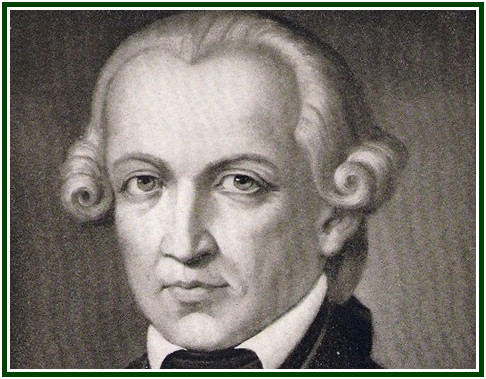
Immanuel Kant
The Main Enlightenment Ideas About Society and Government
A lot of Enlightenment politics starts with the social contract. Government exists because people create it for a purpose.
Hobbes
In Leviathan, Hobbes argued that without government, life would be violent and insecure. People therefore give power to a strong sovereign for protection. This matters because Enlightenment-style reasoning did not always lead to democracy.
Locke
Locke gave the most AP-testable version of limited government.
- Two Treatises of Government argued for natural rights to life, liberty, and property.
- Government exists by consent to protect those rights.
- If it fails, people have a right of rebellion.
- In Essay Concerning Human Understanding, Locke described the mind as tabula rasa, a blank slate shaped by experience. That made education and environment look more important than birth.
Montesquieu
In The Spirit of the Laws, Montesquieu compared governments almost like a scientist compares systems.
- He argued for separation of powers to stop despotism.
- His ideas later shaped constitutional governments, especially checks and balances.
Rousseau
Rousseau pushed farther toward equality and collective rule.
- In The Social Contract, sovereignty belongs to the people.
- The general will meant the common good, not just individual wants added together.
- In Discourse on Inequality, he argued that civilization and private property created inequality.
Beccaria
In On Crimes and Punishments, Beccaria applied reason to law.
- Punishments should be clear, proportionate, prompt, and meant to deter.
- He attacked torture and the death penalty as irrational and unjust.
The Main Enlightenment Ideas About Economics and Religion
The same critical spirit hit economics and religion.
Economics
Thinkers challenged mercantilism, monopolies, and heavy regulation.
| Thinker | Main idea | Why it mattered |
|---|---|---|
| Physiocrats | Economy follows a natural order | Pushed against state controls |
| Quesnay | Tableau économique mapped economic flow | Treated the economy as a system |
| Turgot | Supported laissez-faire | Wanted fewer regulations |
| Adam Smith | Wealth of Nations said wealth comes from labor, division of labor, and exchange | Argued for freer markets and free trade |
Smith’s “invisible hand” meant that individual self-interest in competitive markets could produce wider benefits.
Religion
Enlightenment religion was a spectrum, not one view.
- Deism taught that a creator could be known through reason and nature rather than revelation or church authority.
- Voltaire attacked intolerance, censorship, fanaticism, and clerical privilege in works like Letters Concerning the English Nation and Candide.
- Diderot edited the Encyclopédie, which spread practical knowledge and criticism of superstition.
- Hume used skepticism to question miracles and certainty in religion.
- Baron d’Holbach argued for materialism and atheism.
- German Pietism showed faith stayed powerful. It emphasized inner devotion and revival rather than reason alone.
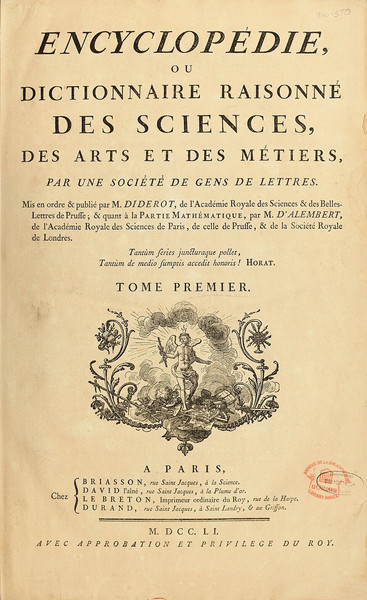
Title page of Diderot’s Encyclopédie (1751)
How Enlightenment Ideas Spread
The Enlightenment was transnational. Important cities included Paris, London, Edinburgh, Amsterdam, Geneva, Berlin, Vienna, Milan, and Naples. The network of correspondence known as the Republic of Letters tied many of these centers together.
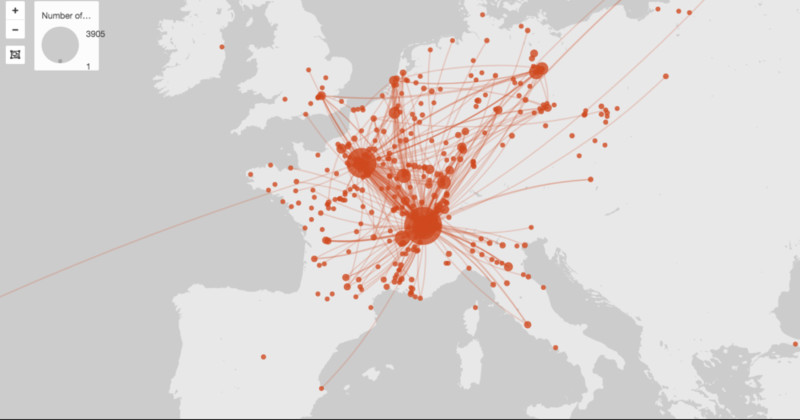
Republic of Letters network in Europe
The Republic of Letters linked thinkers through travel, letters, and print.
Ideas spread through:
- salons, often run by women like Madame Geoffrin
- coffeehouses, where people read and argued about public affairs
- academies and essay contests
- lending libraries
- Masonic lodges
- books, pamphlets, journals, newspapers, and the Encyclopédie
Censorship still existed, so writers used satire, anonymity, foreign presses, and underground printing. All of this helped create a public sphere, meaning discussion outside church and court control.
Limits and Consequences of Enlightenment Thought
Enlightenment ideas weakened divine-right monarchy, criticized hereditary privilege, and made rights, consent, utility, and the public good normal ways to judge government. They encouraged reform in law, religion, education, and economics, and they gave later revolutionaries language to use in America and France.
The limits matter just as much.
- Many philosophes wanted elite reform, not mass democracy.
- Equality often stopped at property, sex, and status.
- Rousseau excluded women from politics in Émile.
- Mary Wollstonecraft, in A Vindication of the Rights of Woman, and Condorcet used Enlightenment logic to challenge that exclusion.
Key Takeaways
The Enlightenment
Late-17th- and 18th-century movement that applied reason, observation, and criticism to society and challenged inherited authority
Republic of Letters
International network of thinkers connected through correspondence, travel, translation, and print
Empiricism
The view that reliable knowledge begins with sensory experience and observation
Tabula Rasa (Blank Slate)
Locke’s idea that the mind begins without innate ideas and is shaped by experience, education, and environment
Rationalism
The view that reason can discover coherent principles and determine whether beliefs are logically defensible
Skepticism
The method of doubting claims that lack sufficient evidence rather than accepting them on authority
Natural Law
Universal moral or political principles discoverable through reason rather than dependent on a ruler or church
Philosophes
Enlightenment public intellectuals who used reason and criticism to advocate social reform
Enlightenment Idea of Progress
Belief that education, open inquiry, and rational laws could reduce ignorance, cruelty, and arbitrary government
Immanuel Kant
German thinker who defined enlightenment as humanity’s emergence from intellectual dependence through the courageous use of reason
Voltaire
French philosophe who used satire and history to promote civil liberties, toleration, free expression, and legal reform
Denis Diderot
French philosophe who directed the Encyclopédie and later explored materialist and atheistic explanations of nature
Encyclopédie
Diderot’s multivolume work that organized practical and intellectual knowledge while criticizing superstition, intolerance, and hierarchy
Natural Rights
Rights possessed before government exists, conventionally summarized by Locke as life, liberty, and property
Social Contract
The theory that legitimate political authority arises from an agreement among individuals to establish government
State of Nature
A hypothetical condition before political government used to explain why individuals form a social contract
John Locke
English thinker who defended natural rights, government by consent, limited power, and the right to replace rulers who violated their trust
Consent of the Governed
The principle that legitimate political authority derives from the agreement of the people subject to it
Montesquieu
French thinker who compared political systems and argued that divided governmental powers were necessary to preserve liberty
Separation of Powers
Division of legislative, executive, and judicial functions so that political power checks political power
Jean-Jacques Rousseau
Thinker who defended popular sovereignty and collective self-rule but excluded women from direct political citizenship
Popular Sovereignty
The principle that ultimate political authority belongs collectively to the people
General Will
Rousseau’s term for the common interest of the political community rather than the sum of private desires
Cesare Beccaria
Italian reformer who opposed torture and arbitrary punishment and advocated prompt, lawful, proportionate penalties designed to deter crime
Physiocrats
French economists who sought natural economic laws, treated agriculture as the source of surplus, and opposed mercantilist restrictions
François Quesnay
Physiocrat whose Tableau économique portrayed wealth circulating through an interconnected economy centered on agriculture
Laissez-Faire
The principle that government should let economic activity operate with fewer detailed controls
Adam Smith
Scottish economist who argued in The Wealth of Nations that labor, specialization, competition, and freer exchange created national wealth
Division of Labor
Specialization of workers in separate tasks to increase efficiency and productivity
Invisible Hand
Smith’s metaphor for how individual choices within competitive markets can unintentionally promote broader economic benefits
Economic Liberalism (System of Natural Liberty)
Support for property, contracts, competition, free trade, and freer markets instead of extensive mercantilist direction
Deism (Natural Religion)
Belief in a creator known through reason and nature while questioning revelation, miracles, and clerical authority
David Hume
Scottish empiricist who questioned miracles and religious certainty while emphasizing the limits of reason and the role of habit
Materialism
The view that matter and natural processes can explain life and thought without supernatural intervention
Atheism
Rejection of belief in a deity, an explicit but minority position among Enlightenment thinkers
Baron Paul-Henri d’Holbach
Radical Enlightenment writer who defended materialism and atheism and attributed religion to ignorance and fear
Religious Toleration
The principle that civil rights and public order should not depend on enforced religious conformity
Privatization of Religion
The growing treatment of religion as a matter of private conscience rather than the basis of public membership
Pietism
Lutheran revival movement emphasizing personal conversion, heartfelt faith, Bible reading, discipline, and active Christian conduct
Public Sphere
Social space in which private individuals discussed public affairs and formed judgments outside formal government institutions
Salons
Elite gatherings in private homes where guests discussed philosophy, literature, science, and politics
Salonnières
Women who hosted and directed salons, selected guests, and connected writers with patrons
Coffeehouses
Commercial meeting places where mostly male patrons read news and debated politics, trade, and ideas
Academies
Official or private learned societies that supported research, debate, and public essay competitions
Lending and Subscription Libraries
Institutions that let readers borrow books and thereby broadened literate urban access to new ideas
Freemasonry (Masonic Lodges)
Selective fraternal networks promoting moral improvement, voluntary association, and often religious toleration
Mary Wollstonecraft
Author of A Vindication of the Rights of Woman, arguing that women’s apparent inferiority resulted from denied education, not nature
Marquis de Condorcet
French thinker who argued that women’s capacity for reason made their exclusion from citizenship contrary to natural rights
Notes
The Enlightenment
Late-17th- and 18th-century movement that applied reason, observation, and criticism to society and challenged inherited authority
Republic of Letters
International network of thinkers connected through correspondence, travel, translation, and print
Empiricism
The view that reliable knowledge begins with sensory experience and observation
Tabula Rasa (Blank Slate)
Locke’s idea that the mind begins without innate ideas and is shaped by experience, education, and environment
Rationalism
The view that reason can discover coherent principles and determine whether beliefs are logically defensible
Skepticism
The method of doubting claims that lack sufficient evidence rather than accepting them on authority
Natural Law
Universal moral or political principles discoverable through reason rather than dependent on a ruler or church
Philosophes
Enlightenment public intellectuals who used reason and criticism to advocate social reform
Enlightenment Idea of Progress
Belief that education, open inquiry, and rational laws could reduce ignorance, cruelty, and arbitrary government
Immanuel Kant
German thinker who defined enlightenment as humanity’s emergence from intellectual dependence through the courageous use of reason
Voltaire
French philosophe who used satire and history to promote civil liberties, toleration, free expression, and legal reform
Denis Diderot
French philosophe who directed the Encyclopédie and later explored materialist and atheistic explanations of nature
Encyclopédie
Diderot’s multivolume work that organized practical and intellectual knowledge while criticizing superstition, intolerance, and hierarchy
Natural Rights
Rights possessed before government exists, conventionally summarized by Locke as life, liberty, and property
Social Contract
The theory that legitimate political authority arises from an agreement among individuals to establish government
State of Nature
A hypothetical condition before political government used to explain why individuals form a social contract
John Locke
English thinker who defended natural rights, government by consent, limited power, and the right to replace rulers who violated their trust
Consent of the Governed
The principle that legitimate political authority derives from the agreement of the people subject to it
Montesquieu
French thinker who compared political systems and argued that divided governmental powers were necessary to preserve liberty
Separation of Powers
Division of legislative, executive, and judicial functions so that political power checks political power
Jean-Jacques Rousseau
Thinker who defended popular sovereignty and collective self-rule but excluded women from direct political citizenship
Popular Sovereignty
The principle that ultimate political authority belongs collectively to the people
General Will
Rousseau’s term for the common interest of the political community rather than the sum of private desires
Cesare Beccaria
Italian reformer who opposed torture and arbitrary punishment and advocated prompt, lawful, proportionate penalties designed to deter crime
Physiocrats
French economists who sought natural economic laws, treated agriculture as the source of surplus, and opposed mercantilist restrictions
François Quesnay
Physiocrat whose Tableau économique portrayed wealth circulating through an interconnected economy centered on agriculture
Laissez-Faire
The principle that government should let economic activity operate with fewer detailed controls
Adam Smith
Scottish economist who argued in The Wealth of Nations that labor, specialization, competition, and freer exchange created national wealth
Division of Labor
Specialization of workers in separate tasks to increase efficiency and productivity
Invisible Hand
Smith’s metaphor for how individual choices within competitive markets can unintentionally promote broader economic benefits
Economic Liberalism (System of Natural Liberty)
Support for property, contracts, competition, free trade, and freer markets instead of extensive mercantilist direction
Deism (Natural Religion)
Belief in a creator known through reason and nature while questioning revelation, miracles, and clerical authority
David Hume
Scottish empiricist who questioned miracles and religious certainty while emphasizing the limits of reason and the role of habit
Materialism
The view that matter and natural processes can explain life and thought without supernatural intervention
Atheism
Rejection of belief in a deity, an explicit but minority position among Enlightenment thinkers
Baron Paul-Henri d’Holbach
Radical Enlightenment writer who defended materialism and atheism and attributed religion to ignorance and fear
Religious Toleration
The principle that civil rights and public order should not depend on enforced religious conformity
Privatization of Religion
The growing treatment of religion as a matter of private conscience rather than the basis of public membership
Pietism
Lutheran revival movement emphasizing personal conversion, heartfelt faith, Bible reading, discipline, and active Christian conduct
Public Sphere
Social space in which private individuals discussed public affairs and formed judgments outside formal government institutions
Salons
Elite gatherings in private homes where guests discussed philosophy, literature, science, and politics
Salonnières
Women who hosted and directed salons, selected guests, and connected writers with patrons
Coffeehouses
Commercial meeting places where mostly male patrons read news and debated politics, trade, and ideas
Academies
Official or private learned societies that supported research, debate, and public essay competitions
Lending and Subscription Libraries
Institutions that let readers borrow books and thereby broadened literate urban access to new ideas
Freemasonry (Masonic Lodges)
Selective fraternal networks promoting moral improvement, voluntary association, and often religious toleration
Mary Wollstonecraft
Author of A Vindication of the Rights of Woman, arguing that women’s apparent inferiority resulted from denied education, not nature
Marquis de Condorcet
French thinker who argued that women’s capacity for reason made their exclusion from citizenship contrary to natural rights
