Topic 9.14 Notes – 20th- and 21st-Century Culture, Arts, and Demographic Trends
How European Culture Changed After World War II
Europe’s older confidence in reason, progress, and shared authority had been shaken by World War I, then shattered more fully by World War II and the Holocaust. Modern science and bureaucracy had helped produce medicine and comfort, but they had also helped produce mechanized killing, genocide, and atomic bombs.
Existentialism
Existentialism asked what a person does when meaning is not already built into the world.
- Jean-Paul Sartre argued that “existence precedes essence.” You are not born with a fixed purpose. You become who you are through your choices.
- That made freedom central, but also heavy. If your choices define you, then you carry responsibility for them.
- Common themes included alienation, anxiety, absurdity, and authenticity.
- Albert Camus is often linked to this mood. His work explored the absurd, the clash between our search for meaning and a universe that does not hand it to us.
Postmodernism
Postmodernism pushed the crisis of certainty even further.
- It doubted universal truth and big “metanarratives,” meaning grand stories like inevitable progress, national destiny, or one rational explanation for history.
- It stressed fragmentation, perspective, and the way language and power shape what people call knowledge.
- The key difference is this. Existentialism asks how an individual lives responsibly without fixed meaning. Postmodernism questions whether stable universal meaning can even be established.
How Artists and Writers Rejected Old Standards
The same doubt that reshaped philosophy also reshaped the arts. Artists and writers experimented with form, explored the subconscious, and attacked the idea of one objective viewpoint.
Visual art movements
- Cubism with Pablo Picasso and Georges Braque showed multiple perspectives at once. That broke with the old idea that art should copy one stable reality.
- Picasso’s Guernica, shown below, used fragmentation to convey the horror of war.
- Futurism celebrated speed, machines, youth, and violence. It loved modern energy, and that helps explain why some futurists later connected to fascism.
- Dadaism was anti-art. After World War I, artists like Marcel Duchamp treated absurdity as the only honest response to a broken civilization. His Fountain challenged the definition of art itself.
- Surrealism explored dreams and the subconscious. Salvador Dalí’s The Persistence of Memory used irrational images like melting clocks.
- Abstract Expressionism emphasized gesture, spontaneity, and abstraction. Jackson Pollock mattered here, and so did the fact that New York began to rival Paris, showing rising U.S. cultural influence.
- Pop Art used ads, celebrities, and consumer goods. Andy Warhol blurred elite art and mass culture.
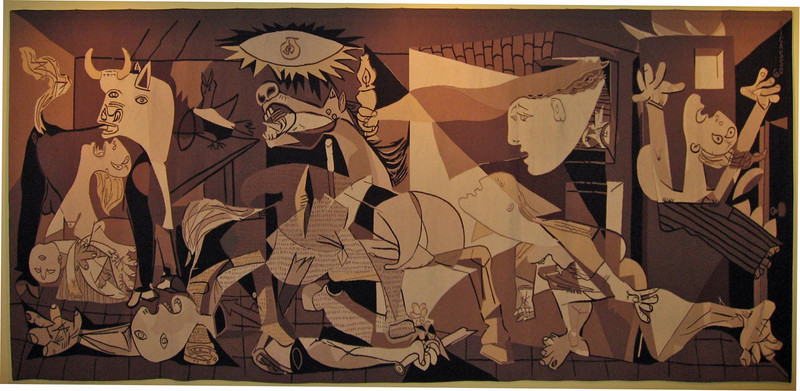
Pablo Picasso, Guernica
Architecture and music
- Bauhaus and Modernism, linked to Walter Gropius, favored function, clean lines, and industrial materials.
- Postmodern architecture reacted against strict functionalism by bringing back ornament, irony, and mixed styles.
- In music, Igor Stravinsky, Arnold Schoenberg, and Richard Strauss rejected conventional harmony through dissonance, atonality, and rhythmic shock.
Writers
- Franz Kafka showed people trapped in oppressive bureaucracy.
- James Joyce used stream of consciousness.
- Virginia Woolf explored inner life, memory, and gender.
- Erich Maria Remarque showed antiwar disillusionment in All Quiet on the Western Front.
- Sartre’s fiction and plays examined freedom and self-deception.
Religion, Secularization, and Reform
Europe became more secular, but religion still mattered in politics, family life, charity, and resistance.
- Christian responses to totalitarianism were mixed. Some resisted, some stayed silent, some accommodated regimes.
- Dietrich Bonhoeffer opposed Nazism and was executed.
- Martin Niemöller and the Confessing Church resisted Nazi control over the church.
- Under communism, Eastern European regimes restricted churches because they competed with the state for loyalty.
- Pope John Paul II became a symbol of resistance in Poland, and Solidarity, led by Lech Wałęsa, drew strength from Catholic networks.
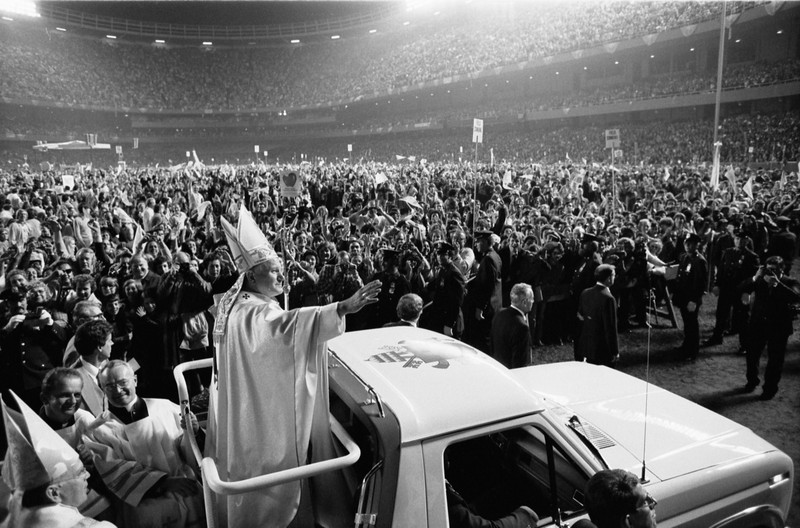
Pope John Paul II in Poland
Second Vatican Council 1962-1965
Called by Pope John XXIII, Vatican II tried to adapt Catholicism to the modern world.
- Mass could be said in vernacular languages
- greater lay participation
- more ecumenism and dialogue with non-Christian religions
- support for religious liberty
- better Catholic-Jewish relations
Religion lost its monopoly over European life. It did not lose its importance.
Prosperity, Demographic Change, and New Social Movements
Postwar recovery brought mass production, higher wages, new food technologies, and more household comfort. Electricity, indoor plumbing, appliances, plastics, synthetic fibers, TVs, and cars became common. Consumer culture shaped identity through advertising, leisure, fashion, and private consumption, often with strong American influence from Hollywood, rock, TV, fast food, and ads.
Baby boom and rights movements
- The baby boom came from postwar recovery, delayed marriages and births, housing, welfare, and pronatalist policies like family allowances and childcare facilities.
- This created a large youth generation that later strained schools, universities, jobs, and pensions.
- Women’s movements challenged inequality in work, education, politics, family law, and reproductive life.
- Gay and lesbian movements fought criminalization, stigma, and discrimination.
- Other movements pushed peace, environmentalism, civil liberties, and anti-nuclear activism.
Revolts of 1968
That youth generation helped fuel the protests of 1968, especially in major university cities.
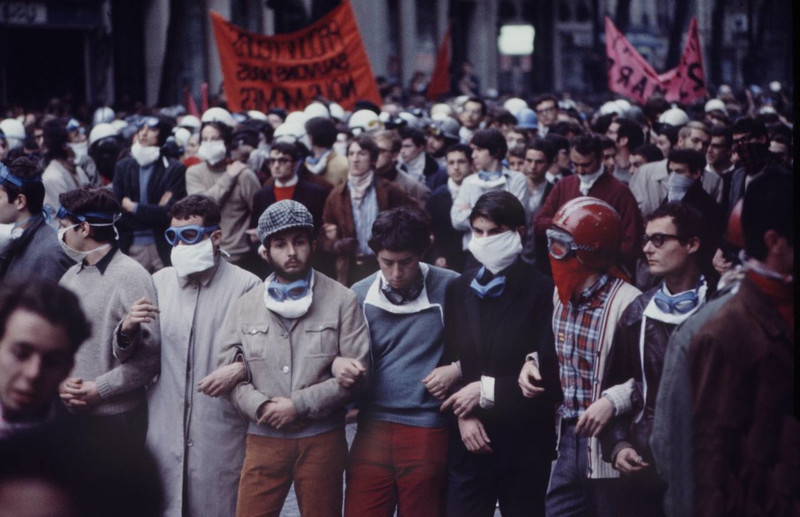
Paris protest during May 1968
Young people attacked bourgeois materialism, conformity, authoritarian universities, and old moral rules.
- In France, May 1968 joined student protests with worker strikes and seriously challenged de Gaulle.
- Similar unrest appeared in West Germany, Italy, and the Prague Spring in Czechoslovakia.
Prosperity created comfort, but it also created youth culture and rebellion against that same society.
Key Takeaways
Existentialism
Postwar philosophy emphasizing individual freedom, responsibility, alienation, and the creation of meaning through authentic choices in an apparently absurd world
Jean-Paul Sartre
French existentialist who argued that “existence precedes essence,” making individuals responsible for defining themselves through their choices
Albert Camus
Writer associated with postwar existentialism who explored the absurd conflict between humanity’s search for meaning and an indifferent universe but rejected the existentialist label
Postmodernism
Later-20th-century movement skeptical of universal truths and grand historical explanations, emphasizing fragmented, perspective-dependent meanings shaped by language, culture, and power
Cubism
Modernist art movement that broke subjects into geometric forms and presented multiple viewpoints at once, rejecting unified Renaissance perspective
Futurism
Italian movement celebrating machinery, speed, youth, violence, and modern urban dynamism, with some adherents later supporting fascism
Dadaism (Dada)
World War I movement that used absurdity, chance, provocation, and anti-art to mock the supposedly rational civilization that had produced industrial slaughter
Surrealism
Movement influenced by psychoanalysis that represented dreams, unconscious desires, and irrational associations through unexpected, dreamlike imagery
Abstract Expressionism
Postwar movement emphasizing large abstract canvases, spontaneity, gesture, and the physical act of painting, centered especially in the United States
Pop Art
1950s–1960s movement using advertising, consumer goods, comics, and celebrities to blur elite and popular culture and ambiguously portray consumer society
Bauhaus
German school founded by Walter Gropius that united art, craft, industrial design, and architecture through functional planning, geometric forms, and minimal ornament
Modernist Architecture
Functional architecture using steel, glass, concrete, open interiors, and unornamented forms suited to industrial production and postwar reconstruction
Postmodern Architecture
Reaction against modernist uniformity that restored ornament, color, symbolism, historical references, irony, and mixtures of styles
Igor Stravinsky
Modernist composer whose dissonance, changing rhythms, and unexpected accents—especially in The Rite of Spring—challenged musical and theatrical conventions
Arnold Schoenberg
Modernist composer who abandoned conventional tonality and developed the twelve-tone method to avoid a dominant tonal center
Atonality
Music not organized around a conventional central key or tonal center
Twelve-Tone Method
Schoenberg’s method of arranging all twelve chromatic notes into a sequence that structures a composition without privileging one tonal center
Richard Strauss
Composer who bridged late Romanticism and modernism through intense chromaticism, psychological themes, and unsettling operatic subjects
Franz Kafka
Modernist writer who portrayed individuals trapped in absurd, dehumanizing systems governed by mysterious and irrational bureaucratic rules
James Joyce
Modernist writer who used interior monologue, stream of consciousness, wordplay, and shifting styles to represent unstable individual perception
Virginia Woolf
Modernist writer who used stream of consciousness to explore memory, identity, time, and gender while criticizing barriers to women’s intellectual achievement
Stream of Consciousness
Literary technique representing a character’s shifting flow of thoughts, memories, sensations, and perceptions rather than straightforward narration
Erich Maria Remarque
Author of All Quiet on the Western Front, which portrayed industrial warfare through German soldiers’ fear, destruction, and disillusionment rather than heroism
Secularization
Decline of religious observance and clerical authority in public and private life, despite organized religion’s continuing cultural and political influence
Dietrich Bonhoeffer
German Lutheran theologian who opposed Nazi control of the churches, joined resistance circles, and was executed by the regime in 1945
Martin Niemöller
German pastor who moved from initial sympathy for Hitler to resisting Nazi control of Protestant churches and was imprisoned from 1938 to 1945
Pope John Paul II
First Polish pope, elected in 1978, whose public support for Polish Catholic identity made him a major symbol of resistance to communism
Solidarity
Polish trade-union and social movement founded in 1980 that united workers, intellectuals, and Catholic supporters against the communist state
Second Vatican Council (Vatican II)
Catholic reform council of 1962–1965 that promoted vernacular worship, lay participation, religious liberty, ecumenism, and dialogue with Jews and other religions
Consumer Culture
Social order in which mass production, advertising, brands, leisure, and private consumption increasingly shape daily life, status, and personal identity
Baby Boom
Sharp post-1945 rise in births caused by postponed marriages, demobilization, economic recovery, welfare support, and government encouragement of larger families
Natalist Policies (Pronatalist Policies; Neonatalism)
Government measures such as family allowances, tax benefits, maternity support, housing, and childcare intended to encourage higher birth rates
Women’s Movements
Postwar movements seeking equality and autonomy in education, employment, politics, family law, and reproductive life
Gay and Lesbian Movements
Movements opposing criminalization, harassment, medical stigma, and discrimination while seeking legal recognition, protections, and marriage equality
Youth Culture
Distinct postwar culture created by a large, educated, comparatively prosperous generation with greater access to leisure, travel, music, media, and consumer goods
Revolts of 1968
International wave of student, worker, and intellectual protests against authoritarian institutions, capitalism, consumerism, war, and restrictive social conventions
May 1968 in France
French crisis in which student protests and university occupations triggered mass worker strikes, challenged de Gaulle’s government, and produced lasting cultural change
Notes
Existentialism
Postwar philosophy emphasizing individual freedom, responsibility, alienation, and the creation of meaning through authentic choices in an apparently absurd world
Jean-Paul Sartre
French existentialist who argued that “existence precedes essence,” making individuals responsible for defining themselves through their choices
Albert Camus
Writer associated with postwar existentialism who explored the absurd conflict between humanity’s search for meaning and an indifferent universe but rejected the existentialist label
Postmodernism
Later-20th-century movement skeptical of universal truths and grand historical explanations, emphasizing fragmented, perspective-dependent meanings shaped by language, culture, and power
Cubism
Modernist art movement that broke subjects into geometric forms and presented multiple viewpoints at once, rejecting unified Renaissance perspective
Futurism
Italian movement celebrating machinery, speed, youth, violence, and modern urban dynamism, with some adherents later supporting fascism
Dadaism (Dada)
World War I movement that used absurdity, chance, provocation, and anti-art to mock the supposedly rational civilization that had produced industrial slaughter
Surrealism
Movement influenced by psychoanalysis that represented dreams, unconscious desires, and irrational associations through unexpected, dreamlike imagery
Abstract Expressionism
Postwar movement emphasizing large abstract canvases, spontaneity, gesture, and the physical act of painting, centered especially in the United States
Pop Art
1950s–1960s movement using advertising, consumer goods, comics, and celebrities to blur elite and popular culture and ambiguously portray consumer society
Bauhaus
German school founded by Walter Gropius that united art, craft, industrial design, and architecture through functional planning, geometric forms, and minimal ornament
Modernist Architecture
Functional architecture using steel, glass, concrete, open interiors, and unornamented forms suited to industrial production and postwar reconstruction
Postmodern Architecture
Reaction against modernist uniformity that restored ornament, color, symbolism, historical references, irony, and mixtures of styles
Igor Stravinsky
Modernist composer whose dissonance, changing rhythms, and unexpected accents—especially in The Rite of Spring—challenged musical and theatrical conventions
Arnold Schoenberg
Modernist composer who abandoned conventional tonality and developed the twelve-tone method to avoid a dominant tonal center
Atonality
Music not organized around a conventional central key or tonal center
Twelve-Tone Method
Schoenberg’s method of arranging all twelve chromatic notes into a sequence that structures a composition without privileging one tonal center
Richard Strauss
Composer who bridged late Romanticism and modernism through intense chromaticism, psychological themes, and unsettling operatic subjects
Franz Kafka
Modernist writer who portrayed individuals trapped in absurd, dehumanizing systems governed by mysterious and irrational bureaucratic rules
James Joyce
Modernist writer who used interior monologue, stream of consciousness, wordplay, and shifting styles to represent unstable individual perception
Virginia Woolf
Modernist writer who used stream of consciousness to explore memory, identity, time, and gender while criticizing barriers to women’s intellectual achievement
Stream of Consciousness
Literary technique representing a character’s shifting flow of thoughts, memories, sensations, and perceptions rather than straightforward narration
Erich Maria Remarque
Author of All Quiet on the Western Front, which portrayed industrial warfare through German soldiers’ fear, destruction, and disillusionment rather than heroism
Secularization
Decline of religious observance and clerical authority in public and private life, despite organized religion’s continuing cultural and political influence
Dietrich Bonhoeffer
German Lutheran theologian who opposed Nazi control of the churches, joined resistance circles, and was executed by the regime in 1945
Martin Niemöller
German pastor who moved from initial sympathy for Hitler to resisting Nazi control of Protestant churches and was imprisoned from 1938 to 1945
Pope John Paul II
First Polish pope, elected in 1978, whose public support for Polish Catholic identity made him a major symbol of resistance to communism
Solidarity
Polish trade-union and social movement founded in 1980 that united workers, intellectuals, and Catholic supporters against the communist state
Second Vatican Council (Vatican II)
Catholic reform council of 1962–1965 that promoted vernacular worship, lay participation, religious liberty, ecumenism, and dialogue with Jews and other religions
Consumer Culture
Social order in which mass production, advertising, brands, leisure, and private consumption increasingly shape daily life, status, and personal identity
Baby Boom
Sharp post-1945 rise in births caused by postponed marriages, demobilization, economic recovery, welfare support, and government encouragement of larger families
Natalist Policies (Pronatalist Policies; Neonatalism)
Government measures such as family allowances, tax benefits, maternity support, housing, and childcare intended to encourage higher birth rates
Women’s Movements
Postwar movements seeking equality and autonomy in education, employment, politics, family law, and reproductive life
Gay and Lesbian Movements
Movements opposing criminalization, harassment, medical stigma, and discrimination while seeking legal recognition, protections, and marriage equality
Youth Culture
Distinct postwar culture created by a large, educated, comparatively prosperous generation with greater access to leisure, travel, music, media, and consumer goods
Revolts of 1968
International wave of student, worker, and intellectual protests against authoritarian institutions, capitalism, consumerism, war, and restrictive social conventions
May 1968 in France
French crisis in which student protests and university occupations triggered mass worker strikes, challenged de Gaulle’s government, and produced lasting cultural change
