Topic 6.2 Notes – The Spread of Industry Throughout Europe
What Industrialization Needed to Spread
Industrialization means a lasting shift to mechanized production, factory labor, fossil-fuel energy, concentrated capital, and bigger transportation networks and markets. After Britain went first, the big question from 1815 to 1914 is why the rest of Europe industrialized so unevenly.
When you look at any region, scan for the same full set of conditions:
- Natural resources like coal and iron ore. These mattered because factories, steam engines, rails, and machines needed fuel and metal.
- Transportation like rivers, ports, canals, and railroads. A coalfield was only useful if you could move coal cheaply.
- Capital and finance like banks, credit, insurance, and joint-stock investment. Factories and railroads cost too much for most individuals.
- Human capital like inventors, engineers, mechanics, skilled workers, and entrepreneurs who could build, improve, and run industrial systems.
- Politics and law like property rights, contracts, political stability, and internal free trade.
- Government action like canals, railroads, subsidies, concessions, and trade agreements.
- Agriculture and labor like productive farming, mobile workers, and the absence of serfdom.
The key AP idea is combination. No single factor explains industrialization.
Why Britain Led Europe
Britain had the strongest mix of advantages. It had abundant, accessible coal and iron ore, plus compact geography, navigable rivers, ports, turnpikes, and canals.
Transportation helped twice. Canals and railways made resources usable, and building them increased demand for coal, iron, and machinery.
Textile mechanization
Britain’s breakthrough came in cotton textiles, where a chain of inventions sped up production:
- Spinning jenny increased thread production by one worker.
- Water frame used waterpower for spinning.
- Spinning mule made strong, fine thread.
- Power loom mechanized weaving.
- James Watt’s improved steam engine made steam power efficient for mines, factories, and transport.
Iron was the key early industrial metal. Cotton tied Britain to Atlantic trade and imperial markets.
Private initiative and supportive institutions
Britain relied heavily on entrepreneurs, merchants, capitalists, and inventors. Growth was supported by:
- Banks that gathered and lent money
- Credit that let businesses expand before profits arrived
- Insurance that lowered risk
- Joint-stock investment that spread costs among investors
- Patents and government financial awards to inventors
Britain’s parliamentary government usually protected property and commerce. The clearest example is the repeal of the Corn Laws in 1846, which showed industrial and commercial interests beating landed interests. Britain celebrated its dominance at the Great Exhibition of 1851, with the Crystal Palace as a symbol of engineering skill and the “workshop of the world.”
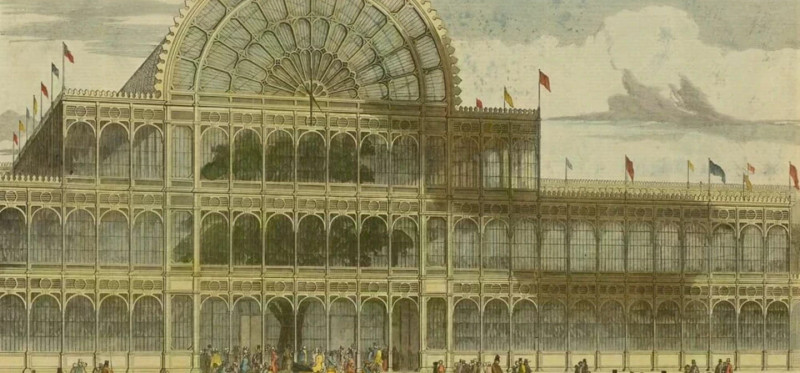
Crystal Palace, Great Exhibition of 1851
How Industrialization Moved to the Continent
After 1815, British machines, skills, and methods spread despite efforts to block exports of machinery and skilled workers. Industrialization usually began in regional clusters, not across whole countries at once.
Belgium became the first major continental success because it had coal and iron deposits, a textile tradition, proximity to Britain, and strong market connections.
Continental industrialization usually involved more state support than Britain’s model:
- Canals
- Railroads
- Technical schools
- Support for banks and credit
- Trade agreements
- Reduction of internal trade barriers
France’s Gradual Path and Why Eastern and Southern Europe Lagged
France industrialized, but more slowly. Small workshops, household industry, and peasant farming stayed important longer.
France’s slower pace came from several causes:
- less favorable coal supply and geography than Britain
- higher transportation costs across a larger territory
- political instability after the Revolution and Napoleon
- many small peasant landholders stayed on the land
- continued strength in luxury and specialized goods
The French state played a larger role through canals, railroads, backed banks, concessions, guarantees, and the Cobden-Chevalier Treaty of 1860.
Much of eastern and southern Europe lagged because several obstacles piled up together:
- lack of resources or poor access to them
- lack of adequate transportation
- weak banking and limited capital
- small markets caused by peasant poverty
- dominance of traditional landed elites
- inadequate government sponsorship
- Russian serfdom until 1861, which tied labor to the land
Agriculture, Crisis, and the Uneven Map of Europe by 1914
Primitive agricultural practices and unequal landholding kept productivity low. That caused famine, debt, and land shortages, and it also slowed industrialization because labor stayed trapped in agriculture and peasants could buy few manufactured goods.
The Hungry ’40s brought harvest failures, high food prices, falling demand for manufactured goods, and economic distress that fed into the revolutions of 1848.
The Irish potato famine from 1845 to 1852 came from potato blight, but the disaster became far worse because of landlordism, tiny tenant holdings, dependence on potatoes, and limited British relief. About one million died and one million emigrated.
By 1914, Europe still showed an uneven map of development. The biggest urban concentrations clustered in Britain, northern France and Belgium, and western Germany, with fewer large cities across much of southern and eastern Europe.
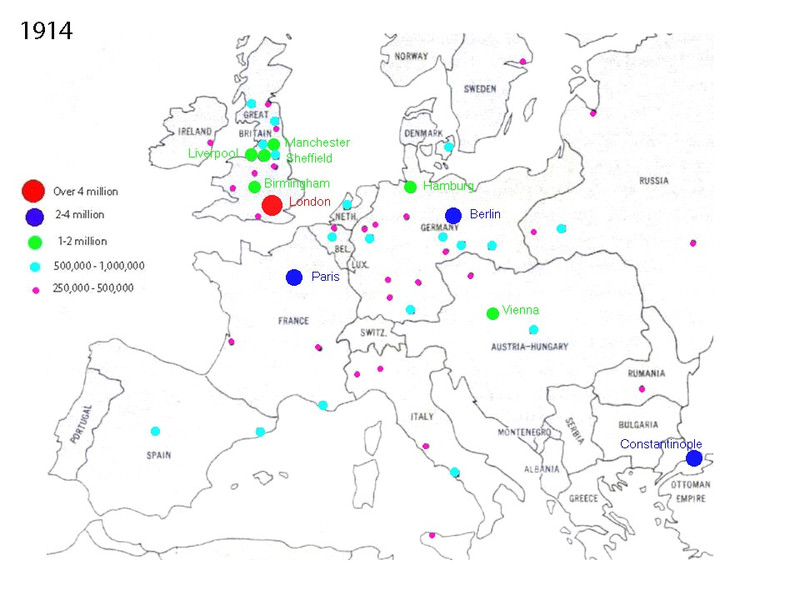
European urbanization by 1914
| Heavily industrial | More agricultural overall |
|---|---|
| Britain | Ireland |
| Belgium | Iberian countryside |
| parts of France | Italian countryside |
| parts of Germany | Balkans |
| much of Russia and the Habsburg lands |
Key Takeaways
Industrialization
Sustained reorganization of production around mechanization, factories, concentrated capital, specialized labor, fossil-fuel energy, and expanded markets and transportation
Mechanization
Replacement or supplementation of human and animal labor with machines
Factory System
Production system concentrating workers and powered machinery under centralized management in factories
Putting-Out System
Production system in which merchants distributed raw materials to households for processing
Spinning Jenny
Textile machine that allowed one worker to spin several threads at once
Water Frame
Water-powered machine that mechanized the spinning of thread
Spinning Mule
Textile machine that produced strong, fine thread by combining earlier spinning technologies
Power Loom
Powered machine that mechanized the weaving of cloth
James Watt’s Steam Engine
Watt’s improvements made the steam engine more efficient and adaptable to factories, mines, and transportation
Capital
Accumulated wealth invested in production with the expectation of profit
Human Capital
The knowledge and skills possessed by engineers, inventors, artisans, entrepreneurs, and other workers
Patents
Temporary legal rights over inventions that encouraged innovation by allowing inventors to profit from their work
Corn Laws
British tariffs and restrictions on imported grain that kept food prices high for landowners until their repeal in 1846
Anti-Corn Law League
Organization of manufacturers and urban commercial interests that campaigned for repeal of the Corn Laws and freer trade
Great Exhibition of 1851
London exhibition displaying machinery, manufactures, and global raw materials to showcase Britain’s industrial supremacy
Crystal Palace
Prefabricated iron-and-glass building that housed the Great Exhibition and symbolized British engineering and mass production
Belgian Industrialization
The earliest major continental industrialization, aided by coal and iron, textiles, proximity to Britain, and access to markets
Continental State Sponsorship of Industrialization
Government promotion of industry through infrastructure, technical schools, banks, trade policies, subsidies, concessions, and guarantees
French Industrialization
A gradual, state-assisted industrialization in which factories and railroads expanded while workshops, household production, and small farming persisted
Cobden–Chevalier Treaty
1860 British-French trade agreement that reduced tariffs on many goods and encouraged Anglo-French commerce
Serfdom
System tying peasants to the land and requiring labor or payments to landlords, restricting mobility, productivity, and purchasing power
Emancipation Decree of 1861
Alexander II’s abolition of serfdom in the Russian Empire, removing a legal barrier to labor mobility but leaving many former serfs burdened by debt and land restrictions
Traditional Agriculture
Labor-intensive, minimally mechanized farming with limited fertilizer or crop rotation and production near subsistence
Hungry Forties
Economic hardship and food crises of the 1840s, when failed grain and potato harvests caused high prices, hunger, and unemployment
Great Irish Famine
The 1845–1852 catastrophe in which potato blight, unequal landholding, and limited British relief caused about one million deaths and mass emigration
Notes
Industrialization
Sustained reorganization of production around mechanization, factories, concentrated capital, specialized labor, fossil-fuel energy, and expanded markets and transportation
Mechanization
Replacement or supplementation of human and animal labor with machines
Factory System
Production system concentrating workers and powered machinery under centralized management in factories
Putting-Out System
Production system in which merchants distributed raw materials to households for processing
Spinning Jenny
Textile machine that allowed one worker to spin several threads at once
Water Frame
Water-powered machine that mechanized the spinning of thread
Spinning Mule
Textile machine that produced strong, fine thread by combining earlier spinning technologies
Power Loom
Powered machine that mechanized the weaving of cloth
James Watt’s Steam Engine
Watt’s improvements made the steam engine more efficient and adaptable to factories, mines, and transportation
Capital
Accumulated wealth invested in production with the expectation of profit
Human Capital
The knowledge and skills possessed by engineers, inventors, artisans, entrepreneurs, and other workers
Patents
Temporary legal rights over inventions that encouraged innovation by allowing inventors to profit from their work
Corn Laws
British tariffs and restrictions on imported grain that kept food prices high for landowners until their repeal in 1846
Anti-Corn Law League
Organization of manufacturers and urban commercial interests that campaigned for repeal of the Corn Laws and freer trade
Great Exhibition of 1851
London exhibition displaying machinery, manufactures, and global raw materials to showcase Britain’s industrial supremacy
Crystal Palace
Prefabricated iron-and-glass building that housed the Great Exhibition and symbolized British engineering and mass production
Belgian Industrialization
The earliest major continental industrialization, aided by coal and iron, textiles, proximity to Britain, and access to markets
Continental State Sponsorship of Industrialization
Government promotion of industry through infrastructure, technical schools, banks, trade policies, subsidies, concessions, and guarantees
French Industrialization
A gradual, state-assisted industrialization in which factories and railroads expanded while workshops, household production, and small farming persisted
Cobden–Chevalier Treaty
1860 British-French trade agreement that reduced tariffs on many goods and encouraged Anglo-French commerce
Serfdom
System tying peasants to the land and requiring labor or payments to landlords, restricting mobility, productivity, and purchasing power
Emancipation Decree of 1861
Alexander II’s abolition of serfdom in the Russian Empire, removing a legal barrier to labor mobility but leaving many former serfs burdened by debt and land restrictions
Traditional Agriculture
Labor-intensive, minimally mechanized farming with limited fertilizer or crop rotation and production near subsistence
Hungry Forties
Economic hardship and food crises of the 1840s, when failed grain and potato harvests caused high prices, hunger, and unemployment
Great Irish Famine
The 1845–1852 catastrophe in which potato blight, unequal landholding, and limited British relief caused about one million deaths and mass emigration
