Topic 2.1 Notes – Contextualizing 16th- and 17th-Century Challenges and Developments
How Europe Changed from One Christian Commonwealth to a Confessionally Divided, More Sovereign Europe
Before the Reformation, western Europe imagined itself as Latin Christendom, one Christian community under the Roman Catholic Church. The pope, canon law, monasteries, universities, parishes, sacraments, saints’ cults, and the Christian calendar gave people a shared structure for life.
Religion shaped public life, not just private belief. It affected law, morality, marriage, political loyalty, and social order. That is why religious conflict became political conflict so fast.
This unity was never perfect.
- The Holy Roman Empire was fragmented into many territories.
- Popes and rulers fought over power, taxes, and appointments.
- Europe already included Jews, Muslims, and Orthodox Christians.
By 1648, the Peace of Westphalia symbolized the end of the old ideal of one united western Christendom. Europe was still deeply religious, but now it was religiously plural, more state-centered, more commercial, and still full of old hierarchies.
Conditions That Made the Reformation Spread
Luther’s attack on indulgences mattered because Europe was already ready for a huge argument about religion.
Church criticism before Luther
People had criticized abuses for a long time:
- Simony meant buying and selling church offices.
- Ecclesiastical pluralism meant one person holding several church jobs at once.
- Absenteeism meant clergy collecting income without actually serving.
- Nepotism meant giving offices to relatives.
- Many clergy had poor education or bad conduct.
The biggest flashpoint was indulgences. An indulgence officially meant remission of temporal punishment for sin, not buying salvation. But indulgence preaching often sounded like salvation was for sale. Johann Tetzel became the classic example, and people resented money flowing to Rome for St. Peter’s Basilica.
Christian humanism
Erasmus and other humanists used ad fontes thinking, which meant going back to original texts. In Praise of Folly, Erasmus mocked superstition, ignorance, and empty ritual. Humanism did not directly create Protestantism, but it trained people to question corruption and read texts critically.
Printing and vernacular communication
Johannes Gutenberg’s movable-type press let pamphlets, sermons, images, and Bibles spread much faster. A basic hand press like this made it possible to reproduce the same text again and again at a scale Europe had never seen before. Vernacular languages let people beyond Latin readers join the debate. Print also helped Catholics defend their ideas and censor opponents.
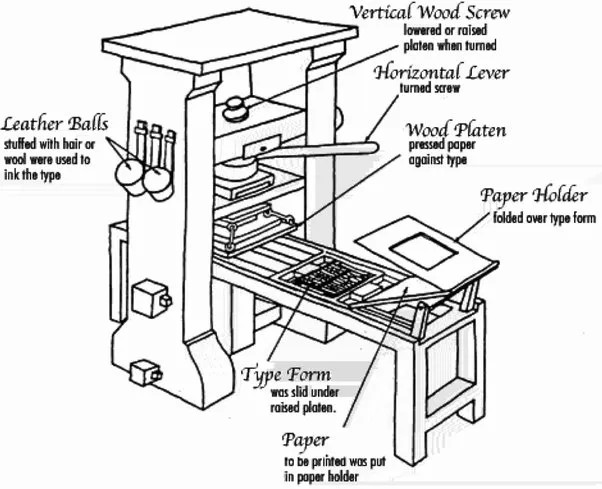
Early movable-type printing press
What Religious Pluralism Changed
Once unity broke, Europe developed lasting competing confessions: Catholic, Lutheran, Reformed/Calvinist, Anglican, and Anabaptist.
- Theology split over salvation, scripture, sacraments, clergy, and the church itself.
- Institutions changed. Protestant areas reduced papal power, monasteries, clerical celibacy, and parts of the sacramental system.
- The Catholic Reformation strengthened seminaries, bishops’ oversight, religious orders, education, and missions.
- Confessionalization meant states and churches worked together to enforce correct belief and behavior.
- Daily life changed through preaching, schools, catechisms, music, ritual, art, and censorship.
- Protestants often pushed iconoclasm and vernacular scripture. Catholics renewed visual and devotional culture.
On wealth, Calvinists often praised discipline, thrift, and labor. The trap answer is saying Protestantism created capitalism. Commercial growth also thrived in Catholic regions.
How Religion, Politics, and War Became Entangled
Religious reform often gave rulers more control.
- Henry VIII made himself head of the Church of England.
- Rulers gained power over clergy, worship, and church lands.
- Catholic rulers also enforced orthodoxy and censorship.
But reform also gave people reasons to resist rulers. Calvinists, Huguenots, Puritans, Anabaptists, and nobles in Poland-Lithuania argued that ungodly rulers could be opposed.
These conflicts mixed religion with politics and economics:
- French Wars of Religion combined Catholic-Huguenot conflict with noble rivalry.
- Spain vs England involved religion, dynasty, and trade.
- In the Thirty Years’ War, Sweden and Denmark had strategic motives too, and Catholic France fought Catholic Habsburgs to block Habsburg power.
Limited toleration did appear, but it was practical, not modern freedom. Examples include the Edict of Nantes (1598), the Dutch Republic, and Poland-Lithuania.
Social and Economic Change amid Old Structures
Commercial and agricultural capitalism expanded through investment, credit, long-distance trade, profit, enclosure in some regions, and market farming. But medieval structures stayed alive too. Manorial dues, guilds, noble prestige, and subsistence farming still shaped life.
Population growth and American silver helped cause the Price Revolution, a long inflationary period. Prices often rose faster than wages, hurting laborers and people on fixed incomes, while some merchants and landowners could benefit.
Cities grew from migration and commerce, but growth brought overcrowding, disease, poverty, and food stress. Cities also became centers of printing, reform, riots, and stricter regulation of begging, prostitution, drinking, marriage, and public order.
The family remained the main social and economic unit. Northwestern Europe often had a nuclear family, but many household forms existed. Women’s labor was essential even though law usually placed them under male authority.
Popular culture still mattered. Carnival, fairs, charivari, taverns, saints’ days, and communal rituals shaped daily life. Folk beliefs stayed strong, and witchcraft accusations peaked around 1580 to 1650.
Key Takeaways
Latin Christendom / Universal Christendom
The pre-Reformation ideal of western Europe as one Christian community under the Roman Catholic Church’s universal spiritual authority
Simony
The buying or selling of church offices
Ecclesiastical Pluralism
The practice of one person holding multiple church offices or benefices
Absenteeism
A church officeholder’s collection of income without residing in or adequately serving the assigned territory
Nepotism
The advancement of relatives to church offices
Indulgence
A remission of temporal punishment remaining after sin’s guilt was forgiven, whose commercialization provoked criticism of church wealth and authority
Christian Humanism
The use of humanist textual scholarship and education to study Christian sources and promote moral and institutional reform, exemplified by Erasmus
Movable-Type Printing Press
Gutenberg’s mid-15th-century printing technology, which rapidly and cheaply spread standardized texts, vernacular ideas, and religious controversy
Religious Pluralism
The durable coexistence of competing Christian confessions, including Catholic, Lutheran, Reformed, Anglican, and Anabaptist communities
Confessionalization
The process by which governments and churches defined, taught, and enforced a particular religious confession
Commercial Capitalism
Production and exchange organized around investment, credit, long-distance trade, and profit
Agricultural Capitalism
The market-oriented use of land and labor to produce agricultural goods for sale and profit
Price Revolution
The long-term 16th-century inflation fueled partly by population growth and American silver, with prices often rising faster than wages
Nuclear Family
A household centered on a married couple and their children, common in much of northwestern Europe
Popular Culture
Communal festivals, leisure, rituals, and folk practices that could reinforce social norms or provide occasions to challenge authority
Charivari
Noisy public ridicule of people believed to have violated community expectations concerning marriage, sexuality, or household authority
Carnival
A communal festival that temporarily inverted hierarchy, mocked elites, and permitted controlled disorder
Sovereign State / Sovereignty
A state’s supreme authority within a defined territory and independence from external political control
Secular Systems of Law
Law whose authority increasingly came from territorial governments rather than universal papal or exclusively ecclesiastical jurisdiction
Jean Bodin / Six Books of the Commonwealth
Bodin’s 1576 work arguing that political stability required a supreme and continuing lawmaking authority within the commonwealth
Peace of Westphalia
The 1648 settlements ending the Thirty Years’ War that strengthened territorial rulers and marked the effective collapse of universal Christendom
Notes
Latin Christendom / Universal Christendom
The pre-Reformation ideal of western Europe as one Christian community under the Roman Catholic Church’s universal spiritual authority
Simony
The buying or selling of church offices
Ecclesiastical Pluralism
The practice of one person holding multiple church offices or benefices
Absenteeism
A church officeholder’s collection of income without residing in or adequately serving the assigned territory
Nepotism
The advancement of relatives to church offices
Indulgence
A remission of temporal punishment remaining after sin’s guilt was forgiven, whose commercialization provoked criticism of church wealth and authority
Christian Humanism
The use of humanist textual scholarship and education to study Christian sources and promote moral and institutional reform, exemplified by Erasmus
Movable-Type Printing Press
Gutenberg’s mid-15th-century printing technology, which rapidly and cheaply spread standardized texts, vernacular ideas, and religious controversy
Religious Pluralism
The durable coexistence of competing Christian confessions, including Catholic, Lutheran, Reformed, Anglican, and Anabaptist communities
Confessionalization
The process by which governments and churches defined, taught, and enforced a particular religious confession
Commercial Capitalism
Production and exchange organized around investment, credit, long-distance trade, and profit
Agricultural Capitalism
The market-oriented use of land and labor to produce agricultural goods for sale and profit
Price Revolution
The long-term 16th-century inflation fueled partly by population growth and American silver, with prices often rising faster than wages
Nuclear Family
A household centered on a married couple and their children, common in much of northwestern Europe
Popular Culture
Communal festivals, leisure, rituals, and folk practices that could reinforce social norms or provide occasions to challenge authority
Charivari
Noisy public ridicule of people believed to have violated community expectations concerning marriage, sexuality, or household authority
Carnival
A communal festival that temporarily inverted hierarchy, mocked elites, and permitted controlled disorder
Sovereign State / Sovereignty
A state’s supreme authority within a defined territory and independence from external political control
Secular Systems of Law
Law whose authority increasingly came from territorial governments rather than universal papal or exclusively ecclesiastical jurisdiction
Jean Bodin / Six Books of the Commonwealth
Bodin’s 1576 work arguing that political stability required a supreme and continuing lawmaking authority within the commonwealth
Peace of Westphalia
The 1648 settlements ending the Thirty Years’ War that strengthened territorial rulers and marked the effective collapse of universal Christendom
