Topic 6.8 Notes – 19th-Century Social Reform
What 19th-Century Social Reform Was
After 1815, Europe still had kings and old elites, but life was changing fast. Factories, wage labor, crowded cities, and rising literacy made social problems more visible and easier to organize around.
Reform meant organized efforts to fix problems created or exposed by industrialization and urbanization. Reformers drew on liberal, socialist, feminist, and religious ideas and tried to turn them into action.
They targeted problems people could see all around them:
- Poverty in industrial cities, where overcrowding and unstable work trapped families.
- Dangerous work, low wages, and child labor in mines and factories.
- Alcoholism, prostitution, and disease, which many saw as signs of social breakdown.
- Slavery, serfdom, and women’s legal inequality, which reformers attacked as inherited injustice.
What made this possible:
- Rising literacy and cheap newspapers and pamphlets spread ideas fast.
- Railroads and the postal system linked local groups into national movements.
- Mutual-aid societies and voluntary associations taught people how to organize.
- Expanding male suffrage made ordinary voters matter more.
The big shift in this period was from elite charity alone to permanent mass organizations. That included political parties, trade unions, worker parties, feminist groups, and religious reform associations.
Mass Politics and Worker Organization
As more men got the vote, politics had to become organized. A mass-based political party had branches, newspapers, dues, platforms, and election campaigns. It did not just appear during elections.
Great Britain
Britain shows this clearly because the Reform Acts of 1832, 1867, and 1884 kept expanding the male electorate.
- Liberals appealed to middle classes, Nonconformists, and reformers.
- Conservatives broadened beyond old Tory elites.
- Benjamin Disraeli promoted one-nation conservatism. He supported limited reform to keep society stable and reduce class conflict.
France
Under the Third Republic, France developed organized conservative, republican, and socialist politics.
- In 1905, socialists united in the SFIO.
- Jean Jaurès became a major socialist leader.
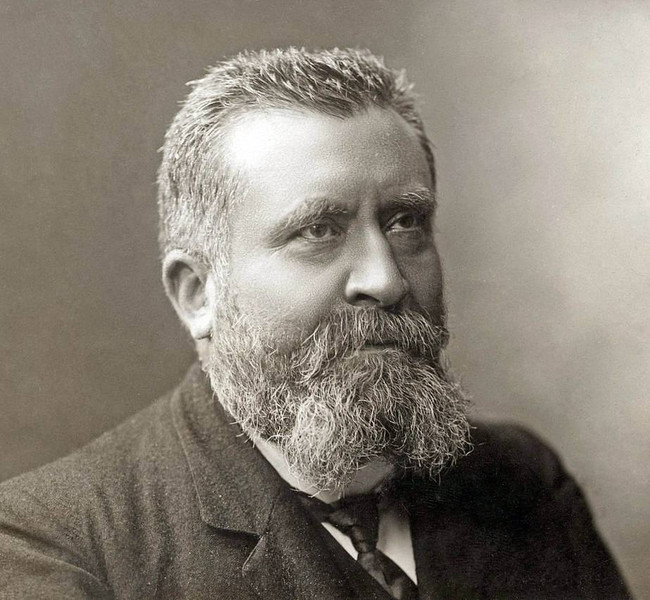
Jean Jaurès
Trade unions
Unions organized workers as employees. Their goals were practical:
- Higher wages
- Shorter hours
- Safer conditions
- Recognition by employers
- Protection from arbitrary firing
Britain is the key example:
- The Combination Acts of 1799 to 1800 restricted unions.
- They were repealed in 1824, which opened more legal space for organizing.
- New model unions such as the Amalgamated Society of Engineers relied on dues, discipline, and bargaining.
- The Trades Union Congress was founded in 1868.
- Later new unionism brought in less-skilled workers such as dockworkers and gas workers.
How Labor Movements Became Political Parties
Unions could pressure employers, but workers also needed laws changed. That pushed labor movements into politics.
Common demands of worker parties:
- expanded suffrage
- legal unions
- shorter hours
- labor regulation
- social insurance
- progressive taxation
- welfare measures
Germany
Germany gave the strongest example with the SPD.
- It grew from Ferdinand Lassalle’s workers’ association and the socialist work of August Bebel and Wilhelm Liebknecht.
- The movement united at Gotha in 1875 and became the SPD in 1890.
- It built a full working-class culture through newspapers, clubs, education, and unions.
- Bismarck’s Anti-Socialist Laws from 1878 to 1890 tried to crush it, but failed.
- By 1912, the SPD was the largest party in the Reichstag.
Britain
- The Labour Representation Committee formed in 1900.
- It became the Labour Party in 1906.
- British labor politics were tied to unions and parliamentary reform more than one single revolutionary theory.
Russia
- The Russian Social Democratic Labour Party formed in 1898.
- Under tsarist autocracy, it worked underground.
- In 1903, it split into Bolsheviks and Mensheviks.
That split matters because it shows how autocracy pushed labor politics toward secrecy and revolution.
Feminism and Other Social Reform Movements
Women’s reform movements challenged legal, economic, educational, and political inequality.
Feminism
Main demands came together as one broad attack on women’s subordination:
- property and earnings rights
- education and professions
- marriage, divorce, and custody reform
- protection from sexual exploitation
- suffrage
Key people and groups:
- Flora Tristan linked women’s emancipation to working-class organization in The Workers’ Union.
- Barbara Leigh Smith Bodichon fought for property rights, education, and suffrage.
- Britain passed the Married Women’s Property Acts in 1870 and 1882.
- Millicent Garrett Fawcett led the constitutional suffragists in the NUWSS.
- Emmeline, Christabel, and Sylvia Pankhurst were tied to the WSPU, founded in 1903.
- The WSPU used the slogan “Deeds, not words.” Its militancy led to hunger strikes, forcible feeding, and the 1913 Cat and Mouse Act.
- Josephine Butler and the Ladies’ National Association fought the Contagious Diseases Acts, repealed in 1886.
By the early 1900s, the suffrage campaign had become highly visible in public marches and demonstrations.
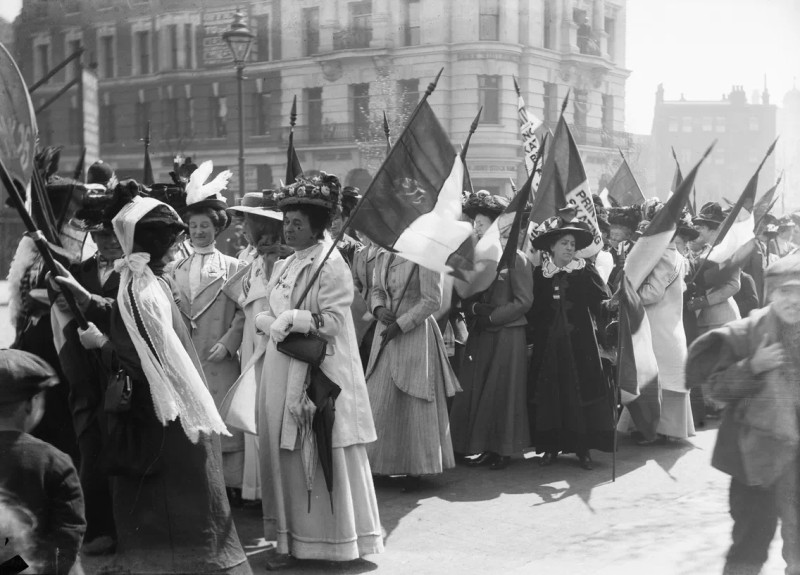
British suffrage march
Religious and nongovernmental reform
These groups often mixed charity with moral reform.
- Sunday schools spread literacy and religious instruction.
- The temperance movement and Band of Hope attacked alcohol as a social evil.
- British abolitionists ended the slave trade in 1807, passed the Slavery Abolition Act in 1833, and founded the British and Foreign Anti-Slavery Society in 1839.
- Serfdom was abolished in the Habsburg lands in 1848 and in Russia in 1861 under Alexander II.
- The Salvation Army, founded by William and Catherine Booth in 1865, aided the urban poor.
- Toynbee Hall, founded in 1884, became a model settlement house.
Key Takeaways
Mass-Based Political Party
Permanent party with mass membership, local branches, funding, publications, platforms, and organizers that continuously mobilized voters and pursued reform
British Liberal Party
Mass party formed from Whigs, radicals, and free-traders that appealed to many middle-class voters, Nonconformists, and supporters of civil and political reform
British Conservative Party
Party developed from the Tories that built a mass organization around nationalism, property, established institutions, and limited reforms meant to preserve social order
One-Nation Conservatism
Benjamin Disraeli’s paternalist approach of using limited social reform to reconcile classes and preserve the existing political and social order
French Section of the Workers’ International (SFIO)
French socialist party formed in 1905 by uniting several socialist groups, associated especially with Jean Jaurès
Trade Union
Workers’ organization that defended workplace interests through dues, benefits, collective bargaining, petitions, demonstrations, and strikes
Combination Acts
British laws of 1799–1800 prohibiting many worker combinations; repealed in 1824, though union activity remained restricted
Mutual-Aid Society
Dues-supported workers’ association providing assistance during illness, unemployment, strikes, or death before extensive state welfare existed
New Model Unions
Mid-19th-century British unions of skilled workers emphasizing disciplined organization, financial reserves, and negotiated workplace improvements
Trades Union Congress (TUC)
British federation established in 1868 to coordinate trade unions and represent the wider union movement
New Unionism
Late-19th-century movement that organized dockworkers, gas workers, transport workers, and other less-skilled laborers through broad recruitment and large strikes
Anti-Socialist Laws
Bismarck’s laws of 1878–1890 restricting socialist meetings, publications, and organizations without preventing socialist candidates from contesting elections
Labour Representation Committee / Labour Party
British organization founded by unions and socialists in 1900 to secure working-class representation; renamed the Labour Party in 1906
Russian Social Democratic Labour Party
Socialist workers’ party founded in 1898 that operated largely underground under tsarism and split into Bolshevik and Menshevik factions in 1903
Nineteenth-Century Feminism
Movement challenging women’s legal, economic, educational, and political subordination, including unequal property, marriage, employment, education, and voting rights
Coverture
British legal doctrine under which a married woman’s independent legal identity and control of property were largely absorbed into those of her husband
Married Women’s Property Acts
British acts of 1870 and 1882 that gave married women increasing legal control over their earnings and property
Flora Tristan
French socialist feminist who argued in The Workers’ Union (1843) that working-class liberation required women’s emancipation and organization across trades
Barbara Leigh Smith Bodichon
British feminist who publicized married women’s legal disabilities and organized for property rights, education, employment, and suffrage
National Union of Women’s Suffrage Societies (NUWSS)
British suffrage organization led by Millicent Garrett Fawcett that used constitutional methods such as petitions, meetings, publications, and lobbying
Women’s Social and Political Union (WSPU)
Militant British suffrage organization founded by Emmeline and Christabel Pankhurst in 1903 under the slogan “Deeds, not words.”
Suffragists vs. Suffragettes
Suffragist meant any women’s-suffrage advocate; suffragette commonly meant a militant British activist associated with disruption, property damage, and hunger strikes
Emmeline Pankhurst
British feminist leader and WSPU cofounder who defended militant suffrage tactics after concluding that peaceful campaigning had failed
Protective Legislation for Women
Workplace laws limiting women’s hours or occupations that reduced some exploitation but could reinforce dependency and restrict women’s economic equality
Religious Humanitarianism
Religiously inspired reform that used charity, moral campaigning, and voluntary organizations to aid the poor and oppose slavery, servitude, and other perceived evils
Sunday School Movement
Movement providing working-class children with basic literacy, religious teaching, and moral instruction before compulsory public education became widespread
Temperance vs. Teetotalism
Temperance sought to reduce or eliminate alcohol consumption; teetotalism was the temperance position demanding total abstinence
Salvation Army
Evangelical organization founded by William and Catherine Booth in London in 1865 that combined preaching with practical aid in poor urban districts
Abolitionism
Humanitarian movement using petitions, testimony, publications, meetings, and boycotts to end slavery and the slave trade
Slavery Abolition Act
British act of 1833, effective in 1834, emancipating enslaved people in most of the empire, initially through an apprenticeship system ended by 1838
Antiserfdom Reform
Liberal and humanitarian campaign against peasants’ inherited legal bondage, contributing to emancipation in the Habsburg lands in 1848 and Russia in 1861
Josephine Butler
Evangelical British feminist who led the campaign against compulsory examinations of suspected prostitutes and the sexual double standard in the Contagious Diseases Acts
Contagious Diseases Acts
British acts of 1864, 1866, and 1869 permitting detention and compulsory examination of women suspected of prostitution in military and naval districts; repealed in 1886
Ladies’ National Association
Organization founded in 1869 that used petitions, pamphlets, speaking tours, and electoral pressure to secure repeal of the Contagious Diseases Acts
Socialist Workers’ Party of Germany / Social Democratic Party of Germany (SPD)
Marxist-influenced German workers’ party created by socialist unification in 1875, renamed the SPD in 1890, and the Reichstag’s largest party by 1912
Cat and Mouse Act / Prisoners (Temporary Discharge for Ill Health) Act of 1913
British law allowing authorities to release hunger-striking suffragettes when seriously ill and rearrest them after recovery
Settlement House Movement
Movement placing educated middle-class residents in poor neighborhoods to provide instruction and social services and investigate urban conditions, exemplified by Toynbee Hall
Notes
Mass-Based Political Party
Permanent party with mass membership, local branches, funding, publications, platforms, and organizers that continuously mobilized voters and pursued reform
British Liberal Party
Mass party formed from Whigs, radicals, and free-traders that appealed to many middle-class voters, Nonconformists, and supporters of civil and political reform
British Conservative Party
Party developed from the Tories that built a mass organization around nationalism, property, established institutions, and limited reforms meant to preserve social order
One-Nation Conservatism
Benjamin Disraeli’s paternalist approach of using limited social reform to reconcile classes and preserve the existing political and social order
French Section of the Workers’ International (SFIO)
French socialist party formed in 1905 by uniting several socialist groups, associated especially with Jean Jaurès
Trade Union
Workers’ organization that defended workplace interests through dues, benefits, collective bargaining, petitions, demonstrations, and strikes
Combination Acts
British laws of 1799–1800 prohibiting many worker combinations; repealed in 1824, though union activity remained restricted
Mutual-Aid Society
Dues-supported workers’ association providing assistance during illness, unemployment, strikes, or death before extensive state welfare existed
New Model Unions
Mid-19th-century British unions of skilled workers emphasizing disciplined organization, financial reserves, and negotiated workplace improvements
Trades Union Congress (TUC)
British federation established in 1868 to coordinate trade unions and represent the wider union movement
New Unionism
Late-19th-century movement that organized dockworkers, gas workers, transport workers, and other less-skilled laborers through broad recruitment and large strikes
Anti-Socialist Laws
Bismarck’s laws of 1878–1890 restricting socialist meetings, publications, and organizations without preventing socialist candidates from contesting elections
Labour Representation Committee / Labour Party
British organization founded by unions and socialists in 1900 to secure working-class representation; renamed the Labour Party in 1906
Russian Social Democratic Labour Party
Socialist workers’ party founded in 1898 that operated largely underground under tsarism and split into Bolshevik and Menshevik factions in 1903
Nineteenth-Century Feminism
Movement challenging women’s legal, economic, educational, and political subordination, including unequal property, marriage, employment, education, and voting rights
Coverture
British legal doctrine under which a married woman’s independent legal identity and control of property were largely absorbed into those of her husband
Married Women’s Property Acts
British acts of 1870 and 1882 that gave married women increasing legal control over their earnings and property
Flora Tristan
French socialist feminist who argued in The Workers’ Union (1843) that working-class liberation required women’s emancipation and organization across trades
Barbara Leigh Smith Bodichon
British feminist who publicized married women’s legal disabilities and organized for property rights, education, employment, and suffrage
National Union of Women’s Suffrage Societies (NUWSS)
British suffrage organization led by Millicent Garrett Fawcett that used constitutional methods such as petitions, meetings, publications, and lobbying
Women’s Social and Political Union (WSPU)
Militant British suffrage organization founded by Emmeline and Christabel Pankhurst in 1903 under the slogan “Deeds, not words.”
Suffragists vs. Suffragettes
Suffragist meant any women’s-suffrage advocate; suffragette commonly meant a militant British activist associated with disruption, property damage, and hunger strikes
Emmeline Pankhurst
British feminist leader and WSPU cofounder who defended militant suffrage tactics after concluding that peaceful campaigning had failed
Protective Legislation for Women
Workplace laws limiting women’s hours or occupations that reduced some exploitation but could reinforce dependency and restrict women’s economic equality
Religious Humanitarianism
Religiously inspired reform that used charity, moral campaigning, and voluntary organizations to aid the poor and oppose slavery, servitude, and other perceived evils
Sunday School Movement
Movement providing working-class children with basic literacy, religious teaching, and moral instruction before compulsory public education became widespread
Temperance vs. Teetotalism
Temperance sought to reduce or eliminate alcohol consumption; teetotalism was the temperance position demanding total abstinence
Salvation Army
Evangelical organization founded by William and Catherine Booth in London in 1865 that combined preaching with practical aid in poor urban districts
Abolitionism
Humanitarian movement using petitions, testimony, publications, meetings, and boycotts to end slavery and the slave trade
Slavery Abolition Act
British act of 1833, effective in 1834, emancipating enslaved people in most of the empire, initially through an apprenticeship system ended by 1838
Antiserfdom Reform
Liberal and humanitarian campaign against peasants’ inherited legal bondage, contributing to emancipation in the Habsburg lands in 1848 and Russia in 1861
Josephine Butler
Evangelical British feminist who led the campaign against compulsory examinations of suspected prostitutes and the sexual double standard in the Contagious Diseases Acts
Contagious Diseases Acts
British acts of 1864, 1866, and 1869 permitting detention and compulsory examination of women suspected of prostitution in military and naval districts; repealed in 1886
Ladies’ National Association
Organization founded in 1869 that used petitions, pamphlets, speaking tours, and electoral pressure to secure repeal of the Contagious Diseases Acts
Socialist Workers’ Party of Germany / Social Democratic Party of Germany (SPD)
Marxist-influenced German workers’ party created by socialist unification in 1875, renamed the SPD in 1890, and the Reichstag’s largest party by 1912
Cat and Mouse Act / Prisoners (Temporary Discharge for Ill Health) Act of 1913
British law allowing authorities to release hunger-striking suffragettes when seriously ill and rearrest them after recovery
Settlement House Movement
Movement placing educated middle-class residents in poor neighborhoods to provide instruction and social services and investigate urban conditions, exemplified by Toynbee Hall
