Topic 4.5 Notes – 18th-Century Culture and Arts
How Cultural Life Changed from Court and Church to Print, Private Life, and the Public Good
This period is about overlap. Baroque churches and royal palaces still shaped culture, but more people were reading, buying, decorating homes, and joining public conversations.
The biggest shift was in audience and purpose.
- Baroque culture served religion and monarchy. It aimed to inspire awe and loyalty.
- Rococo turned toward aristocratic pleasure and private elegance.
- Bourgeois/commercial culture cared more about domestic life, ordinary experience, and consumer goods.
- Neoclassicism connected art to citizenship, civic virtue, and the public good.
Access still depended on wealth, gender, education, and where you lived. A literate urban merchant had far more access than a rural laborer. So the pattern to remember is simple. Patronage continued, but print, markets, and new social spaces widened culture.
Print Culture and the Rise of Public Opinion
Printed material exploded even though censorship never disappeared.
- Newspapers spread current events and political news.
- Periodicals gave regular commentary and essays.
- Books reached a growing reading public.
- Pamphlets spread arguments quickly and cheaply.
- The Encyclopédie gathered and spread Enlightenment knowledge.
One famous example was the Encyclopédie, shown here in the title page of its first volume.
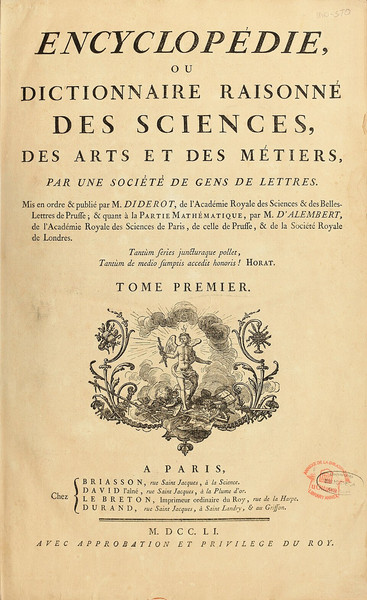
Title page of the Encyclopédie, 1751
Print reached beyond private readers. People shared books, read aloud, borrowed from lending libraries, and discussed ideas in coffeehouses and salons. That matters because public opinion meant views forming outside direct church or state control. It was not democracy. Most Europeans still had no political voice. But rulers now had to care about what educated people were saying.
The Encyclopédie
Denis Diderot and Jean le Rond d’Alembert published it from 1751 to 1772. It organized useful knowledge, including crafts and mechanical processes, and spread Enlightenment criticism to a broad educated audience.
Censorship still worked through licensing, bans, confiscation, and the Index of Forbidden Books. Publishers got around this by printing abroad or smuggling books from the Dutch Republic and Switzerland. That’s a favorite AP move. Print could challenge authority without destroying it.
The Main Artistic and Literary Shifts
Art and literature show the same movement from public authority toward private life and civic ideals.
Baroque and Rococo
Baroque meant grandeur, drama, movement, and emotional intensity.
- Gian Bernini used emotional religious spectacle.
- Diego Velásquez glorified court culture.
- George Frideric Handel and J. S. Bach used music to serve church and court.
- Versailles turned royal power into visual performance.
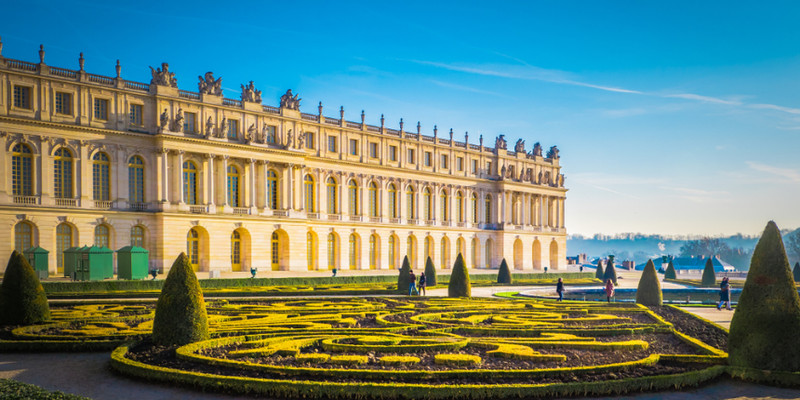
Versailles
Rococo was lighter, intimate, and playful. It fit aristocratic private leisure.
- Watteau
- Fragonard
Commercial society and literature
Dutch painting became the model for art sold to merchants and urban households.
- Rembrandt
- Jan Vermeer
- Common subjects included domestic interiors, family life, still lifes, city scenes, and civic groups.
Writers also reflected commercial and personal life.
| Writer | What to remember |
|---|---|
| Daniel Defoe | Robinson Crusoe, individualism and colonialism |
| Samuel Richardson | private emotion, morality, courtship |
| Henry Fielding | social satire |
| Johann Wolfgang von Goethe | intense feeling and the self |
| Jane Austen | property, manners, courtship, social limits |
Europeans also learned about non-European peoples through travel writing, science, maps, and novels. That could question European norms or reinforce stereotypes. Diderot’s Supplement to the Voyage of Bougainville criticized European morality and conquest.
Neoclassicism
Neoclassicism looked back to Greece and Rome for order, symmetry, restraint, and civic virtue.
- Jacques-Louis David showed sacrifice and citizenship.
- The Pantheon in Paris linked architecture to the public good.
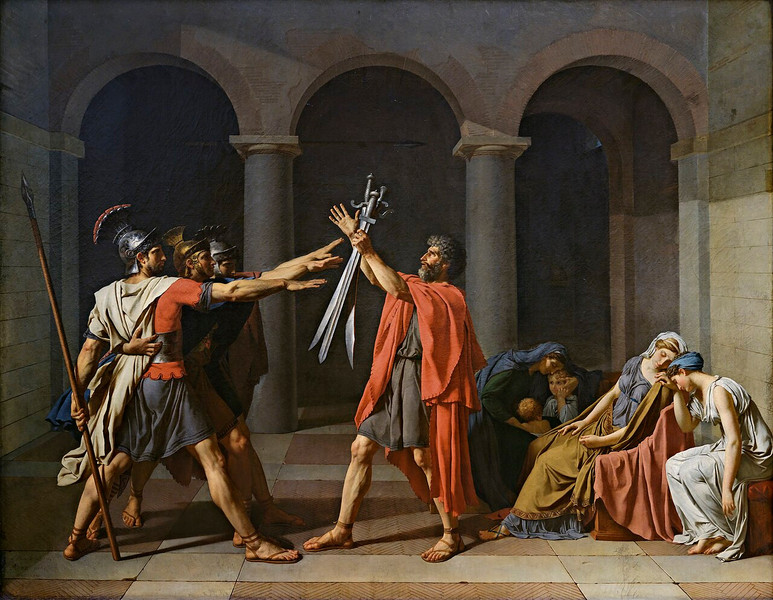
Jacques-Louis David, Oath of the Horatii
Consumer Culture, Privacy, and Leisure
Culture was also changing inside the home. The consumer revolution meant prosperous and middling households bought more goods, thanks to commerce, colonial trade, and manufacturing.
- Porcelain dishes
- Cotton and linens for home décor
- Mirrors
- Prints
Homes increasingly had specialized rooms and private retreats such as the boudoir. Novels encouraged reflection on private emotion, so privacy was physical and emotional.
Leisure became commercial and social at the same time.
- Coffeehouses
- Taverns
- Theaters and opera houses
- Concerts
- Pleasure gardens
These places mixed buying things with discussing news, judging culture, and forming opinions. Culture reached more people, but it still rested on hierarchy and often on colonial labor.
Key Takeaways
Bourgeoisie
The propertied urban and commercial middle classes whose values increasingly shaped eighteenth-century art, literature, consumption, and domestic culture
Print Culture
The expanding production and circulation of newspapers, books, pamphlets, periodicals, prints, and encyclopedias for a growing literate public
Encyclopédie
Diderot and d’Alembert’s 1751–1772 compilation of useful knowledge that publicized Enlightenment criticism despite government censorship
Denis Diderot
Enlightenment writer who principally edited the Encyclopédie and used works such as Supplement to the Voyage of Bougainville to criticize European conventions and colonialism
Public Opinion
Collectively expressed judgments about public issues formed by an expanding reading and discussing public outside direct official control
Public Sphere
The realm of discussion and cultural exchange between private household life and official state authority
Coffeehouses
Commercial venues where mainly male merchants, professionals, writers, and readers consumed beverages, read periodicals, and exchanged political and commercial news
Salons
Elite gatherings, often organized by women, that brought nobles, intellectuals, artists, and prosperous commoners together for structured conversation
Noble Savage
An idealized image of naturally virtuous non-European peoples used to contrast presumed natural simplicity with the corruption of European civilization
Baroque
Grand, dramatic, emotional, and richly ornamented art and music used into about 1750 to inspire religious devotion and display monarchical power
Gian Lorenzo Bernini
Baroque sculptor and architect whose Ecstasy of Saint Teresa used movement, expression, and theatrical lighting to make Catholic devotion emotionally immediate
Johann Sebastian Bach
Baroque composer whose technically complex cantatas and Saint Matthew Passion expressed Lutheran faith within church and municipal patronage
George Frideric Handel
Baroque composer whose Water Music served royal display and whose Messiah brought Christian themes to paying public audiences
Rococo
A light, intimate, ornate style featuring delicate colors, curved forms, romantic play, and aristocratic leisure in private settings
Jean-Antoine Watteau
Rococo painter whose Pilgrimage to Cythera portrayed aristocratic love and leisure in an idealized landscape
Jean-Honoré Fragonard
Rococo painter whose The Swing depicted flirtation, luxury, and erotic play in a private aristocratic setting
Dutch Golden Age Painting
Market-oriented art for urban buyers that commonly depicted domestic interiors, family life, landscapes, still lifes, and civic or professional groups
Johannes Vermeer
Dutch painter whose quiet interior scenes emphasized domestic activity, material comfort, literacy, and carefully ordered household space
Rembrandt van Rijn
Dutch artist who produced portraits and group paintings for urban patrons, including The Anatomy Lesson of Dr. Nicolaes Tulp
Novel
An extended prose narrative suited to print commerce and the exploration of individual development, domestic conflict, morality, economic ambition, and inward emotion
Daniel Defoe
Author of Robinson Crusoe, which celebrated resourcefulness, labor, trade, and property while reflecting assumptions of European colonialism
Samuel Richardson
Author of Pamela, an epistolary novel that used letters to reveal a young woman’s private thoughts and moral struggles
Henry Fielding
Author of Tom Jones, a comic novel that used social satire to portray a broad range of eighteenth-century English society
Johann Wolfgang von Goethe
Author of The Sorrows of Young Werther, which centered intense individual emotion and anticipated Romanticism
Jane Austen
Novelist who used irony to examine courtship, property, rank, manners, and women’s constrained choices in works such as Pride and Prejudice
Neoclassicism
A late-eighteenth-century revival of Greek and Roman forms emphasizing clarity, order, restraint, civic virtue, citizenship, and public duty
Jacques-Louis David
Neoclassical painter whose Oath of the Horatii elevated discipline, sacrifice, and civic duty above private emotion and luxury
Panthéon
A Neoclassical Paris building begun as a church and converted in 1791 into a secular mausoleum honoring distinguished citizens
Joseph Haydn
Composer whose long service to the Esterházy family exemplified the persistence of aristocratic musical patronage
Wolfgang Amadeus Mozart
Composer who sought support through concerts, commissions, published music, and opera, revealing both the opportunities and insecurity of a commercial market
Consumer Revolution
The eighteenth-century expansion in everyday purchasing of household goods and imported commodities, especially among prosperous and middling households
Boudoir
A small private sitting or dressing room, conventionally associated with an elite woman, that reflected the growing desire for privacy within the home
Notes
Bourgeoisie
The propertied urban and commercial middle classes whose values increasingly shaped eighteenth-century art, literature, consumption, and domestic culture
Print Culture
The expanding production and circulation of newspapers, books, pamphlets, periodicals, prints, and encyclopedias for a growing literate public
Encyclopédie
Diderot and d’Alembert’s 1751–1772 compilation of useful knowledge that publicized Enlightenment criticism despite government censorship
Denis Diderot
Enlightenment writer who principally edited the Encyclopédie and used works such as Supplement to the Voyage of Bougainville to criticize European conventions and colonialism
Public Opinion
Collectively expressed judgments about public issues formed by an expanding reading and discussing public outside direct official control
Public Sphere
The realm of discussion and cultural exchange between private household life and official state authority
Coffeehouses
Commercial venues where mainly male merchants, professionals, writers, and readers consumed beverages, read periodicals, and exchanged political and commercial news
Salons
Elite gatherings, often organized by women, that brought nobles, intellectuals, artists, and prosperous commoners together for structured conversation
Noble Savage
An idealized image of naturally virtuous non-European peoples used to contrast presumed natural simplicity with the corruption of European civilization
Baroque
Grand, dramatic, emotional, and richly ornamented art and music used into about 1750 to inspire religious devotion and display monarchical power
Gian Lorenzo Bernini
Baroque sculptor and architect whose Ecstasy of Saint Teresa used movement, expression, and theatrical lighting to make Catholic devotion emotionally immediate
Johann Sebastian Bach
Baroque composer whose technically complex cantatas and Saint Matthew Passion expressed Lutheran faith within church and municipal patronage
George Frideric Handel
Baroque composer whose Water Music served royal display and whose Messiah brought Christian themes to paying public audiences
Rococo
A light, intimate, ornate style featuring delicate colors, curved forms, romantic play, and aristocratic leisure in private settings
Jean-Antoine Watteau
Rococo painter whose Pilgrimage to Cythera portrayed aristocratic love and leisure in an idealized landscape
Jean-Honoré Fragonard
Rococo painter whose The Swing depicted flirtation, luxury, and erotic play in a private aristocratic setting
Dutch Golden Age Painting
Market-oriented art for urban buyers that commonly depicted domestic interiors, family life, landscapes, still lifes, and civic or professional groups
Johannes Vermeer
Dutch painter whose quiet interior scenes emphasized domestic activity, material comfort, literacy, and carefully ordered household space
Rembrandt van Rijn
Dutch artist who produced portraits and group paintings for urban patrons, including The Anatomy Lesson of Dr. Nicolaes Tulp
Novel
An extended prose narrative suited to print commerce and the exploration of individual development, domestic conflict, morality, economic ambition, and inward emotion
Daniel Defoe
Author of Robinson Crusoe, which celebrated resourcefulness, labor, trade, and property while reflecting assumptions of European colonialism
Samuel Richardson
Author of Pamela, an epistolary novel that used letters to reveal a young woman’s private thoughts and moral struggles
Henry Fielding
Author of Tom Jones, a comic novel that used social satire to portray a broad range of eighteenth-century English society
Johann Wolfgang von Goethe
Author of The Sorrows of Young Werther, which centered intense individual emotion and anticipated Romanticism
Jane Austen
Novelist who used irony to examine courtship, property, rank, manners, and women’s constrained choices in works such as Pride and Prejudice
Neoclassicism
A late-eighteenth-century revival of Greek and Roman forms emphasizing clarity, order, restraint, civic virtue, citizenship, and public duty
Jacques-Louis David
Neoclassical painter whose Oath of the Horatii elevated discipline, sacrifice, and civic duty above private emotion and luxury
Panthéon
A Neoclassical Paris building begun as a church and converted in 1791 into a secular mausoleum honoring distinguished citizens
Joseph Haydn
Composer whose long service to the Esterházy family exemplified the persistence of aristocratic musical patronage
Wolfgang Amadeus Mozart
Composer who sought support through concerts, commissions, published music, and opera, revealing both the opportunities and insecurity of a commercial market
Consumer Revolution
The eighteenth-century expansion in everyday purchasing of household goods and imported commodities, especially among prosperous and middling households
Boudoir
A small private sitting or dressing room, conventionally associated with an elite woman, that reflected the growing desire for privacy within the home
