Topic 4.1 Notes – Contextualizing the Scientific Revolution and the Enlightenment
How Reason Gained More Authority in Europe
The Scientific Revolution and the Enlightenment are connected, but they are not the same thing. The Scientific Revolution asked how nature works. The Enlightenment asked whether the same habits of inquiry could be used on government, religion, society, law, and the economy.
Europe had long relied on Christian teaching, ancient authorities like Aristotle, Ptolemy, and Galen, monarchy, social hierarchy, and mercantilism. What changed was the growing belief that truth should be tested through evidence and argument.
- Scientific Revolution focused on observation, experimentation, and mathematics.
- Enlightenment applied similar thinking to human institutions.
- This was not a total break. Many thinkers stayed religious, and astrology and alchemy still mattered.
Core terms
- Empiricism means knowledge from observation and experience.
- Rationalism means trust in reason and logical thinking.
- Skepticism means questioning claims instead of accepting authority automatically.
- Inductive reasoning moves from specific examples to general rules.
- Deductive reasoning starts with general principles and reasons toward conclusions.
Isaac Newton’s Principia in 1687 became the best symbol of this shift. Newton showed that motion and gravity could be explained by universal mathematical laws. That suggested a huge idea. If nature had laws, maybe society did too.
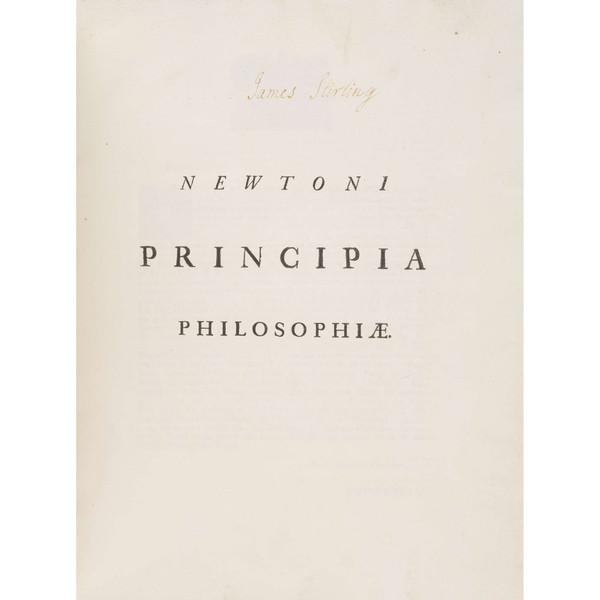
Title page from Newton’s Principia
What Prepared Europe for the Scientific Revolution and Enlightenment
Several earlier developments made this new confidence in reason possible.
Renaissance humanism
Humanists recovered Greek and Roman texts and used philology, careful comparison of language and manuscripts, to get “back to the sources.” That built respect for antiquity, but it also exposed ancient mistakes. Once old texts could be corrected, authority looked less untouchable.
Printing and rising literacy
The Gutenberg printing press made ideas move much faster.
- Books, diagrams, pamphlets, and arguments could spread across Europe.
- Scholars could compare findings and build on each other’s work.
- Censorship existed, but it never fully stopped circulation.
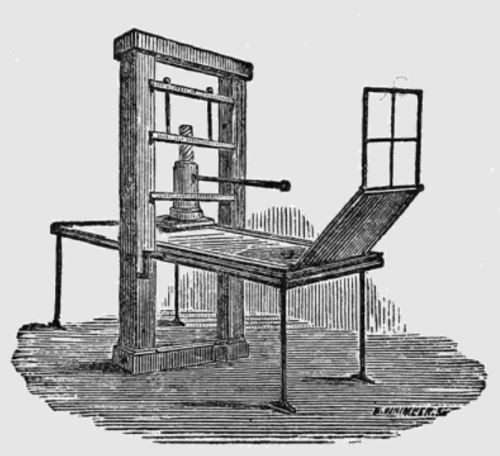
Early hand-operated printing press
Reformation and religious conflict
When Luther challenged the Catholic Church, he helped prove that major authority could be questioned. Religious division also increased literacy and publishing. After the Thirty Years’ War, the Peace of Westphalia (1648) showed how destructive enforced religious unity could be. That helped grow interest in toleration and political order not based only on religion.
Exploration and the Commercial Revolution
Overseas exploration exposed gaps in classical knowledge and created practical demand for better astronomy, maps, navigation, and instruments. Growing merchant and professional classes also created readers for new ideas. One contradiction sits right here: ideas about universal reason developed alongside empire and Atlantic slavery.
The Political and Social World Enlightenment Thinkers Reacted Against
By the late 1600s and 1700s, reason was being aimed at a very specific world.
- Absolutism and divine-right monarchy were strongest in the model of Louis XIV.
- The English Civil War and Glorious Revolution gave a constitutional contrast.
- Mercantilism tied economic policy to state power through regulation.
- Established churches shaped education, censorship, and public order.
- Society was hierarchical through estates, legal privilege, guilds, patriarchy, and inherited status.
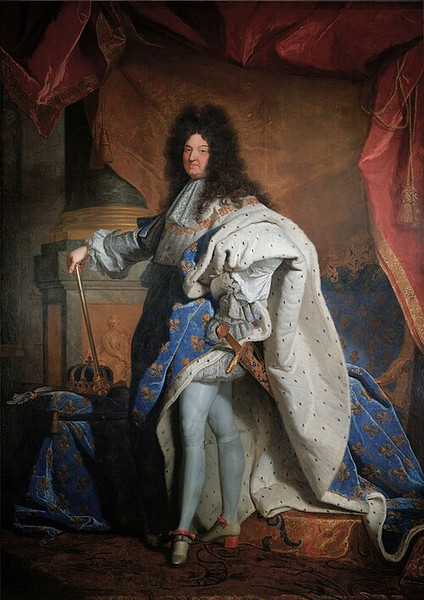
Louis XIV in coronation robes
Population growth, urbanization, and consumer culture created more private life and more readers. Salons and discussion networks expanded, but poverty and inequality remained severe.
How Ideas Spread Beyond Scholars
Ideas mattered because they traveled.
Print culture and the Republic of Letters
The Republic of Letters was a cross-border exchange of books, letters, and criticism among educated Europeans. French became a major language of elite intellectual life.
Public sphere venues
Enlightenment ideas spread in places people gathered:
- Salons
- Coffeehouses
- Academies
- Lending libraries
- Masonic lodges
- Theaters and taverns
These spaces helped turn private thought into public discussion.
State-supported science
- Royal Society of London founded 1660
- French Academy of Sciences founded 1666
Rulers supported science for prestige, war, navigation, and administration.
Women’s role
Women, especially salonnières, patrons, and readers, helped circulate ideas. They still remained mostly excluded from formal politics, which is one of the era’s clearest limits.
Why the New Emphasis on Reason Mattered and Why It Stayed Contested
Enlightenment thinkers used reason to challenge divine-right rule, mercantilism, religious intolerance, arbitrary punishment, and inherited privilege.
Some supported deism or natural religion, which pictured a rational creator but reduced the role of miracles and church dogma. Support for toleration grew after religious violence, but it stayed incomplete, especially for Jews, dissenters, and nonbelievers.
Older beliefs remained strong. Church authority, censorship, popular religion, and revivals like Pietism all pushed back against pure rationalism.
The biggest contradiction is easy to test on exams. Europeans used universal rights language while keeping slavery, empire, and women’s exclusion. Mary Wollstonecraft and Condorcet exposed those limits.
The chain to remember is this: humanism → print → Reformation conflict → Westphalia → state competition and commerce → scientific method → Enlightenment critique of society and government.
Key Takeaways
Scientific Revolution
Transformation of the study of nature through greater reliance on observation, experimentation, mathematics, and testable explanations
Enlightenment
Diverse late-17th- and 18th-century movement that applied reasoned criticism to government, society, economics, religion, law, and ethics
Scholasticism
University tradition that used logic to reconcile Christian theology with ancient authorities, especially Aristotle
Natural Philosophy
Early modern investigation of nature, encompassing fields later identified as science and often overlapping with theology, astrology, and alchemy
Empiricism
The view that reliable knowledge is grounded in sensory experience, observation, and experiment
Rationalism
The view that reason and logically ordered principles are major sources of reliable knowledge
Inductive Reasoning
Reasoning from particular observations toward broader generalizations
Deductive Reasoning
Reasoning from general principles to conclusions that logically follow from them
Skepticism
The practice of subjecting claims to doubt and critical examination rather than accepting them solely on tradition or authority
Scientific Method
Systematic investigation combining observation and controlled experiment with repeatability, rational analysis, and mathematical description
Scientific Academies
State-supported institutions, such as the Royal Society and French Academy of Sciences, that organized communication, observation, and experiment
Idea of Progress
Enlightenment belief that accumulating knowledge and rational reform could improve society rather than leave it bound to inherited arrangements
Deism / Natural Religion
Belief that reason and observation of nature reveal a creator while minimizing or rejecting miracles, revelation, and church doctrine
Religious Toleration
Limited or broad permission for people to practice differing religions without state coercion or persecution
Public Sphere
Social realm in which people discussed matters of general concern outside the direct control of the state or established church
Republic of Letters
International network through which writers, scholars, officials, and educated readers exchanged books, letters, and ideas across state boundaries
Salons
Elite social and intellectual gatherings, often hosted by women, where Enlightenment ideas were discussed and popularized
Coffeehouses
Urban meeting places where readers, merchants, and other groups encountered news and debated commercial and intellectual issues
Masonic Lodges
Associations that cultivated sociability and intellectual exchange across some confessional and status boundaries
Consumer Revolution
Expansion in the purchase and use of goods that increased domestic comfort, specialized private spaces, and attention to family life
Contextualization
Identifying broader circumstances and explaining how they made a historical development possible, meaningful, or likely
Notes
Scientific Revolution
Transformation of the study of nature through greater reliance on observation, experimentation, mathematics, and testable explanations
Enlightenment
Diverse late-17th- and 18th-century movement that applied reasoned criticism to government, society, economics, religion, law, and ethics
Scholasticism
University tradition that used logic to reconcile Christian theology with ancient authorities, especially Aristotle
Natural Philosophy
Early modern investigation of nature, encompassing fields later identified as science and often overlapping with theology, astrology, and alchemy
Empiricism
The view that reliable knowledge is grounded in sensory experience, observation, and experiment
Rationalism
The view that reason and logically ordered principles are major sources of reliable knowledge
Inductive Reasoning
Reasoning from particular observations toward broader generalizations
Deductive Reasoning
Reasoning from general principles to conclusions that logically follow from them
Skepticism
The practice of subjecting claims to doubt and critical examination rather than accepting them solely on tradition or authority
Scientific Method
Systematic investigation combining observation and controlled experiment with repeatability, rational analysis, and mathematical description
Scientific Academies
State-supported institutions, such as the Royal Society and French Academy of Sciences, that organized communication, observation, and experiment
Idea of Progress
Enlightenment belief that accumulating knowledge and rational reform could improve society rather than leave it bound to inherited arrangements
Deism / Natural Religion
Belief that reason and observation of nature reveal a creator while minimizing or rejecting miracles, revelation, and church doctrine
Religious Toleration
Limited or broad permission for people to practice differing religions without state coercion or persecution
Public Sphere
Social realm in which people discussed matters of general concern outside the direct control of the state or established church
Republic of Letters
International network through which writers, scholars, officials, and educated readers exchanged books, letters, and ideas across state boundaries
Salons
Elite social and intellectual gatherings, often hosted by women, where Enlightenment ideas were discussed and popularized
Coffeehouses
Urban meeting places where readers, merchants, and other groups encountered news and debated commercial and intellectual issues
Masonic Lodges
Associations that cultivated sociability and intellectual exchange across some confessional and status boundaries
Consumer Revolution
Expansion in the purchase and use of goods that increased domestic comfort, specialized private spaces, and attention to family life
Contextualization
Identifying broader circumstances and explaining how they made a historical development possible, meaningful, or likely
