Topic 9.3 Notes – The Cold War
What the Cold War Was
The Cold War lasted from the mid-1940s to 1991. It was “cold” because the U.S. and USSR never fought a sustained direct war against each other, but the conflict was still intense and dangerous.
- The West centered on capitalism, liberal democracy, and U.S. leadership.
- The Soviet bloc centered on communism, one-party rule, and state planning.
- Europe was the first main battleground. Later, the rivalry spread through proxy wars across the world.
Several causes worked together:
- Ideology
Each side believed its system should shape the future. That made compromise hard.
- Distrust
This went back before 1945. The Bolshevik Revolution scared Western governments, the West intervened in the Russian Civil War, Stalin had signed the Nazi-Soviet Pact, and wartime allies suspected each other constantly.
- Security fears
The USSR had suffered enormous losses in WWII and wanted a buffer zone in Eastern Europe. The West saw that same policy as Soviet expansion.
- Postwar disputes
Germany, Poland, and Eastern Europe all raised the same question. Who would control them?
- A new power structure
Britain and France were weakened. The world became bipolar, dominated by the U.S. and USSR.
Yalta, Potsdam, and the UN
- Yalta Conference (1945) divided Germany into occupation zones and promised free elections in liberated Europe, though the Allies meant different things by that.
- Potsdam Conference (1945) showed rising tension after Germany’s defeat and the U.S. atomic bomb test.
- The United Nations was created in 1945 to preserve cooperation, but superpower vetoes often blocked action.
How Europe Was Divided
The Cold War turned Europe into two opposing camps separated by the Iron Curtain.
This map helps you see the broad division, along with a few important exceptions like Yugoslavia and the neutral states.
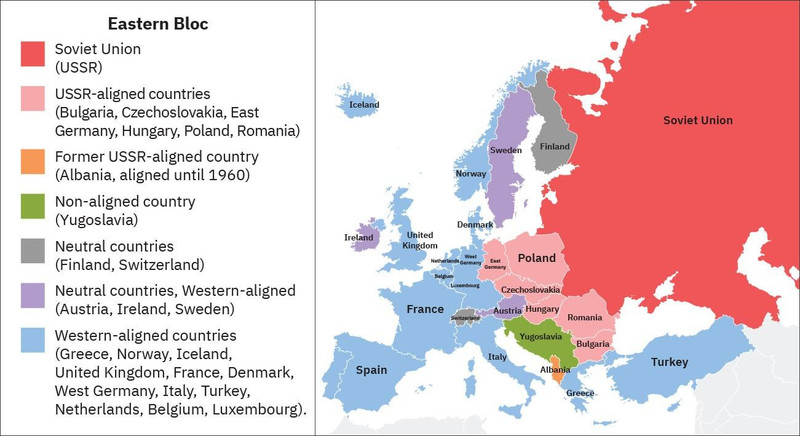
Cold War Europe and the Iron Curtain
Churchill popularized the term in his 1946 speech. It meant more than a border. It was political, military, ideological, and eventually physical separation.
Eastern and Western blocs
- Eastern bloc under Soviet domination: Poland, East Germany, Czechoslovakia, Hungary, Romania, Bulgaria
- Western bloc aligned with the U.S.: Britain, France, Italy, the Low Countries, West Germany
Complications
- Yugoslavia under Tito broke with Stalin in 1948.
- Neutral/nonaligned states included Sweden, Switzerland, Finland, and Austria after 1955.
Hardening of the division
- Containment became the main Western strategy. The goal was to stop communism from spreading.
- Truman Doctrine (1947) promised aid to states resisting communism.
- Marshall Plan (1947) rebuilt Western Europe and tied it more closely to the U.S.
- Berlin Blockade and Airlift (1948-49) showed how dangerous Berlin was. West Berlin stayed free because supplies flew in.
- Germany split in 1949 into the FRG (West Germany) and GDR (East Germany).
- NATO (1949) bound the West militarily.
- COMECON tied the Eastern bloc economically.
- Warsaw Pact (1955) became the Eastern military alliance.
How the Cold War Was Fought
This rivalry used several methods at once.
Propaganda
- The West praised freedom, religion, consumer goods, and broadcasts like Radio Free Europe and Voice of America.
- The USSR praised equality, anti-imperialism, and planned economic progress.
- The space race was propaganda too: Sputnik (1957), Yuri Gagarin (1961), Apollo 11 (1969).
Espionage and covert action
- Major agencies included the CIA, KGB, and British intelligence.
- The U.S. secretly influenced the Italian election of 1948.
- The Iran coup of 1953 overthrew Mohammad Mossadegh.
- The U-2 incident (1960) embarrassed the U.S. when pilot Francis Gary Powers was shot down.
Arms race and brinkmanship
- Soviet atomic bomb in 1949
- Hydrogen bombs: U.S. 1952, USSR 1953
- Both sides built ICBMs, submarine missiles, and huge nuclear stockpiles.
Deterrence meant preventing attack by threatening massive retaliation. MAD, mutually assured destruction, meant both sides could destroy each other even after being hit first.
Cuban Missile Crisis
This was the clearest example of brinkmanship. The map helps show why missiles in Cuba caused such panic in Washington, since Cuba sat within striking distance of a large part of the United States.
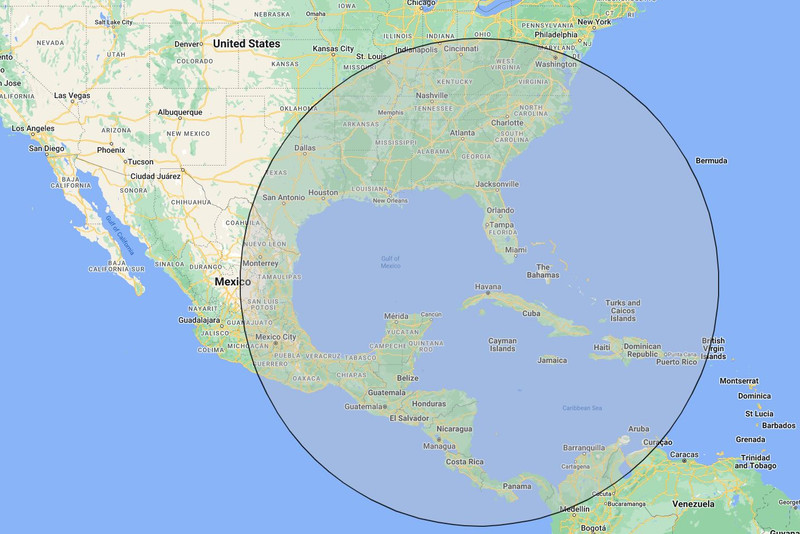
Cuba's strategic proximity to the United States
- Bay of Pigs (1961) failed and pushed Castro closer to the USSR.
- Khrushchev placed missiles in Cuba.
- Kennedy answered with a naval quarantine.
- The USSR withdrew missiles.
- The U.S. publicly promised not to invade Cuba and secretly removed missiles from Turkey.
Détente
Tensions eased somewhat through arms control:
- Limited Test Ban Treaty (1963)
- Nuclear Non-Proliferation Treaty (1968)
- SALT I and ABM Treaty (1972)
Tension rose again in the late 1970s.
Hot Wars and Global Effects
The Cold War became global because the superpowers backed opposite sides in regional wars.
| War | Sides | Result |
|---|---|---|
| Korean War 1950-53 | North Korea backed by USSR/China; South by U.S./UN | Armistice near the 38th parallel |
| Vietnam War | North Vietnam under Ho Chi Minh backed by USSR/China; South by U.S. | Saigon fell in 1975 |
| Yom Kippur War 1973 | Egypt and Syria attacked Israel; U.S. backed Israel, USSR backed Arab states | Cease-fire; tied to oil crisis |
| Afghanistan 1979-89 | USSR backed communist government; mujahideen backed by U.S., Pakistan, Saudi Arabia | Major Soviet drain |
These wars matter because they show the pattern. Europe stayed divided, but much of the bloodshed happened in Asia, Africa, Latin America, and the Middle East. Nuclear fear shaped politics and culture everywhere. Both sides also betrayed their own ideals by supporting harsh regimes when strategy mattered more than principle.
Key Takeaways
Cold War
The mid-1940s–1991 political, ideological, economic, military, and cultural rivalry between the U.S.-led Western bloc and Soviet-led Eastern bloc without sustained direct war
Limited Hot War
An armed conflict contained geographically or politically enough to avoid becoming a direct general war between the United States and Soviet Union
Proxy War
A regional conflict in which the superpowers supported opposing states or movements rather than fighting one another directly
Security Dilemma
A situation in which one state's defensive measures appear aggressive to another, provoking countermeasures that make both less secure
Yalta Conference
The February 1945 Allied meeting that arranged occupation zones in Germany and Berlin and endorsed ambiguously defined democratic elections in liberated Europe
Potsdam Conference
The July–August 1945 Allied meeting at which growing distrust over Germany, Eastern Europe, and Soviet-backed governments revealed the wartime alliance's breakdown
Bipolar International Order
The postwar world system organized primarily around two superpowers, the United States and Soviet Union, rather than a European balance of power
United Nations
The international organization founded in 1945 to preserve peace and cooperation, though superpower vetoes often limited action on Cold War disputes
Iron Curtain
The political, military, ideological, and increasingly physical boundary separating Soviet-dominated Eastern Europe from Western Europe
Containment
The Western strategy of preventing further communist expansion rather than overthrowing every government already under communist rule
Truman Doctrine
The 1947 American commitment to support Greece and Turkey against communist pressure as part of containment
Marshall Plan
American economic aid that strengthened Western European reconstruction and containment while the Soviet Union barred its satellites from participating
North Atlantic Treaty Organization (NATO)
The Western military alliance created in 1949 that bound Western Europe and North America together against the Soviet bloc
Council for Mutual Economic Assistance (COMECON)
The Soviet-bloc economic organization that helped bind the communist states of Eastern Europe to the USSR.
Warsaw Pact
The Soviet-led military alliance established in 1955 to organize the armed forces of the Eastern bloc
Cold War Propaganda
Speeches, media, education, culture, and public displays used by each bloc to praise its system and discredit the other
Space Race
U.S.-Soviet competition in satellites and human spaceflight used to demonstrate scientific, military, and ideological superiority
Espionage vs. Covert Action
Espionage secretly gathers information; covert action secretly attempts to change political outcomes
U-2 Incident
The 1960 Soviet downing of Francis Gary Powers's American reconnaissance plane, exposing U.S. deception and helping collapse a planned summit
Cold War Arms Race
The U.S.-Soviet buildup of conventional forces and increasingly destructive nuclear weapons, missiles, bombers, and submarines
Nuclear Deterrence
Preventing attack by convincing an opponent that aggression would produce unacceptable nuclear retaliation
Mutually Assured Destruction (MAD)
The condition in which both superpowers could survive a first strike and retaliate with enough nuclear force to destroy the attacker
Brinkmanship
The willingness to approach the edge of war to force an opponent to retreat, despite the risk of catastrophic miscalculation
Bay of Pigs Invasion
The failed American-backed 1961 invasion of Cuba that strengthened Fidel Castro's reliance on the Soviet Union
Cuban Missile Crisis
The 1962 confrontation over Soviet nuclear missiles in Cuba that ended with their removal, a U.S. noninvasion pledge, and secret removal of U.S. missiles from Turkey
Détente
The period of reduced U.S.-Soviet tension from the later 1960s through the 1970s, characterized by negotiation without ending Cold War competition
Limited Nuclear Test Ban Treaty
The 1963 agreement prohibiting nuclear tests in the atmosphere, outer space, and underwater
Nuclear Non-Proliferation Treaty
The 1968 agreement intended to prevent the spread of nuclear weapons to additional states
Strategic Arms Limitation Talks I (SALT I)
The 1972 U.S.-Soviet agreement that placed limits on parts of the two superpowers' strategic nuclear forces
Anti-Ballistic Missile Treaty
The 1972 U.S.-Soviet treaty limiting systems designed to defend against ballistic missiles
Korean War
The 1950–1953 war in which U.S.-led UN forces defended South Korea against Soviet-supported North Korea and Chinese intervention, leaving Korea divided
Vietnam War
The Cold War-era conflict in which the U.S. supported South Vietnam against Soviet- and Chinese-backed communist forces, ending with communist reunification in 1975
Yom Kippur War
The 1973 Egyptian-Syrian attack on U.S.-supported Israel, backed by Soviet aid, that raised superpower tensions and helped trigger an Arab oil embargo
Soviet Invasion of Afghanistan
The 1979–1989 Soviet war to preserve Afghanistan's communist government against foreign-supported mujahideen, weakening détente and burdening the USSR.
Angolan Civil War
A post-1975 conflict in which the USSR and Cuba supported the Marxist MPLA government while the U.S. and South Africa supported its opponents
Non-Aligned Movement
A movement of states seeking independent action rather than formal alignment with either Cold War bloc, though many accepted aid from both
Berlin Blockade
The 1948–1949 Soviet cutoff of Western land access to West Berlin, intended to pressure the Western powers
Berlin Airlift
The successful Western operation that supplied West Berlin by air until the Soviet blockade ended in 1949
Federal Republic of Germany (West Germany)
The Western-aligned German state created from the western occupation zones in May 1949, with West Berlin tied to it politically and economically
German Democratic Republic (East Germany)
The Soviet-aligned German state created from the Soviet occupation zone in October 1949
Notes
Cold War
The mid-1940s–1991 political, ideological, economic, military, and cultural rivalry between the U.S.-led Western bloc and Soviet-led Eastern bloc without sustained direct war
Limited Hot War
An armed conflict contained geographically or politically enough to avoid becoming a direct general war between the United States and Soviet Union
Proxy War
A regional conflict in which the superpowers supported opposing states or movements rather than fighting one another directly
Security Dilemma
A situation in which one state's defensive measures appear aggressive to another, provoking countermeasures that make both less secure
Yalta Conference
The February 1945 Allied meeting that arranged occupation zones in Germany and Berlin and endorsed ambiguously defined democratic elections in liberated Europe
Potsdam Conference
The July–August 1945 Allied meeting at which growing distrust over Germany, Eastern Europe, and Soviet-backed governments revealed the wartime alliance's breakdown
Bipolar International Order
The postwar world system organized primarily around two superpowers, the United States and Soviet Union, rather than a European balance of power
United Nations
The international organization founded in 1945 to preserve peace and cooperation, though superpower vetoes often limited action on Cold War disputes
Iron Curtain
The political, military, ideological, and increasingly physical boundary separating Soviet-dominated Eastern Europe from Western Europe
Containment
The Western strategy of preventing further communist expansion rather than overthrowing every government already under communist rule
Truman Doctrine
The 1947 American commitment to support Greece and Turkey against communist pressure as part of containment
Marshall Plan
American economic aid that strengthened Western European reconstruction and containment while the Soviet Union barred its satellites from participating
North Atlantic Treaty Organization (NATO)
The Western military alliance created in 1949 that bound Western Europe and North America together against the Soviet bloc
Council for Mutual Economic Assistance (COMECON)
The Soviet-bloc economic organization that helped bind the communist states of Eastern Europe to the USSR.
Warsaw Pact
The Soviet-led military alliance established in 1955 to organize the armed forces of the Eastern bloc
Cold War Propaganda
Speeches, media, education, culture, and public displays used by each bloc to praise its system and discredit the other
Space Race
U.S.-Soviet competition in satellites and human spaceflight used to demonstrate scientific, military, and ideological superiority
Espionage vs. Covert Action
Espionage secretly gathers information; covert action secretly attempts to change political outcomes
U-2 Incident
The 1960 Soviet downing of Francis Gary Powers's American reconnaissance plane, exposing U.S. deception and helping collapse a planned summit
Cold War Arms Race
The U.S.-Soviet buildup of conventional forces and increasingly destructive nuclear weapons, missiles, bombers, and submarines
Nuclear Deterrence
Preventing attack by convincing an opponent that aggression would produce unacceptable nuclear retaliation
Mutually Assured Destruction (MAD)
The condition in which both superpowers could survive a first strike and retaliate with enough nuclear force to destroy the attacker
Brinkmanship
The willingness to approach the edge of war to force an opponent to retreat, despite the risk of catastrophic miscalculation
Bay of Pigs Invasion
The failed American-backed 1961 invasion of Cuba that strengthened Fidel Castro's reliance on the Soviet Union
Cuban Missile Crisis
The 1962 confrontation over Soviet nuclear missiles in Cuba that ended with their removal, a U.S. noninvasion pledge, and secret removal of U.S. missiles from Turkey
Détente
The period of reduced U.S.-Soviet tension from the later 1960s through the 1970s, characterized by negotiation without ending Cold War competition
Limited Nuclear Test Ban Treaty
The 1963 agreement prohibiting nuclear tests in the atmosphere, outer space, and underwater
Nuclear Non-Proliferation Treaty
The 1968 agreement intended to prevent the spread of nuclear weapons to additional states
Strategic Arms Limitation Talks I (SALT I)
The 1972 U.S.-Soviet agreement that placed limits on parts of the two superpowers' strategic nuclear forces
Anti-Ballistic Missile Treaty
The 1972 U.S.-Soviet treaty limiting systems designed to defend against ballistic missiles
Korean War
The 1950–1953 war in which U.S.-led UN forces defended South Korea against Soviet-supported North Korea and Chinese intervention, leaving Korea divided
Vietnam War
The Cold War-era conflict in which the U.S. supported South Vietnam against Soviet- and Chinese-backed communist forces, ending with communist reunification in 1975
Yom Kippur War
The 1973 Egyptian-Syrian attack on U.S.-supported Israel, backed by Soviet aid, that raised superpower tensions and helped trigger an Arab oil embargo
Soviet Invasion of Afghanistan
The 1979–1989 Soviet war to preserve Afghanistan's communist government against foreign-supported mujahideen, weakening détente and burdening the USSR.
Angolan Civil War
A post-1975 conflict in which the USSR and Cuba supported the Marxist MPLA government while the U.S. and South Africa supported its opponents
Non-Aligned Movement
A movement of states seeking independent action rather than formal alignment with either Cold War bloc, though many accepted aid from both
Berlin Blockade
The 1948–1949 Soviet cutoff of Western land access to West Berlin, intended to pressure the Western powers
Berlin Airlift
The successful Western operation that supplied West Berlin by air until the Soviet blockade ended in 1949
Federal Republic of Germany (West Germany)
The Western-aligned German state created from the western occupation zones in May 1949, with West Berlin tied to it politically and economically
German Democratic Republic (East Germany)
The Soviet-aligned German state created from the Soviet occupation zone in October 1949
