Topic 7.2 Notes – Nationalism
What Nationalism Meant in Nineteenth-Century Europe
Nationalism said your nation should get your highest political loyalty and should have political institutions that express who “your people” are.
- A nation is a people who believe they share language, history, culture, religion, memories, or identity.
- A state is a government that rules a territory.
- A nation-state is a state that claims to represent one nation.
- Patriotism is loyalty to your country or state. It does not always mean the borders match one national group.
The core nationalist claim was simple. Political borders should match the nation more closely.
That mattered after 1815 because Europe’s map did not match national identities very well. This map gives you the basic problem nationalists wanted to solve. Germans and Italians were split among many states, and the Austrian, Ottoman, and Russian Empires ruled many peoples.
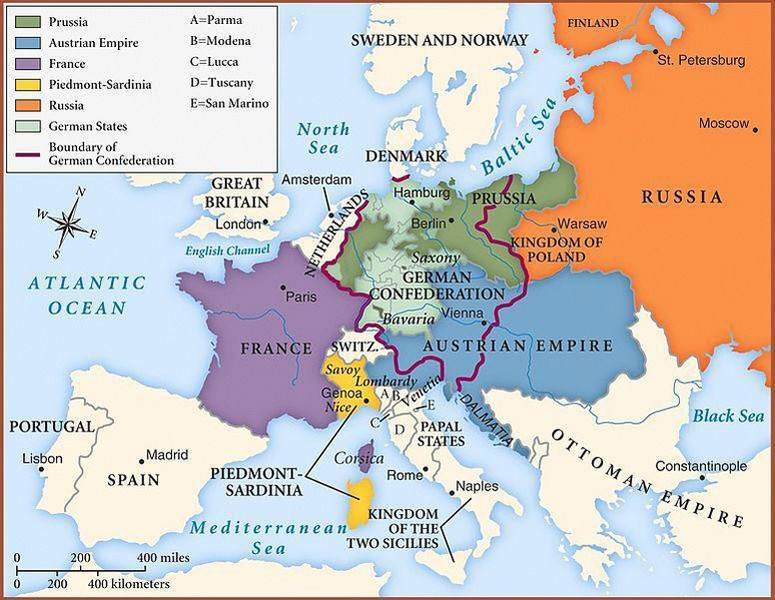
Europe after 1815
The French Revolution and Napoleon had already spread popular sovereignty, the idea that authority comes from the people or nation, and they also stirred resistance to foreign domination. The Congress of Vienna ignored national self-determination and restored dynastic rule, so nationalism became a challenge to the Vienna system.
One tension runs through this whole topic:
- Civic nationalism tied the nation to citizenship and political loyalty.
- Ethnic nationalism tied the nation to ancestry, language, religion, or “blood.”
How Nationalists Built Loyalty to the Nation
Nationalism did not just appear. People built it through culture, education, and symbols.
Major tools included:
- Romantic idealism that celebrated feeling, history, and the unique spirit of a people
- Language standardization so scattered populations could imagine themselves as one community
- Folklore and legends treated as proof of an ancient national spirit
- Heroes, flags, monuments, festivals, and schools that taught shared memory
Fichte
J. G. Fichte wrote Addresses to the German Nation during Napoleonic domination. He argued that shared language and education could create German unity even before a German state existed.
Grimm Brothers
The Grimm Brothers collected German folktales. In this context, fairy tales were political. They seemed to preserve the authentic voice of the German people.
Mazzini
Giuseppe Mazzini founded Young Italy in 1831. He tied nationalism to liberal republicanism and wanted a unified, independent Italian republic led by the people.
Pan-Slavists
Pan-Slavists stressed shared Slavic language and culture. Some wanted cultural cooperation, some autonomy, some political unity. That threatened Habsburg and Ottoman control.
How Nationalism Changed Politics and States
Early nationalism often worked with liberalism. Nationalists often wanted constitutions, representative government, civil equality, and an end to absolutism, dynastic privilege, and foreign rule.
Nationalism could move politics in two directions:
- Unification of divided peoples, like Italians and Germans
- Autonomy or independence for peoples inside empires
After 1848, conservative rulers learned to use nationalism themselves. This is nationalism from above.
- Napoleon III used plebiscites, public works, military prestige, and national glory to build support for authoritarian empire.
- Cavour, prime minister of Piedmont-Sardinia, used diplomacy and war to make Piedmont lead Italian unification. He was far more practical and monarchist than Mazzini.
- Bismarck used diplomacy, war, and German nationalism to unify Germany under Prussian leadership.
In multinational empires, rulers tried compromise. The Ausgleich of 1867 created Austria-Hungary, a dual monarchy with separate Austrian and Hungarian governments under one Habsburg ruler. It calmed Hungarian demands but left Slavs and others unhappy.
How Nationalism Became Exclusionary
By the late nineteenth century, nationalism often hardened into chauvinism, an aggressive belief in national superiority, and racialism, the idea that nations were biological groups.
That changed the question from “Who are our citizens?” to “Who truly belongs?”
Many Jews in western and central Europe gained civil rights and became acculturated. They entered universities, professions, politics, journalism, and the arts. But anti-Semitism still grew.
Modern anti-Semitism treated Jewishness as racial and permanent. Even fully assimilated Jews could be labeled alien to the nation.
Key examples:
- Adolf Stoecker used anti-Semitic Christian Social politics in Germany.
- Karl Lueger, mayor of Vienna, showed that anti-Semitic mass politics could thrive in a modern city.
- The Dreyfus affair in France exposed the conflict between republican citizenship and exclusionary nationalism. Alfred Dreyfus was falsely convicted of treason in 1894, and Émile Zola’s “J’Accuse…!” attacked the injustice.
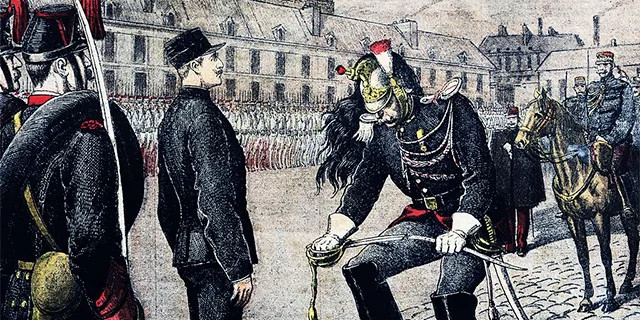
Alfred Dreyfus’s public degradation, 1895
The image shows Dreyfus being publicly stripped of honor, which turned the case into a powerful symbol of how exclusionary nationalism could override justice.
Zionism grew out of that failure of assimilation. Theodor Herzl, in The Jewish State (1896), argued that Jews needed a homeland. The First Zionist Congress met at Basel in 1897.
Key Takeaways
Nation
A community whose members understand themselves as sharing a collective identity and historical destiny
State
A sovereign political organization governing a defined territory
Nation-State
A sovereign state that claims to represent a particular nation, though it may contain cultural or ethnic minorities
Nationalism
The ideology or movement that gives the nation primary political loyalty and seeks institutions expressing its collective identity
Patriotism
Attachment to one's country or state without necessarily demanding that its borders correspond to a particular nation
National Sovereignty
The principle that legitimate political authority belongs to the nation rather than to a monarch or dynasty
National Self-Determination
The principle that a nation should be able to choose its political status and govern itself
Cultural or Romantic Nationalism
Nationalism that uses language, folklore, literature, traditions, and historical memory to present a people as an organic national community
Johann Gottlieb Fichte
German cultural nationalist whose Addresses to the German Nation stressed language, education, and moral regeneration as foundations of German unity
Grimm Brothers
Jacob and Wilhelm Grimm, whose collections of German folktales and linguistic scholarship promoted a shared German culture and historical identity
Giuseppe Mazzini
Italian republican nationalist who envisioned nations as divinely ordained communities and sought popular unification of an independent Italian republic
Young Italy
Organization founded by Mazzini in 1831 to promote a unified, independent Italian republic through popular nationalist action
Pan-Slavism
A movement emphasizing the shared languages, cultures, and histories of Slavic peoples and supporting cooperation, autonomy, or political unity
Liberal Nationalism
Nationalism joining national sovereignty with constitutions, representative institutions, legal equality, and freedom from foreign or absolutist rule
Napoleon III
French ruler who used plebiscites, national glory, economic development, and military prestige to legitimize the authoritarian Second Empire
Camillo di Cavour
Piedmont-Sardinian prime minister who used monarchy, constitutional government, diplomacy, and war to direct Italian nationalism toward unification under Savoy rule
Otto von Bismarck
Conservative Prussian minister-president who used diplomacy, warfare, and German nationalism to unify Germany under Prussian and Hohenzollern leadership
Nationalism from Above
The use of popular national sentiment by an existing ruler or government to unify, expand, or legitimize the state
Chauvinism
Aggressive, uncritical belief in the superiority or interests of one's own nation
National Aggrandizement
The enlargement of a nation's territory, power, prestige, or influence
Racialism
The belief that humanity consists of hereditary racial groups possessing unequal characteristics or worth
Civic Nationalism vs. Ethnic or Racial Nationalism
Civic nationalism bases membership on citizenship and political allegiance; ethnic or racial nationalism bases it on ancestry, language, religion, or supposed blood ties
Jewish Acculturation
The adoption by Jews of the surrounding society's language, education, practices, and public culture without necessarily abandoning Jewish identity
Jewish Emancipation
The uneven extension of civil and political rights to European Jews through Enlightenment, revolutionary, and nineteenth-century liberal reforms
Modern Anti-Semitism
Hostility portraying Jews as a permanent racial or hereditary group alien to the nation regardless of citizenship, conversion, or acculturation
Adolf Stoecker
German Protestant court preacher who organized conservative, Christian, monarchist, and anti-Semitic appeals as a form of mass politics
Christian Social Workers' Party
German party founded by Adolf Stoecker in 1878 to attract lower-middle-class and working-class support through conservative Christian and anti-Semitic appeals
Karl Lueger
Mayor of Vienna from 1897 to 1910 who combined Catholic and lower-middle-class appeals with attacks on Jews and liberal elites
Christian Social Party
Austrian party associated with Karl Lueger that mobilized Catholic and lower-middle-class voters through anti-Semitic attacks on Jews and liberal elites
Dreyfus Affair
French crisis over the false 1894 treason conviction of Jewish officer Alfred Dreyfus; anti-Semitism and an army cover-up divided France before his 1906 exoneration
Zionism
Late nineteenth-century Jewish nationalism seeking a political homeland and collective self-determination in response to persistent anti-Semitism
Theodor Herzl
Central figure in political Zionism who argued in The Jewish State that assimilation could not defeat anti-Semitism and advocated establishing a Jewish state
First Zionist Congress
The 1897 Basel meeting convened by Herzl that endorsed a publicly and legally secured home for the Jewish people in Palestine
Compromise (Ausgleich) of 1867 and the Dual Monarchy
Settlement creating Austria-Hungary, with separate Austrian and Hungarian governments under one Habsburg monarch and shared foreign and military affairs
Notes
Nation
A community whose members understand themselves as sharing a collective identity and historical destiny
State
A sovereign political organization governing a defined territory
Nation-State
A sovereign state that claims to represent a particular nation, though it may contain cultural or ethnic minorities
Nationalism
The ideology or movement that gives the nation primary political loyalty and seeks institutions expressing its collective identity
Patriotism
Attachment to one's country or state without necessarily demanding that its borders correspond to a particular nation
National Sovereignty
The principle that legitimate political authority belongs to the nation rather than to a monarch or dynasty
National Self-Determination
The principle that a nation should be able to choose its political status and govern itself
Cultural or Romantic Nationalism
Nationalism that uses language, folklore, literature, traditions, and historical memory to present a people as an organic national community
Johann Gottlieb Fichte
German cultural nationalist whose Addresses to the German Nation stressed language, education, and moral regeneration as foundations of German unity
Grimm Brothers
Jacob and Wilhelm Grimm, whose collections of German folktales and linguistic scholarship promoted a shared German culture and historical identity
Giuseppe Mazzini
Italian republican nationalist who envisioned nations as divinely ordained communities and sought popular unification of an independent Italian republic
Young Italy
Organization founded by Mazzini in 1831 to promote a unified, independent Italian republic through popular nationalist action
Pan-Slavism
A movement emphasizing the shared languages, cultures, and histories of Slavic peoples and supporting cooperation, autonomy, or political unity
Liberal Nationalism
Nationalism joining national sovereignty with constitutions, representative institutions, legal equality, and freedom from foreign or absolutist rule
Napoleon III
French ruler who used plebiscites, national glory, economic development, and military prestige to legitimize the authoritarian Second Empire
Camillo di Cavour
Piedmont-Sardinian prime minister who used monarchy, constitutional government, diplomacy, and war to direct Italian nationalism toward unification under Savoy rule
Otto von Bismarck
Conservative Prussian minister-president who used diplomacy, warfare, and German nationalism to unify Germany under Prussian and Hohenzollern leadership
Nationalism from Above
The use of popular national sentiment by an existing ruler or government to unify, expand, or legitimize the state
Chauvinism
Aggressive, uncritical belief in the superiority or interests of one's own nation
National Aggrandizement
The enlargement of a nation's territory, power, prestige, or influence
Racialism
The belief that humanity consists of hereditary racial groups possessing unequal characteristics or worth
Civic Nationalism vs. Ethnic or Racial Nationalism
Civic nationalism bases membership on citizenship and political allegiance; ethnic or racial nationalism bases it on ancestry, language, religion, or supposed blood ties
Jewish Acculturation
The adoption by Jews of the surrounding society's language, education, practices, and public culture without necessarily abandoning Jewish identity
Jewish Emancipation
The uneven extension of civil and political rights to European Jews through Enlightenment, revolutionary, and nineteenth-century liberal reforms
Modern Anti-Semitism
Hostility portraying Jews as a permanent racial or hereditary group alien to the nation regardless of citizenship, conversion, or acculturation
Adolf Stoecker
German Protestant court preacher who organized conservative, Christian, monarchist, and anti-Semitic appeals as a form of mass politics
Christian Social Workers' Party
German party founded by Adolf Stoecker in 1878 to attract lower-middle-class and working-class support through conservative Christian and anti-Semitic appeals
Karl Lueger
Mayor of Vienna from 1897 to 1910 who combined Catholic and lower-middle-class appeals with attacks on Jews and liberal elites
Christian Social Party
Austrian party associated with Karl Lueger that mobilized Catholic and lower-middle-class voters through anti-Semitic attacks on Jews and liberal elites
Dreyfus Affair
French crisis over the false 1894 treason conviction of Jewish officer Alfred Dreyfus; anti-Semitism and an army cover-up divided France before his 1906 exoneration
Zionism
Late nineteenth-century Jewish nationalism seeking a political homeland and collective self-determination in response to persistent anti-Semitism
Theodor Herzl
Central figure in political Zionism who argued in The Jewish State that assimilation could not defeat anti-Semitism and advocated establishing a Jewish state
First Zionist Congress
The 1897 Basel meeting convened by Herzl that endorsed a publicly and legally secured home for the Jewish people in Palestine
Compromise (Ausgleich) of 1867 and the Dual Monarchy
Settlement creating Austria-Hungary, with separate Austrian and Hungarian governments under one Habsburg monarch and shared foreign and military affairs
