Topic 9.9 Notes – Decolonization
What Decolonization Was
Decolonization means ending colonial rule and gaining sovereignty, or the right to govern yourself. It usually took years. A declaration of independence mattered, but so did the fighting, negotiations, and power struggles around it.
A 1945 map of Africa helps show the starting point. Most of the continent was still under European control, with only a few independent states.
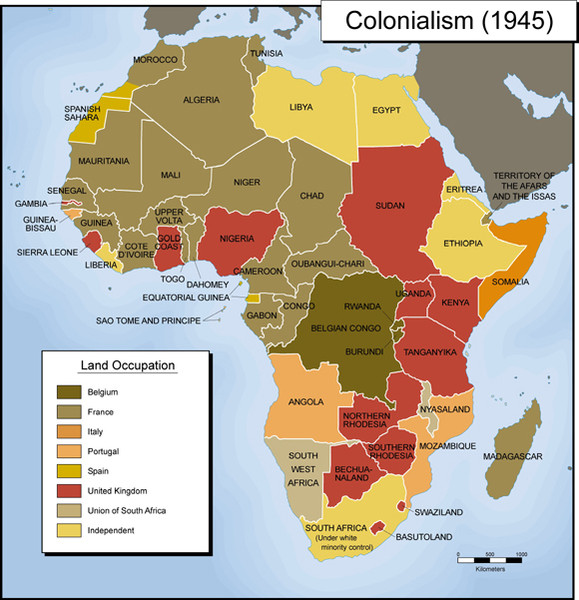
Colonial rule in Africa, 1945
- National self-determination meant peoples should choose their own government. Woodrow Wilson made the phrase famous after World War I, but Europeans applied it mostly to Europe, not broadly to Africa and Asia.
- Indigenous nationalism means anticolonial movements built inside colonized societies. These were local leaders, parties, and activists pushing for self-rule.
- The metropole was the imperial ruling state, like Britain or France.
- A settler colony had a strong European settler population. These settlers often fought hardest against majority rule. Algeria is the clearest example.
- Neocolonialism means formal independence happened, but foreign powers still kept major economic or political influence.
The pattern to remember is simple. Independence came through a mix of negotiation, protest, diplomacy, and war, not one single path.
Why Decolonization Accelerated After World War II
World War II changed the balance. European empires still wanted control, but they had a much harder time keeping it.
- European weakness mattered. Britain, France, and the Netherlands came out of WWII exhausted, in debt, and focused on rebuilding at home.
- Imperial prestige collapsed when Japan defeated European colonial regimes in Southeast Asia. Colonized peoples saw that Europeans were not unbeatable.
- Allied talk about freedom created a huge contradiction. The Atlantic Charter talked about peoples choosing their government, so colonized groups asked why that did not include them.
- The United Nations gave anticolonial leaders a place to appeal to world opinion, especially as more Asian and African states joined.
Cold War pressures
The Cold War pushed in both directions.
- It could speed independence because the U.S., USSR, and China sometimes backed nationalist movements or pressured empires.
- It could delay independence because Western powers feared communist takeovers and sometimes supported colonial rule or anticommunist local forces.
Bandung and nonalignment
At the Bandung Conference in 1955, Asian and African leaders met around anticolonialism. The Non-Aligned Movement in 1961 tried to avoid becoming tools of either the U.S. or USSR.
The exam loves this idea. Local nationalism plus global change explains decolonization better than either one alone.
Ways Colonial Groups Sought Independence
Colonial movements used overlapping methods, often at the same time.
Political organization and negotiation
- Nationalist parties used petitions, elections, constitutional talks, and transitional governments.
- The classic example is the Indian National Congress, which turned nationalism into a mass political force.
Mass protest and civil disobedience
- Tactics included strikes, boycotts, tax resistance, and demonstrations.
- Gandhi’s satyagraha used disciplined nonviolence to make British rule harder and less legitimate.
- The Salt March in 1930 challenged British salt taxes and became a symbol of resistance.
- The Quit India movement in 1942 demanded immediate British withdrawal.
Armed struggle
- Some groups used guerrilla war, sabotage, bombings, and conventional fighting.
- Key examples are the FLN in Algeria, the Viet Minh under Ho Chi Minh in Vietnam, and Indonesian resistance to Dutch return.
International diplomacy and superpower alignment
- Nationalists appealed to the UN, world opinion, and foreign governments.
- They also sought weapons, aid, and recognition from powerful allies.
Major Case Studies of Decolonization
India is the clearest example of mass nonviolent resistance, often associated with Gandhi’s campaigns like the Salt March.
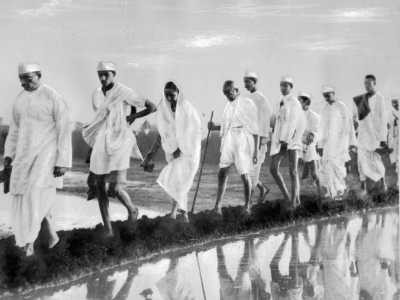
Gandhi during the Salt March
| Place | Main movement | How independence came | Key point |
|---|---|---|---|
| India | Indian National Congress, Gandhi | Negotiation + mass protest | Partition in 1947 created India and Pakistan and led to huge violence |
| Indonesia | Sukarno and Hatta | Declaration in 1945 + guerrilla war + diplomacy | Dutch transferred sovereignty in 1949 |
| Vietnam | Ho Chi Minh’s Viet Minh | War against France | Dien Bien Phu in 1954; Geneva Accords divided Vietnam |
| Algeria | FLN | Violent revolt against France | Settler colony; Evian Accords gave independence in 1962 |
Algeria is especially important because the pieds-noirs settlers made compromise much harder, and the war helped trigger a political crisis in France itself.
Why Independence Was Delayed and What Changed After It
European powers delayed independence because colonies brought resources, markets, prestige, military bases, and strategic routes. Settler resistance made places like Algeria and Kenya especially violent. Colonial borders and weak institutions also made transfer of power difficult.
African cases you should know:
- Ghana under Kwame Nkrumah gained negotiated independence in 1957.
- Kenya saw the violent Mau Mau uprising before independence.
- The Congo in 1960 showed how sudden Belgian withdrawal could produce chaos.
- 1960 is the Year of Africa because 17 African countries became independent.
- Angola and Mozambique stayed under Portugal until 1975, after the Carnation Revolution in Portugal.
Formal independence did not end outside influence. Neocolonialism, commodity dependence, and inherited colonial borders kept shaping new states.
The Suez Crisis in 1956 showed European decline clearly. Britain and France could no longer act like old imperial powers without superpower approval.
Key Takeaways
Decolonization
The prolonged process by which colonies ended formal imperial rule and became sovereign states
National Self-Determination (Wilsonian Self-Determination)
The principle that a people should choose its own political status and government without outside control
Indigenous Nationalism
Anticolonial nationalism organized within a colonized society rather than imposed by the imperial power
Metropole
The imperial state that governed overseas colonies, such as Britain, France, Belgium, Portugal, or the Netherlands
Settler Colony
A colony with a substantial, influential population of imperial settlers who commonly resisted transfer to majority rule
Mandate System
League of Nations administration of former German and Ottoman territories by victorious powers after World War I, officially as preparation for self-government
Neocolonialism
Continued foreign economic, political, strategic, or cultural control or influence after formal independence
Atlantic Charter
The 1941 Allied statement affirming peoples’ right to choose their government, language later used to challenge colonial rule
Bandung Conference
The 1955 meeting of Asian and African states promoting anticolonialism, political independence, and cooperation outside the Cold War blocs
Nonalignment
The policy of avoiding formal identification with either the American or Soviet Cold War bloc
Non-Aligned Movement
The organization established in 1961 by states seeking political independence from both Cold War blocs
Indian National Congress
The principal Indian nationalist organization, founded in 1885, that used mass action and negotiation to pursue independence from Britain
Mohandas Gandhi
Indian National Congress leader who mobilized resistance to British rule through disciplined nonviolence, boycotts, and civil disobedience
Satyagraha
Gandhi’s method of disciplined nonviolent resistance through noncooperation and civil disobedience
Salt March
Gandhi’s 1930 campaign defying Britain’s salt monopoly and tax, which mobilized Indians and publicized nonviolent resistance
Muslim League
The Jinnah-led organization that argued Indian Muslims needed a separate state to avoid Hindu-majority domination
Quit India Movement
The Indian National Congress campaign launched in 1942 demanding an immediate end to British rule
Partition of India
The 1947 division of British India into India and Pakistan, accompanied by mass displacement and communal violence
Sukarno
Indonesian nationalist leader who organized during Japanese occupation and, with Mohammad Hatta, declared independence in 1945
Ho Chi Minh
Vietnamese communist nationalist who led the Viet Minh and proclaimed the Democratic Republic of Vietnam in 1945
Viet Minh
Ho Chi Minh’s communist-led Vietnamese nationalist movement that fought Japanese occupation and French colonial restoration
First Indochina War
The 1946–1954 war between France and the Viet Minh over France’s attempt to restore colonial rule in Indochina
Battle of Dien Bien Phu
The decisive 1954 Viet Minh victory that ended France’s attempt to reconquer Vietnam
Geneva Settlement (Geneva Accords)
The 1954 agreement ending the First Indochina War and temporarily dividing Vietnam near the 17th parallel
Pieds-Noirs
European settlers in French Algeria who held disproportionate power and strongly opposed Algerian independence
National Liberation Front (FLN)
The Algerian nationalist organization that began an armed revolt against French rule in 1954
Battle of Algiers
The 1956–1957 struggle in which French repression broke much of the FLN’s urban network but damaged France’s legitimacy
Evian Accords
The 1962 agreement that ended the Algerian War and recognized Algeria’s independence from France
Convention People’s Party
Kwame Nkrumah’s Ghanaian nationalist party, which used strikes, elections, and demands for “self-government now” to secure independence
Mau Mau Uprising
The 1950s anticolonial uprising in Kenya that prompted harsh British counterinsurgency before Kenya gained independence in 1963
Congo Crisis
The political fragmentation, mutiny, secession, and foreign intervention that followed Belgium’s abrupt withdrawal from the Congo in 1960
Year of Africa
The year 1960, when seventeen African countries became independent
Carnation Revolution
The 1974 overthrow of Portugal’s authoritarian regime after colonial wars fueled military discontent, leading to independence for Angola and Mozambique in 1975
Woodrow Wilson
U.S. president whose post–World War I promotion of national self-determination raised colonized peoples’ expectations without producing general independence
Muhammad Ali Jinnah
Leader of the Muslim League who argued that Indian Muslims required a separate state, helping bring about Pakistan in the 1947 partition
Kwame Nkrumah
Ghanaian nationalist leader whose Convention People’s Party used elections, strikes, and mass pressure to achieve independence in 1957
Charles de Gaulle
French leader who returned to power during the Algerian crisis and ultimately accepted Algerian independence as continued French rule became unsustainable
Algerian War
The 1954–1962 war in which the FLN fought French rule, ending with the Evian Accords and Algerian independence
Notes
Decolonization
The prolonged process by which colonies ended formal imperial rule and became sovereign states
National Self-Determination (Wilsonian Self-Determination)
The principle that a people should choose its own political status and government without outside control
Indigenous Nationalism
Anticolonial nationalism organized within a colonized society rather than imposed by the imperial power
Metropole
The imperial state that governed overseas colonies, such as Britain, France, Belgium, Portugal, or the Netherlands
Settler Colony
A colony with a substantial, influential population of imperial settlers who commonly resisted transfer to majority rule
Mandate System
League of Nations administration of former German and Ottoman territories by victorious powers after World War I, officially as preparation for self-government
Neocolonialism
Continued foreign economic, political, strategic, or cultural control or influence after formal independence
Atlantic Charter
The 1941 Allied statement affirming peoples’ right to choose their government, language later used to challenge colonial rule
Bandung Conference
The 1955 meeting of Asian and African states promoting anticolonialism, political independence, and cooperation outside the Cold War blocs
Nonalignment
The policy of avoiding formal identification with either the American or Soviet Cold War bloc
Non-Aligned Movement
The organization established in 1961 by states seeking political independence from both Cold War blocs
Indian National Congress
The principal Indian nationalist organization, founded in 1885, that used mass action and negotiation to pursue independence from Britain
Mohandas Gandhi
Indian National Congress leader who mobilized resistance to British rule through disciplined nonviolence, boycotts, and civil disobedience
Satyagraha
Gandhi’s method of disciplined nonviolent resistance through noncooperation and civil disobedience
Salt March
Gandhi’s 1930 campaign defying Britain’s salt monopoly and tax, which mobilized Indians and publicized nonviolent resistance
Muslim League
The Jinnah-led organization that argued Indian Muslims needed a separate state to avoid Hindu-majority domination
Quit India Movement
The Indian National Congress campaign launched in 1942 demanding an immediate end to British rule
Partition of India
The 1947 division of British India into India and Pakistan, accompanied by mass displacement and communal violence
Sukarno
Indonesian nationalist leader who organized during Japanese occupation and, with Mohammad Hatta, declared independence in 1945
Ho Chi Minh
Vietnamese communist nationalist who led the Viet Minh and proclaimed the Democratic Republic of Vietnam in 1945
Viet Minh
Ho Chi Minh’s communist-led Vietnamese nationalist movement that fought Japanese occupation and French colonial restoration
First Indochina War
The 1946–1954 war between France and the Viet Minh over France’s attempt to restore colonial rule in Indochina
Battle of Dien Bien Phu
The decisive 1954 Viet Minh victory that ended France’s attempt to reconquer Vietnam
Geneva Settlement (Geneva Accords)
The 1954 agreement ending the First Indochina War and temporarily dividing Vietnam near the 17th parallel
Pieds-Noirs
European settlers in French Algeria who held disproportionate power and strongly opposed Algerian independence
National Liberation Front (FLN)
The Algerian nationalist organization that began an armed revolt against French rule in 1954
Battle of Algiers
The 1956–1957 struggle in which French repression broke much of the FLN’s urban network but damaged France’s legitimacy
Evian Accords
The 1962 agreement that ended the Algerian War and recognized Algeria’s independence from France
Convention People’s Party
Kwame Nkrumah’s Ghanaian nationalist party, which used strikes, elections, and demands for “self-government now” to secure independence
Mau Mau Uprising
The 1950s anticolonial uprising in Kenya that prompted harsh British counterinsurgency before Kenya gained independence in 1963
Congo Crisis
The political fragmentation, mutiny, secession, and foreign intervention that followed Belgium’s abrupt withdrawal from the Congo in 1960
Year of Africa
The year 1960, when seventeen African countries became independent
Carnation Revolution
The 1974 overthrow of Portugal’s authoritarian regime after colonial wars fueled military discontent, leading to independence for Angola and Mozambique in 1975
Woodrow Wilson
U.S. president whose post–World War I promotion of national self-determination raised colonized peoples’ expectations without producing general independence
Muhammad Ali Jinnah
Leader of the Muslim League who argued that Indian Muslims required a separate state, helping bring about Pakistan in the 1947 partition
Kwame Nkrumah
Ghanaian nationalist leader whose Convention People’s Party used elections, strikes, and mass pressure to achieve independence in 1957
Charles de Gaulle
French leader who returned to power during the Algerian crisis and ultimately accepted Algerian independence as continued French rule became unsustainable
Algerian War
The 1954–1962 war in which the FLN fought French rule, ending with the Evian Accords and Algerian independence
