Topic 2.7 Notes – Art of the 16th Century: Mannerism and Baroque Art
How Art Changed from the High Renaissance to Mannerism and Baroque
High Renaissance art gave viewers balance. Think Leonardo, Raphael, and Michelangelo. Their work usually feels ordered, proportionate, and stable.
Mannerism and Baroque grew out of that achievement, not against it. Artists still knew perspective, anatomy, and Christian subjects. What changed was the goal. Art moved from calm harmony toward tension, movement, emotion, and strong visual impact.
Three methods organize the whole topic:
- Distortion in Mannerism. Bodies and space get stretched, twisted, or made unstable.
- Drama in Baroque. Artists show the most intense moment and pull you into it emotionally.
- Illusion in Baroque. Light, space, and architecture make scenes feel present and immersive.
Why this happened:
- Artists wanted originality after Renaissance naturalism had already been mastered.
- Elite courts liked sophistication, virtuosity, and hard-to-read allegory because it showed taste.
- The Reformation and Catholic Reformation changed what religious art was supposed to do.
- Patrons wanted art to display power, piety, prestige, and legitimacy.
Mannerism
Mannerism appeared in the 1520s, especially in Italy. It fit a world shaped by court culture, the Sack of Rome in 1527, and religious and political instability.
Its style feels elegant but unsettled, and Parmigianino's Madonna with the Long Neck is a classic example:
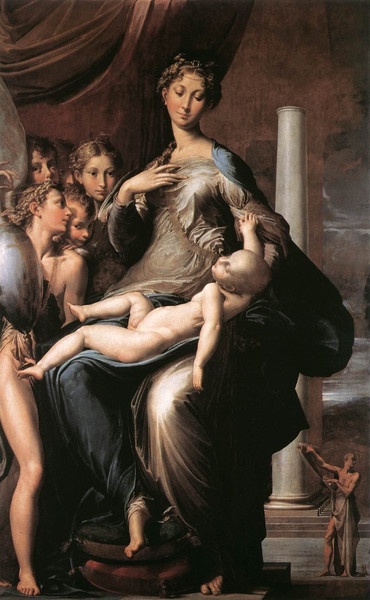
Parmigianino, Madonna with the Long Neck
- elongated bodies, necks, fingers, and limbs
- twisted poses and exaggerated gestures
- crowded, asymmetrical compositions
- compressed or irrational space
- strange scale relationships
- unnatural color
- learned symbolism and emotional tension
Standard examples
- Parmigianino, Madonna with the Long Neck
The Virgin is stretched out, Christ is oversized, and the background space barely makes sense. The point is refined artificiality, not realism. - Pontormo, Deposition
The figures seem weightless, the colors are unusual, and the scene feels unstable and grief-filled. - El Greco
He is the key AP example because his work uses elongation, intense color, and visionary space for Catholic meaning.
The Burial of the Count of Orgaz
El Greco's Burial of the Count of Orgaz shows this especially clearly:
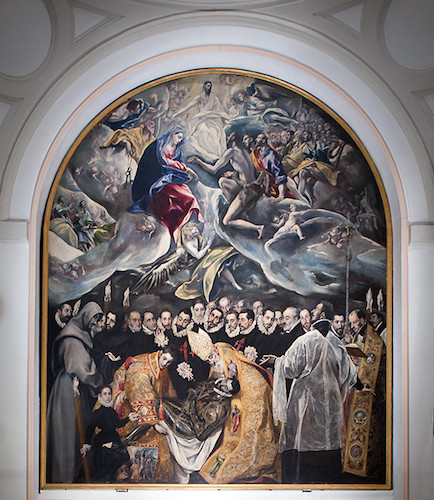
El Greco, The Burial of the Count of Orgaz
The lower half shows the burial on earth. The upper half shows the soul received in heaven. El Greco uses distortion to separate ordinary reality from spiritual reality. Commissioned for the Church of Santo Tomé in Toledo, it promotes local piety, church tradition, and Habsburg Catholic culture.
Mannerism worked well for courts because it showed elite sophistication and made the spiritual world feel otherworldly.
Baroque Art
Baroque art began in late 16th-century Italy and spread across 17th-century Europe. It aimed for immediate emotional engagement.
Caravaggio’s The Calling of Saint Matthew is a classic example. The sharp beam of light, the dark room, and the startled reactions make the religious moment feel sudden and real.
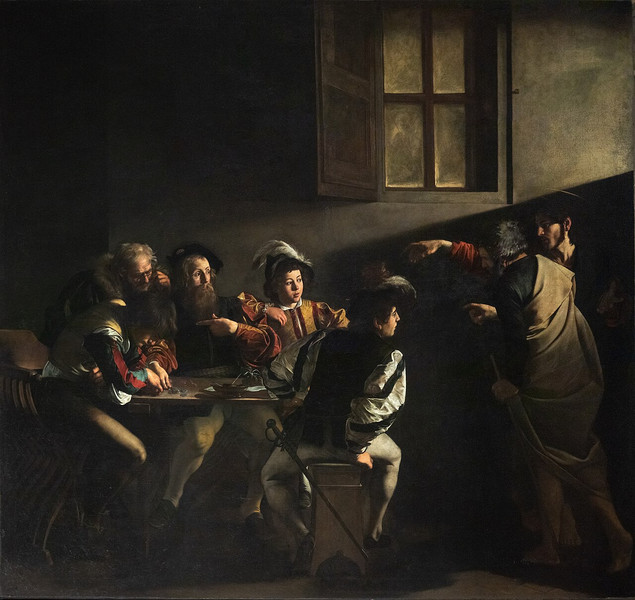
Caravaggio, The Calling of Saint Matthew
Common Baroque features:
- dramatic diagonals and movement
- climactic action
- strong emotion and gesture
- vivid naturalism
- rich color and texture
- chiaroscuro = strong light and shade modeling form
- tenebrism = extreme spotlight effect out of darkness
- foreshortening into viewer space
- monumental scale and ornament
- illusionistic ceilings and integrated spaces
Standard examples
- Caravaggio, The Calling of Saint Matthew
A beam of light marks the instant of conversion. The figures look like ordinary people in contemporary dress. The sacred event feels present and personal. - Artemisia Gentileschi, Judith Slaying Holofernes
Strong diagonals, tenebrism, and physical struggle create raw drama. She also matters because her career shows both the possibilities and limits for women artists. - Bernini, David
Unlike Michelangelo’s calm David, Bernini catches him in action, twisting mid-move. - Bernini, Baldachin in St. Peter’s
Twisting bronze columns, huge scale, and papal symbols turn the altar area into a statement of papal authority. - Bernini, Ecstasy of Saint Teresa
Hidden light and theatrical setting stage a mystical experience for viewers. - Rubens, The Elevation of the Cross
Muscular bodies and diagonals create movement and spiritual intensity. - Rubens, Marie de’ Medici cycle
Monarchy uses allegory and grandeur to build dynastic legitimacy.
How Religion and Patronage Shaped the Art
The Reformation changed the setting for art. Some Protestants saw religious images as idolatrous, and iconoclasm destroyed images in some regions.
The Catholic Church responded differently. The Council of Trent reaffirmed images if they taught clearly and inspired devotion. It did not invent Baroque style, but it encouraged emotionally compelling, doctrinally clear art.
Major patrons included:
| Patron | What they wanted |
|---|---|
| Catholic Church and popes | doctrine, devotion, reverence |
| Monarchies and courts | glory, legitimacy, dynastic prestige |
| City-states, guilds, confraternities | civic wealth, piety, status |
| Wealthy families and elites | prestige and cultivated taste |
Art filled churches, chapels, and palaces with visible authority.
What to Compare and Connect on the Test
- Mannerism means distortion, elegance, ambiguity, artificiality, and tension.
- Baroque means movement, drama, emotional immediacy, strong light effects, and illusion.
- Both kept Renaissance foundations such as technical skill, patronage, and Christian or classical subjects.
- The strongest AP claim is that artistic expression changed because institutions needed new visual languages of persuasion and power.
- A strong connection sentence is this one. Mannerist distortion and Baroque drama and illusion helped churches and rulers shape belief, display prestige, and strengthen religious or political authority in public spaces.
Key Takeaways
Mannerism
Style emerging in 1520s Italy that departed from High Renaissance balance through elongated bodies, difficult poses, unstable space, unnatural color, and intellectual complexity
Baroque Art
Late-sixteenth- and seventeenth-century style using movement, emotion, dramatic light, monumental scale, and illusion to engage viewers and magnify religious or political authority
Chiaroscuro
Modeling forms through strong contrasts of light and shade, intensified by Baroque artists for dramatic effect
Tenebrism
Extreme light-dark contrast in which brightly illuminated figures emerge from deep surrounding darkness
Patronage
The commissioning and financing of art by patrons who negotiated its subject, scale, materials, location, and intended religious, civic, or dynastic purpose
Council of Trent
Catholic council of 1545–1563 that affirmed sacred images for instruction and devotion while demanding doctrinal clarity and decorum
Parmigianino
Italian Mannerist painter whose elegant distortions and unstable spaces are exemplified by Madonna with the Long Neck
Madonna with the Long Neck
Parmigianino’s Mannerist painting with an elongated Virgin, oversized Christ child, crowded figures, and irrational spatial relationships
Jacopo Pontormo
Italian Mannerist painter known for elongated, weightless figures, unstable compositions, and unusual colors
Deposition
Pontormo’s Mannerist painting of grief using elongated, weightless figures, unusual colors, and an unstable composition with little visible ground
El Greco (Domenikos Theotokopoulos)
Crete-born painter active in Spain who combined Byzantine, Venetian, and Mannerist influences in elongated, intensely colored spiritual visions
The Burial of the Count of Orgaz
El Greco’s painting contrasting a recognizable earthly burial with an elongated, compressed, and swirling heavenly realm
Caravaggio (Michelangelo Merisi da Caravaggio)
Early Baroque painter who combined ordinary-looking figures, decisive action, and tenebrism to make sacred events immediate and emotionally compelling
The Calling of Saint Matthew
Caravaggio’s painting in which contemporary figures, Christ’s gesture, and a sharp beam of light dramatize Matthew’s moment of conversion
Gian Lorenzo Bernini
Leading sculptor and architect of papal Baroque Rome who integrated sculpture, architecture, light, movement, and ceremonial space
Bernini’s David
Baroque sculpture depicting David twisting during the sling’s release, extending action and tension into the viewer’s space
Bernini’s Baldachin in St. Peter’s Basilica
Monumental bronze canopy over the papal altar and Saint Peter’s tomb whose twisting columns and Barberini emblems proclaim papal continuity and power
The Ecstasy of Saint Teresa
Bernini’s theatrical chapel ensemble using animated marble, concealed light, and observing Cornaro patrons to stage Teresa’s mystical vision
Artemisia Gentileschi
Italian Baroque painter influenced by Caravaggio who built a courtly career and became known for forceful biblical heroines
Judith Slaying Holofernes
Gentileschi’s Baroque painting of Judith and her maid killing Holofernes through strong diagonals, tenebrism, physical force, and decisive action
Peter Paul Rubens
Flemish Baroque painter who combined Italian Renaissance monumentality, Caravaggesque drama, rich color, muscular bodies, and energetic movement in Catholic and courtly commissions
The Elevation of the Cross
Rubens’s painting showing straining figures raising Christ on a powerful diagonal, combining muscular force, dramatic light, and spiritual sacrifice
Marie de’ Medici Cycle
Rubens’s monumental series combining the queen’s life with gods and allegory to turn contested events into a heroic claim of dynastic legitimacy
Notes
Mannerism
Style emerging in 1520s Italy that departed from High Renaissance balance through elongated bodies, difficult poses, unstable space, unnatural color, and intellectual complexity
Baroque Art
Late-sixteenth- and seventeenth-century style using movement, emotion, dramatic light, monumental scale, and illusion to engage viewers and magnify religious or political authority
Chiaroscuro
Modeling forms through strong contrasts of light and shade, intensified by Baroque artists for dramatic effect
Tenebrism
Extreme light-dark contrast in which brightly illuminated figures emerge from deep surrounding darkness
Patronage
The commissioning and financing of art by patrons who negotiated its subject, scale, materials, location, and intended religious, civic, or dynastic purpose
Council of Trent
Catholic council of 1545–1563 that affirmed sacred images for instruction and devotion while demanding doctrinal clarity and decorum
Parmigianino
Italian Mannerist painter whose elegant distortions and unstable spaces are exemplified by Madonna with the Long Neck
Madonna with the Long Neck
Parmigianino’s Mannerist painting with an elongated Virgin, oversized Christ child, crowded figures, and irrational spatial relationships
Jacopo Pontormo
Italian Mannerist painter known for elongated, weightless figures, unstable compositions, and unusual colors
Deposition
Pontormo’s Mannerist painting of grief using elongated, weightless figures, unusual colors, and an unstable composition with little visible ground
El Greco (Domenikos Theotokopoulos)
Crete-born painter active in Spain who combined Byzantine, Venetian, and Mannerist influences in elongated, intensely colored spiritual visions
The Burial of the Count of Orgaz
El Greco’s painting contrasting a recognizable earthly burial with an elongated, compressed, and swirling heavenly realm
Caravaggio (Michelangelo Merisi da Caravaggio)
Early Baroque painter who combined ordinary-looking figures, decisive action, and tenebrism to make sacred events immediate and emotionally compelling
The Calling of Saint Matthew
Caravaggio’s painting in which contemporary figures, Christ’s gesture, and a sharp beam of light dramatize Matthew’s moment of conversion
Gian Lorenzo Bernini
Leading sculptor and architect of papal Baroque Rome who integrated sculpture, architecture, light, movement, and ceremonial space
Bernini’s David
Baroque sculpture depicting David twisting during the sling’s release, extending action and tension into the viewer’s space
Bernini’s Baldachin in St. Peter’s Basilica
Monumental bronze canopy over the papal altar and Saint Peter’s tomb whose twisting columns and Barberini emblems proclaim papal continuity and power
The Ecstasy of Saint Teresa
Bernini’s theatrical chapel ensemble using animated marble, concealed light, and observing Cornaro patrons to stage Teresa’s mystical vision
Artemisia Gentileschi
Italian Baroque painter influenced by Caravaggio who built a courtly career and became known for forceful biblical heroines
Judith Slaying Holofernes
Gentileschi’s Baroque painting of Judith and her maid killing Holofernes through strong diagonals, tenebrism, physical force, and decisive action
Peter Paul Rubens
Flemish Baroque painter who combined Italian Renaissance monumentality, Caravaggesque drama, rich color, muscular bodies, and energetic movement in Catholic and courtly commissions
The Elevation of the Cross
Rubens’s painting showing straining figures raising Christ on a powerful diagonal, combining muscular force, dramatic light, and spiritual sacrifice
Marie de’ Medici Cycle
Rubens’s monumental series combining the queen’s life with gods and allegory to turn contested events into a heroic claim of dynastic legitimacy
