Topic 5.8 Notes – Romanticism
What Romanticism Was
Romanticism was a challenge to Enlightenment rationalism, not a total rejection of thinking or science. Enlightenment thinkers trusted reason, universal laws, and careful analysis to improve society. Romantics argued that this left out too much of what makes people human.
- Romantics emphasized emotion, imagination, intuition, spirituality, individuality, nature, and the unique history of each people.
- Their core claim was that reason alone cannot explain morality, identity, religion, or society.
- The contrast matters:
- Enlightenment = universal truths, rational reform, order
- Romanticism = feeling, authenticity, imagination, historical difference
- This grew in a world shaken by the French Revolution, Napoleonic Wars, early industrialization, and religious revival. Europeans saw mass enthusiasm, suffering, patriotism, and alienation up close.
Rousseau and the Core Romantic Themes
Rousseau sits right on the border between the Enlightenment and Romanticism. He still wanted society improved, but he doubted that civilization and reason automatically made people better.
- Rousseau argued that natural human goodness could be corrupted by inequality, competition, and artificial social rules.
- He thought morality depends on conscience, sympathy, and authentic feeling, not just calculation.
Emile
In Emile (1762), Rousseau said education should follow a child’s natural development.
- Children should learn through experience and contact with nature
- He criticized rote memorization and artificial adult conventions
Confessions
In Confessions, Rousseau treated his own inner life as worth studying.
- Memory, emotion, and personal uniqueness became serious subjects
- This anticipates the Romantic focus on the self
Rousseau’s ideas fed major Romantic themes:
- Emotion, intuition, imagination as sources of truth and creativity
- Nature as spiritually meaningful, not just a machine governed by laws
- Individuality and authenticity, often shown through the alienated or rebellious hero
- Folklore, peasants, the medieval past, and vernacular culture as authentic expressions of a people
The sublime
The sublime means awe mixed with fear in the face of vast, overwhelming nature. Romantic artists often captured it with stormy seas, ruins, and dark skies like the scene below.
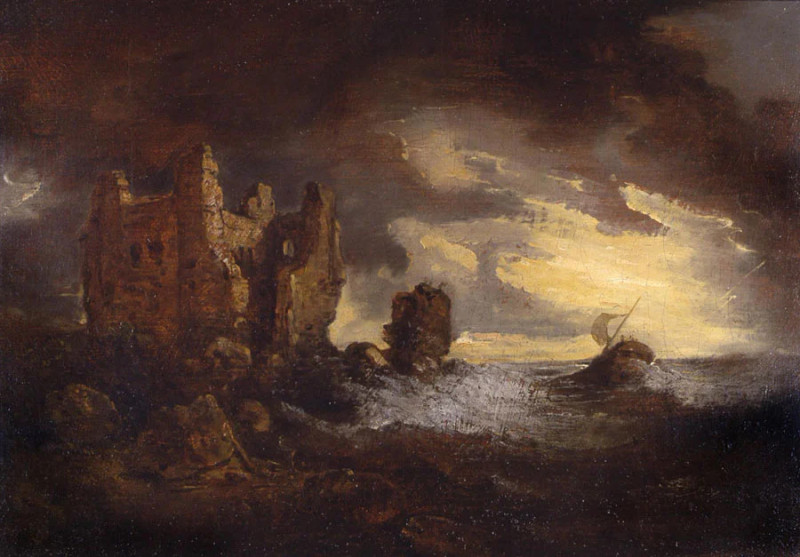
Romantic landscape and the sublime
Think mountains, storms, oceans, ruins. The point is that nature feels bigger than human control.
Romanticism in Literature, Art, and Music
Romanticism shows up most clearly in literature, visual art, and music, where emotional intensity and originality became central.
Literature
- Sturm und Drang in the German states was an early precursor. It celebrated emotional force and rebellion.
- Goethe, The Sorrows of Young Werther (1774)
- impossible love, emotional excess, alienated individual, suicide
- Werther became a model of the Romantic hero
- Wordsworth and Coleridge, Lyrical Ballads (1798)
- ordinary language, rural life, memory, nature, mystery, supernatural
Visual art
Romantic art broke from Neoclassicism.
| Neoclassicism | Romanticism |
|---|---|
| balance, restraint, classical order | drama, movement, suffering, sublime |
Goya's famous execution scene is a good example of that shift.
- Goya, The Third of May 1808
- shows the terror of war and execution of civilians
- anti-heroic view of conflict and resistance to Napoleon
- Friedrich, Monk by the Sea
- tiny person before immense nature
- solitude, spiritual intensity, sublime
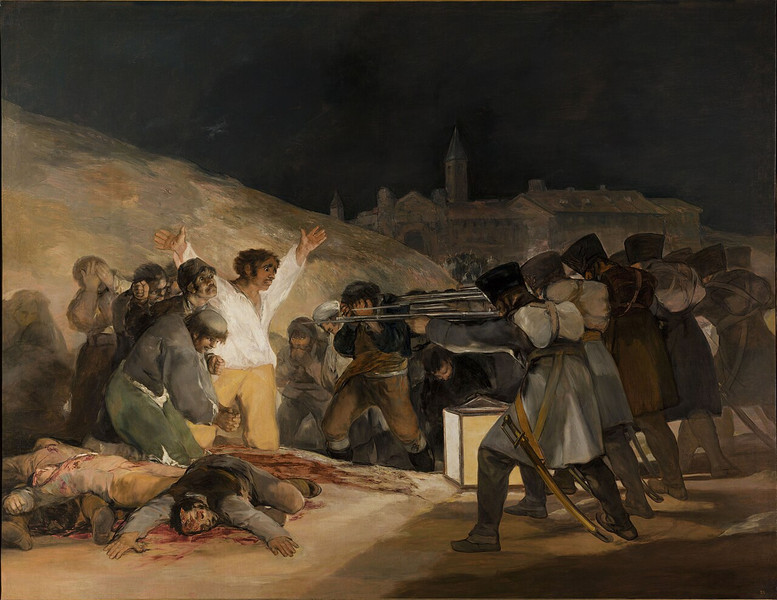
Goya, The Third of May 1808
Music
- Beethoven bridges the Classical and Romantic eras
- He helped create the idea of the composer as an independent creative genius
- Eroica Symphony
- first inspired by Napoleon as a revolutionary hero
- Beethoven withdrew the dedication when Napoleon crowned himself emperor
- the music still captures heroic struggle and emotional power
Religious Revival and the Emotional Power of Politics
The same push toward feeling showed up in religion and politics.
Methodism
Methodism stressed heartfelt faith over cold formalism.
- founded by John Wesley
- Wesley had a conversion experience in 1738
- used open-air preaching, itinerant ministers, and lay participation
- stressed personal conversion, assurance of salvation, discipline, fellowship, and charity
- appealed especially to poorer and working people
Related movements included Pietism and evangelical awakenings.
Politics as emotion
The French Revolution proved politics runs on emotion too.
- crowds, festivals, symbols, fear, sacrifice, enthusiasm
- La Marseillaise became a patriotic anthem
- levée en masse showed the whole nation mobilized for war
- the Reign of Terror showed the destructive side of mass passion
The Napoleonic Wars deepened patriotism and resistance.
- Spanish guerrilla resistance
- Russian resistance
- growing anti-French feeling in the German states
Romanticism and Nationalism
Romanticism helped people imagine the nation as a cultural and historical community, not just a state with borders.
- shared language
- folklore and folk songs
- religion and custom
- collective memory and legends
- attachment to homeland and landscape
- shared suffering under foreign rule
This mattered especially in the German lands under Napoleon. Romanticism gave later nationalism its emotional and cultural base.
One nuance students often miss: Romantic nationalism could support liberal self-determination, but it could also support conservative loyalty to tradition, hierarchy, and an organic national community.
Key Takeaways
Romanticism
Late-eighteenth- and early-nineteenth-century movement that challenged Enlightenment rationalism by emphasizing emotion, imagination, intuition, spirituality, nature, individual experience, and historical particularity
Jean-Jacques Rousseau
Enlightenment thinker and Romantic forerunner who questioned civilization and reason alone, emphasizing natural goodness, conscience, sympathy, authenticity, and emotion
Emile
Rousseau's 1762 work advocating education through experience, nature, and a child's developmental stages rather than memorization and rigid discipline
Confessions
Rousseau's autobiography examining memory, emotion, inner conflict, and individual uniqueness, anticipating Romantic interest in the self
The Sublime
A Romantic experience of attraction, awe, and fear before something so vast, powerful, or magnificent that it reveals human limitation
Romantic Hero
An intense, authentic, and often isolated or rebellious individual whose emotions place him in conflict with society and may lead to self-destruction
Sturm und Drang
German “Storm and Stress” movement of the 1770s emphasizing emotional force, individual genius, and rebellion against social and artistic conventions
The Sorrows of Young Werther
Goethe's 1774 novel about a sensitive young man's impossible love and suicide, establishing a model of the alienated Romantic hero
William Wordsworth
British Romantic poet who used ordinary language, rural subjects, memory, and encounters with nature as material for serious poetry
Samuel Taylor Coleridge
British Romantic poet who emphasized imagination, mystery, psychological experience, and the supernatural
Lyrical Ballads
Wordsworth and Coleridge's 1798 collection that broke with formal poetic conventions through ordinary language, nature, imagination, and supernatural themes
The Third of May 1808
Goya's 1814 painting of French troops executing Spanish civilians, emphasizing terror, individual suffering, and resistance to foreign occupation
Monk by the Sea
Friedrich's painting of a tiny solitary figure before an immense sea and sky, using human smallness to evoke the sublime
Ludwig van Beethoven
Composer bridging the Classical and Romantic eras who expanded music's scale and emotional range and elevated the composer as an independent creative genius
Eroica Symphony
Beethoven's Third Symphony, publicly premiered in 1805, whose scale, conflict, and heroic tone reflected the revolutionary age and fascination with powerful individuals
Religious Revival
Renewal of religion emphasizing heartfelt conversion, personal faith, conscience, spiritual experience, and moral community over formal routine or purely rational theology
Methodism
Eighteenth-century British revival movement emphasizing personal conversion, assurance of salvation, emotional preaching, small-group discipline, lay participation, and outreach to poor and working people
John Wesley
Anglican clergyman who helped found Methodism and promoted experienced faith, itinerant preaching, disciplined fellowship, and personal moral improvement
Romantic Nationalism
The view of a nation as an organic historical community united by language, folklore, religion, memory, customs, music, and attachment to a homeland
Notes
Romanticism
Late-eighteenth- and early-nineteenth-century movement that challenged Enlightenment rationalism by emphasizing emotion, imagination, intuition, spirituality, nature, individual experience, and historical particularity
Jean-Jacques Rousseau
Enlightenment thinker and Romantic forerunner who questioned civilization and reason alone, emphasizing natural goodness, conscience, sympathy, authenticity, and emotion
Emile
Rousseau's 1762 work advocating education through experience, nature, and a child's developmental stages rather than memorization and rigid discipline
Confessions
Rousseau's autobiography examining memory, emotion, inner conflict, and individual uniqueness, anticipating Romantic interest in the self
The Sublime
A Romantic experience of attraction, awe, and fear before something so vast, powerful, or magnificent that it reveals human limitation
Romantic Hero
An intense, authentic, and often isolated or rebellious individual whose emotions place him in conflict with society and may lead to self-destruction
Sturm und Drang
German “Storm and Stress” movement of the 1770s emphasizing emotional force, individual genius, and rebellion against social and artistic conventions
The Sorrows of Young Werther
Goethe's 1774 novel about a sensitive young man's impossible love and suicide, establishing a model of the alienated Romantic hero
William Wordsworth
British Romantic poet who used ordinary language, rural subjects, memory, and encounters with nature as material for serious poetry
Samuel Taylor Coleridge
British Romantic poet who emphasized imagination, mystery, psychological experience, and the supernatural
Lyrical Ballads
Wordsworth and Coleridge's 1798 collection that broke with formal poetic conventions through ordinary language, nature, imagination, and supernatural themes
The Third of May 1808
Goya's 1814 painting of French troops executing Spanish civilians, emphasizing terror, individual suffering, and resistance to foreign occupation
Monk by the Sea
Friedrich's painting of a tiny solitary figure before an immense sea and sky, using human smallness to evoke the sublime
Ludwig van Beethoven
Composer bridging the Classical and Romantic eras who expanded music's scale and emotional range and elevated the composer as an independent creative genius
Eroica Symphony
Beethoven's Third Symphony, publicly premiered in 1805, whose scale, conflict, and heroic tone reflected the revolutionary age and fascination with powerful individuals
Religious Revival
Renewal of religion emphasizing heartfelt conversion, personal faith, conscience, spiritual experience, and moral community over formal routine or purely rational theology
Methodism
Eighteenth-century British revival movement emphasizing personal conversion, assurance of salvation, emotional preaching, small-group discipline, lay participation, and outreach to poor and working people
John Wesley
Anglican clergyman who helped found Methodism and promoted experienced faith, itinerant preaching, disciplined fellowship, and personal moral improvement
Romantic Nationalism
The view of a nation as an organic historical community united by language, folklore, religion, memory, customs, music, and attachment to a homeland
