Topic 2.6 Notes – 16th-Century Society and Politics
How 16th-Century Change Reshaped Society Without Ending Hierarchy
Economic growth and new ideas changed opportunities, but they did not erase old rankings. The key pattern here is change without social revolution.
- Landownership still brought the most prestige. Even rich merchants often tried to buy land, marry into noble families, purchase offices, or gain titles because land still looked more honorable than trade.
- Nobles kept major advantages:
- tax exemptions
- seigneurial dues and fees from peasants
- access to offices and special courts
- hunting rights and legal protections
- Women remained politically excluded almost everywhere, even when a few women ruled.
Rural and urban hierarchy
Most people still lived in the countryside, and rural life had its own ladder.
- Prosperous peasants could hold land and hire labor.
- Tenants, laborers, and servants had far less security.
- In parts of central and eastern Europe, second serfdom tightened noble control over peasants.
Cities had a different ladder, but still a ladder.
- Top groups included wealthy merchants and officeholding elites.
- Then came guild masters, journeymen, and apprentices.
- At the bottom were servants, migrants, casual workers, and beggars.
Religion also became a stronger marker of status after the Reformation. Your confession could shape whether you could hold office, join a guild, live somewhere, worship openly, or count as a full member of the community.
- Venetian ghetto (1516) is the standard example. Jews were forced into a segregated urban space, which shows how religious identity could become legal and social exclusion.
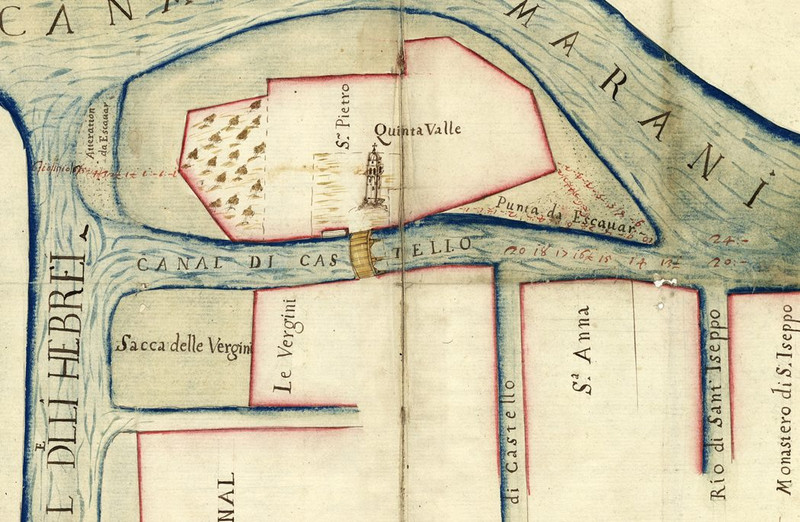
Map of the Venetian ghetto
The Household, Gender Roles, and the Debate Over Women
The household was the basic unit of work, spending, discipline, and identity. It included more than parents and children. It could also include servants, apprentices, relatives, and workers.
Men and women both worked constantly, but authority was still patriarchal.
- In rural households, men were more tied to plowing, landholding, and village authority. Women often handled dairying, spinning, gardening, brewing, and childcare.
- In towns, wives often kept accounts, sold goods, managed labor, and worked in family shops.
- A widow’s privilege sometimes let a woman run her late husband’s business for a time.
Debates about female roles
Renaissance and Reformation thinkers reopened arguments about women.
- La Querelle des Femmes was the long debate over women’s nature, intellect, and proper roles.
- Female education was often defended so women could be pious and manage households well, not because people believed in equality.
- Protestant literacy could increase women’s Bible reading, but usually inside domestic roles.
- Women as preachers or religious writers were unusual. Katharina Zell and Argula von Grumbach are key examples.
- Protestant abolition of convents removed one path to female education and authority.
- Female rulers like Elizabeth I and Catherine de Medici were exceptions, not signs of broad political inclusion for women.
How Authorities Regulated Morals and Popular Culture
Religious division, poverty, migration, and urban growth made leaders fear disorder. Churches and governments worked together in confessionalization or social discipline, trying to create moral, obedient communities.
Authorities targeted:
- adultery, drinking, gambling, prostitution
- begging and vagrancy
- courtship and marriage
- festival behavior, including efforts to restrict Carnival
Geneva under Calvin is the classic case. The Consistory closely watched behavior and pushed moral discipline.
Poor relief also became more organized. Officials separated the deserving poor from “undeserving” beggars and vagrants.
Even with regulation, leisure stayed communal and tied to the religious calendar and farming cycle:
- saint’s day festivities
- Carnival
- blood sports
Carnival mattered because it mixed mockery, excess, and temporary upside-down behavior. Bruegel’s The Fight Between Carnival and Lent captures that crowded world of festivity, ritual, and social tension.
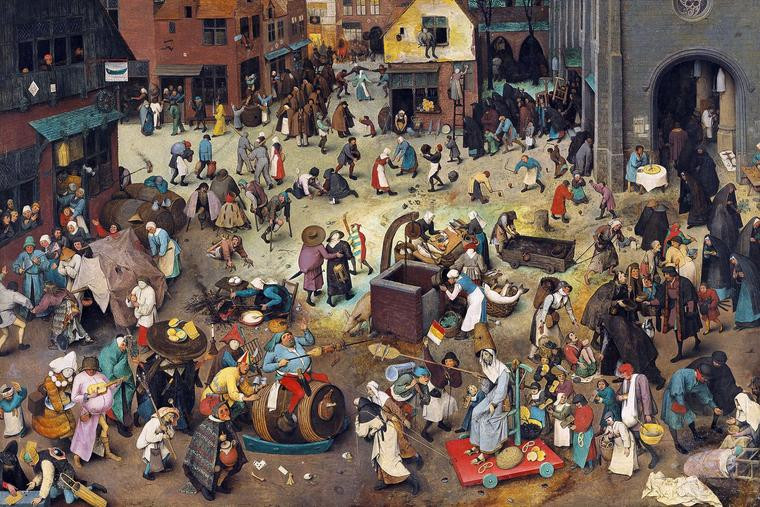
The Fight Between Carnival and Lent, Pieter Bruegel the Elder
Communities also enforced norms through public shame:
- charivari often targeted marriages or households that broke gender expectations
- stocks
- public whipping and branding
Why Witchcraft Accusations Peaked Between 1580 and 1650
Witch hunts grew from local fears plus larger pressures. People often began with maleficium, blaming illness, crop failure, or death on harmful magic. Learned writers then turned that suspicion into fear of a satanic conspiracy.
- Malleus Maleficarum by Heinrich Kramer is the standard text for this demonology.
- Accusations rose because of religious conflict, war, inflation, bad harvests, plague, poverty, and neighborhood tension.
- Women were the majority of the accused, especially older, widowed, poor, or vulnerable women.
- Prosecutions varied a lot by region. Major centers included Trier, Würzburg, and Bamberg.
- Both Catholics and Protestants prosecuted witches.
- The Spanish and Roman Inquisitions were often more restrained than courts in parts of the Holy Roman Empire, Switzerland, and France.
- After 1650, prosecutions declined as states supervised courts more closely, evidence standards tightened, and elite skepticism grew.
Key Takeaways
Orders or Estates
Hierarchy of unequal social ranks—traditionally those who prayed, fought, and worked—regarded as parts of a divinely sanctioned order
Second Serfdom
Strengthening of landlords’ control over peasants in parts of central and eastern Europe as serfdom declined in much of western Europe
Guild Membership
Membership that regulated entry into urban trades, protected masters from competition, and conferred civic standing while excluding many workers and women
Deserving Poor vs. Undeserving Poor
Authorities aided respectable local people unable to work but treated mobile, able-bodied, or allegedly idle poor people as disorderly and subject to punishment
Early Modern Household
Patriarchal unit of production, consumption, welfare, discipline, and identity that could include relatives, servants, apprentices, boarders, and hired workers
Separate but Complementary Labor
Gendered division of household work in which men and women performed different essential tasks, while men retained greater legal authority, property rights, and prestige
La Querelle des Femmes (Debate About Women)
Long-running intellectual dispute over women’s nature, abilities, education, virtues, and proper roles in family, church, and society
Confessionalization or Social Discipline
Cooperative effort by religious and political authorities to make conduct conform to officially approved beliefs and social norms
Geneva Consistory
Calvinist body of ministers and lay elders that investigated residents’ religious knowledge, marriages, sexual behavior, and other misconduct
Communal Leisure
Collective recreation organized chiefly around the Christian religious calendar and agricultural cycle, including festivals, fairs, weddings, games, and harvest celebrations
Carnival
Pre-Lenten communal festival featuring food, drink, masks, processions, sexual humor, mock ceremonies, and temporary inversions of ordinary hierarchy
Public Humiliation
Visible punishment intended to shame offenders, warn spectators, and restore communal order through practices such as stocks, whipping, or branding
Charivari (Rough Music or Shivaree)
Noisy communal shaming ritual directed at marriages or households believed to violate accepted sexual, marital, or gender norms
Maleficium
Supposed use of supernatural power to cause illness, crop failure, animal deaths, infertility, storms, or other harm
Diabolical Witchcraft or Learned Demonology
Elite theory that witches formed a satanic conspiracy, made pacts with the devil, attended secret sabbaths, and renounced Christianity
Malleus Maleficarum (Hammer of Witches)
Heinrich Kramer’s 1486–1487 demonological work, spread through print, that portrayed witchcraft as a diabolical threat particularly associated with women
European Witch Hunts
Prosecutions peaking about 1580–1650 that combined folk beliefs, demonology, social stress, confessional conflict, and enabling courts, producing roughly 40,000–60,000 executions
Protestant Clerical Marriage vs. Catholic Clerical Celibacy
Protestants rejected clerical celibacy and made the married pastor’s household a model of Christian life, while Catholics reaffirmed clerical celibacy
Notes
Orders or Estates
Hierarchy of unequal social ranks—traditionally those who prayed, fought, and worked—regarded as parts of a divinely sanctioned order
Second Serfdom
Strengthening of landlords’ control over peasants in parts of central and eastern Europe as serfdom declined in much of western Europe
Guild Membership
Membership that regulated entry into urban trades, protected masters from competition, and conferred civic standing while excluding many workers and women
Deserving Poor vs. Undeserving Poor
Authorities aided respectable local people unable to work but treated mobile, able-bodied, or allegedly idle poor people as disorderly and subject to punishment
Early Modern Household
Patriarchal unit of production, consumption, welfare, discipline, and identity that could include relatives, servants, apprentices, boarders, and hired workers
Separate but Complementary Labor
Gendered division of household work in which men and women performed different essential tasks, while men retained greater legal authority, property rights, and prestige
La Querelle des Femmes (Debate About Women)
Long-running intellectual dispute over women’s nature, abilities, education, virtues, and proper roles in family, church, and society
Confessionalization or Social Discipline
Cooperative effort by religious and political authorities to make conduct conform to officially approved beliefs and social norms
Geneva Consistory
Calvinist body of ministers and lay elders that investigated residents’ religious knowledge, marriages, sexual behavior, and other misconduct
Communal Leisure
Collective recreation organized chiefly around the Christian religious calendar and agricultural cycle, including festivals, fairs, weddings, games, and harvest celebrations
Carnival
Pre-Lenten communal festival featuring food, drink, masks, processions, sexual humor, mock ceremonies, and temporary inversions of ordinary hierarchy
Public Humiliation
Visible punishment intended to shame offenders, warn spectators, and restore communal order through practices such as stocks, whipping, or branding
Charivari (Rough Music or Shivaree)
Noisy communal shaming ritual directed at marriages or households believed to violate accepted sexual, marital, or gender norms
Maleficium
Supposed use of supernatural power to cause illness, crop failure, animal deaths, infertility, storms, or other harm
Diabolical Witchcraft or Learned Demonology
Elite theory that witches formed a satanic conspiracy, made pacts with the devil, attended secret sabbaths, and renounced Christianity
Malleus Maleficarum (Hammer of Witches)
Heinrich Kramer’s 1486–1487 demonological work, spread through print, that portrayed witchcraft as a diabolical threat particularly associated with women
European Witch Hunts
Prosecutions peaking about 1580–1650 that combined folk beliefs, demonology, social stress, confessional conflict, and enabling courts, producing roughly 40,000–60,000 executions
Protestant Clerical Marriage vs. Catholic Clerical Celibacy
Protestants rejected clerical celibacy and made the married pastor’s household a model of Christian life, while Catholics reaffirmed clerical celibacy
