Topic 9.13 Notes – Globalization
What Globalization Was in Post-1945 Europe
Globalization means the growing movement of information, ideas, goods, services, cultural products, and people across borders, creating interdependence. Europe had already been globally connected through empire, trade, migration, railroads, steamships, and telegraphs. What changed after 1945 was speed, scale, and how normal these connections became in daily life.
A common AP mistake is mixing this up with European integration. European integration meant regional cooperation like the EEC and later the EU. Globalization was broader. It connected Europe to worldwide networks.
Postwar context matters because Europe’s role changed:
- World War II weakened European powers and their empires.
- Decolonization reduced Europe’s old imperial dominance.
- The United States became the leading economic, technological, and cultural power.
- Western Europe was more open to global flows during the Cold War.
- Eastern Bloc governments tried to limit outside influence, but foreign media and ideas still crossed the Iron Curtain.
The core cause you want to remember is simple. Technology made distance matter less, and U.S. influence sped up cultural and economic exchange. The shipping map below is a good reminder that Europe sat inside dense global trade routes rather than acting as an isolated region.
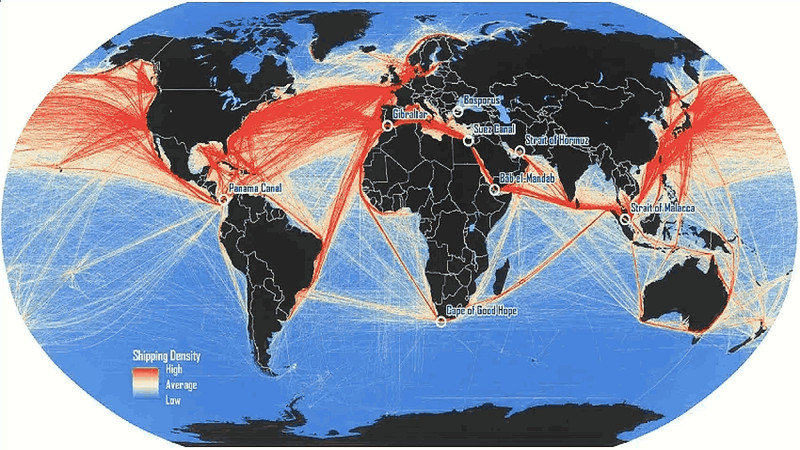
Global shipping routes and chokepoints
The Technologies That Made Globalization Possible
Communication and transportation worked together to compress space and time. Things that once took weeks could happen in hours or instantly.
Communication technologies
- Telephone let people talk directly across long distances, which helped governments, businesses, families, and media coordinate faster.
- Radio created mass audiences at the same time. It mattered for news and propaganda in the interwar years and WWII, and during the Cold War foreign broadcasts reached communist Europe. It also spread American music like jazz and rock.
- Television brought world events into the home. Europeans could watch wars, protests, sports, ads, and entertainment, which helped build postwar consumer culture.
- Computer transformed how information was stored, processed, and shared. This sped up finance, research, publishing, and manufacturing.
- Cell phone made communication mobile instead of tied to one place.
- Internet spread news, data, images, shopping, and social media across borders fast. It also weakened state control over information, though it spread misinformation and surveillance too.
Transportation technologies
- Commercial aviation and jet travel made tourism, migration, diplomacy, business trips, and student exchange much easier.
- Containerization used standard shipping containers that moved easily between ships, trains, and trucks. This cut cost, time, theft, and damage, tying Europe into global supply chains.
- Highways, trucks, airports, and high-speed rail increased mobility inside Europe and linked local economies to world markets.
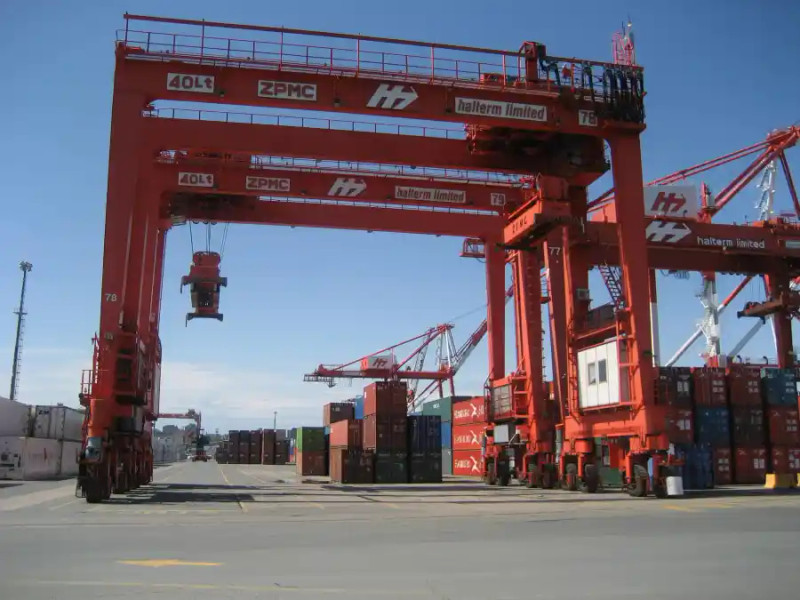
Containerized shipping at a modern port
Americanization and European Responses
A huge part of postwar globalization in Europe was Americanization, the spread of American products, styles, media, business methods, and values. It was part of globalization, not the whole thing.
Standard examples you should know:
- Hollywood films and TV
- jazz, rock, and later popular music
- jeans and casual fashion
- fast food and branded goods
- advertising and marketing
- consumer electronics
- wider use of English in business, science, and entertainment
Many Europeans welcomed this because it seemed to represent prosperity, abundance, youth, convenience, and freedom. After wartime destruction, American-style consumer culture looked modern.
Many also criticized it:
- fear of cultural homogenization
- dislike of materialism and mass consumption
- fear of cultural imperialism, where a powerful country dominates others through media and markets
- France is the classic example of trying to protect national language and culture
The nuance that gets tested is this. Europeans did not just copy the U.S. They blended American influences with local traditions and created hybrid cultures.
How Globalization Changed Daily Life and Why Green Parties Criticized It
Globalization changed ordinary life in visible ways:
- faster cross-border communication
- easier travel and tourism
- more access to foreign goods, music, films, and TV
- quicker spread of political ideas, science, human-rights campaigns, and activism
- foreign media crossed the Iron Curtain even before 1989, and after 1989 to 1991 Eastern Europe became much more connected
It also had limits:
- access was unequal by class and region
- multinational corporations gained power
- people worried about national identity and local control
Consumerism grew with globalization. Buying goods became a sign of comfort, success, and identity. That brought convenience and choice, but also waste, pollution, fossil-fuel use, and resource depletion.
This helps explain the rise of Green parties. They attacked unlimited growth and consumer culture and pushed sustainable development. The standard example is the West German Green Party, founded in 1980, entering parliament in 1983.
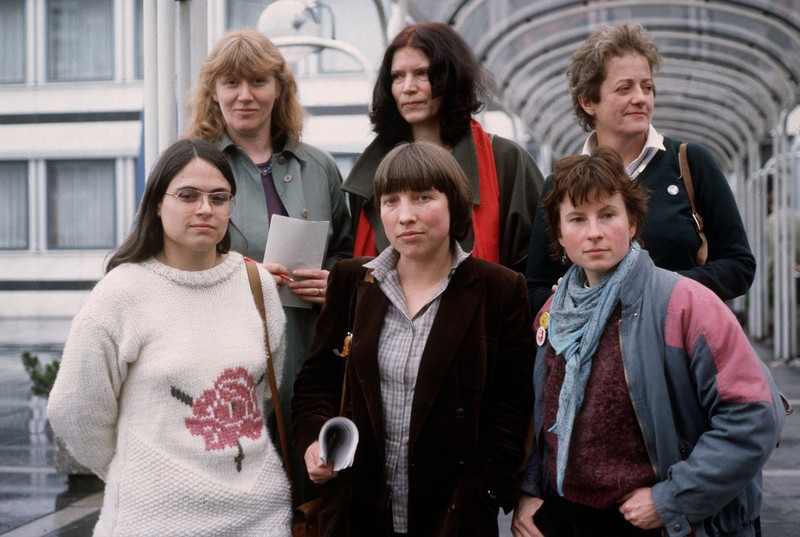
Early West German Green activists
Green criticisms included:
- long-distance transport and greenhouse-gas emissions
- packaging waste
- multinational corporate power
- weakened regulation
- cultural standardization
They supported renewable energy, conservation, recycling, public transportation, local production, and international environmental cooperation.
Key Takeaways
Globalization
Increasing cross-border movement of information, ideas, culture, goods, services, and people, creating worldwide interdependence
Telephone
Communication technology that enabled direct long-distance conversation and faster coordination as national and international networks expanded
Radio
Cross-border mass medium used for news, propaganda, political messages, advertising, and music, including American jazz and rock
Television
Postwar mass medium that brought international news, advertising, entertainment, and especially American visual culture into European homes
Computers
Technologies that accelerated the storage, processing, reproduction, and international transmission of information in government, business, research, and daily life
Cell Phones
Mobile technologies that detached communication from fixed locations and eventually provided continuous access to global information networks
Internet
Worldwide network enabling rapid circulation of information and ideas while also fostering misinformation, surveillance, reduced privacy, and extremism
Commercial Aviation and Jet Travel
Fast long-distance air transportation that expanded international tourism, business, migration, diplomacy, and educational exchange
Containerization
Use of standardized containers transferable among ships, trains, and trucks, lowering shipping costs and integrating international supply chains
Americanization
Adoption or influence of American products, technologies, styles, values, and practices in postwar Europe
Cultural Imperialism
Extension of a powerful society’s influence by dominating media, consumer markets, and cultural preferences without formal territorial rule
Consumerism
Economic and cultural orientation treating the acquisition of goods and services as an expression of prosperity, status, comfort, and identity
Green Parties
Late-20th-century environmental parties that challenged consumerism, advocated sustainable development, and warned against the environmental and social costs of globalization
Sustainable Development
Development that meets present economic and social needs without destroying future generations’ ability to meet theirs
Notes
Globalization
Increasing cross-border movement of information, ideas, culture, goods, services, and people, creating worldwide interdependence
Telephone
Communication technology that enabled direct long-distance conversation and faster coordination as national and international networks expanded
Radio
Cross-border mass medium used for news, propaganda, political messages, advertising, and music, including American jazz and rock
Television
Postwar mass medium that brought international news, advertising, entertainment, and especially American visual culture into European homes
Computers
Technologies that accelerated the storage, processing, reproduction, and international transmission of information in government, business, research, and daily life
Cell Phones
Mobile technologies that detached communication from fixed locations and eventually provided continuous access to global information networks
Internet
Worldwide network enabling rapid circulation of information and ideas while also fostering misinformation, surveillance, reduced privacy, and extremism
Commercial Aviation and Jet Travel
Fast long-distance air transportation that expanded international tourism, business, migration, diplomacy, and educational exchange
Containerization
Use of standardized containers transferable among ships, trains, and trucks, lowering shipping costs and integrating international supply chains
Americanization
Adoption or influence of American products, technologies, styles, values, and practices in postwar Europe
Cultural Imperialism
Extension of a powerful society’s influence by dominating media, consumer markets, and cultural preferences without formal territorial rule
Consumerism
Economic and cultural orientation treating the acquisition of goods and services as an expression of prosperity, status, comfort, and identity
Green Parties
Late-20th-century environmental parties that challenged consumerism, advocated sustainable development, and warned against the environmental and social costs of globalization
Sustainable Development
Development that meets present economic and social needs without destroying future generations’ ability to meet theirs
