Topic 2.2 Notes – Ecosystem Services
What Ecosystem Services Are
An ecosystem service is a human benefit that comes from nature. That benefit can come from the ecosystem itself or from an ecosystem process, which is something happening in nature like pollination, water filtration, or nutrient cycling.
The key difference is simple:
- Process = what happens in the ecosystem
- Service = the human benefit from that process
Example:
- In a wetland, plants and soils remove sediment and nutrients from water.
- That removal is the process.
- Cleaner water and lower water-treatment costs are the service.
This idea is anthropocentric, which means human-centered. You’re looking at nature in terms of how people depend on it. That does not mean nature only matters when it helps humans.
Biodiversity matters here because changes in species, habitats, or ecological interactions can change the services an ecosystem provides. Also, one ecosystem can provide many services at the same time. You classify the benefit, not the whole ecosystem.
Provisioning, Regulating, Cultural, and Supporting
Ecosystem services are grouped into four main categories, and the diagram gives you a quick way to organize them before you look at each one in more detail.
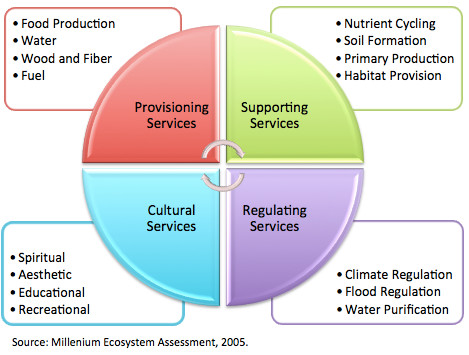
Four categories of ecosystem services
There are four categories:
Provisioning services
These are products people take from ecosystems.
- Food like crops, livestock products, seafood, wild game, fruits, and nuts
- Fresh water
- Timber, lumber, paper, and wood products
- Fibers such as cotton and wool
- Fuelwood and biofuel materials
- Medicinal plants and pharmaceutical compounds
- Genetic resources used in agriculture, medicine, and biotechnology
Regulating services
These control or moderate environmental conditions.
- Climate regulation through carbon uptake and storage
- Flood moderation and water-flow regulation
- Storm protection and coastal erosion reduction
- Water purification
- Air-quality improvement
- Erosion control and soil stabilization
- Pollination
- Natural pest control
- Regulation of some diseases
- Decomposition and treatment of organic wastes
- Local temperature and microclimate moderation
Cultural services
These are nonmaterial benefits.
- Recreation like hiking, swimming, boating, fishing, camping, and wildlife watching
- Tourism and ecotourism
- Aesthetic enjoyment
- Spiritual and religious significance
- Cultural identity and connection to place
- Educational opportunities
- Scientific study and inspiration
- Mental and physical benefits from natural areas
Supporting services
These are the underlying ecological processes that make the others possible.
- Photosynthesis and primary production
- Nutrient cycling
- Soil formation
- Maintenance of food webs
- Habitat provision
- Conditions that allow organisms and communities to persist
How to Classify Services Correctly
Classification depends on the benefit being emphasized.
A coastal wetland can provide all four at once:
- Provisioning: fish, shellfish, reeds, fresh water
- Regulating: water filtration, flood storage, shoreline stabilization, carbon storage, storm-surge reduction
- Cultural: birdwatching, boating, fishing, education, beauty
- Supporting: nutrient cycling, primary production, soil development, nursery habitat
Common AP pairs that get mixed up:
- Timber = provisioning, but erosion prevention by tree roots = regulating
- Fresh water supply = provisioning, but natural purification = regulating
- Crops or fruit = provisioning, but pollination = regulating
- Fish for food = provisioning, but recreational fishing = cultural
- Carbon storage = regulating, but photosynthesis/primary production = supporting
- Soil formation and nutrient cycling = supporting, but stabilization of existing soil = regulating
Economic value does not decide the category. All four can be valuable in money terms.
How Human Activities Disrupt Ecosystem Services
Anthropogenic means human-caused.
Major disruptions include deforestation, wetland drainage, urban development, intensive agriculture, overfishing, pollution, pesticide use, habitat fragmentation, overuse of water, and climate change.
Here’s the usual pathway:
- Human activity changes an ecosystem component or process.
- One or more ecosystem services decline.
- Ecological consequences follow.
- Economic consequences follow.
One of the most tested ideas here is trade-offs. You might increase one provisioning service, like crop production, but reduce regulating, cultural, or supporting services.
Ecological and Economic Consequences
A strong AP answer traces both kinds of consequences.
- Ecological consequences include habitat loss, biodiversity decline, disrupted food webs, lower primary productivity, reduced soil fertility, more erosion and sedimentation, poorer water quality, altered water flow, less carbon storage, less pollination, and lower resilience.
- Economic consequences include lower income from farming, fishing, forestry, recreation, and tourism; shortages or higher prices for food, timber, or water; higher water-treatment costs; more flood and storm damage; restoration expenses; lower property values; job losses; and public health or cleanup costs.
Wetland conversion is the model example. The image below shows a coastal wetland bordered by housing, roads, and agriculture, which is exactly the kind of land-use change AP questions use to connect ecological damage to economic costs.
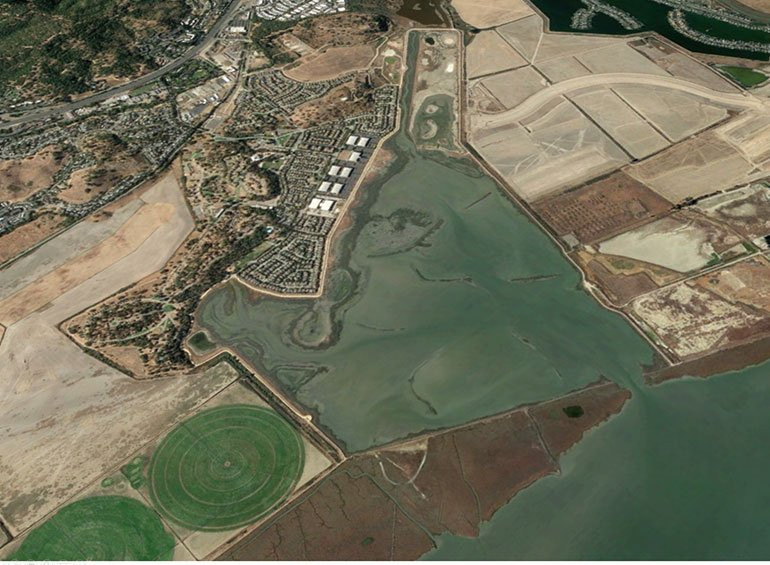
Converted coastal wetland
When wetlands are drained or filled, you lose flood control, water purification, shoreline stabilization, habitat, fisheries support, and recreation. That leads to more runoff, more sediment and nutrients, more erosion, habitat loss, and population declines, plus higher flood damage, higher treatment costs, and lower fisheries and tourism revenue.
Key Takeaways
Ecosystem Services
Benefits people obtain from ecosystems and the ecological processes occurring within them
Provisioning Services
Material products obtained from ecosystems, such as food, fresh water, timber, fibers, fuel, and medicines
Regulating Services
Benefits produced when ecosystems control, moderate, or buffer environmental conditions
Cultural Services
Nonmaterial ecosystem benefits involving recreation, education, identity, inspiration, aesthetics, or spiritual well-being
Supporting Services
Fundamental ecological processes that maintain ecosystems and make the other service categories possible
Anthropogenic Disruption of Ecosystem Services
Human-caused alteration of ecosystem components or processes that can weaken or eliminate services, potentially causing ecological and economic consequences
Ecosystem-Service Trade-Offs
Situations in which managing an ecosystem to increase one service reduces one or more other services
Ecosystem Process
A physical, chemical, or biological activity occurring in an ecosystem; it becomes an ecosystem service when it provides a human benefit
Notes
Ecosystem Services
Benefits people obtain from ecosystems and the ecological processes occurring within them
Provisioning Services
Material products obtained from ecosystems, such as food, fresh water, timber, fibers, fuel, and medicines
Regulating Services
Benefits produced when ecosystems control, moderate, or buffer environmental conditions
Cultural Services
Nonmaterial ecosystem benefits involving recreation, education, identity, inspiration, aesthetics, or spiritual well-being
Supporting Services
Fundamental ecological processes that maintain ecosystems and make the other service categories possible
Anthropogenic Disruption of Ecosystem Services
Human-caused alteration of ecosystem components or processes that can weaken or eliminate services, potentially causing ecological and economic consequences
Ecosystem-Service Trade-Offs
Situations in which managing an ecosystem to increase one service reduces one or more other services
Ecosystem Process
A physical, chemical, or biological activity occurring in an ecosystem; it becomes an ecosystem service when it provides a human benefit
