Topic 8.9 Notes – Solid Waste Disposal
What Solid Waste Is
Solid waste is any discarded material that is not a liquid or gas. It comes from domestic, business, industrial, and agricultural sources.
Common examples include:
- Household trash like food scraps and broken items
- Packaging like cardboard, plastic wrap, and containers
- Industrial residues left from manufacturing
- Construction debris like wood, drywall, and concrete
- Agricultural waste such as manure or crop leftovers
- Discarded electronics like old devices
The key idea here is simple. Throwing something away does not make matter disappear. Waste gets moved, buried, burned, or concentrated somewhere else.
The disposal methods you need to know are:
- Sanitary landfilling
- Incineration
- Improper disposal such as illegal dumping and ocean dumping
Sanitary Landfills and How They Work
Landfills are the most common solid waste disposal method. In a sanitary landfill, waste is put in a specific area, compacted, and covered in sections called cells. This is very different from an open dump because it is engineered to limit pollution.
This cross-section highlights the main systems APES expects you to recognize, especially the liner, leachate collection, cap, and methane collection.
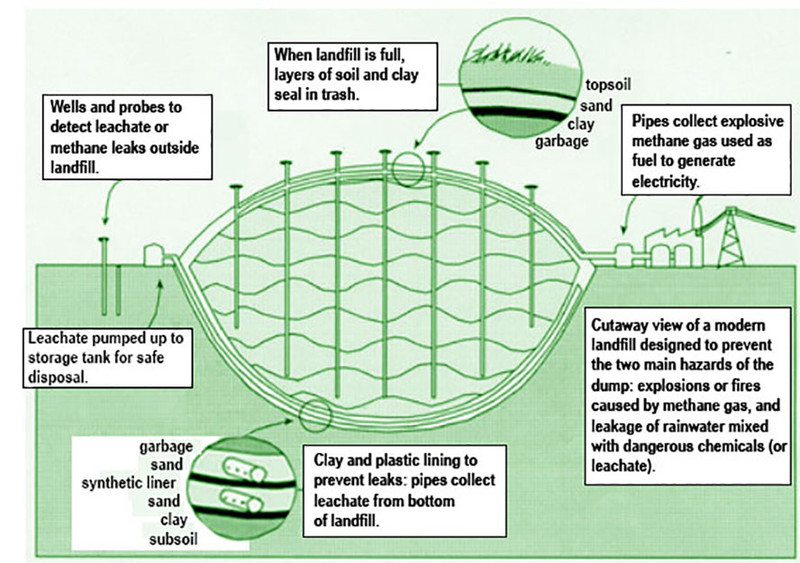
Modern sanitary landfill design
Main landfill parts
Bottom liner
Made of plastic, clay, or both. It helps separate waste from the soil and groundwater below.Leachate collection system
Leachate is contaminated liquid formed when water moves through trash. Pipes collect it and send it away for treatment.Stormwater collection system
Diverts runoff away from the landfill so less water enters the trash. Less water means less leachate forms.Cap
Seals the landfill after it is full. It reduces water infiltration, erosion, and exposure of the waste.Methane collection system
Captures landfill gas, especially methane from decomposition. This lowers fire, explosion, and greenhouse gas risks.
What can go wrong
Even sanitary landfills only reduce risk. They do not remove it.
- Liners can tear
- Pipes can clog
- Leachate can leak into soil and groundwater
- A groundwater plume can carry contamination to wells or connected surface water
- Methane and other gases can escape
- Closed landfills still need long-term monitoring
Landfill decomposition
Decomposition depends on what the trash is made of and the conditions microbes need.
- Biodegradable
Food waste, paper, yard waste - Slow or nondecomposing
Plastics, glass, metals, many synthetics
Important conditions include:
- Moisture
- Temperature
- Oxygen
- pH
- Decomposers
Because landfill waste is tightly compacted, oxygen becomes scarce. That means anaerobic decomposition dominates, producing methane and carbon dioxide. One common mistake is thinking landfills make trash break down quickly. They often slow decomposition.
Other Disposal Methods and Their Effects
Incineration
Incineration means burning waste at high temperatures.
- Main benefit: greatly reduces waste volume
- Main costs: releases air pollutants and leaves behind ash that still needs disposal
Possible pollutants include:
- Particulate matter
- Carbon monoxide
- Nitrogen oxides
- Acidic gases
- Carbon dioxide
- Mercury
- Toxic compounds
The trade-off is classic APES. Less landfill space needed, but more air pollution risk.
Electronic waste
E-waste means discarded electronic devices.
Examples you need to know:
- Televisions
- Cell phones
- Computers
E-waste may contain hazardous substances such as lead and mercury. In landfills, those toxins can enter leachate. If burned, they can enter the air or ash.
Illegal dumping and rejected materials
Some items are not accepted in ordinary sanitary landfills. When dumped illegally, they bypass liners, gas controls, and leachate systems.
A required example is used rubber tires:
- They collect standing water
- That creates mosquito breeding grounds
- More mosquitoes can increase disease spread
Ocean Dumping and Why Disposal Method Matters
Some waste is dumped directly into the ocean. Marine debris also comes from runoff, rivers, shore litter, shipping, and fishing gear. Plastics are the big problem because they persist and break into smaller pieces very slowly.
Ocean currents and gyres concentrate this debris. The Great Pacific Garbage Patch is a broad region with lots of floating trash, especially plastics. The map below shows that it is spread across a large area between Hawaii and California. It is not a solid island.
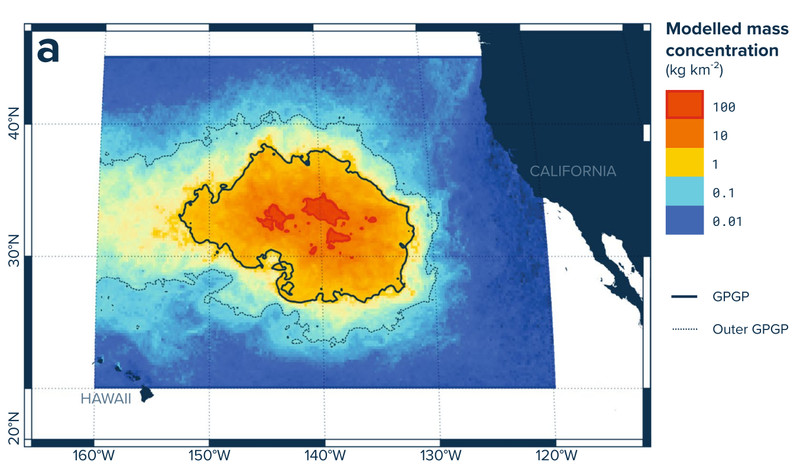
Great Pacific Garbage Patch
Major biological effects:
- Entanglement in nets, lines, and debris
- Ingestion by birds, sea turtles, fish, and marine mammals
- Digestive blockage, false fullness, injury, or death
So the comparison is:
- Landfilling contains waste but risks leachate and methane
- Incineration reduces volume but creates emissions and ash
- Illegal dumping and ocean dumping have fewer controls and often cause more direct harm
Key Takeaways
Solid Waste
Any discarded material that is neither a liquid nor a gas
Municipal Solid Waste
Solid waste generated primarily by homes, institutions, and commercial establishments and commonly collected by municipal services
Landfill (Landfilling)
A disposal method in which waste is placed, compacted, and covered in a designated land area
Sanitary Municipal Landfill (Sanitary Landfill)
An engineered landfill with a bottom liner, leachate and stormwater collection, a cap, and methane collection
Bottom Liner
A low-permeability clay or plastic barrier that separates landfill waste from soil and groundwater
Leachate
Contaminated liquid formed when water passes through waste and dissolves or carries substances from it
Leachate Collection System
Drainage material and perforated pipes above the liner that collect leachate for removal and treatment
Stormwater Collection System
A system that diverts rainwater and runoff around a landfill to reduce erosion and leachate formation
Landfill Cap
A low-permeability final cover that limits precipitation infiltration, erosion, waste exposure, and gas movement
Methane Collection System
Wells and pipes that capture landfill gas so it can be controlled rather than accumulating or escaping
Landfill Gas
Gas produced by anaerobic waste decomposition, composed mainly of methane and carbon dioxide
Electronic Waste (E-Waste)
Discarded electronic devices that may contain hazardous substances such as lead, mercury, and other metals
Incineration
High-temperature burning that greatly reduces waste volume but releases air pollutants and leaves ash that may contain concentrated toxic substances
Illegal Dumping
Unauthorized disposal that bypasses landfill containment and monitoring, allowing pollution to enter the environment directly
Open Dump
An uncontrolled waste site lacking routine cover, liners, and systems for collecting leachate and gas
Ocean Dumping
Disposal of solid waste directly into the ocean, contributing to persistent marine debris and harm to wildlife
Marine Debris
Persistent human-made waste in the ocean that can entangle wildlife, be ingested, and damage habitats
Gyre
A large rotating ocean-current system that can concentrate floating debris
Notes
Solid Waste
Any discarded material that is neither a liquid nor a gas
Municipal Solid Waste
Solid waste generated primarily by homes, institutions, and commercial establishments and commonly collected by municipal services
Landfill (Landfilling)
A disposal method in which waste is placed, compacted, and covered in a designated land area
Sanitary Municipal Landfill (Sanitary Landfill)
An engineered landfill with a bottom liner, leachate and stormwater collection, a cap, and methane collection
Bottom Liner
A low-permeability clay or plastic barrier that separates landfill waste from soil and groundwater
Leachate
Contaminated liquid formed when water passes through waste and dissolves or carries substances from it
Leachate Collection System
Drainage material and perforated pipes above the liner that collect leachate for removal and treatment
Stormwater Collection System
A system that diverts rainwater and runoff around a landfill to reduce erosion and leachate formation
Landfill Cap
A low-permeability final cover that limits precipitation infiltration, erosion, waste exposure, and gas movement
Methane Collection System
Wells and pipes that capture landfill gas so it can be controlled rather than accumulating or escaping
Landfill Gas
Gas produced by anaerobic waste decomposition, composed mainly of methane and carbon dioxide
Electronic Waste (E-Waste)
Discarded electronic devices that may contain hazardous substances such as lead, mercury, and other metals
Incineration
High-temperature burning that greatly reduces waste volume but releases air pollutants and leaves ash that may contain concentrated toxic substances
Illegal Dumping
Unauthorized disposal that bypasses landfill containment and monitoring, allowing pollution to enter the environment directly
Open Dump
An uncontrolled waste site lacking routine cover, liners, and systems for collecting leachate and gas
Ocean Dumping
Disposal of solid waste directly into the ocean, contributing to persistent marine debris and harm to wildlife
Marine Debris
Persistent human-made waste in the ocean that can entangle wildlife, be ingested, and damage habitats
Gyre
A large rotating ocean-current system that can concentrate floating debris
