Topic 6.12 Notes – Wind Energy
What Wind Energy Is
Wind energy means electricity generated from the kinetic energy of moving air. Kinetic energy is energy of motion.
A quick reminder of where wind comes from helps this make sense. The Sun heats Earth unevenly, and that uneven heating drives atmospheric circulation, which creates moving air. Since those atmospheric processes keep happening, wind is considered renewable.
Wind is also considered clean during operation because turbines do not burn fuel and do not directly release air pollutants while generating electricity.
That said, two ideas get confused a lot:
- Renewable means naturally replenished. It does not mean constant.
- Clean means low direct pollution during operation. It does not mean impact-free.
The central trade-off is simple. Wind can replace electricity from fossil fuels, which lowers greenhouse gas emissions and air pollution. At the same time, turbines can harm wildlife and disturb habitats.
How Wind Turbines Generate Electricity
The energy conversion is the heart of this topic.
This turbine diagram helps connect that energy pathway to the main parts students are expected to recognize.
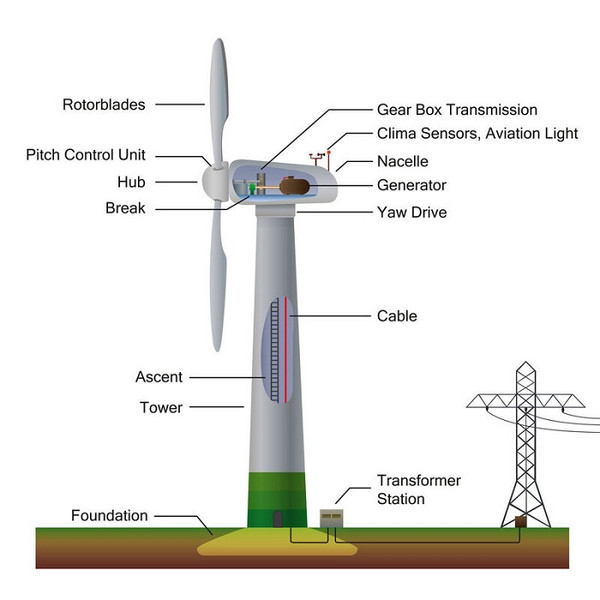
Parts of a wind turbine
Here’s how the parts work together:
- Wind pushes past the blades.
- The blades and hub, together called the rotor, spin.
- The rotor turns a shaft.
- The shaft drives the gearbox and generator in the nacelle.
- The generator converts that rotational motion into electricity, which then travels by cable down the tower.
Why the tall tower? Winds are usually stronger and less blocked by trees, buildings, and surface friction higher above the ground.
A few common mistakes to avoid:
- Blades do not directly make electricity. They capture wind and create rotation.
- Generators make the electricity.
- Turbines do not store electricity. Storage requires a separate system.
- Wind turbines do not use combustion, heat, or steam.
A wind farm is just a group of turbines linked to collection and transmission lines. Wind farms can be onshore or offshore.
Where Wind Works Best and Why Output Changes
Wind power works best where winds are strong and steady, such as:
- open plains
- coastlines
- mountain passes
- exposed ridges
- offshore areas
These places usually have fewer obstacles, so wind moves more consistently.
Onshore and offshore
Offshore wind often has stronger, steadier winds than onshore wind. The downside is cost. Offshore projects are harder to build, maintain, and connect back to land.
Variable output
Wind electricity is intermittent. That means output changes over time.
- If wind is absent or too weak, turbines produce no electricity.
- As wind speed rises, output increases up to the turbine’s rated speed.
- In dangerously high winds, turbines may shut down to avoid damage.
The power curve below ties those ideas together from cut-in speed to rated output to cut-out speed.
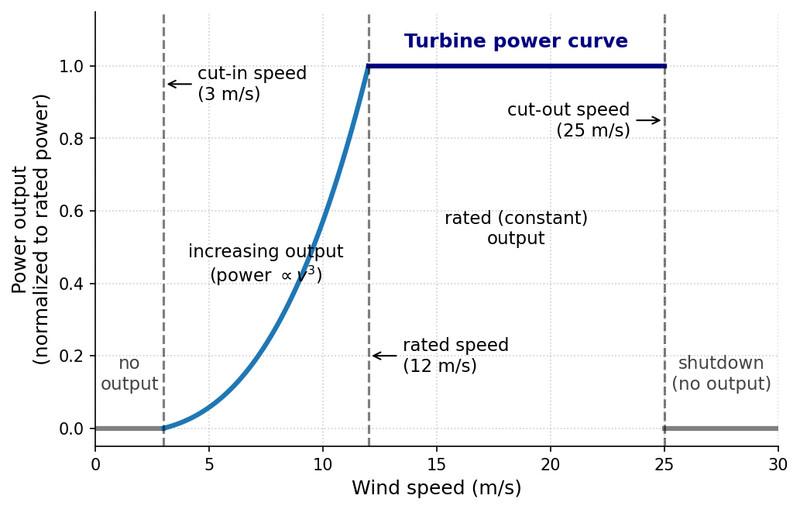
Wind turbine power curve
That makes wind not dispatchable on demand in the same way as a fuel-based power plant.
Grids handle intermittency by:
- combining wind with other energy sources
- connecting wind farms across wider regions
- expanding transmission lines
- using demand management
- storing extra energy for later use
Environmental Advantages and Disadvantages
Here’s the main comparison.
| Advantages | Disadvantages |
|---|---|
| Renewable energy source | Bird and bat mortality from blade collisions |
| No direct emissions during operation | Habitat loss or fragmentation from roads, foundations, and lines |
| No direct , NOx, particulate matter, CO, mercury, or other combustion pollutants | Offshore construction can disturb marine/coastal habitats |
| Little water use compared with thermal plants | Noise for nearby communities |
| No ongoing mining, drilling, fuel processing, or fuel transport during generation | Visual impacts |
| Land between turbines may still support agriculture or grazing | High initial construction costs and intermittent output |
The bird and bat examples matter because they are the wildlife impacts most often tested.
How to Reduce Wildlife Impacts
The best fix is careful siting. Put turbines where collision risk is lower.
Avoid:
- major migration corridors
- nesting areas
- roosting areas
- feeding grounds
- wetlands
- high-use raptor habitats
- high-use bat habitats
Other ways to reduce harm:
- Curtailment means temporarily slowing or stopping turbines.
- Shut turbines down during intense migration or high wildlife activity.
- Raise the cut-in speed during times when bats are active, so blades spin less in low-wind periods.
- Use detection systems that trigger shutdowns when vulnerable birds approach.
- Monitor birds and bats before and after construction.
- Design layouts and power lines to reduce collision, electrocution, and habitat disturbance.
- Restore disturbed land and minimize access roads.
The trade-off here is important. Reducing wildlife deaths often means less electricity output or choosing a less productive site.
Key Takeaways
Wind Energy (Wind Power)
Use of moving air to generate electricity; renewable and clean during operation, but turbine blades can kill birds and bats
Wind Turbine
Device that captures wind’s kinetic energy as mechanical rotation and uses a generator to convert that rotation into electricity
Wind Farm
Group of wind turbines connected to an electrical collection and transmission system, located either onshore or offshore
Intermittent (Variable) Energy Source
Energy source whose output changes and cannot always be supplied on demand; wind output varies with wind speed and may require storage or other balancing sources
Wind Turbine Curtailment
Intentionally slowing or stopping turbines, often during high wildlife activity, to reduce mortality at the cost of electricity generation
Notes
Wind Energy (Wind Power)
Use of moving air to generate electricity; renewable and clean during operation, but turbine blades can kill birds and bats
Wind Turbine
Device that captures wind’s kinetic energy as mechanical rotation and uses a generator to convert that rotation into electricity
Wind Farm
Group of wind turbines connected to an electrical collection and transmission system, located either onshore or offshore
Intermittent (Variable) Energy Source
Energy source whose output changes and cannot always be supplied on demand; wind output varies with wind speed and may require storage or other balancing sources
Wind Turbine Curtailment
Intentionally slowing or stopping turbines, often during high wildlife activity, to reduce mortality at the cost of electricity generation
