Topic 8.3 Notes – Endocrine Disruptors
What Endocrine Disruptors Are
An endocrine disruptor is a chemical that interferes with the endocrine system, the body system that uses hormones to send messages.
Here’s the quick refresher you need:
- Glands release hormones.
- Hormones are chemical messengers.
- They travel to target cells and bind to receptors.
- That binding tells the cell how to respond.
Hormones help control:
- growth and development
- sexual differentiation and maturation
- reproduction
- metabolism
- stress response
- homeostasis (keeping internal conditions stable)
The definition matters here. A chemical counts as an endocrine disruptor because it alters hormone signaling, not because it is immediately deadly.
That leads to an important AP distinction:
- A chemical can be toxic without being an endocrine disruptor.
- A chemical can be an endocrine disruptor even if it does not cause obvious short-term death.
Why low levels still matter:
- Hormones normally work at very low concentrations.
- Exposure during embryonic or juvenile development can be more important than a larger exposure later in life.
- Effects may not show up until the organism reaches reproductive age.
Ways Endocrine Disruptors Interfere with Hormones
The main question is how the chemical changes the message.
Hormone mimicry
A mimic acts like a natural hormone and activates the receptor.
- The cell gets a signal it should not be getting
- or gets it at the wrong time
- or gets too strong a signal
Hormone blocking
A blocker sits in the receptor and prevents the real hormone from binding.
- The normal signal cannot get through
- So the body fails to carry out a hormone-controlled process correctly
The diagram below shows both of those receptor-level effects. Focus on the middle and right panels.
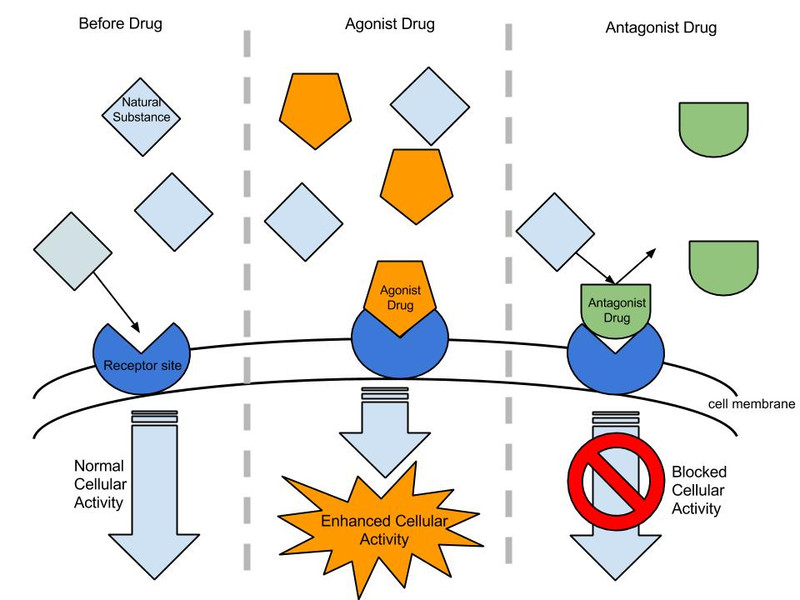
Hormone mimicry and blocking at a receptor
Changes to hormone levels
Some disruptors change:
- hormone production
- release
- transport
- breakdown
- elimination
That means the body may end up with too much or too little of a hormone.
Changes to receptor response
Some chemicals change:
- the number of receptors
- the sensitivity of receptors
So even normal hormone levels may produce an abnormal response.
Common AP wording includes:
- interferes with hormone signaling
- alters endocrine function
- disrupts normal development or reproduction
Sources and Environmental Pathways
Endocrine-active chemicals can be natural or synthetic, but APES mainly cares about human-released pollutants.
Examples you should know:
- BPA (bisphenol A)
- phthalates
- steroid hormones and hormone-like pharmaceutical compounds
- pesticides, including DDT and atrazine
- PCBs (polychlorinated biphenyls)
- some industrial chemicals and combustion by-products
Do not assume every pesticide or plastic chemical is an endocrine disruptor. There has to be evidence that it interferes with hormones.
Major pathways into ecosystems:
- wastewater and sewage
- municipal wastewater
- sewage-treatment-plant effluent
- human-excreted pharmaceuticals
- industrial release
- industrial wastewater
- manufacturing discharge
- agricultural input
- pesticide runoff
- runoff carrying animal hormones or waste
- consumer-product release and disposal
- leaching from discarded products
- improper disposal of pharmaceuticals and household chemicals
Aquatic systems matter a lot because organisms in water can face continuous exposure.
Source connection:
- Point source = one identifiable source, like a wastewater outfall
- Nonpoint source = spread-out source, like agricultural runoff
Effects on Organisms, Populations, and Ecosystems
The effects usually build in a chain.
- A chemical disrupts hormone signaling.
- Individual organisms show abnormal development or reduced reproductive success.
- Populations get fewer viable offspring or shifted sex ratios.
- Population size declines or recruitment drops.
- Food-web interactions change.
Characteristic organism-level effects include:
- birth defects
- developmental disorders
- abnormal sexual development
- malformed reproductive organs
- delayed or accelerated sexual maturation
- reduced sperm or egg production
- reduced fertility or reproductive failure
- altered reproductive behavior
- intersex characteristics
- feminization of males or masculinization of females
When AP says gender imbalance, read that as altered sex ratio or abnormal sexual development.
A huge test idea here is that no fish kill is required. Endocrine disruptors can cause slow ecological harm because adults survive, but they fail to replace themselves.
Evidence and the Standard Fish Example
Scientists look for evidence at more than one level:
- the chemical in water, sediment, or tissue
- exposed vs. control groups
- hormone-related markers such as vitellogenin in male fish
- intersex or malformed reproductive organs
- fertility, offspring number, hatching success, juvenile recruitment, population abundance
Strong studies use:
- controls
- replication
- controlled exposure
Field studies can show association, but they do not always prove cause by themselves.
The classic case involved fathead minnows, shown here.
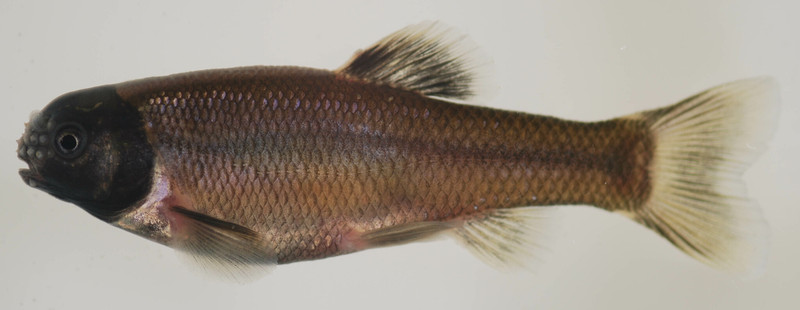
Fathead minnow
The classic case:
- Synthetic estrogen 17α-ethinylestradiol from contraceptives entered lake water through wastewater effluent.
- Male fathead minnows showed feminization, including vitellogenin production and intersex tissue.
- Reproduction dropped sharply and the population nearly collapsed.
What this proves:
- Low concentrations can matter.
- Endocrine disruption often affects reproduction more than survival.
- Individual-level effects can scale up to population decline.
Keep this distinction straight:
- Endocrine disruption = affects hormone signaling
- Persistence = breaks down slowly
- Bioaccumulation = builds up in one organism
- Biomagnification = increases up the food chain
One chemical can have more than one of these properties, but they are not the same thing.
Key Takeaways
Endocrine Disruptor
A chemical that alters normal hormone signaling in animals, potentially causing birth defects, developmental or sexual abnormalities, impaired reproduction, and population sex-ratio imbalances
Notes
Endocrine Disruptor
A chemical that alters normal hormone signaling in animals, potentially causing birth defects, developmental or sexual abnormalities, impaired reproduction, and population sex-ratio imbalances
