Topic 6.13 Notes – Energy Conservation
What Energy Conservation Means
In this topic, energy conservation means avoiding unnecessary human energy use. It does not mean the physics law that energy cannot be created or destroyed.
Here’s the quick distinction that shows up on tests:
- Conservation = using less energy overall
- Example: setting the thermostat lower in winter
- Efficiency = getting the same service with less energy input
- Example: an LED bulb giving the same light with less electricity
Both matter because both lower total energy demand.
Why that matters:
- less electricity and fuel needed
- less mining, drilling, processing, transport, and power generation
- often lower greenhouse gas emissions, air pollution, water use, habitat disruption, and waste
The exact benefit depends on what energy source you are replacing. Saving electricity on a coal-heavy grid cuts more emissions than saving the same amount on a cleaner grid, but lower demand still reduces environmental impact either way.
Ways to Conserve Energy at Home
The home examples the AP course expects are adjusting the thermostat, conserving water, using energy-efficient appliances, and conservation landscaping.
Thermostat adjustment and heating and cooling
Heating and cooling use a lot of household energy because your home is being kept at a different temperature than outdoors. A smaller indoor-outdoor temperature difference means less energy use.
- lower thermostat in winter
- higher thermostat in summer
- programmable or smart thermostats cut heating or cooling when people are asleep or away
These work even better with building features that slow heat transfer. The diagram highlights common places where homes lose heat, including the roof, walls, windows, air leaks, and the ground.
- insulation in walls/attics
- weather stripping and caulking to stop air leaks
- double-pane or efficient windows
- window shades, overhangs, and exterior vegetation
- HVAC maintenance so the system runs efficiently
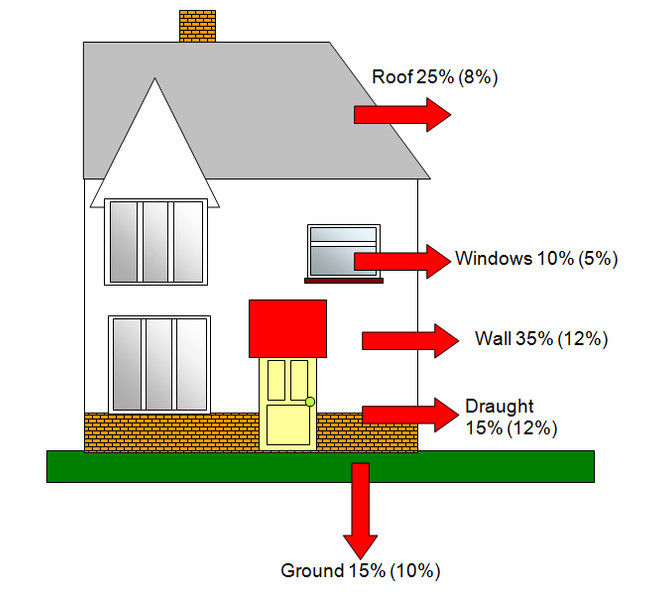
Household heat loss pathways
Water conservation
Water use also uses energy because water must be pumped, treated, distributed, heated, and wastewater treated.
Examples:
- shorter showers
- low-flow showerheads and fixtures
- efficient washing machines
- fixing leaks
- washing clothes in cold water
Hot water matters most because heating water takes energy directly. Outdoor water conservation also saves energy used in pumping and treatment.
Efficient appliances and lighting
Efficient devices give the same service with less energy.
Examples the course likes:
- efficient refrigerators, washers, dishwashers, water heaters, and HVAC equipment
- LED lighting
- ENERGY STAR appliances
One small detail students forget is standby power. Some electronics still draw electricity even when “off.”
Conservation landscaping
Conservation landscaping means arranging plants and outdoor features to reduce energy use and irrigation demand.
- deciduous shade trees cool homes in summer and allow winter sunlight after leaves fall
- windbreaks reduce winter heat loss
- xeriscaping uses drought-tolerant or locally adapted plants
- mulch and efficient irrigation reduce watering needs
Placement matters. A good design in one climate may waste energy in another.
Ways to Conserve Energy on a Larger Scale
Improved fuel economy
Higher fuel economy means traveling farther per unit of fuel, so the same trip uses less gasoline.
Ways it improves:
- efficient engines and transmissions
- lower vehicle mass
- better aerodynamics
- properly inflated tires
- less idling, rapid acceleration, and excess weight
Government standards can spread these savings across millions of vehicles.
BEVs and hybrid vehicles
- BEVs use batteries and electric motors and have no tailpipe emissions
- hybrids combine a gasoline engine with an electric motor and battery
Both conserve energy through:
- higher efficiency
- less idling
- regenerative braking that captures energy during braking
Trade-offs still exist. Total impact depends on the electricity mix, battery production, and driving habits.
Public transportation
Buses, trains, and subways can reduce energy use per passenger-mile when ridership is high. Carpooling works for the same reason. Compact development also makes transit, walking, and biking more practical.
Green building design
Green buildings are designed to reduce long-term energy demand.
Common features:
- insulation and air sealing
- efficient windows and shading
- building orientation
- daylighting
- efficient HVAC, lighting, and water heating
- occupancy sensors and programmable controls
- cool roofs, green roofs, low-flow fixtures, compact size
How to Calculate Energy Savings
Two formulas matter most:
Energy used equals power times time.
Keep the units straight:
| Unit | Meaning |
|---|---|
| watts or kilowatts | rate of energy use |
| kilowatt-hours | amount of energy used |
Also know:
Common APES trap: higher mpg does not equal the same percent fuel savings. Calculate fuel used first, then compare.
Limits, Trade-Offs, and System Effects
Conservation can happen at many scales, from individuals to governments and utilities. One major system effect is reduced peak demand, which can lower the need for extra power plants and grid capacity.
Trade-offs include:
- efficient technology may cost more up front
- public transit needs infrastructure and enough riders
- BEVs need charging systems and battery materials
The rebound effect means savings can shrink if people use more because it costs less to operate. A more efficient car saves less fuel if its owner drives much more.
Key Takeaways
Energy Conservation
Reducing human energy demand through changes in behavior, technology, design, or transportation rather than merely changing energy sources
Energy Efficiency
Providing the same service with less energy input; efficiency = useful energy output ÷ total energy input × 100
Thermostat Adjustment
Setting temperatures lower in winter, higher in summer, or closer to outdoor temperatures when a building is unoccupied to reduce HVAC energy use
Water Conservation
Reducing water use to save the energy required to withdraw, pump, treat, distribute, heat, collect, and treat water and wastewater
ENERGY STAR Certification
A certification identifying products that meet specified energy-efficiency criteria, though actual energy use still depends on size and operation
LED Lighting
Lighting that produces the same visible light with much less electricity and waste heat than incandescent lighting
Standby Load
Electricity consumed by a device while it is turned off or operating in standby mode
Conservation Landscaping
Selecting and placing vegetation and landscape materials to reduce building heating, cooling, and irrigation demand
Xeriscaping
Landscaping with drought-tolerant or adapted plants, limited turf, mulch, and efficient irrigation to reduce water and associated energy use
Fuel Economy
Distance traveled per unit of fuel, commonly miles per gallon; fuel consumed = distance traveled ÷ fuel economy
Battery Electric Vehicle (BEV)
A vehicle propelled by an electric motor using battery-stored electricity; it has no tailpipe emissions, but generation and manufacturing still cause impacts
Hybrid Vehicle
A vehicle combining an internal-combustion engine with an electric motor and battery to use less fuel than a comparable conventional vehicle
Public Transportation
Shared transportation that can reduce energy use and emissions per passenger-mile when enough riders share the vehicle’s energy consumption
Green Building Design
Designing and operating buildings to reduce energy and resource demand through orientation, insulation, sealing, shading, efficient systems, controls, and water-saving features
Passive Design
Using building form, orientation, materials, thermal mass, shading, and natural airflow to manage heat and light with little or no mechanical energy
Calculating Electrical Energy Use
E = P × t; multiply power by operating time, converting watts to kilowatts when the answer is needed in kilowatt-hours
Power vs. Energy
Power, measured in watts or kilowatts, is the rate of energy use; energy, measured in watt-hours or kilowatt-hours, is the amount used over time
Percentage Reduction
Percentage reduction = (original use − new use) ÷ original use × 100
Simple Payback Period
The time required for savings to equal an initial cost; simple payback = initial cost ÷ annual monetary savings
Emissions Factor
The amount of a pollutant emitted per unit of energy produced or consumed for a particular energy system
Peak Demand
The period of highest electricity use, which determines how much generating and transmission capacity an electric system must provide
Rebound Effect
The partial loss of expected efficiency savings when lower operating costs encourage greater use of the efficient product or service
Notes
Energy Conservation
Reducing human energy demand through changes in behavior, technology, design, or transportation rather than merely changing energy sources
Energy Efficiency
Providing the same service with less energy input; efficiency = useful energy output ÷ total energy input × 100
Thermostat Adjustment
Setting temperatures lower in winter, higher in summer, or closer to outdoor temperatures when a building is unoccupied to reduce HVAC energy use
Water Conservation
Reducing water use to save the energy required to withdraw, pump, treat, distribute, heat, collect, and treat water and wastewater
ENERGY STAR Certification
A certification identifying products that meet specified energy-efficiency criteria, though actual energy use still depends on size and operation
LED Lighting
Lighting that produces the same visible light with much less electricity and waste heat than incandescent lighting
Standby Load
Electricity consumed by a device while it is turned off or operating in standby mode
Conservation Landscaping
Selecting and placing vegetation and landscape materials to reduce building heating, cooling, and irrigation demand
Xeriscaping
Landscaping with drought-tolerant or adapted plants, limited turf, mulch, and efficient irrigation to reduce water and associated energy use
Fuel Economy
Distance traveled per unit of fuel, commonly miles per gallon; fuel consumed = distance traveled ÷ fuel economy
Battery Electric Vehicle (BEV)
A vehicle propelled by an electric motor using battery-stored electricity; it has no tailpipe emissions, but generation and manufacturing still cause impacts
Hybrid Vehicle
A vehicle combining an internal-combustion engine with an electric motor and battery to use less fuel than a comparable conventional vehicle
Public Transportation
Shared transportation that can reduce energy use and emissions per passenger-mile when enough riders share the vehicle’s energy consumption
Green Building Design
Designing and operating buildings to reduce energy and resource demand through orientation, insulation, sealing, shading, efficient systems, controls, and water-saving features
Passive Design
Using building form, orientation, materials, thermal mass, shading, and natural airflow to manage heat and light with little or no mechanical energy
Calculating Electrical Energy Use
E = P × t; multiply power by operating time, converting watts to kilowatts when the answer is needed in kilowatt-hours
Power vs. Energy
Power, measured in watts or kilowatts, is the rate of energy use; energy, measured in watt-hours or kilowatt-hours, is the amount used over time
Percentage Reduction
Percentage reduction = (original use − new use) ÷ original use × 100
Simple Payback Period
The time required for savings to equal an initial cost; simple payback = initial cost ÷ annual monetary savings
Emissions Factor
The amount of a pollutant emitted per unit of energy produced or consumed for a particular energy system
Peak Demand
The period of highest electricity use, which determines how much generating and transmission capacity an electric system must provide
Rebound Effect
The partial loss of expected efficiency savings when lower operating costs encourage greater use of the efficient product or service
