Topic 6.8 Notes – Solar Energy
What Solar Energy Is
Solar energy is energy from sunlight. Humans can capture it in two useful forms:
- Electricity
- Heat
It is renewable on human time scales because the sun keeps supplying energy. That does not mean it is always available. Solar output depends on how much sunlight actually reaches the system.
Things that change solar availability:
- Time of day because sunlight is strongest around midday and absent at night
- Season because winter days are shorter and the sun angle is lower
- Latitude because places closer to the equator usually get more direct sunlight
- Cloud cover because clouds block or scatter incoming light
- Shading from trees, buildings, or terrain
- Panel orientation because panels work best when angled toward the sun
- Local climate because some regions are sunnier than others
A solar farm like the one shown here works only when enough sunlight reaches the panels, so all of those factors affect its output.
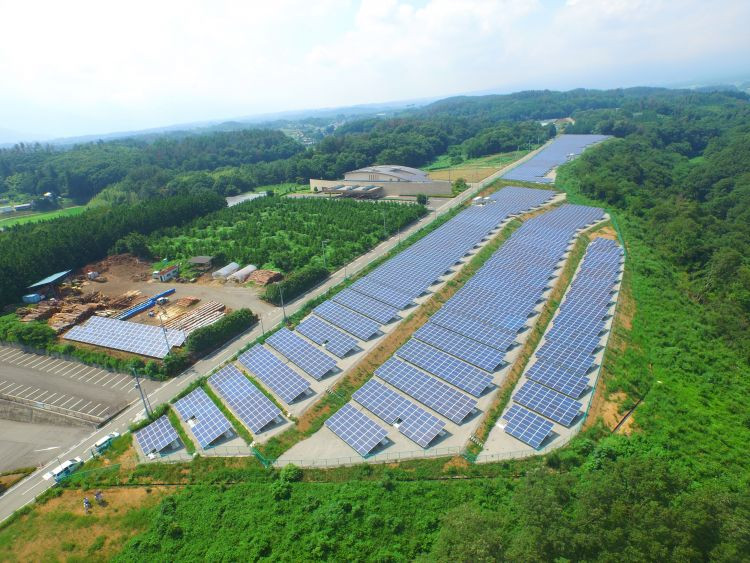
Ground-mounted solar array
The core idea for this whole topic is simple. Solar is relatively clean during operation, but it is not impact-free.
Types of Solar Energy Systems
There are three main categories you need to keep separate.
Photovoltaic cells
Photovoltaic cells, or PV cells, turn light directly into electricity.
How they work:
- PV cells use semiconductors, usually silicon
- Photons from sunlight hit the cell and free electrons
- An internal electric field pushes those electrons in one direction, creating current
- The cell produces DC electricity
- An inverter converts DC to AC for homes or the power grid
- Cells → panels → arrays
In a grid-connected setup, the electricity from the panels passes through an inverter before going to a building’s electrical panel and then to appliances or the utility grid.
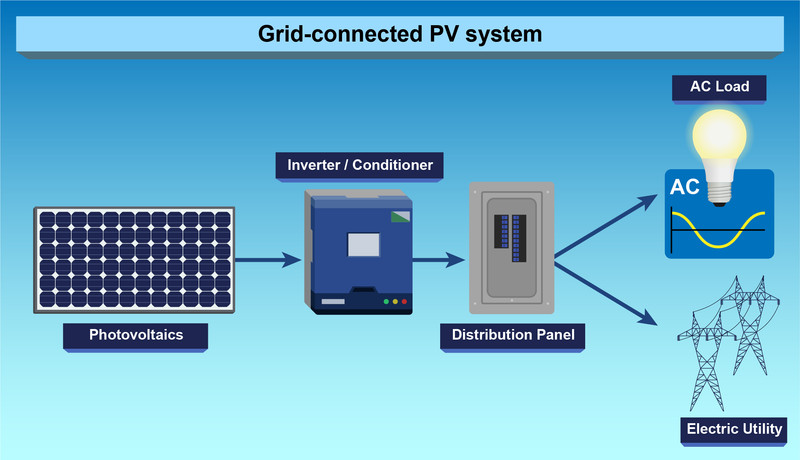
Grid-connected photovoltaic system
One easy exam trap is storage. PV cells do not store energy. Batteries are separate.
Active solar systems
Active solar systems capture the sun’s energy as heat and use equipment to move it.
Common parts include:
- Pumps
- Fans
- Valves
- Sensors
- Controls
The heat-transfer fluid might be water, air, or another liquid. These systems often store heat in an insulated tank. Common uses are water heating and space heating.
Passive solar systems
Passive solar systems heat a building directly, without pumps, fans, or electronic controls.
They depend on:
- Building orientation
- Window placement
- Shading
- Design of the structure
A common example is sunlight entering properly oriented windows and warming indoor space. In APES, passive systems do not actively collect or store energy for later use.
How to tell them apart
- Photovoltaic = direct electricity from light
- Active solar = heat collected and moved by equipment
- Passive solar = direct heating without collection equipment
A PV system can have equipment like an inverter and still be photovoltaic, not active solar.
How Solar Systems Work in Practice
Active solar water heating
This process usually appears in order:
- Sunlight strikes a collector
- The collector heats a circulating fluid
- A pump moves the warmed fluid
- Heat transfers to water or indoor space
- An insulated tank stores thermal energy
The diagram below shows the main parts of that loop, including the collectors, pump, and storage tank.
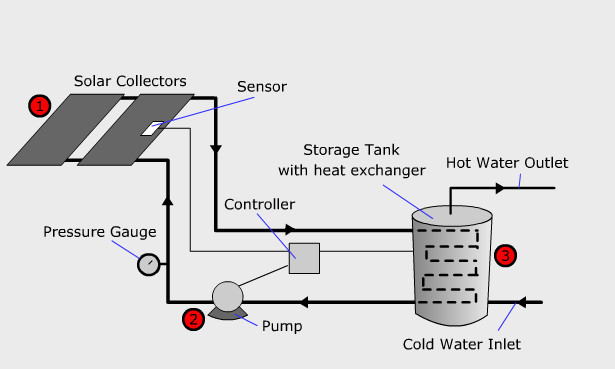
Active solar water-heating system
Why solar output changes
PV systems produce no electricity at night. Output drops with:
- Clouds
- Shade
- Poor panel orientation
- Short winter days
Batteries and grid connections help with intermittency, but they are separate from the solar panels themselves.
Reading solar data
A PV graph over one day usually has an arch shape:
- Zero at night
- Rising in the morning
- Highest near midday
- Falling in the afternoon
Cloudy days show dips or jagged drops. Clear days are higher and smoother.
That pattern is what the graph shows, with a smooth clear-day curve and a lower cloudy-day curve with several dips.
Also keep power and energy separate:
- Kilowatts (kW) = rate of electricity production
- Kilowatt-hours (kWh) = total electricity produced over time
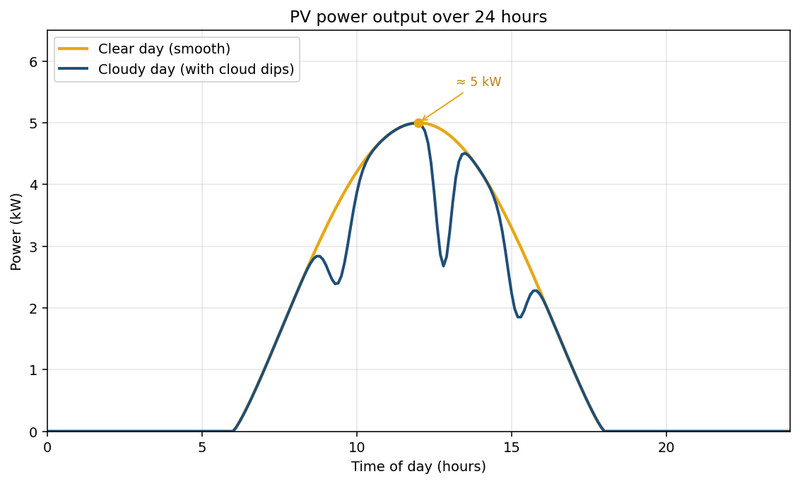
PV power output over 24 hours
Environmental Benefits and Drawbacks
Advantages
During operation, solar has low environmental impact compared with fossil fuels.
- No fuel combustion
- No direct operational emissions of carbon dioxide, sulfur dioxide, nitrogen oxides, particulate matter, or mercury
- No coal ash or other combustion waste
- Rooftop systems use already developed land
- Sunlight has no fuel cost after installation
Limitations and costs
Solar can be expensive upfront because of:
- Panels
- Inverters
- Mounting
- Wiring
- Installation
- Pumps and controls
- Storage systems
It is also intermittent, so it is dependable only when sunlight is available unless paired with storage or backup.
Land-use impacts
Large solar farms need a lot of land. In desert areas, development can cause:
- Vegetation removal
- Soil disturbance
- Road building
- Fencing
- Transmission lines
- Habitat fragmentation
A key example is the Mojave Desert, where solar development can harm habitat for the desert tortoise.
Life-cycle perspective
Solar is low-impact, not zero-impact. Environmental costs can happen during:
- Mining
- Manufacturing
- Transport
- Construction
- Disposal or recycling
Why Solar Energy Matters
Solar can replace some fossil-fuel electricity, which helps reduce greenhouse gas emissions and air pollution. Its environmental value depends on what energy source it replaces and where and how it is built.
The best summary is this. Solar is renewable and relatively clean, but it is limited by sunlight, cost, and land-use trade-offs.
Key Takeaways
Solar Energy
Radiant energy from the sun captured as electricity or useful heat; renewable but dependent on available sunlight
Photovoltaic (PV) Cell (Solar Cell)
A device that converts light energy directly into electrical energy, initially as direct current (DC)
Active Solar Energy System (Active Solar Thermal System)
A system that uses pumps or other equipment to collect and move solar heat in a fluid, allowing the thermal energy to be stored
Passive Solar Energy System (Passive Solar System)
A design that absorbs and uses solar heat directly without mechanical or electrical collection equipment or dedicated energy storage
Solar Intermittency
Variation or cessation of solar production as available sunlight changes, including zero photovoltaic output at night
Utility-Scale Solar Farm
A large installation of many solar arrays that requires substantial land and may damage or fragment desert habitat
Clean Energy
Energy produced without fuel combustion or direct operational air pollution, though not without all life-cycle environmental effects
Notes
Solar Energy
Radiant energy from the sun captured as electricity or useful heat; renewable but dependent on available sunlight
Photovoltaic (PV) Cell (Solar Cell)
A device that converts light energy directly into electrical energy, initially as direct current (DC)
Active Solar Energy System (Active Solar Thermal System)
A system that uses pumps or other equipment to collect and move solar heat in a fluid, allowing the thermal energy to be stored
Passive Solar Energy System (Passive Solar System)
A design that absorbs and uses solar heat directly without mechanical or electrical collection equipment or dedicated energy storage
Solar Intermittency
Variation or cessation of solar production as available sunlight changes, including zero photovoltaic output at night
Utility-Scale Solar Farm
A large installation of many solar arrays that requires substantial land and may damage or fragment desert habitat
Clean Energy
Energy produced without fuel combustion or direct operational air pollution, though not without all life-cycle environmental effects
