Topic 5.10 Notes – Impacts of Urbanization
What Urbanization Is
Urbanization means two things happening together:
- a growing proportion of people live in cities
- developed land physically expands
The key environmental idea is simple. Natural land gets replaced with built land, and that changes how ecosystems work. Water soaks in less, habitats get broken up, and resource use becomes concentrated.
A common mix-up is urbanization versus urban sprawl.
- Urbanization = growth of urban populations and development
- Urban sprawl = low-density spread outward into suburbs and rural land
A city can grow in a compact, high-density way or in a low-density outward way. That matters because compact development often uses less land and less energy per person, even if the city’s total resource use is still huge.
Keep four impacts connected in your head through the whole topic:
- resource depletion
- hydrologic-cycle disruption
- increased atmospheric carbon
- habitat loss and fragmentation
How Urbanization Changes Water Flow and Water Supply
On natural land, rain can:
- infiltrate into soil
- percolate downward
- recharge groundwater
- return to the air by evaporation and transpiration
- move as surface runoff
Urban land shifts water away from infiltration and toward runoff. That is why hydrographs for developed watersheds usually show a faster, taller spike after rain.
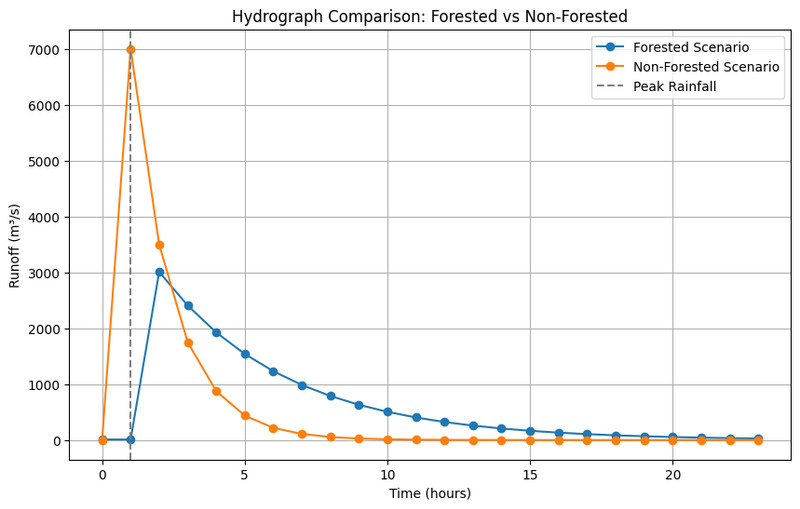
Hydrograph of forested vs. non-forested runoff
Impervious surfaces
Impervious surfaces are human-made surfaces that block water from reaching soil.
Illustrative examples you should know:
- roads
- buildings and rooftops
- sidewalks
- parking lots
- traditional asphalt and concrete surfaces
Runoff and flooding
This cause-and-effect chain gets tested a lot:
- More impervious surface
- Less infiltration and groundwater recharge
- More surface runoff
- Water reaches streams and storm drains faster
- Higher peak discharge and more flooding
Urban streams are called flashier because they have:
- shorter lag time
- higher peak discharge
- quicker drop after the storm
That fast runoff also erodes stream banks and carries pollutants quickly.
Groundwater depletion
Cities use lots of freshwater from rivers, reservoirs, and especially aquifers. Depletion happens when water is withdrawn faster than recharge replaces it.
Results can include:
- lowered water table
- dry wells
- land subsidence from sediment compaction
This connection matters a lot. Urbanization can increase water demand and reduce recharge at the same time.
Saltwater intrusion
Saltwater intrusion is saline water moving into a freshwater aquifer, usually in coastal cities.
A coastal aquifer cross section helps you picture what is happening underground near the shoreline.
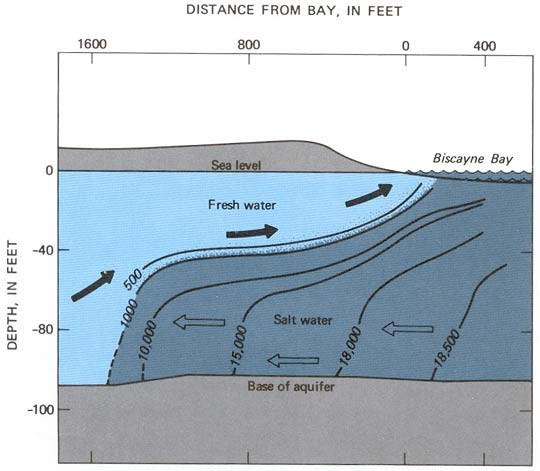
Saltwater intrusion in a coastal aquifer
Sequence:
- Heavy groundwater pumping
- Freshwater pressure drops
- Seawater moves inland or upward underground
- Wells become brackish or salty
This is not seawater flooding over land. It happens underground.
How Urbanization Affects the Carbon Cycle
Urbanization raises atmospheric carbon in three main ways.
Fossil-fuel combustion
Transportation, electricity, heating and cooling, industry, and construction burn coal, oil, and natural gas. That moves stored geologic carbon into the atmosphere as CO2. Sprawl usually increases driving, so it often increases emissions too.
Landfills
Cities generate lots of waste with organic carbon.
- aerobic decomposition releases CO2
- anaerobic decomposition in landfills releases methane and CO2
- burning landfill gas still produces CO2
Vegetation removal
When land is cleared for development:
- fewer plants remove CO2 by photosynthesis
- less carbon is stored in biomass and soils
What Urban Sprawl Changes
Urban sprawl is movement from high-density urban areas to low-density suburbs spreading into rural land.
Land conversion and habitat fragmentation
Sprawl replaces:
- forests
- wetlands
- grasslands
- farmland
This splits continuous habitat into smaller patches. That means:
- more edge habitat
- less interior habitat
- blocked wildlife movement
- more wildlife-vehicle collisions
Transportation and infrastructure impacts
Sprawl separates homes, stores, and jobs, so people depend more on cars. It also needs more:
- roads
- parking lots
- sewer lines
- water lines
- electricity infrastructure
That raises both environmental costs and public costs per person.
Why These Impacts Matter and How They Are Reduced
These effects reinforce each other. Sprawl adds impervious surface, runoff rises, recharge falls, pumping increases, coastal aquifers face saltwater intrusion, and driving raises CO2 emissions.
Common ways to reduce impacts:
- compact development and public transit
- permeable surfaces and less unnecessary pavement
- protecting recharge areas
- water conservation and managed aquifer recharge
- urban trees and green spaces
Tradeoffs matter too:
- compact development can concentrate heat, traffic, and pollution if poorly planned
- green space and recharge projects need land, money, and maintenance
- no single solution fixes every urban problem
Key Takeaways
Urbanization
Increase in the proportion of people living in cities and the associated development of buildings, roads, and infrastructure
Resource Depletion
Reduction of a resource when withdrawal exceeds natural replenishment; urban demand can deplete freshwater, energy, and materials
Land Subsidence
Sinking of land as excessive groundwater withdrawal causes underground sediments to compact
Impervious Surface
A surface such as pavement or a rooftop that prevents infiltration, increasing runoff and flooding while reducing groundwater recharge
Saltwater Intrusion
Movement of saline water into a freshwater aquifer when pumping lowers freshwater pressure, especially near coasts
Urban Sprawl
Low-density outward spread of population and development from cities into suburban and rural land
Habitat Fragmentation
Division of continuous habitat by roads and development into smaller, isolated patches
Urban Heat Island Effect
The higher temperatures of urban areas relative to surrounding rural areas because built surfaces absorb and reradiate heat and vegetation is reduced
Notes
Urbanization
Increase in the proportion of people living in cities and the associated development of buildings, roads, and infrastructure
Resource Depletion
Reduction of a resource when withdrawal exceeds natural replenishment; urban demand can deplete freshwater, energy, and materials
Land Subsidence
Sinking of land as excessive groundwater withdrawal causes underground sediments to compact
Impervious Surface
A surface such as pavement or a rooftop that prevents infiltration, increasing runoff and flooding while reducing groundwater recharge
Saltwater Intrusion
Movement of saline water into a freshwater aquifer when pumping lowers freshwater pressure, especially near coasts
Urban Sprawl
Low-density outward spread of population and development from cities into suburban and rural land
Habitat Fragmentation
Division of continuous habitat by roads and development into smaller, isolated patches
Urban Heat Island Effect
The higher temperatures of urban areas relative to surrounding rural areas because built surfaces absorb and reradiate heat and vegetation is reduced
