Topic 5.7 Notes – Meat Production Methods
What Meat Production Methods Are
There are two main terrestrial livestock systems in this topic.
Intensive confinement systems
Animals are kept in concentrated spaces and feed is brought to them.Pasture-based systems
Animals eat grass or other forage directly from the land for most of their lives.
Why meat usually has a larger environmental footprint than plant foods comes down to energy transfer. Livestock eat plants, but much of that energy is lost through respiration, movement, body maintenance, and waste, so less ends up as edible protein.
That means meat production usually needs more:
- Land for pasture or feed crops
- Freshwater for animals and feed production
- Energy for machinery, buildings, transport, and feed production
It also tends to increase:
- Nutrient pollution from manure and fertilizer
- Greenhouse gas emissions
Impacts vary by animal:
- Ruminants like cattle and sheep produce lots of methane through enteric fermentation, which is digestion by microbes in their stomachs.
- Nonruminants like pigs and poultry usually convert feed more efficiently, but they still need feed, water, energy, and manure management.
A common test trap is thinking smaller facility space means lower impact. It might just mean the feed cropland is somewhere else.
Types of Meat Production Methods
Feedlots and CAFOs
A feedlot is a confined area, especially for cattle, where animals are fed high-energy feed instead of grazing. A CAFO is the broader category, meaning a concentrated animal feeding operation with many animals in a small area.
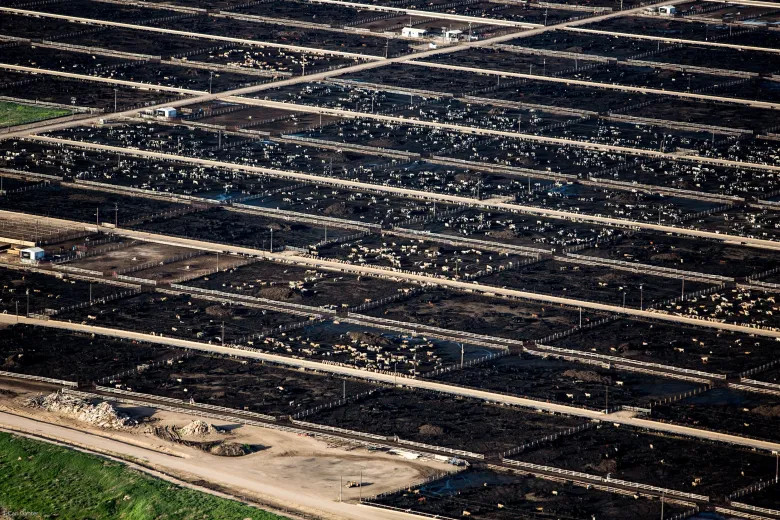
Large cattle feedlot or CAFO
Typical features of systems like the one shown here include:
- Feed is usually grain- and soy-based.
- Benefits include rapid weight gain, economic efficiency, predictable supply, and lower consumer prices.
- Drawbacks include concentrated manure, water pollution risk, greenhouse gas emissions, and routine antibiotic use.
Pasture-based and free-range systems
In pasture-based systems, animals feed on grass or forage for most of their lives. Free-range means outdoor access, but it does not automatically mean low-impact or antibiotic-free.
- Benefit is that manure is spread across pasture, which can return nutrients to soil.
- Drawbacks include more land use, often higher prices, and possible runoff or erosion if stocking density is too high.
Rotational grazing
Rotational grazing means livestock are moved among paddocks so vegetation gets time to recover. The diagram shows animals grazing one section while the others rest and regrow before the herd is moved again.
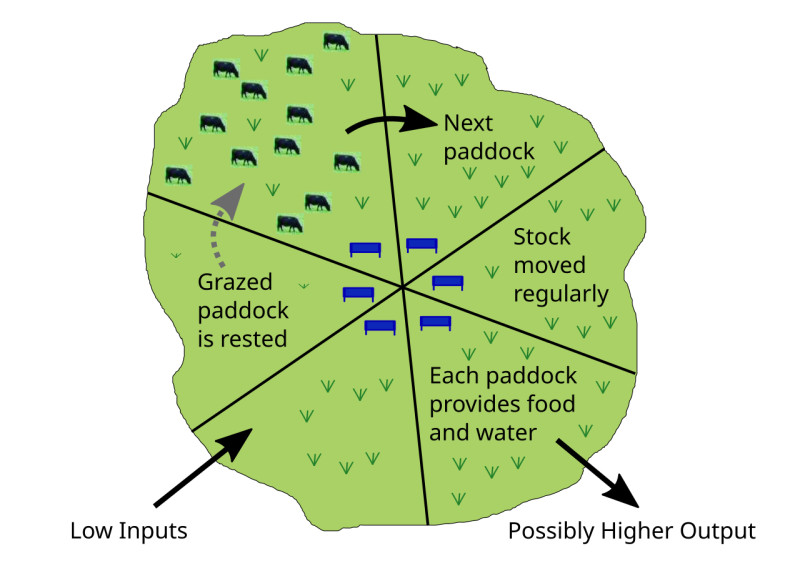
Rotational grazing system
This can:
- reduce erosion
- keep plant cover in place
- spread manure more evenly
- protect soil fertility
It only works when stocking rate is reasonable and the land gets enough recovery time.
Environmental Trade-Offs and Impacts
Water pollution from manure
In CAFOs, manure can build up faster than crops and soil can absorb its nutrients. Then leakage, spills, or overapplication can send nitrogen and phosphorus into water.
Runoff may carry:
- manure
- nutrients
- organic matter
- sediment
- pathogens
That can lead to eutrophication, which means excess nutrients cause algal growth, then decomposition uses up oxygen and harms aquatic life. Pasture systems can also cause runoff if too many animals are crowded onto the land.
Antibiotic resistance
Routine antibiotic use in intensive systems creates selection pressure. Bacteria with resistance survive and spread through waste, soil, water, food handling, and contact.
The key distinction is this: bacteria evolve resistance, not the livestock.
Greenhouse gases
Meat production releases three major greenhouse gases:
- CO2 from fossil-fuel use and land-use change
- CH4 from enteric fermentation in cattle and sheep, plus anaerobic manure storage
- N2O from manure, pasture soils, and fertilized feed crops
Land use and feed demand
- CAFOs use less nearby grazing land, but depend heavily on cropland for feed.
- Pasture systems need more total land and can cause habitat loss if forests or grasslands are cleared.
Overgrazing and Desertification
Overgrazing happens when livestock remove vegetation faster than it can regrow.
Step by step, this causes:
- Less plant cover
- More soil compaction from trampling
- Less infiltration
- More runoff and erosion
- Lower soil fertility
- Lower biodiversity and less carbon storage
Desertification is long-term degradation of productive land in arid and semi-arid regions. Overgrazing can drive it by stripping vegetation, increasing erosion, and reducing soil moisture.
The classic example is the Sahel, the semi-arid belt just south of the Sahara that stretches across much of Africa.
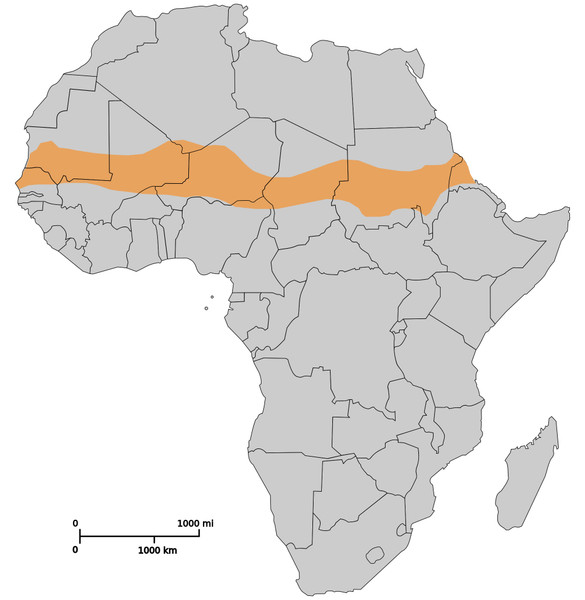
The Sahel region of Africa
Prevention and restoration include reducing livestock numbers, using rotational grazing, protecting streambanks and erosion-prone areas, revegetating damaged land, and adjusting grazing during drought.
How to Compare Methods and Reduce Impacts
No method is always best. You have to look at:
- species
- stocking density
- feed source
- manure management
- land-use history
Reducing meat consumption, especially beef and lamb, can lower CO2, CH4, and N2O emissions, save freshwater, and reduce reliance on antibiotics and growth hormones.
Other ways to reduce impact:
- Improved feed quality can raise feed-conversion efficiency and sometimes reduce methane.
- Precision farming can match feed and water to animal needs, detect illness, monitor pasture, and reduce waste.
When reading data, watch the denominator.
- Per kilogram of meat is different from per gram of protein.
- Less land at the facility is different from less total land use.
Key Takeaways
Feedlot
A confined area, especially for cattle, where livestock are fed energy-rich feed instead of obtaining most food by grazing
Concentrated Animal Feeding Operation (CAFO)
An intensive operation that confines many animals in a small area and brings them feed, lowering costs but concentrating manure and pollution risks
Pasture-Based Production
A system in which livestock obtain grass or other forage directly from the land for most of their lives
Free-Range System
A system in which animals have outdoor access and are not continuously confined; the label does not guarantee sustainable grazing or antibiotic-free production
Rotational Grazing
Planned movement of livestock among paddocks so previously grazed vegetation and roots have time to recover
Overgrazing
Grazing that removes or damages vegetation faster than it can regenerate, causing vegetation loss, compaction, erosion, reduced fertility, and lower biodiversity
Desertification
Degradation of productive dryland through losses of vegetation, soil fertility, and biological productivity, often intensified by overgrazing
Ruminant Livestock
Livestock such as cattle and sheep whose digestive microbes break down cellulose and produce substantial methane
Enteric Fermentation
Microbial breakdown of cellulose in a ruminant’s digestive system that produces methane, released mainly through belching
Antibiotic Resistance
The evolution of bacterial populations that survive antibiotics, making those drugs less effective; routine livestock use increases the selection pressure
Precision Farming Technologies
Sensors, automated feeding, identification, and monitoring systems used to target feed, water, treatment, manure application, and grazing more accurately
Improved Feed
Higher-quality or more digestible feed that can improve feed-conversion efficiency, reduce excess nitrogen in manure, and lower digestive methane in ruminants
Reducing Meat Consumption
Reducing demand for meat, especially beef and lamb, can lower greenhouse gas emissions, freshwater use, and reliance on antibiotics and growth hormones
Notes
Feedlot
A confined area, especially for cattle, where livestock are fed energy-rich feed instead of obtaining most food by grazing
Concentrated Animal Feeding Operation (CAFO)
An intensive operation that confines many animals in a small area and brings them feed, lowering costs but concentrating manure and pollution risks
Pasture-Based Production
A system in which livestock obtain grass or other forage directly from the land for most of their lives
Free-Range System
A system in which animals have outdoor access and are not continuously confined; the label does not guarantee sustainable grazing or antibiotic-free production
Rotational Grazing
Planned movement of livestock among paddocks so previously grazed vegetation and roots have time to recover
Overgrazing
Grazing that removes or damages vegetation faster than it can regenerate, causing vegetation loss, compaction, erosion, reduced fertility, and lower biodiversity
Desertification
Degradation of productive dryland through losses of vegetation, soil fertility, and biological productivity, often intensified by overgrazing
Ruminant Livestock
Livestock such as cattle and sheep whose digestive microbes break down cellulose and produce substantial methane
Enteric Fermentation
Microbial breakdown of cellulose in a ruminant’s digestive system that produces methane, released mainly through belching
Antibiotic Resistance
The evolution of bacterial populations that survive antibiotics, making those drugs less effective; routine livestock use increases the selection pressure
Precision Farming Technologies
Sensors, automated feeding, identification, and monitoring systems used to target feed, water, treatment, manure application, and grazing more accurately
Improved Feed
Higher-quality or more digestible feed that can improve feed-conversion efficiency, reduce excess nitrogen in manure, and lower digestive methane in ruminants
Reducing Meat Consumption
Reducing demand for meat, especially beef and lamb, can lower greenhouse gas emissions, freshwater use, and reliance on antibiotics and growth hormones
