Topic 6.14 Notes – Continuity and Change in Period 6
How Industrialization Changed the United States from 1865 to 1898
This topic is about extent of change. The best argument is not “industry appeared.” Industry already existed. The real change was that production and business became much bigger, more mechanized, and more national.
- Biggest changes
- Large corporations replaced many smaller local firms.
- Mechanized production increased output and lowered costs.
- National markets linked regions through railroads, telegraphs, and advertising.
- Wage labor expanded as more people worked for employers instead of as independent artisans.
- Urbanization sped up as cities filled with workers and immigrants.
- Western integration tied western land and resources into the national economy.
- Mass consumer culture grew through department stores, mail-order catalogs, and brand-name goods.
- Biggest continuities
- Agriculture stayed central, especially in the South and West.
- Capitalism and private property still dominated.
- Government promoted growth through land grants, tariffs, and legal support.
- Racial and gender hierarchies persisted, even in new forms.
The New Industrial Economy
After 1865, railroads, telegraphs, natural resources, machinery, and pro-business policy pushed rapid growth.
National markets
Rail lines helped turn regional economies into a national market.
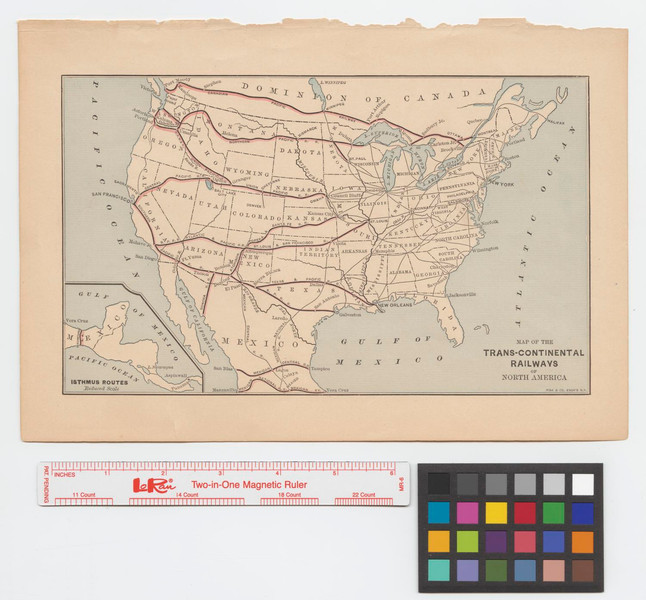
Transcontinental railways of North America
- Transcontinental railroads connected East and West.
- Refrigerated rail cars let meat and farm goods travel far.
- International communication networks sped up prices, news, and investment.
- Mail-order businesses like Sears reached rural customers.
- National advertising helped create mass consumption.
Major industries
| Industry | Why it mattered |
|---|---|
| Steel | The Bessemer process made steel cheaper for rails, bridges, and buildings |
| Oil | Standard Oil dominated refining and distribution |
| Railroads | Backbone of national growth, shipping, settlement, and finance |
| Meatpacking | Mechanized slaughter and refrigeration transformed food markets |
Corporate consolidation
- Horizontal integration means controlling competitors in the same industry. John D. Rockefeller used this with Standard Oil.
- Vertical integration means controlling every step of production. Andrew Carnegie used this in steel.
- Trusts, holding companies, stock ownership, and professional managers made giant firms possible.
People argued over these businessmen. “Captains of industry” praised innovation. “Robber barons” attacked monopoly and exploitation. Carnegie defended wealth concentration in the Gospel of Wealth, saying the rich should give back through philanthropy.
The gains were uneven. Consumer goods became cheaper, but wealth concentrated, wages stayed low for many, work was dangerous, child labor spread, and the Panic of 1873 and Panic of 1893 exposed how unstable the system could be.
Labor, Farmers, and the Backlash against Industrial Capitalism
Industrial growth changed work by reducing independence and increasing factory discipline.
Labor organizations and strikes
- National Labor Union pushed for reforms like the eight-hour day.
- Knights of Labor tried to unite skilled and unskilled workers.
- American Federation of Labor under Samuel Gompers focused on skilled workers and practical gains.
- Great Railroad Strike of 1877 involved wage cuts and was crushed by troops.
- Haymarket affair in 1886 tied labor to radicalism in many Americans’ minds.
- Homestead Strike in 1892 ended in union defeat.
- Pullman Strike in 1894 brought in federal power against labor; Eugene V. Debs became nationally known.
The pattern matters more than any one strike. Employers, courts, militias, and federal troops usually sided against labor.
Farmers and Populism
Farming remained crucial, but railroads, machinery, grain elevators, and credit tied farmers to national markets. That meant debt, deflation, freight rates, and falling crop prices could crush them.
- Grange supported cooperation and regulation.
- Farmers’ Alliances expanded agrarian organizing.
- Populist Party and the Omaha Platform demanded free silver, graduated income tax, direct election of senators, and railroad and communications regulation or public ownership.
Migration, Cities, and Uneven Social Change
Industrialization moved people into cities, across regions, and into the West.
- Southern and eastern Europeans increased immigration.
- Chinese immigrants worked in railroads, mining, agriculture, and western cities, then faced exclusion.
- African Americans moved within and out of the South in smaller numbers before the later Great Migration.
Cities like New York, Chicago, and Pittsburgh grew fast. That meant tenements, pollution, sanitation problems, and sharper class divisions. The tenement buildings shown here are a good reminder of the crowded urban neighborhoods that came with rapid growth. It also meant baseball, vaudeville, saloons, and amusement parks.
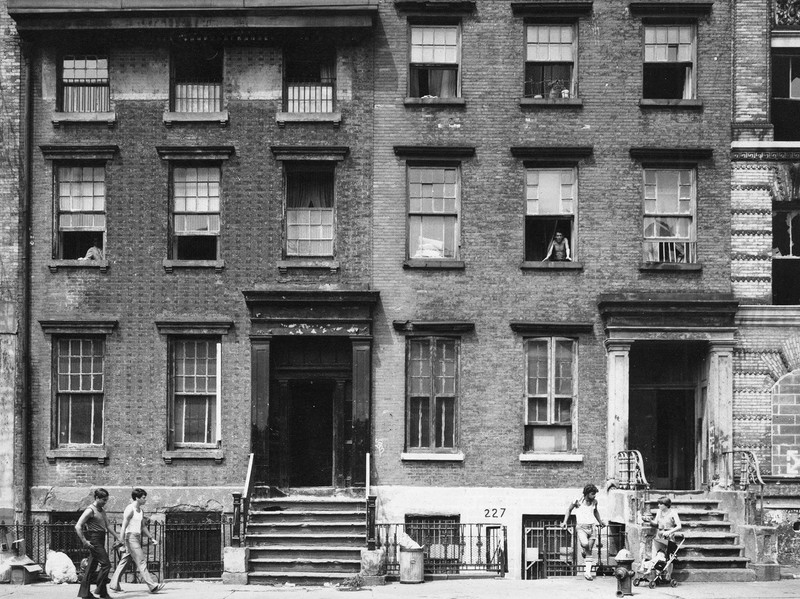
New York tenement housing
Nativism grew too. The Chinese Exclusion Act of 1882 was the first major federal law restricting immigration by nationality. Tammany Hall and other machines mixed real services with patronage and corruption.
In the West, the Homestead Act, railroad land grants, mining, ranching, and commercial farming expanded settlement. Native peoples faced reservation policy, the Dawes Act, boarding schools, the Battle of the Little Bighorn, the Nez Perce conflict, and Wounded Knee. Mexican Americans also lost land and influence.
In the South, “New South” boosters promised industry, but cotton, sharecropping, and tenant farming still dominated. Jim Crow, disfranchisement, lynching, and Plessy v. Ferguson enforced white supremacy. Ida B. Wells fought lynching. Booker T. Washington urged economic self-help within segregation.
Government, Reform, and What Stayed the Same
Government was never fully laissez-faire. It actively helped business with tariffs, land grants, patents, contracts, and legal protection.
Early regulation stayed limited:
- Pendleton Act 1883 reduced patronage through civil service reform.
- Interstate Commerce Act 1887 tried to regulate railroads.
- Sherman Antitrust Act 1890 attacked monopolies in theory, but early enforcement was weak.
Politics reflected the era’s conflicts. Crédit Mobilier showed corruption. Republicans usually favored protective tariffs and gold. Debate over gold vs silver exploded in 1896, when William Jennings Bryan gave the Cross of Gold speech and lost to William McKinley.
Intellectual responses split sharply:
- Social Darwinism and William Graham Sumner defended inequality.
- Social Gospel urged reform of social conditions.
- Hull House, founded by Jane Addams and Ellen Gates Starr, helped immigrants.
- Henry George’s Progress and Poverty, Edward Bellamy’s Looking Backward, and Mark Twain and Charles Dudley Warner’s The Gilded Age criticized the era’s inequality and corruption.
