Topic 7.12 Notes – World War II: Mobilization
How World War II Mobilization Remade the United States
Mobilization means the country reorganized itself to win a war. This started before Pearl Harbor. Franklin Roosevelt’s Arsenal of Democracy speech in 1940 argued that U.S. industry should supply countries fighting the Axis. The Selective Training and Service Act of 1940 created the first peacetime draft, and the Lend-Lease Act of 1941 let the U.S. send weapons and supplies to Britain, the Soviet Union, and China.
That message quickly became reality after December 7, 1941, when this effort exploded into total war. The federal government did not permanently take over most businesses. Instead, it coordinated private industry, labor, and consumers on a huge scale. That matters because APUSH loves this distinction: wartime America used a government-business partnership, not full nationalization.
U.S. factories were also safer than those in Europe or Asia, so American industrial strength could supply both U.S. troops and the Allies.
How the Wartime Economy Worked
Several agencies handled different parts of the war economy:
- War Production Board set priorities, handed out scarce materials, and shifted factories from civilian to military goods.
- Office of Price Administration controlled prices and rationed gasoline, tires, sugar, coffee, meat, and butter.
- War Manpower Commission tried to move workers where they were most needed.
- National War Labor Board settled labor disputes, limited wage increases, and helped unions stay stable.
- Office of War Information shaped propaganda and public messaging.
- War Finance Division ran war bond drives.
The government paid companies through cost-plus contracts, which covered costs and guaranteed profit. That encouraged fast expansion and helped big corporations grow even larger. Car companies stopped making civilian cars and built tanks, trucks, jeeps, and aircraft engines. Ford’s Willow Run plant became famous for mass-producing B-24 bombers, and Liberty ships showed how quickly standardized cargo ships could be built.
Massive deficit spending ended the Depression. Unemployment dropped to about 1 percent by 1944. The Revenue Act of 1942 and payroll withholding expanded federal taxation.
Civilians were part of the system too. People planted victory gardens, joined scrap drives, drove less, and bought bonds. Roosevelt’s Four Freedoms, popularized in Norman Rockwell paintings, gave people a moral reason to accept sacrifice. Shortages and black markets showed the limits of government control.
How Mobilization Changed Work, Migration, and Daily Life
Labor shortages opened jobs and moved millions of people.
Women
About six million women entered the workforce. Rosie the Riveter became the symbol of women doing factory work, shipyard labor, office work, transportation, and farm labor. The Lanham Act funded some child-care centers. Women also served in the Women’s Army Corps, WAVES, as nurses, and as WASPs.
These gains had limits. Women still faced unequal pay, job segregation, harassment, and many were pushed out after the war.
Organized labor
Major unions made a no-strike pledge, and union membership grew during the war. Still, John L. Lewis led coal strikes, and the Smith-Connally Act let the federal government seize struck plants.
Internal migration
Defense jobs pulled people to California, the Pacific Coast, the Midwest, and the South. That created overcrowding, housing shortages, and pressure on schools and hospitals. It also helped build the postwar Sun Belt.
How Mobilization Opened Opportunity but Deepened Conflict for Minority Groups
Wartime need created openings, but racism and discrimination stayed strong.
- African Americans joined the Second Great Migration to Detroit, Chicago, Los Angeles, and Oakland. The Double V campaign demanded victory against fascism abroad and racism at home. A. Philip Randolph’s march threat pushed Roosevelt to issue Executive Order 8802, creating the Fair Employment Practice Committee. Over one million Black Americans served in segregated forces. The Detroit race riot of 1943 showed how jobs and housing competition could turn violent.
- Mexican Americans and Mexican migrants saw increased migration under the Bracero Program, which brought Mexican laborers to farms and railroads. This sharply contradicted Depression-era repatriation and deportation. Many faced poor housing, discrimination, and broken contracts. The Zoot Suit Riots in Los Angeles revealed wartime racial tension.
- Other groups also changed position. Native Americans served and migrated for war work, including the Navajo Code Talkers. Chinese Americans gained from China’s ally status, and the Magnuson Act of 1943 repealed the Chinese Exclusion Act while keeping tiny quotas. Puerto Ricans and other Latin American and Caribbean migrants also entered defense work.
Japanese American Incarceration and the Limits of Wartime Freedom
This was the clearest home-front civil liberties violation of the war. Executive Order 9066 led to the removal and incarceration of about 120,000 people of Japanese ancestry, about two-thirds of them U.S. citizens.
The causes were wartime fear, anti-Asian racism, and economic competition. There was no proven espionage justifying mass removal. Families lost homes, farms, and businesses and were confined in War Relocation Authority camps.
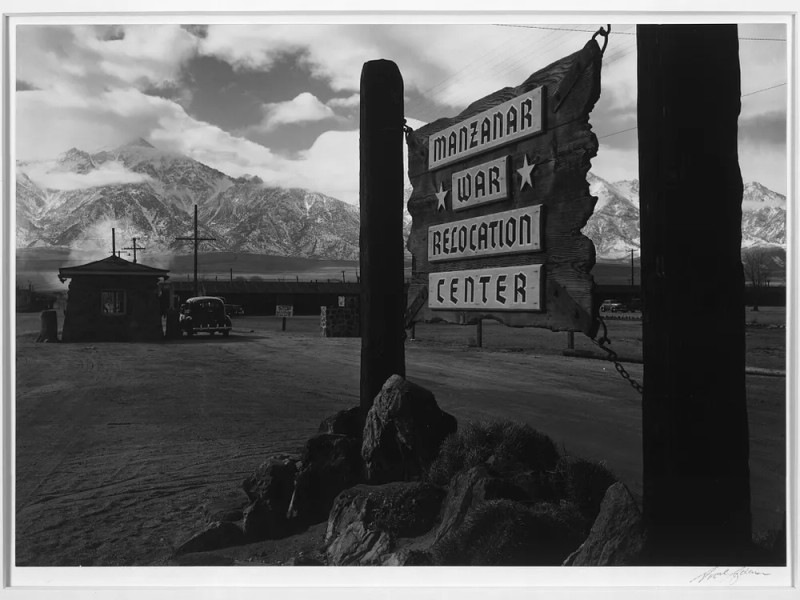
Manzanar War Relocation Center
Treatment was unequal. German Americans and Italian Americans were not removed on the same scale, and Hawaii did not see mainland-style mass removal. That tells you race mattered.
- Korematsu v. United States upheld exclusion.
- Ex parte Endo ruled that loyal citizens could not keep being detained.
The contrast is striking. The 442nd Regimental Combat Team fought with distinction while many of their families remained incarcerated.
Key Takeaways
World War II Mobilization
Redirection of the federal government, economy, labor force, and civilian life toward total war, ending mass unemployment and making U.S. industry crucial to Allied victory
Franklin D. Roosevelt
President who began defense mobilization before Pearl Harbor, promoted aid to the Allies, and expanded federal control of the wartime economy
Arsenal of Democracy
Roosevelt’s description of the United States as the great producer and supplier of military goods for nations fighting the Axis
Selective Training and Service Act
1940 law that established the first peacetime draft in U.S. history and expanded military manpower before Pearl Harbor
Lend-Lease Act
1941 law authorizing the president to provide arms and supplies to countries whose defense was vital to the United States
War Production Board
Wartime agency that set production priorities, allocated scarce materials, and converted factories from civilian to military production
Office of Price Administration
Wartime agency that controlled consumer prices and administered rationing to limit inflation and conserve scarce goods
War Manpower Commission
Agency that attempted to allocate workers among the military, defense industries, agriculture, and other essential sectors
National War Labor Board
Agency that mediated labor disputes, controlled wages, and helped preserve union membership while limiting wartime strikes
Office of War Information
Agency that coordinated wartime information and propaganda promoting production, rationing, bond purchases, and support for the war
Cost-Plus Contracts
Contracts that reimbursed manufacturers’ production costs and guaranteed additional profit, encouraging rapid military expansion with little financial risk
Revenue Act of 1942
Law that greatly expanded the number of Americans required to pay federal income taxes, helping finance wartime mobilization
War Bonds
Loans purchased by civilians to finance the war and reduce inflationary consumer spending
Rationing
Government distribution of scarce civilian goods through stamps or points so strategic materials could be reserved for military use
Victory Gardens
Civilian gardens planted to supplement the food supply and support the war effort
Four Freedoms
Roosevelt’s ideals of freedom of speech, freedom of worship, freedom from want, and freedom from fear, used to define the war’s democratic purpose
No-Strike Pledge
Major labor federations’ wartime promise to avoid strikes so military production would continue without interruption
John L. Lewis
United Mine Workers leader whose 1943 coal strikes challenged wartime labor controls and helped provoke the Smith-Connally Act
Smith-Connally Act
1943 law allowing federal seizure of strike-threatened plants and requiring advance notice of certain wartime work stoppages
Sun Belt
The growing South and West, whose cities and industries expanded through wartime migration, federal investment, and military production
Rosie the Riveter
Symbol of women performing industrial war work traditionally classified as male, especially in aircraft and shipbuilding plants
Second Great Migration
Wartime movement of African Americans from the rural South to industrial centers in the North, Midwest, and West
Double V Campaign
Black newspaper campaign demanding victory over fascism abroad and victory over racism at home
A. Philip Randolph
Brotherhood of Sleeping Car Porters leader whose threatened 1941 March on Washington pressured Roosevelt to ban discrimination in defense employment
Executive Order 8802
Roosevelt’s 1941 order prohibiting racial discrimination in federal and defense employment and creating the Fair Employment Practice Committee
Fair Employment Practice Committee
Committee created by Executive Order 8802 to investigate discrimination in federal and defense employment, though it had limited enforcement power
Detroit Race Riot of 1943
Deadly racial violence arising from competition over wartime jobs, housing, and public space, with most fatalities being African American
Bracero Program
U.S.-Mexican temporary labor program begun in 1942 that recruited Mexican workers mainly for agriculture and railroads, often under exploitative conditions
Zoot Suit Riots
1943 Los Angeles attacks by white servicemen on Mexican American youths, revealing wartime racism and conflict over urban space
Magnuson Act
1943 law that repealed Chinese exclusion, permitted a small Chinese immigration quota, and allowed Chinese immigrants to naturalize
Japanese American Incarceration
Forced removal and confinement of about 120,000 people of Japanese ancestry, most without individual evidence of disloyalty and about two-thirds U.S. citizens
Executive Order 9066
Roosevelt’s 1942 order authorizing military exclusion zones, which became the basis for removing Japanese Americans from the West Coast
War Relocation Authority
Federal agency that administered the isolated camps in which removed Japanese Americans were confined
Korematsu v. United States
1944 Supreme Court decision upholding the exclusion of Japanese Americans as a claimed wartime military measure
Ex parte Endo
1944 Supreme Court decision holding that the government could not continue detaining a U.S. citizen it conceded was loyal
Liberty Ships
Mass-produced cargo vessels built with standardized parts and assembly-line methods to transport Allied troops and supplies
Notes
World War II Mobilization
Redirection of the federal government, economy, labor force, and civilian life toward total war, ending mass unemployment and making U.S. industry crucial to Allied victory
Franklin D. Roosevelt
President who began defense mobilization before Pearl Harbor, promoted aid to the Allies, and expanded federal control of the wartime economy
Arsenal of Democracy
Roosevelt’s description of the United States as the great producer and supplier of military goods for nations fighting the Axis
Selective Training and Service Act
1940 law that established the first peacetime draft in U.S. history and expanded military manpower before Pearl Harbor
Lend-Lease Act
1941 law authorizing the president to provide arms and supplies to countries whose defense was vital to the United States
War Production Board
Wartime agency that set production priorities, allocated scarce materials, and converted factories from civilian to military production
Office of Price Administration
Wartime agency that controlled consumer prices and administered rationing to limit inflation and conserve scarce goods
War Manpower Commission
Agency that attempted to allocate workers among the military, defense industries, agriculture, and other essential sectors
National War Labor Board
Agency that mediated labor disputes, controlled wages, and helped preserve union membership while limiting wartime strikes
Office of War Information
Agency that coordinated wartime information and propaganda promoting production, rationing, bond purchases, and support for the war
Cost-Plus Contracts
Contracts that reimbursed manufacturers’ production costs and guaranteed additional profit, encouraging rapid military expansion with little financial risk
Revenue Act of 1942
Law that greatly expanded the number of Americans required to pay federal income taxes, helping finance wartime mobilization
War Bonds
Loans purchased by civilians to finance the war and reduce inflationary consumer spending
Rationing
Government distribution of scarce civilian goods through stamps or points so strategic materials could be reserved for military use
Victory Gardens
Civilian gardens planted to supplement the food supply and support the war effort
Four Freedoms
Roosevelt’s ideals of freedom of speech, freedom of worship, freedom from want, and freedom from fear, used to define the war’s democratic purpose
No-Strike Pledge
Major labor federations’ wartime promise to avoid strikes so military production would continue without interruption
John L. Lewis
United Mine Workers leader whose 1943 coal strikes challenged wartime labor controls and helped provoke the Smith-Connally Act
Smith-Connally Act
1943 law allowing federal seizure of strike-threatened plants and requiring advance notice of certain wartime work stoppages
Sun Belt
The growing South and West, whose cities and industries expanded through wartime migration, federal investment, and military production
Rosie the Riveter
Symbol of women performing industrial war work traditionally classified as male, especially in aircraft and shipbuilding plants
Second Great Migration
Wartime movement of African Americans from the rural South to industrial centers in the North, Midwest, and West
Double V Campaign
Black newspaper campaign demanding victory over fascism abroad and victory over racism at home
A. Philip Randolph
Brotherhood of Sleeping Car Porters leader whose threatened 1941 March on Washington pressured Roosevelt to ban discrimination in defense employment
Executive Order 8802
Roosevelt’s 1941 order prohibiting racial discrimination in federal and defense employment and creating the Fair Employment Practice Committee
Fair Employment Practice Committee
Committee created by Executive Order 8802 to investigate discrimination in federal and defense employment, though it had limited enforcement power
Detroit Race Riot of 1943
Deadly racial violence arising from competition over wartime jobs, housing, and public space, with most fatalities being African American
Bracero Program
U.S.-Mexican temporary labor program begun in 1942 that recruited Mexican workers mainly for agriculture and railroads, often under exploitative conditions
Zoot Suit Riots
1943 Los Angeles attacks by white servicemen on Mexican American youths, revealing wartime racism and conflict over urban space
Magnuson Act
1943 law that repealed Chinese exclusion, permitted a small Chinese immigration quota, and allowed Chinese immigrants to naturalize
Japanese American Incarceration
Forced removal and confinement of about 120,000 people of Japanese ancestry, most without individual evidence of disloyalty and about two-thirds U.S. citizens
Executive Order 9066
Roosevelt’s 1942 order authorizing military exclusion zones, which became the basis for removing Japanese Americans from the West Coast
War Relocation Authority
Federal agency that administered the isolated camps in which removed Japanese Americans were confined
Korematsu v. United States
1944 Supreme Court decision upholding the exclusion of Japanese Americans as a claimed wartime military measure
Ex parte Endo
1944 Supreme Court decision holding that the government could not continue detaining a U.S. citizen it conceded was loyal
Liberty Ships
Mass-produced cargo vessels built with standardized parts and assembly-line methods to transport Allied troops and supplies
