Topic 8.5 Notes – Culture after 1945
How Postwar Mass Culture Worked
A national mass culture already existed through radio, movies, magazines, chain stores, and advertising. After 1945, television pulled all of that into the home and made the same images, products, and values feel unavoidable.
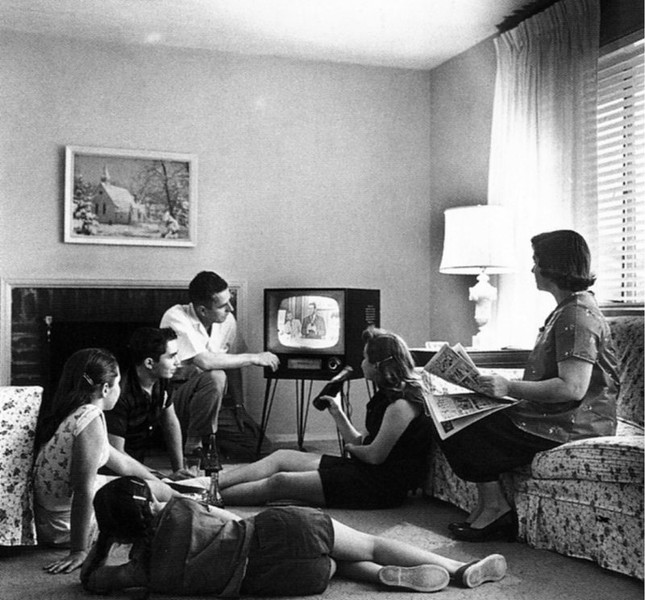
Postwar family gathered around a television
The dominant ideal was the white, middle-class, suburban nuclear family. Success looked like a house, steady income, kids, church, appliances, and clear gender roles. In the Cold War, that image mattered politically too. American leaders treated capitalism, family life, and religion as proof that the U.S. was better than the Soviet Union.
Homogeneous does not mean everyone actually lived this way. It means this was the national norm being promoted, even though it excluded many Americans.
The Main Pieces of Postwar Conformity
Television and national media
TV spread insanely fast, from about 9% of households in 1950 to nearly 90% by 1960. That meant families across the country saw the same shows, ads, and celebrities.
- Sitcoms like I Love Lucy, The Honeymooners, Father Knows Best, and Leave It to Beaver presented family life as orderly and stable.
- Other huge shared programs included Gunsmoke and The Mickey Mouse Club.
- TV also nationalized news, politics, and advertising, so public life reached mass audiences in the same medium as entertainment.
Consumer culture and suburban life
Buying things became part of identity. Happiness looked purchasable.
- Suburban homes created demand for cars, TVs, appliances, furniture, and lawn equipment.
- Shopping centers, chain businesses, and national brands spread with suburbs.
- Ray Kroc’s McDonald’s in 1955 showed standardization. You could get the same product in different places.
- Credit expanded consumption through Diners Club (1950) and BankAmericard (1958).
Corporate and social conformity
Conformity shaped work and daily life. Large corporations, suburbs, schools, churches, and Cold War patriotism all rewarded fitting in.
Key critiques:
- William H. Whyte, The Organization Man: corporate life pressured people to sacrifice individuality.
- Sloan Wilson, The Man in the Gray Flannel Suit: success could feel empty and anxious.
- David Riesman, The Lonely Crowd: people became “other-directed,” guided by peer pressure and social approval.
Religion and Americanism
Religion surged after the war and blended with patriotism and anti-communism.
- Billy Graham used crusades, radio, and TV to make evangelical Christianity part of mass culture.
- “Under God” was added to the Pledge in 1954.
- “In God We Trust” became the official motto in 1956.
Gender roles and domesticity
The ideal man was breadwinner, veteran, homeowner. The ideal woman was wife, mother, homemaker, and consumer. Popular culture pushed women away from wartime jobs and toward domestic fulfillment, even though many women still worked for wages.
The Main Challenges to Conformity
Youth culture and generational tension
Teenagers became a distinct market because they had more spending money and more shared high school culture. Their rebellion was real, but it was also commercialized. Rebel Without a Cause with James Dean captured that tension.
Rock and roll
Rock and roll came from African American rhythm and blues, gospel, blues, and white country music. It crossed racial lines, challenged parental taste, and made youth culture powerful.
Key figures:
- Chuck Berry
- Little Richard
- Elvis Presley
A common AP move here is to ask about the contradiction. Black musicians created much of the sound, but white performers and corporations often got more profit and visibility.
Beat Generation
The Beats rejected suburban respectability, materialism, office careers, and sexual restraint.
- Jack Kerouac, On the Road
- Allen Ginsberg, “Howl”
- 1957 obscenity trial over “Howl” showed fights over censorship and artistic freedom
Artistic experimentation
Abstract expressionism broke from realistic art. Jackson Pollock’s drip paintings became symbols of individualism and experimentation.
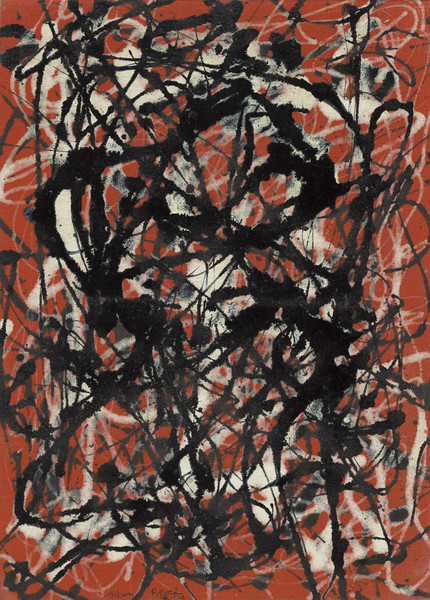
Jackson Pollock abstract expressionist painting
Cold War twist: the U.S. could point to avant-garde art like this as evidence of freedom, unlike Soviet cultural control.
Why the Homogeneous Ideal Was Limited and Why It Matters
Mainstream culture ignored or minimized racial minorities, poverty, working-class life, and women’s diverse experiences. Discrimination in housing, lending, education, and jobs kept many Americans out of suburban prosperity. Fear also sat underneath the happy image, especially nuclear anxiety and worries about juvenile delinquency.
Betty Friedan’s The Feminine Mystique attacked domestic ideology and named women’s dissatisfaction as “the problem that has no name.”
The core idea is this: postwar mass culture was held together by media, suburbs, consumerism, religion, and Cold War conformity. It was challenged by rebellious youth, artists, intellectuals, and women. In the 1950s those challenges were still limited or absorbed by the market, but they helped set up the bigger cultural revolts of the 1960s.
Key Takeaways
Postwar Mass Culture
A nationally shared culture shaped by television, advertising, consumer goods, and idealized white middle-class suburban life
Television
The leading postwar mass medium, spreading national programs, advertising, celebrities, and idealized family and gender roles
Consumer Culture
A social order in which possessions and purchasing signified success, modernity, identity, and family happiness
Postwar Advertising
National marketing that sold lifestyles and identities through brands, slogans, television sponsorship, and idealized domestic images
Consumer Credit
Buy-now-pay-later financing, including expanding credit cards, that normalized continued middle-class consumption
Conformity
Pressure to adjust behavior, appearance, ambitions, and beliefs to accepted corporate, suburban, gender, religious, and political norms
Nuclear Anxiety
Fear of atomic war expressed through civil-defense drills, shelter preparations, science fiction, film, and literature
Billy Graham
Evangelist whose mass revival crusades and use of radio and television brought Protestantism into national popular culture
Postwar Domestic Ideal
The ideal of a breadwinning husband, homemaking wife, nuclear family, suburban home, and sharply divided gender roles
Rock and Roll
Black-influenced youth music combining rhythm and blues, gospel, blues, and country that challenged racial, sexual, and generational norms
Chuck Berry
African American rock-and-roll innovator whose music brought Black rhythm-and-blues traditions into national youth culture
Little Richard
African American rock-and-roll innovator known for energetic music and performance styles that challenged respectable convention
Elvis Presley
White performer who popularized Black-influenced rock and roll and became a symbol of teenage rebellion and sexual energy
Beat Generation
Writers who rejected materialism, corporate conformity, conventional careers, sexual restraint, and suburban respectability
Abstract Expressionism
Postwar art emphasizing abstraction, scale, gesture, emotion, and individual experimentation rather than realistic depiction
Jackson Pollock
Abstract expressionist painter whose poured and splattered drip paintings rejected traditional images and painting techniques
William H. Whyte
Social critic whose 1956 book The Organization Man condemned the sacrifice of individuality to corporate and group expectations
The Organization Man
Whyte’s 1956 critique of employees who traded independence for security and advancement within bureaucratic corporations
David Riesman
Sociologist who argued in The Lonely Crowd that modern Americans increasingly sought guidance and approval from their peers
The Lonely Crowd
Riesman’s 1950 book describing modern Americans as increasingly other-directed and guided by peers and social expectations
Other-Directed
Guided by peers’ approval and social expectations rather than primarily by independent or internal values
Betty Friedan
Author who challenged the postwar domestic ideal and helped inspire second-wave feminism through The Feminine Mystique
The Feminine Mystique
Friedan’s 1963 critique of the belief that women could find complete fulfillment only through marriage, motherhood, and homemaking
Youth Culture
A distinct postwar teenage identity built around peers, music, films, clothing, and symbols that could challenge adult expectations
Youth Market
The profitable teenage consumer audience targeted by record companies, filmmakers, clothing manufacturers, and advertisers
James Dean
Actor who became a national symbol of alienated and rebellious youth through Rebel Without a Cause
Rebel Without a Cause
A 1955 film portraying alienation and generational conflict among materially comfortable suburban teenagers
Jack Kerouac
Beat writer whose novel On the Road celebrated travel, improvisation, and intense experience over settled corporate and domestic life
On the Road
Kerouac’s 1957 novel presenting travel, improvisation, and intense experience as alternatives to settled corporate and domestic life
Allen Ginsberg
Beat poet whose Howl attacked conformity and openly addressed sexuality, mental distress, and social marginality
Howl
Ginsberg’s poem attacking forces that crushed individuality and openly addressing sexuality, mental distress, and social marginality
Notes
Postwar Mass Culture
A nationally shared culture shaped by television, advertising, consumer goods, and idealized white middle-class suburban life
Television
The leading postwar mass medium, spreading national programs, advertising, celebrities, and idealized family and gender roles
Consumer Culture
A social order in which possessions and purchasing signified success, modernity, identity, and family happiness
Postwar Advertising
National marketing that sold lifestyles and identities through brands, slogans, television sponsorship, and idealized domestic images
Consumer Credit
Buy-now-pay-later financing, including expanding credit cards, that normalized continued middle-class consumption
Conformity
Pressure to adjust behavior, appearance, ambitions, and beliefs to accepted corporate, suburban, gender, religious, and political norms
Nuclear Anxiety
Fear of atomic war expressed through civil-defense drills, shelter preparations, science fiction, film, and literature
Billy Graham
Evangelist whose mass revival crusades and use of radio and television brought Protestantism into national popular culture
Postwar Domestic Ideal
The ideal of a breadwinning husband, homemaking wife, nuclear family, suburban home, and sharply divided gender roles
Rock and Roll
Black-influenced youth music combining rhythm and blues, gospel, blues, and country that challenged racial, sexual, and generational norms
Chuck Berry
African American rock-and-roll innovator whose music brought Black rhythm-and-blues traditions into national youth culture
Little Richard
African American rock-and-roll innovator known for energetic music and performance styles that challenged respectable convention
Elvis Presley
White performer who popularized Black-influenced rock and roll and became a symbol of teenage rebellion and sexual energy
Beat Generation
Writers who rejected materialism, corporate conformity, conventional careers, sexual restraint, and suburban respectability
Abstract Expressionism
Postwar art emphasizing abstraction, scale, gesture, emotion, and individual experimentation rather than realistic depiction
Jackson Pollock
Abstract expressionist painter whose poured and splattered drip paintings rejected traditional images and painting techniques
William H. Whyte
Social critic whose 1956 book The Organization Man condemned the sacrifice of individuality to corporate and group expectations
The Organization Man
Whyte’s 1956 critique of employees who traded independence for security and advancement within bureaucratic corporations
David Riesman
Sociologist who argued in The Lonely Crowd that modern Americans increasingly sought guidance and approval from their peers
The Lonely Crowd
Riesman’s 1950 book describing modern Americans as increasingly other-directed and guided by peers and social expectations
Other-Directed
Guided by peers’ approval and social expectations rather than primarily by independent or internal values
Betty Friedan
Author who challenged the postwar domestic ideal and helped inspire second-wave feminism through The Feminine Mystique
The Feminine Mystique
Friedan’s 1963 critique of the belief that women could find complete fulfillment only through marriage, motherhood, and homemaking
Youth Culture
A distinct postwar teenage identity built around peers, music, films, clothing, and symbols that could challenge adult expectations
Youth Market
The profitable teenage consumer audience targeted by record companies, filmmakers, clothing manufacturers, and advertisers
James Dean
Actor who became a national symbol of alienated and rebellious youth through Rebel Without a Cause
Rebel Without a Cause
A 1955 film portraying alienation and generational conflict among materially comfortable suburban teenagers
Jack Kerouac
Beat writer whose novel On the Road celebrated travel, improvisation, and intense experience over settled corporate and domestic life
On the Road
Kerouac’s 1957 novel presenting travel, improvisation, and intense experience as alternatives to settled corporate and domestic life
Allen Ginsberg
Beat poet whose Howl attacked conformity and openly addressed sexuality, mental distress, and social marginality
Howl
Ginsberg’s poem attacking forces that crushed individuality and openly addressing sexuality, mental distress, and social marginality
