Topic 7.6 Notes – World War I: Home Front
How World War I Changed Life on the Home Front
U.S. entry into the war meant total mobilization. The country needed weapons, rail transport, food, fuel, soldiers, and public unity all at once. That pushed the federal government deeper into everyday life than before.
This fit the Progressive Era idea that expert-led government could solve big problems. In wartime, that meant agencies that coordinated the economy instead of leaving everything to private businesses.
The pattern to remember is simple. Mobilization created new chances for workers, women, and migrants, but it also expanded federal power, repression, and nativism.
Federal Mobilization and Wartime Labor
The government built a wartime economy through temporary agencies.
- War Industries Board under Bernard Baruch coordinated industrial production. It set priorities, allocated raw materials, and standardized goods so factories could produce faster.
- United States Railroad Administration under William G. McAdoo took federal control of railroads to reduce delays and move troops and supplies efficiently.
- The Lever Food and Fuel Control Act gave Washington more control over essentials.
Food and fuel
- The Food Administration under Herbert Hoover relied mostly on voluntary conservation. Campaigns pushed “Meatless Tuesdays,” “Wheatless Mondays,” and home gardens.
- The Fuel Administration promoted “heatless Mondays” and daylight saving time to save coal and energy.
Paying for the war
- The war was funded by higher taxes and by borrowing through Liberty Loans and the Victory Loan.
- Bond drives turned patriotism into a public test. Buying bonds showed loyalty, and refusing could make people look suspicious.
Wartime mobilization also depended on mass persuasion and enlistment campaigns, like the famous Uncle Sam recruiting poster.
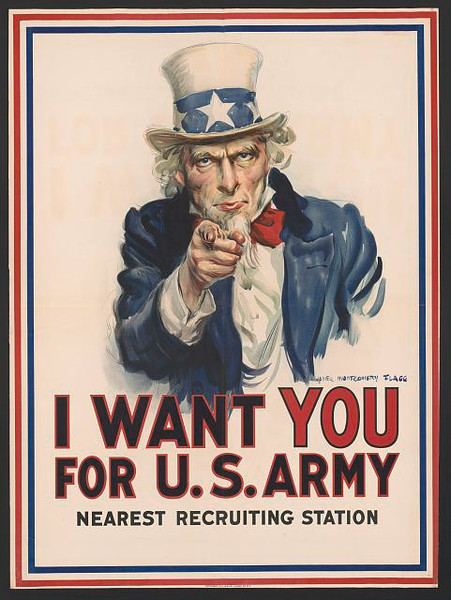
World War I Uncle Sam recruiting poster
Labor shortages came from three things at once: reduced European immigration, men leaving for military service, and rising war production.
- The AFL under Samuel Gompers backed the war effort.
- The National War Labor Board mediated disputes, supported the 8-hour day in many industries, recognized workers’ right to organize, and accepted equal pay for women doing equal work.
- Union membership rose during the war.
About one million additional women entered the workforce. They worked in munitions, railroads, offices, communications, nursing, and as Navy yeomen. The war expanded women’s job options, even though many gains faded after 1918. Their service also strengthened support for the Nineteenth Amendment.
Limits mattered too. Employers and the government were much harsher toward radical unions like the Industrial Workers of the World.
Propaganda, Repression, and Wartime Nationalism
The Wilson administration wanted unity, so it sold the war aggressively.
- The Committee on Public Information led by George Creel used posters, films, pamphlets, and newspapers.
- Four-Minute Men gave short pro-war speeches in public places.
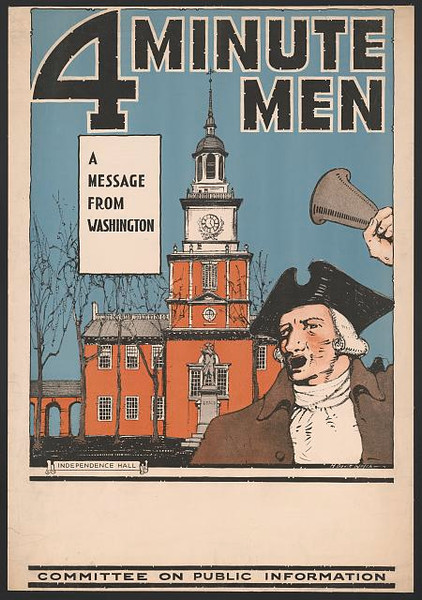
Four-Minute Men wartime propaganda poster
Posters like this one helped spread the message of “100 percent Americanism,” and that pressure quickly turned into anti-German hysteria.
- German Americans were suspected of disloyalty.
- German language teaching shrank, books were removed, place names changed, and even sauerkraut became “liberty cabbage.”
- Robert Prager was lynched in Illinois.
- The American Protective League helped investigate “disloyalty.”
The legal side of repression mattered just as much:
- Espionage Act of 1917 banned interference with recruitment and blocked mailing of “disloyal” material.
- Sedition Act of 1918 punished disloyal speech about the government, flag, Constitution, or armed forces.
- Eugene V. Debs was jailed for an antiwar speech and ran for president from prison in 1920.
- In Schenck v. United States (1919), the Supreme Court upheld limits on anti-draft speech. Justice Oliver Wendell Holmes Jr. used the “clear and present danger” test.
The core contradiction is classic APUSH. The U.S. said it was defending democracy abroad while restricting dissent at home.
Migration, Nativism, and the Red Scare
War disrupted Atlantic travel and cut European immigration, so employers looked harder for workers already in the U.S. That pulled people toward industrial cities in the Northeast, Great Lakes, and West Coast. Cities grew fast, and that meant overcrowding, housing shortages, and more racial tension.
The Great Migration
About 1.6 million African Americans left the South between 1910 and 1930, heading especially to cities in the Midwest, Northeast, and on the West Coast.
- Push factors included Jim Crow, disfranchisement, lynching, low wages, sharecropping, and the boll weevil.
- Pull factors included factory jobs, higher wages, voting opportunities, and existing Black communities.
- The Chicago Defender encouraged migration.
- Migrants still faced segregation and job discrimination.
- Major violence included East St. Louis 1917, Red Summer 1919, and the Chicago riot of 1919.
This migration helped build larger Black urban communities, expand the NAACP, and lay groundwork for the Harlem Renaissance and later civil rights activism.
Mexican migration and restriction
The Mexican Revolution pushed migrants north, and U.S. labor demand pulled them into agriculture, mining, railroads, and Southwest industry. They also faced segregation and hostility.
Wartime nativism fed directly into immigration law:
| Law | What it did |
|---|---|
| Immigration Act of 1917 | literacy test and Asiatic Barred Zone |
| Emergency Quota Act of 1921 | limited immigration by nationality |
| Immigration Act of 1924 | favored northern and western Europeans and excluded Japanese immigration |
First Red Scare
Fear shifted from Germans to radicals after 1918. The Russian Revolution, strikes, and bombings sparked the First Red Scare.
- Attorney General A. Mitchell Palmer and J. Edgar Hoover targeted suspected radicals.
- The Palmer Raids arrested many people and often violated civil liberties.
- Labor activism, immigrant culture, socialism, anarchism, and communism got lumped together as threats.
Key Takeaways
War Industries Board
Bernard Baruch’s agency that coordinated wartime production, allocated raw materials, set priorities, standardized products, and advised businesses on prices
Bernard Baruch
Financier who led the War Industries Board and coordinated industrial production during World War I.
United States Railroad Administration
Agency that placed railroads under temporary federal control to coordinate transportation and prioritize military freight
Lever Food and Fuel Control Act
1917 law authorizing federal management and conservation of essential food and fuel resources during the war
Food Administration
Herbert Hoover's agency that increased food production and promoted voluntary conservation for soldiers and the Allies
Herbert Hoover
Head of the Food Administration who promoted increased production and voluntary measures such as meatless and wheatless days
Fuel Administration
Federal agency that regulated coal distribution and promoted conservation measures such as heatless Mondays and daylight saving time
Liberty Loans / Liberty Bonds
Government bonds sold through patriotic campaigns to finance most of the American war effort
American Federation of Labor
Samuel Gompers's union federation, which supported the war and gained a greater federal role in labor policy
Samuel Gompers
AFL leader who supported World War I and cooperated with the Wilson administration in exchange for greater labor recognition
National War Labor Board
Federal board that mediated wartime labor disputes and supported organizing rights, the eight-hour day, and equal pay for equal work
Industrial Workers of the World
Radical union that opposed the war and was severely weakened by federal prosecutions, raids, and vigilante violence
Nineteenth Amendment
Amendment ratified in 1920 that prohibited denying voting rights on the basis of sex, aided by arguments about women's wartime service
Committee on Public Information
George Creel's federal propaganda agency, which used speeches, films, pamphlets, and posters to build support for the war
George Creel
Journalist who headed the Committee on Public Information and directed federal wartime propaganda
Four-Minute Men
CPI volunteers who delivered brief speeches promoting enlistment, Liberty Bonds, conservation, and loyalty
Anti-German Campaigns
Wartime attacks on German American language, culture, employment, and loyalty that pressured the group to assimilate
100 Percent Americanism
Wartime demand for complete patriotic and cultural conformity that treated immigrant difference as evidence of disloyalty
American Protective League
Volunteer organization that cooperated with the Justice Department to investigate disloyalty and conduct raids and draft checks
Espionage Act of 1917
Law banning interference with military recruitment or operations and allowing allegedly disloyal publications to be barred from the mail
Sedition Act of 1918
Amendment to the Espionage Act that criminalized disloyal or abusive language about the government, flag, or armed forces
Eugene V. Debs
Socialist leader imprisoned for an antiwar speech under wartime speech laws who ran for president from prison in 1920
Schenck v. United States
1919 Supreme Court decision upholding an Espionage Act conviction and permitting restrictions on speech posing a clear and present danger
Clear and Present Danger Test
Rule from Schenck allowing speech to be restricted when its context creates a clear and present danger that Congress has authority to prevent
Oliver Wendell Holmes Jr.
Supreme Court justice who wrote the Schenck opinion and introduced the clear and present danger test
European Immigration During World War I
Previously high European immigration fell sharply because of dangerous travel and wartime departure restrictions, worsening U.S. labor shortages
Immigration Act of 1917
Law imposing literacy tests and creating an Asiatic Barred Zone that expanded restrictions on Asian immigration
Emergency Quota Act of 1921
Law limiting each nationality's annual immigration to 3 percent of its U.S. population in the 1910 census
Immigration Act of 1924
Law using a 2 percent quota based on the 1890 census, favoring northern and western Europeans and effectively barring Japanese immigration
Wartime Internal Migration and Urban Growth
War-production jobs drew Americans to industrial cities, accelerating urbanization while worsening housing shortages and social tensions
Great Migration
Movement of African Americans from the South to northern, midwestern, and western cities for industrial opportunities and escape from Jim Crow, though they continued to face discrimination and racial violence
Chicago Defender
Black newspaper that encouraged the Great Migration by publishing job information, train schedules, success stories, and attacks on southern racism
Red Summer of 1919
Wave of racial violence in numerous cities as white mobs attacked Black communities amid postwar job, housing, and racial tensions
Mexican Migration During World War I
Mexicans fleeing revolutionary disruption moved to U.S. farms, mines, railroads, and industries for wartime jobs and higher wages but faced segregation and hostility
First Red Scare
1919–1920 fear that communists, anarchists, socialists, immigrant radicals, and militant labor groups threatened revolution
Palmer Raids
Federal raids of 1919–1920 that arrested thousands of suspected radicals without proper safeguards and deported hundreds of noncitizens
A. Mitchell Palmer
Attorney general who organized the Palmer Raids after anarchist bombings and promoted fears of an imminent revolutionary uprising
J. Edgar Hoover
Young Justice Department official who headed the General Intelligence Division and collected information on radicals during the Red Scare
Women’s Wartime Employment
Labor shortages opened new industrial and clerical jobs to women, though many lost those positions after the war and opportunities remained unequal by race
William Gibbs McAdoo
Treasury secretary who directed the United States Railroad Administration during the federal wartime takeover of the railroads
Notes
War Industries Board
Bernard Baruch’s agency that coordinated wartime production, allocated raw materials, set priorities, standardized products, and advised businesses on prices
Bernard Baruch
Financier who led the War Industries Board and coordinated industrial production during World War I.
United States Railroad Administration
Agency that placed railroads under temporary federal control to coordinate transportation and prioritize military freight
Lever Food and Fuel Control Act
1917 law authorizing federal management and conservation of essential food and fuel resources during the war
Food Administration
Herbert Hoover's agency that increased food production and promoted voluntary conservation for soldiers and the Allies
Herbert Hoover
Head of the Food Administration who promoted increased production and voluntary measures such as meatless and wheatless days
Fuel Administration
Federal agency that regulated coal distribution and promoted conservation measures such as heatless Mondays and daylight saving time
Liberty Loans / Liberty Bonds
Government bonds sold through patriotic campaigns to finance most of the American war effort
American Federation of Labor
Samuel Gompers's union federation, which supported the war and gained a greater federal role in labor policy
Samuel Gompers
AFL leader who supported World War I and cooperated with the Wilson administration in exchange for greater labor recognition
National War Labor Board
Federal board that mediated wartime labor disputes and supported organizing rights, the eight-hour day, and equal pay for equal work
Industrial Workers of the World
Radical union that opposed the war and was severely weakened by federal prosecutions, raids, and vigilante violence
Nineteenth Amendment
Amendment ratified in 1920 that prohibited denying voting rights on the basis of sex, aided by arguments about women's wartime service
Committee on Public Information
George Creel's federal propaganda agency, which used speeches, films, pamphlets, and posters to build support for the war
George Creel
Journalist who headed the Committee on Public Information and directed federal wartime propaganda
Four-Minute Men
CPI volunteers who delivered brief speeches promoting enlistment, Liberty Bonds, conservation, and loyalty
Anti-German Campaigns
Wartime attacks on German American language, culture, employment, and loyalty that pressured the group to assimilate
100 Percent Americanism
Wartime demand for complete patriotic and cultural conformity that treated immigrant difference as evidence of disloyalty
American Protective League
Volunteer organization that cooperated with the Justice Department to investigate disloyalty and conduct raids and draft checks
Espionage Act of 1917
Law banning interference with military recruitment or operations and allowing allegedly disloyal publications to be barred from the mail
Sedition Act of 1918
Amendment to the Espionage Act that criminalized disloyal or abusive language about the government, flag, or armed forces
Eugene V. Debs
Socialist leader imprisoned for an antiwar speech under wartime speech laws who ran for president from prison in 1920
Schenck v. United States
1919 Supreme Court decision upholding an Espionage Act conviction and permitting restrictions on speech posing a clear and present danger
Clear and Present Danger Test
Rule from Schenck allowing speech to be restricted when its context creates a clear and present danger that Congress has authority to prevent
Oliver Wendell Holmes Jr.
Supreme Court justice who wrote the Schenck opinion and introduced the clear and present danger test
European Immigration During World War I
Previously high European immigration fell sharply because of dangerous travel and wartime departure restrictions, worsening U.S. labor shortages
Immigration Act of 1917
Law imposing literacy tests and creating an Asiatic Barred Zone that expanded restrictions on Asian immigration
Emergency Quota Act of 1921
Law limiting each nationality's annual immigration to 3 percent of its U.S. population in the 1910 census
Immigration Act of 1924
Law using a 2 percent quota based on the 1890 census, favoring northern and western Europeans and effectively barring Japanese immigration
Wartime Internal Migration and Urban Growth
War-production jobs drew Americans to industrial cities, accelerating urbanization while worsening housing shortages and social tensions
Great Migration
Movement of African Americans from the South to northern, midwestern, and western cities for industrial opportunities and escape from Jim Crow, though they continued to face discrimination and racial violence
Chicago Defender
Black newspaper that encouraged the Great Migration by publishing job information, train schedules, success stories, and attacks on southern racism
Red Summer of 1919
Wave of racial violence in numerous cities as white mobs attacked Black communities amid postwar job, housing, and racial tensions
Mexican Migration During World War I
Mexicans fleeing revolutionary disruption moved to U.S. farms, mines, railroads, and industries for wartime jobs and higher wages but faced segregation and hostility
First Red Scare
1919–1920 fear that communists, anarchists, socialists, immigrant radicals, and militant labor groups threatened revolution
Palmer Raids
Federal raids of 1919–1920 that arrested thousands of suspected radicals without proper safeguards and deported hundreds of noncitizens
A. Mitchell Palmer
Attorney general who organized the Palmer Raids after anarchist bombings and promoted fears of an imminent revolutionary uprising
J. Edgar Hoover
Young Justice Department official who headed the General Intelligence Division and collected information on radicals during the Red Scare
Women’s Wartime Employment
Labor shortages opened new industrial and clerical jobs to women, though many lost those positions after the war and opportunities remained unequal by race
William Gibbs McAdoo
Treasury secretary who directed the United States Railroad Administration during the federal wartime takeover of the railroads
