Topic 8.12 Notes – Youth Culture of the 1960s
What Youth Culture of the 1960s Was
This was a youth rebellion against the “establishment,” meaning the political, military, educational, economic, and cultural authorities that seemed to run American life.
- It was not one single movement. Three strands overlapped:
- New Left activists wanted deeper political change.
- Antiwar protesters targeted Vietnam and the draft.
- The counterculture rejected middle-class lifestyles and values.
- Many young people rejected their parents’ world of conformity, materialism, bureaucracy, Cold War thinking, and traditional family and sexual norms.
- The movement grew out of postwar conditions:
- the baby boom created a huge youth generation
- affluence gave many middle-class young people time to question society
- college expansion put millions of students together on campuses
- television spread shared images and ideas
- suburban upbringing made conformity feel especially confining
- civil rights activism showed that direct action could work
- Earlier roots mattered too. Beat writers had already attacked conformity in the 1950s, and rock and roll had already created a separate youth culture.
- Important nuance: many young Americans stayed conventional or supported the war. The reason this still mattered so much is that media coverage made youth dissent impossible to ignore.
The New Left and Campus Protest
The New Left attacked both conservatism and the limits of postwar liberalism. These students thought liberal leaders talked about justice but did too little about racism, poverty, inequality, and Cold War violence abroad.
Participatory democracy
Their key idea was participatory democracy. People should directly shape the decisions that affect their lives instead of leaving power to distant experts, politicians, and bureaucracies.
SDS and the Port Huron Statement
Students for a Democratic Society (SDS) became the main student group.
- In 1962, Tom Hayden helped write the Port Huron Statement.
- It criticized racial injustice, nuclear danger, Cold War militarism, bureaucracy, and political apathy.
- It called for participatory democracy.
Universities became protest centers because students lived in large numbers under strict rules, and many campuses had ties to corporations, military research, and government.
Berkeley and Columbia
- Free Speech Movement at Berkeley (1964)
Mario Savio became its best-known voice. Students demanded the right to do political organizing on campus. Berkeley became a model for later campus protest. - Columbia University protests (1968)
Students protested the university’s military research ties and a gym project many saw as exploiting Harlem.
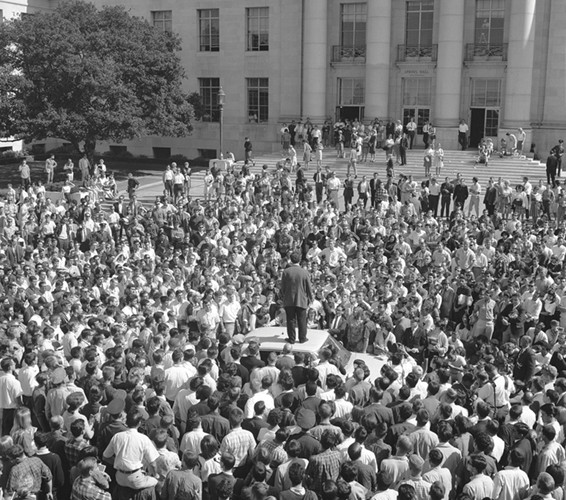
Free Speech Movement rally at UC Berkeley
Scenes like this help explain why campus protest became so visible in the 1960s. Civil rights tactics such as sit-ins, occupations, and mass demonstrations moved from Southern protest into college politics.
Why Vietnam Created Mass Youth Opposition
Vietnam turned student dissent into a national movement because foreign policy now touched young people directly.
- The draft made war personal.
- College deferments made the burden look unfair, since working-class and minority men were more likely to serve.
- TV made Vietnam the “living room war.”
- Many saw Vietnam as nationalism and decolonization, not just containment.
- The credibility gap grew as official optimism clashed with rising casualties.
- The Tet Offensive (1968) shattered claims that victory was near.
- Images of napalm, bombing, chemical defoliants, and the My Lai massacre created moral outrage.
Forms of protest
- Teach-ins on campuses
- Marches and rallies
- Petitions and electoral action
- Draft-card burning and draft resistance
- Protests at draft boards, military sites, and campuses
Major events
- SDS antiwar march in Washington (1965)
- March on the Pentagon (1967)
- Democratic National Convention in Chicago (1968) and the televised “police riot”
- Draft lottery (1969)
- Nixon’s Cambodia expansion (1970)
- Kent State shootings (1970)
- Jackson State killings (1970)
The Kent State shootings became one of the most powerful images of this backlash and helped turn campus protest into a national issue.
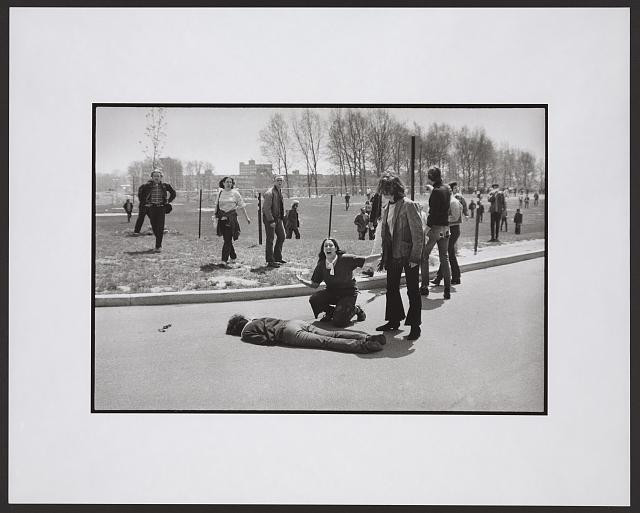
Kent State shootings aftermath, 1970
This mattered because Cold War foreign policy, once broadly accepted, became a target of mass domestic criticism.
The Counterculture and the Sexual Revolution
The counterculture was more about lifestyle than formal politics. Hippies rejected consumerism, corporate careers, suburban conformity, and conventional adulthood.
- Values included peace, authenticity, spontaneity, communes, alternative spirituality, Eastern religions, and mysticism.
- Their style was easy to spot: long hair, jeans, colorful clothes, informal speech and manners.
Symbols and sounds
- Haight-Ashbury became a center of the movement.
- The Summer of Love (1967) made it nationally visible.
- Woodstock (1969) became its most famous symbol.
Music carried the movement’s message, and mass gatherings like Woodstock made that culture visible to the whole country.
- Protest folk: Bob Dylan, Joan Baez, Pete Seeger
- Psychedelic and rock: the Beatles, Jimi Hendrix, Janis Joplin, Jefferson Airplane, Grateful Dead
- Black music and pride: Aretha Franklin, James Brown
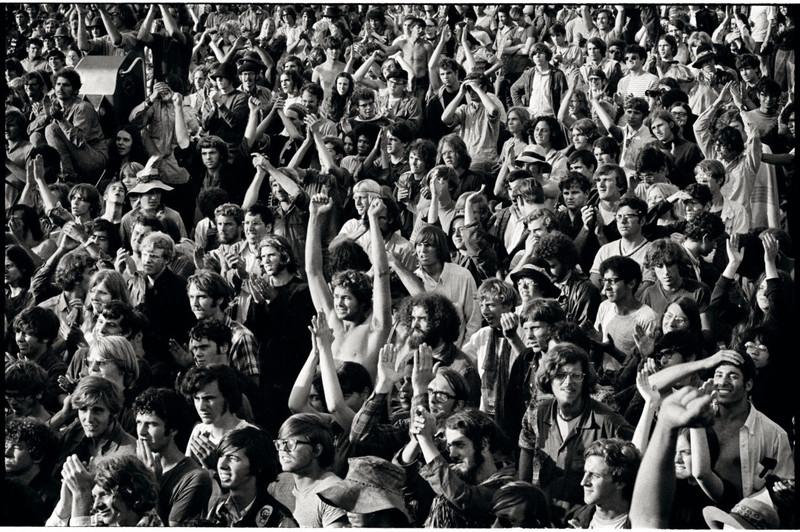
Woodstock crowd, 1969
Drugs and sex
- Marijuana and LSD were linked to altered consciousness.
- Timothy Leary said, “turn on, tune in, drop out.”
- Drug culture also brought addiction, disorder, and backlash.
The sexual revolution meant more openness about sex, premarital relationships, cohabitation, and personal choice.
- The birth control pill was approved in 1960.
- Alfred Kinsey had earlier challenged public assumptions about sexual behavior.
- Campus rules and censorship weakened.
- Limits mattered too. Women often still faced inequality, even inside “liberated” movements.
What Changed and Why It Mattered
Youth culture made American life more informal in clothing, language, music, and behavior. It also deepened skepticism toward government, war, and established institutions.
By the late 1960s, parts of the movement fragmented and radicalized:
- SDS split
- the Weathermen/Weather Underground turned to bombings and revolutionary talk
At the same time, mainstream culture absorbed many countercultural styles and sold them back as consumer products.
There was also a strong conservative backlash built around law and order, defense of traditional values, and fears of moral decline. The movement also helped inspire later activism for women’s rights, LGBTQ+ rights, environmentalism, and broader social justice.
Key Takeaways
Baby Boom
Postwar surge in births that produced the unusually large generation reaching adolescence and college age during the 1960s
Generation Gap
The widening divide between many young Americans and their parents over politics, authority, lifestyles, and social values
The Establishment
The interconnected political, economic, military, educational, and cultural institutions that youth activists believed held authority
New Left
Mostly young activists who sought participatory democracy and structural reform while criticizing conservatism and cautious mainstream liberalism
Students for a Democratic Society (SDS)
The leading national student organization of the New Left, known for campus activism, participatory democracy, and opposition to Vietnam
Port Huron Statement
SDS's 1962 manifesto criticizing racism, militarism, political apathy, and bureaucracy while calling for participatory democracy
Tom Hayden
SDS activist who was the principal author of the 1962 Port Huron Statement
Participatory Democracy
The New Left ideal that people should directly influence decisions affecting their lives rather than defer to distant institutions
Free Speech Movement
The successful 1964 Berkeley student campaign against university restrictions on campus political advocacy and organizing
Mario Savio
Leading spokesperson for Berkeley's Free Speech Movement who condemned the university as a bureaucratic machine
Columbia University Protests
The 1968 student occupations opposing Columbia's military connections, institutional authority, and proposed gymnasium near Harlem
Antiwar Movement
The expanding movement against the Vietnam War and draft, ranging from liberal demands for withdrawal to radical rejection of the political system
Selective Service System (The Draft)
The system that conscripted young men for military service and fueled protest because its burdens appeared unequal
Teach-In
An extended campus discussion in which faculty and activists examined the history, policy, and morality of the Vietnam War
Vietnam as the Television War
Description of Vietnam as the first war whose recurring combat footage and casualties entered American homes through television
Credibility Gap
The growing divide between optimistic government claims about Vietnam and public perceptions of rising troops, casualties, and failure
Tet Offensive
The January 1968 communist offensive that was a military setback for communist forces but contradicted claims that U.S. victory was near and widened the credibility gap
My Lai Massacre
The 1968 killing of Vietnamese civilians by U.S. soldiers, revealed publicly in 1969 and used as evidence that the war was immoral
March on the Pentagon
The October 1967 antiwar demonstration that combined mass protest, civil disobedience, and countercultural theater
1968 Democratic National Convention Protests
Chicago antiwar demonstrations marked by nationally televised clashes and a police response later described as a police riot
Kent State Shootings
The May 4, 1970 killing of four students by National Guardsmen during protests against Nixon's expansion of the war into Cambodia
Weather Underground (Weathermen)
A radical faction formed after SDS fractured in 1969 that advocated revolution and bombed symbols of government and corporate power
Counterculture
The youth movement, whose participants were often called hippies, that rejected conventional middle-class values and experimented with informal and alternative lifestyles
Haight-Ashbury
The San Francisco district that became a major center of hippie communities, psychedelic culture, and alternative lifestyles
Summer of Love
The 1967 influx of thousands of young people into Haight-Ashbury that symbolized countercultural liberation but exposed problems including exploitation, crime, and drug addiction
Woodstock Music and Art Fair
The August 1969 festival where roughly 400,000 people created an enduring symbol of countercultural music, informality, and peaceful community
Timothy Leary
Former Harvard psychologist who promoted LSD and urged youth to “turn on, tune in, drop out.”
Sexual Revolution
The movement toward greater openness about sexuality, acceptance of sex outside marriage, and individual choice in intimate relationships
Oral Contraceptive Pill (The Pill)
FDA-approved in 1960, this reliable contraception helped separate sexual activity from pregnancy and altered sexual expectations
LSD
Psychedelic drug associated with countercultural experimentation, altered consciousness, music, and art
Notes
Baby Boom
Postwar surge in births that produced the unusually large generation reaching adolescence and college age during the 1960s
Generation Gap
The widening divide between many young Americans and their parents over politics, authority, lifestyles, and social values
The Establishment
The interconnected political, economic, military, educational, and cultural institutions that youth activists believed held authority
New Left
Mostly young activists who sought participatory democracy and structural reform while criticizing conservatism and cautious mainstream liberalism
Students for a Democratic Society (SDS)
The leading national student organization of the New Left, known for campus activism, participatory democracy, and opposition to Vietnam
Port Huron Statement
SDS's 1962 manifesto criticizing racism, militarism, political apathy, and bureaucracy while calling for participatory democracy
Tom Hayden
SDS activist who was the principal author of the 1962 Port Huron Statement
Participatory Democracy
The New Left ideal that people should directly influence decisions affecting their lives rather than defer to distant institutions
Free Speech Movement
The successful 1964 Berkeley student campaign against university restrictions on campus political advocacy and organizing
Mario Savio
Leading spokesperson for Berkeley's Free Speech Movement who condemned the university as a bureaucratic machine
Columbia University Protests
The 1968 student occupations opposing Columbia's military connections, institutional authority, and proposed gymnasium near Harlem
Antiwar Movement
The expanding movement against the Vietnam War and draft, ranging from liberal demands for withdrawal to radical rejection of the political system
Selective Service System (The Draft)
The system that conscripted young men for military service and fueled protest because its burdens appeared unequal
Teach-In
An extended campus discussion in which faculty and activists examined the history, policy, and morality of the Vietnam War
Vietnam as the Television War
Description of Vietnam as the first war whose recurring combat footage and casualties entered American homes through television
Credibility Gap
The growing divide between optimistic government claims about Vietnam and public perceptions of rising troops, casualties, and failure
Tet Offensive
The January 1968 communist offensive that was a military setback for communist forces but contradicted claims that U.S. victory was near and widened the credibility gap
My Lai Massacre
The 1968 killing of Vietnamese civilians by U.S. soldiers, revealed publicly in 1969 and used as evidence that the war was immoral
March on the Pentagon
The October 1967 antiwar demonstration that combined mass protest, civil disobedience, and countercultural theater
1968 Democratic National Convention Protests
Chicago antiwar demonstrations marked by nationally televised clashes and a police response later described as a police riot
Kent State Shootings
The May 4, 1970 killing of four students by National Guardsmen during protests against Nixon's expansion of the war into Cambodia
Weather Underground (Weathermen)
A radical faction formed after SDS fractured in 1969 that advocated revolution and bombed symbols of government and corporate power
Counterculture
The youth movement, whose participants were often called hippies, that rejected conventional middle-class values and experimented with informal and alternative lifestyles
Haight-Ashbury
The San Francisco district that became a major center of hippie communities, psychedelic culture, and alternative lifestyles
Summer of Love
The 1967 influx of thousands of young people into Haight-Ashbury that symbolized countercultural liberation but exposed problems including exploitation, crime, and drug addiction
Woodstock Music and Art Fair
The August 1969 festival where roughly 400,000 people created an enduring symbol of countercultural music, informality, and peaceful community
Timothy Leary
Former Harvard psychologist who promoted LSD and urged youth to “turn on, tune in, drop out.”
Sexual Revolution
The movement toward greater openness about sexuality, acceptance of sex outside marriage, and individual choice in intimate relationships
Oral Contraceptive Pill (The Pill)
FDA-approved in 1960, this reliable contraception helped separate sexual activity from pregnancy and altered sexual expectations
LSD
Psychedelic drug associated with countercultural experimentation, altered consciousness, music, and art
