Topic 3.2 Notes – The Seven Years’ War (The French and Indian War)
Why the Seven Years’ War Broke Out
Britain and France had been rivals for a long time, and North America became one more front in that imperial struggle. In North America, the fighting is called the French and Indian War because British colonists were fighting France and many of France’s Native allies.
The map helps you see why the conflict centered on the interior rather than the Atlantic coast alone. The real pressure point was the Ohio River Valley, where British colonial expansion collided with French claims and Native interests.
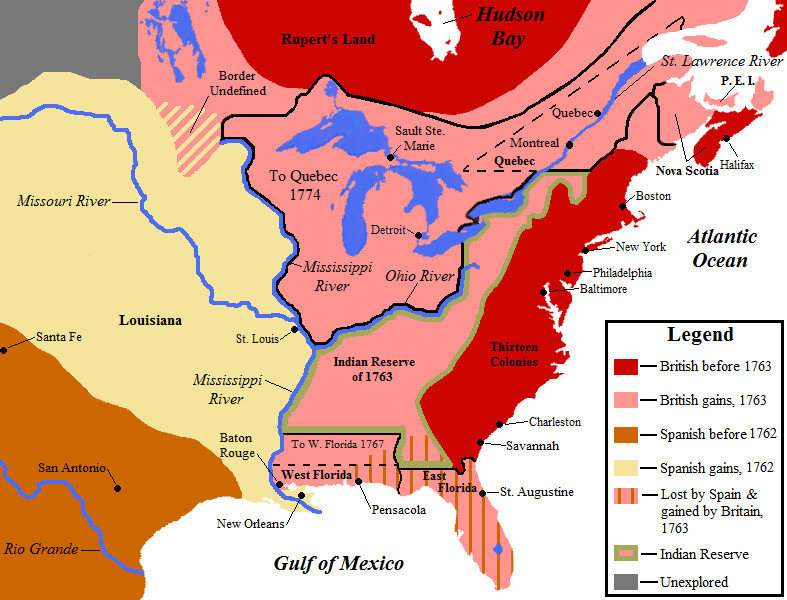
North America after the French and Indian War
The key chain is worth knowing cold:
- British colonial population grew fast.
- Colonists pushed west into the Ohio River Valley.
- That threatened French forts, trade routes, and Native autonomy.
- Fighting broke out in 1754.
- Britain won, but victory brought debt, tighter control, and more frontier conflict.
The Ohio River Valley
This region mattered to everyone for different reasons:
- British colonists wanted land, settlement, and speculation profits.
- France wanted to connect Canada to the Mississippi Valley through forts and trade.
- Native nations wanted to protect land, trade, and political independence.
Native alliances were strategic. Many Great Lakes and Ohio Valley peoples, including Hurons, Ottawas, and other Algonquian-speaking groups, often worked with France because French settlement usually threatened Native land less directly than British farming settlement. The Haudenosaunee or Iroquois Confederacy had ties to Britain through the Covenant Chain, but often tried to balance both empires.
The 1754 spark
- Virginia governor Robert Dinwiddie sent George Washington to challenge French claims.
- The French built Fort Duquesne at the forks of the Ohio.
- Fighting began at Jumonville Glen.
- Washington then lost at Fort Necessity.
Albany Congress
The colonies were still separate and protective of their own power. At the Albany Congress in 1754, Benjamin Franklin proposed the Albany Plan of Union, but both colonial assemblies and British officials rejected it. Franklin also pushed the broader idea of colonial unity in the famous “Join, or Die” cartoon shown here.
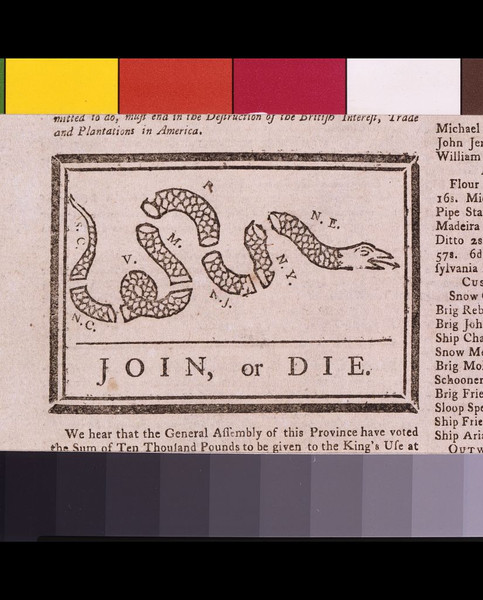
Benjamin Franklin’s “Join, or Die” cartoon
How Britain Won the War
Britain did not dominate at first. In 1755, General Edward Braddock was defeated near Fort Duquesne. British regulars often clashed with colonial militias over rank, discipline, command, quartering, and who would pay. Frontier warfare and Native tactics also made British armies struggle.
Britain turned the war around under William Pitt, who treated North America as part of a larger imperial contest. He sent more troops, used British naval power, and spent heavily. He also reimbursed colonial assemblies, which made the colonies more willing to help.
Key victories
- Louisbourg captured in 1758
- Fort Duquesne abandoned by France and rebuilt as Fort Pitt in 1758
- Battle of Quebec in 1759 on the Plains of Abraham
- James Wolfe defeated Marquis de Montcalm
- Montreal surrendered in 1760
This was a global war, not just a colonial border fight. Fighting also mattered in Europe, the Caribbean, West Africa, and India.
What Britain Gained in 1763
The Treaty of Paris of 1763 redrew the map.
- France gave Canada and land east of the Mississippi to Britain, except New Orleans.
- Spain gave Florida to Britain.
- France gave Louisiana west of the Mississippi and New Orleans to Spain.
Britain became the dominant power in eastern North America. But now it had bigger problems: huge war debt, a larger empire to defend, troops to station in America, French Catholics in Canada to govern, and Native relations to manage.
Why the War Changed Britain’s Relationship with Colonists and Native Peoples
Colonists came out of the war more confident and more suspicious of Britain. Colonial soldiers gained experience, especially George Washington. Colonists also saw British military weakness and resented British arrogance. With France removed from Canada, colonists felt less dependent on British protection. Britain thought the colonies should help pay for defense. Colonists thought they had already done enough.
For Native peoples, British victory was dangerous. France had been a counterweight. After 1763, settlers and speculators pushed harder west. British commander Jeffrey Amherst made things worse by cutting gift-giving and trade goods, which Native diplomacy saw as basic signs of alliance and respect.
Pontiac’s War in 1763
Pontiac, an Ottawa leader, became the best-known figure in a wider Native resistance movement. Native groups attacked British forts and settlements across the Great Lakes and Ohio country. This showed that British victory over France did not mean control of the interior.
Proclamation of 1763
Britain banned settlement west of the Appalachians (colonists could only settle east of the line). The goal was to reduce conflict, cut defense costs, and regulate western land purchases. Colonists hated it, especially settlers, speculators, veterans, and land companies who expected western land after the war.
Why the Seven Years’ War Was a Turning Point
Britain saw a costly victory that required tighter imperial control and more colonial revenue. Colonists saw a victory that should open western lands while preserving self-government. Native nations saw a direct threat to land, trade, and autonomy. France lost its mainland empire, but the bigger APUSH point is what changed inside the British Empire.
Key Takeaways
Seven Years’ War / French and Indian War
Global imperial war, 1756–1763, whose North American fighting began in 1754; Britain defeated France, gained extensive territory and debt, and then sought more colonial revenue and control
Ohio River Valley
Contested interior region claimed for British settlement and trade, needed by France to connect Canada with Louisiana, and defended by Native peoples as their homeland
Haudenosaunee / Iroquois Confederacy
Native confederacy connected to Britain through the Covenant Chain but often balancing Britain and France to preserve its independence and influence
George Washington
Virginia officer whose 1754 clash at Jumonville Glen and surrender at Fort Necessity helped ignite the war and gave him early military experience
Fort Duquesne / Fort Pitt
French fort at the forks of the Ohio that the French abandoned in 1758; Britain occupied and renamed it Fort Pitt
Fort Necessity
Hastily built fort where French and Native forces compelled George Washington to surrender in July 1754
Albany Congress
1754 meeting of seven colonies called to strengthen Iroquois relations and coordinate defense against France
Albany Plan of Union
Benjamin Franklin’s rejected plan for a Crown-appointed president-general and colonial grand council to manage defense, western affairs, and shared funds
Benjamin Franklin
Colonial leader who proposed the Albany Plan of Union and promoted cooperation through the “Join, or Die” cartoon
“Join, or Die”
Franklin’s segmented-snake cartoon warning that the colonies would remain vulnerable unless they united for defense
Edward Braddock
British general killed in 1755 when French and Native forces defeated his expedition against Fort Duquesne
William Pitt
Principal organizer of Britain’s war effort from 1757 who sent more troops and naval support, spent heavily, and reimbursed colonies for military expenses
Battle of Quebec / Plains of Abraham
Decisive 1759 British victory outside Quebec that opened the heart of New France to conquest; Wolfe and Montcalm were both mortally wounded
James Wolfe
British general who defeated French forces at the Plains of Abraham in 1759 and died from his wounds
Marquis de Montcalm
French commander defeated by James Wolfe at the Plains of Abraham in 1759 who was mortally wounded in the battle
Treaty of Paris of 1763
Peace treaty giving Britain Canada, French claims east of the Mississippi except New Orleans, and Spanish Florida, while Spain received western Louisiana and New Orleans
Jeffrey Amherst
British commander whose reductions in diplomatic gifts and restrictions on ammunition and trade goods worsened relations with Native nations
Pontiac
Ottawa leader associated with the broad 1763 Native resistance to British forts and settlement, though he did not control the entire movement
Pontiac’s Rebellion / Pontiac’s War
1763 multi-Nation Native resistance that attacked British forts and settlements around the Great Lakes and Ohio country in defense of land, trade, and autonomy
Proclamation of 1763
Crown order barring private settlement west of the Appalachian boundary and reserving western lands for Native peoples under imperial supervision
New France
French colonial empire built around forts, the fur trade, and Native alliances, with a small population linking Canada, the Great Lakes, and the Mississippi Valley
Notes
Seven Years’ War / French and Indian War
Global imperial war, 1756–1763, whose North American fighting began in 1754; Britain defeated France, gained extensive territory and debt, and then sought more colonial revenue and control
Ohio River Valley
Contested interior region claimed for British settlement and trade, needed by France to connect Canada with Louisiana, and defended by Native peoples as their homeland
Haudenosaunee / Iroquois Confederacy
Native confederacy connected to Britain through the Covenant Chain but often balancing Britain and France to preserve its independence and influence
George Washington
Virginia officer whose 1754 clash at Jumonville Glen and surrender at Fort Necessity helped ignite the war and gave him early military experience
Fort Duquesne / Fort Pitt
French fort at the forks of the Ohio that the French abandoned in 1758; Britain occupied and renamed it Fort Pitt
Fort Necessity
Hastily built fort where French and Native forces compelled George Washington to surrender in July 1754
Albany Congress
1754 meeting of seven colonies called to strengthen Iroquois relations and coordinate defense against France
Albany Plan of Union
Benjamin Franklin’s rejected plan for a Crown-appointed president-general and colonial grand council to manage defense, western affairs, and shared funds
Benjamin Franklin
Colonial leader who proposed the Albany Plan of Union and promoted cooperation through the “Join, or Die” cartoon
“Join, or Die”
Franklin’s segmented-snake cartoon warning that the colonies would remain vulnerable unless they united for defense
Edward Braddock
British general killed in 1755 when French and Native forces defeated his expedition against Fort Duquesne
William Pitt
Principal organizer of Britain’s war effort from 1757 who sent more troops and naval support, spent heavily, and reimbursed colonies for military expenses
Battle of Quebec / Plains of Abraham
Decisive 1759 British victory outside Quebec that opened the heart of New France to conquest; Wolfe and Montcalm were both mortally wounded
James Wolfe
British general who defeated French forces at the Plains of Abraham in 1759 and died from his wounds
Marquis de Montcalm
French commander defeated by James Wolfe at the Plains of Abraham in 1759 who was mortally wounded in the battle
Treaty of Paris of 1763
Peace treaty giving Britain Canada, French claims east of the Mississippi except New Orleans, and Spanish Florida, while Spain received western Louisiana and New Orleans
Jeffrey Amherst
British commander whose reductions in diplomatic gifts and restrictions on ammunition and trade goods worsened relations with Native nations
Pontiac
Ottawa leader associated with the broad 1763 Native resistance to British forts and settlement, though he did not control the entire movement
Pontiac’s Rebellion / Pontiac’s War
1763 multi-Nation Native resistance that attacked British forts and settlements around the Great Lakes and Ohio country in defense of land, trade, and autonomy
Proclamation of 1763
Crown order barring private settlement west of the Appalachian boundary and reserving western lands for Native peoples under imperial supervision
New France
French colonial empire built around forts, the fur trade, and Native alliances, with a small population linking Canada, the Great Lakes, and the Mississippi Valley
