Topic 9.7 Notes – Causation in Period 9
How Change After 1980 Reshaped American National Identity
National identity means Americans’ competing ideas about who belongs, what values define the country, what government should do, and what role the U.S. should play in the world. After 1980, one shared answer never appeared. Conflict got sharper.
The strongest causation move here is to explain the mechanism. Don’t just say the internet spread and polarization rose. Say digital media let people choose like-minded news, weakened old gatekeepers, and helped ideological communities form.
When you judge significance, rank changes by:
- breadth: how many people it affected
- depth: how much it changed behavior or beliefs
- duration: whether it lasted
- impact on older ideas: whether it changed ideas about citizenship or national purpose
The major changes you should compare together are:
- conservative politics and culture wars
- economic restructuring and globalization
- technological change
- demographic shifts
- end of the Cold War
- 9/11 and the war on terrorism
Conservative Politics and the Contested Role of Government
Reagan’s 1980 victory marked the rise of modern conservatism into national power.
Core conservative ideas included:
- lower taxes, deregulation, less federal power
- free enterprise and individual responsibility
- traditional social values, religion, opposition to abortion, and resistance to some changes in gender roles and sexuality
Key policy effects:
- Reaganomics used major tax cuts to encourage investment and growth.
- Deregulation reduced government rules on business.
- Conservatives pushed patriotism and a strong military as central national values.
This did not erase the welfare state. Social Security and Medicare stayed popular, and New Deal and Great Society programs survived. That created a lasting contradiction. Many voters attacked “big government” in general but still defended specific federal benefits.
Culture-war conflicts deepened polarization:
- abortion
- immigration
- racial diversity
- gender roles
- same-sex relationships and family structures
NAFTA became a symbol of these fights. Supporters saw free trade and global markets. Critics saw lost jobs and the human cost of globalization.
Economic, Technological, and Demographic Change
These belong together because they interacted and reshaped daily life more than almost anything else.
Economic restructuring
The U.S. shifted away from manufacturing and toward service, finance, healthcare, information, and high-tech work. Globalization and outsourcing hurt many factory towns in the Midwest and Northeast, the Rust Belt.
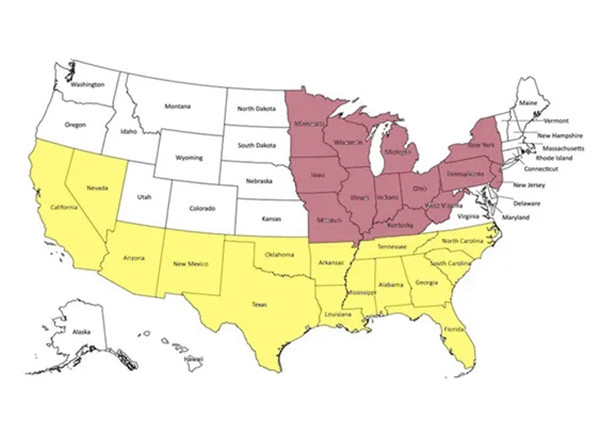
Rust Belt and Sun Belt map
Union membership fell, wages stagnated for many workers, and inequality grew.
The Great Recession of 2007 to 2009 exposed how unstable and unequal this economy could be, and it revived arguments over regulation and government bailouts.
Technological change
- personal computers
- the internet
- digital mobile devices
- social media
These created new wealth, new jobs, and instant global communication. They also changed politics and news. People could organize faster, but the shared media world broke apart, and misinformation and echo chambers became more common.
Demographic transformation
Immigration from Latin America and Asia, continuing changes set in motion by the Immigration and Nationality Act of 1965, made the U.S. more racially, ethnically, linguistically, and religiously diverse. That pushed a broader, more pluralist idea of American identity.
Backlash grew too, especially over assimilation, unauthorized immigration, border control, and citizenship.
Domestic migration to the Sun Belt shifted population, House seats, and electoral votes toward the South and West. Women’s changing work and family patterns also kept reshaping gender expectations.
American Power After the Cold War and After 9/11
Foreign policy changed because the old Cold War mission disappeared, then terrorism gave the U.S. a new one.
Reagan and the Cold War’s end
Reagan used:
- military buildup
- anti-communist rhetoric
- support for anti-communist movements
- limited interventions
Then communist governments fell in Eastern Europe in 1989, and the Soviet Union dissolved in 1991. This happened because of Reagan pressure, but also Soviet economic weakness, political stagnation, and Gorbachev’s reforms.
The fall of the Berlin Wall became one of the clearest symbols of that turning point.
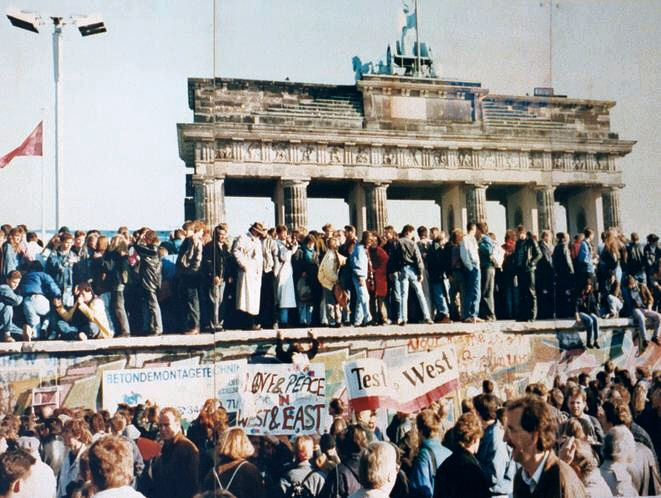
Berlin Wall, 1989
The U.S. became the sole superpower. Confidence in democratic capitalism rose, but containment no longer gave foreign policy a clear purpose.
Examples:
- Persian Gulf War (1991) showed U.S. military strength and coalition leadership.
- Balkans interventions in the 1990s showed willingness to intervene after the Cold War.
9/11 and the war on terrorism
The September 11, 2001 attacks hit the World Trade Center and Pentagon. The U.S. invaded Afghanistan and later Iraq, created the Department of Homeland Security, and passed the USA PATRIOT Act.
These events intensified tensions over:
- patriotism and executive power
- liberty versus security
- surveillance, detention, due process, and human rights
- discrimination toward Muslim Americans
The wars also showed the limits of U.S. military power.
Which Changes Mattered Most
The best argument is that no single development explains national identity after 1980. The broadest effect was a nation that became more diverse, more connected, and more polarized.
- Demographic change may be the most significant because it permanently changed who Americans were and what belonging meant.
- Technological and economic change was just as far-reaching because it transformed work, communication, inequality, and politics.
- Conservatism mattered most politically because it reset debates over taxes, regulation, markets, and traditional values.
- The end of the Cold War and 9/11 were major turning points because they changed the U.S. from anti-communist leader to sole superpower to a nation focused on terrorism.
