Topic 2.3 Notes – The Regions of British Colonies
How Regional British America Took Shape
British America split into regions because geography opened some doors and closed others, then colonists built different societies around those conditions. Good harbors encouraged trade, rich soil encouraged cash crops, and long growing seasons made plantation agriculture possible. But geography alone did not decide everything. Settlers’ goals, labor needs, and Atlantic market demand turned land into regional economies.
Before breaking down each region, it helps to picture the colonies as part of a larger Atlantic world that included both the mainland and the Caribbean.
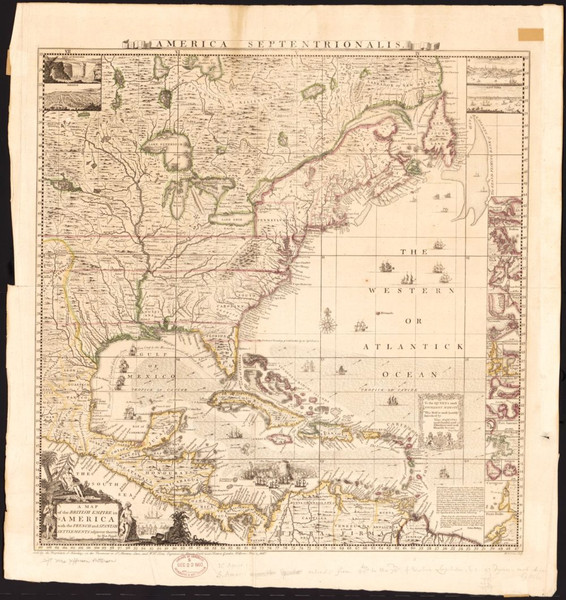
British North America and the British West Indies
A quick map in words:
- New England sat in the rocky, colder northeast.
- Middle colonies stretched around the Hudson and Delaware river valleys.
- Chesapeake centered on Virginia and Maryland around Chesapeake Bay.
- Southern Atlantic colonies ran through the Carolinas and Georgia.
- British West Indies in the Caribbean, especially Barbados and Jamaica, mattered because they shaped mainland plantation models.
Across all regions, you still see shared patterns:
- Agriculture mattered everywhere, even when trade was strong.
- Atlantic commerce tied every colony into a larger market.
- Land hunger pushed settlement onto Native land and caused conflict.
- Hierarchy existed everywhere.
- Unfree labor existed everywhere, though in very different degrees.
- Representative government developed, but participation stayed limited.
The Four Mainland Regions and the West Indies
New England
Massachusetts, Plymouth (merged into Massachusetts in 1691), Connecticut, Rhode Island, and New Hampshire grew from Puritan and Pilgrim settlement. John Winthrop’s idea of a “city upon a hill” captured the goal of building a model Christian society.
- Family migration, balanced sex ratios, and lower death rates led to stable communities and natural increase.
- Rocky soil and short growing seasons discouraged staple plantations.
- People lived in compact towns built around meetinghouses, with small family farms nearby.
- The economy mixed farming with cod fishing, timber, shipbuilding, whaling, commerce, and small manufacturing. Boston became the major port.
- Roger Williams and Anne Hutchinson challenged Puritan authority. Rhode Island became known for broader toleration.
Middle colonies
New York, New Jersey, Pennsylvania, and Delaware had fertile soil and moderate climates, so they became the bread colonies.
- Farmers grew wheat, rye, barley, and oats, exporting grain and flour to Europe and the West Indies.
- New York and Philadelphia grew through river trade, mills, merchants, and artisans.
- Diversity came from Dutch New Netherland, Swedish settlements, and William Penn’s Quaker “holy experiment.”
- Groups to know: English, Dutch, German, Swedish, Scots-Irish, Welsh; Quakers, Anglicans, Lutherans, Presbyterians, Catholics, Jews.
Chesapeake
Virginia and Maryland developed around tobacco. Jamestown began in 1607. Maryland was founded in 1634 under the Calvert family.
- Warm climate and fertile soil made tobacco profitable.
- Tobacco wore out the soil, so settlers kept moving inland for new land.
- Plantations spread along rivers, so settlement was dispersed, not town-centered.
- Labor first came mostly from indentured servants, later increasingly from enslaved Africans.
- The headright system rewarded people who paid for migrants’ passage.
- Early Chesapeake society had high death rates and more men than women, though family life stabilized later.
- North Carolina partly fit here because of tobacco, smaller farms, and naval stores.
Southern Atlantic and British West Indies
North Carolina, South Carolina, Georgia, plus Barbados and Jamaica, had long growing seasons that supported plantation cash crops.
- South Carolina and Georgia Lowcountry specialized in rice and indigo. Charleston became a major port.
- Barbados strongly influenced South Carolina’s plantation model.
- The British West Indies centered on sugar, the most labor-intensive and slavery-dependent plantation economy in Britain’s empire.
- James Oglethorpe founded Georgia as a buffer against Spanish Florida. Trustees first limited slavery and large estates, then Georgia shifted toward plantation slavery by the early 1750s.
Labor Systems and Social Order
Labor systems shaped class structure.
- New England used enslaved labor, but it was less central. More white men owned land, and family life was steadier.
- Middle colonies had a mixed social order of independent farmers, tenants, servants, artisans, merchants, and enslaved laborers. New York had notable large estates and tenancy.
- Chesapeake society moved from indentured servitude in the 1600s to racial slavery later. A planter elite stood at the top.
- Lower South and West Indies depended most on enslaved Africans. In many places enslaved people formed the majority. African knowledge helped rice cultivation, the task system shaped Lowcountry labor, and Gullah/Geechee culture preserved African traditions.
Government and the Main Comparison to Lock In
Britain was far away, and early imperial control was often loose, which helped colonies build self-government. This is the idea of salutary neglect.
- New England used town meetings where qualified men participated directly and elected representatives.
- Middle colonies had elected assemblies and more plural local politics.
- Chesapeake and southern colonies had elected bodies too, like Virginia’s House of Burgesses in 1619 and Maryland’s assembly, but elite planters dominated county courts, militias, and parish offices.
The comparison to remember:
- New England = religion, family migration, towns, mixed economy, town meetings
- Middle = fertile land, grain exports, immigration, diversity, toleration
- Chesapeake = tobacco, riverside spread, servants then slavery, planter rule
- Lower South/West Indies = rice, indigo, sugar, plantation slavery, enslaved majorities, oligarchy
Key Takeaways
New England Colonies
Massachusetts, Connecticut, Rhode Island, and New Hampshire; Puritan-influenced towns, family farms, town meetings, and a mixed commercial economy
Puritans
English Protestants who founded Massachusetts Bay to create disciplined, covenanted Christian communities and enforced substantial religious conformity
Roger Williams
Banished Massachusetts dissenter who founded Rhode Island in 1636 with church-state separation and comparatively broad religious toleration
Town Meeting
New England institution in which qualified men governed local affairs, elected officials, levied taxes, and selected legislative representatives
New England Mixed Economy
Economy combining family farming with fishing, timber, shipbuilding, commerce, whaling, and small-scale manufacturing
Middle Colonies
New York, New Jersey, Pennsylvania, and Delaware; a diverse region of fertile farms, grain exports, religious pluralism, and major ports
Quakers (Society of Friends)
Religious group emphasizing spiritual equality, opposing established churches, and generally rejecting warfare and compulsory military service
Bread Colonies (Breadbasket Colonies)
The middle colonies, whose fertile soil and moderate climate supported major exports of wheat and other cereal crops
Chesapeake Colonies
Virginia and Maryland; tobacco-exporting colonies marked by dispersed riverfront settlement, bound labor, and planter-dominated government
Cash Crop (Staple Crop)
A commodity, such as tobacco, rice, indigo, or sugar, produced primarily for sale and export rather than household use
Tobacco
Labor-intensive Chesapeake and North Carolina cash crop that brought prosperity while encouraging dispersed settlement, soil exhaustion, and demand for bound labor
Indentured Servitude
Labor system in which migrants worked for a fixed term in exchange for transportation, supplying most early Chesapeake plantation labor
Headright System
Policy granting land to those who paid migrants’ transportation costs, encouraging Chesapeake immigration and the growth of large estates
House of Burgesses
Virginia’s representative assembly, established in 1619 as the first elected legislature in the English mainland colonies
Calvert Family (Lords Baltimore)
Proprietors who founded Maryland in 1634 partly as a refuge for English Catholics
Maryland Toleration Act (Act Concerning Religion)
1649 Maryland law protecting worship for Christians who accepted its Christian premises, not establishing complete religious liberty
Southern Atlantic Colonies
North Carolina, South Carolina, and Georgia; long growing seasons supported plantation exports and planter governments, especially in the Lowcountry
James Oglethorpe
Leader in Georgia’s founding as a colony for poor settlers and a defensive buffer against Spanish Florida
Task System
Plantation labor system assigning enslaved workers specified daily tasks, sometimes leaving limited personal time after completion
Gullah (Geechee) Culture
Distinctive African American culture formed in coastal South Carolina and Georgia through the preservation and blending of African languages and traditions
British West Indies
Caribbean colonies such as Barbados and Jamaica, dominated by sugar plantations, enslaved African majorities, and wealthy planter elites
Colonial Self-Government
Local assemblies and institutions created as distance and weak British supervision forced colonists to manage taxation, spending, courts, roads, and defense
Salutary Neglect
Britain’s loose or inconsistent supervision of colonial affairs while the colonies remained profitable and loyal, encouraging local political autonomy
Planter-Dominated Government
Southern political pattern in which wealthy planters controlled elected assemblies, county courts, militia offices, and most political influence
Pilgrims (Separatists)
English Separatists who broke with the Church of England and founded Plymouth in 1620
John Winthrop
Massachusetts Bay leader who described the colony as a “city upon a hill,” an exemplary Puritan society
City upon a Hill
Winthrop’s image of Massachusetts Bay as an exemplary Christian society watched by the world
New Netherland
Dutch colony centered on New Amsterdam, seized by England in 1664 and renamed New York while retaining Dutch cultural influences
William Penn
Quaker proprietor who promoted Pennsylvania with generous land policies and religious toleration to attract migrants
Holy Experiment
William Penn’s effort to make Pennsylvania a tolerant Quaker colony without an established church
North Carolina
Southern colony resembling the Chesapeake through smaller tobacco farms while also producing livestock, timber, and naval stores
Rice
Labor-intensive Lowcountry cash crop grown in coastal wetlands with enslaved labor and knowledge contributed by Africans
Indigo
Lowcountry cash crop processed into blue dye and produced for export with enslaved labor
Sugar
Highly profitable Caribbean cash crop produced on capital-intensive plantations by large enslaved African labor forces
Plantation Economy
Export economy based on large estates producing labor-intensive cash crops, chiefly with enslaved African labor
Notes
New England Colonies
Massachusetts, Connecticut, Rhode Island, and New Hampshire; Puritan-influenced towns, family farms, town meetings, and a mixed commercial economy
Puritans
English Protestants who founded Massachusetts Bay to create disciplined, covenanted Christian communities and enforced substantial religious conformity
Roger Williams
Banished Massachusetts dissenter who founded Rhode Island in 1636 with church-state separation and comparatively broad religious toleration
Town Meeting
New England institution in which qualified men governed local affairs, elected officials, levied taxes, and selected legislative representatives
New England Mixed Economy
Economy combining family farming with fishing, timber, shipbuilding, commerce, whaling, and small-scale manufacturing
Middle Colonies
New York, New Jersey, Pennsylvania, and Delaware; a diverse region of fertile farms, grain exports, religious pluralism, and major ports
Quakers (Society of Friends)
Religious group emphasizing spiritual equality, opposing established churches, and generally rejecting warfare and compulsory military service
Bread Colonies (Breadbasket Colonies)
The middle colonies, whose fertile soil and moderate climate supported major exports of wheat and other cereal crops
Chesapeake Colonies
Virginia and Maryland; tobacco-exporting colonies marked by dispersed riverfront settlement, bound labor, and planter-dominated government
Cash Crop (Staple Crop)
A commodity, such as tobacco, rice, indigo, or sugar, produced primarily for sale and export rather than household use
Tobacco
Labor-intensive Chesapeake and North Carolina cash crop that brought prosperity while encouraging dispersed settlement, soil exhaustion, and demand for bound labor
Indentured Servitude
Labor system in which migrants worked for a fixed term in exchange for transportation, supplying most early Chesapeake plantation labor
Headright System
Policy granting land to those who paid migrants’ transportation costs, encouraging Chesapeake immigration and the growth of large estates
House of Burgesses
Virginia’s representative assembly, established in 1619 as the first elected legislature in the English mainland colonies
Calvert Family (Lords Baltimore)
Proprietors who founded Maryland in 1634 partly as a refuge for English Catholics
Maryland Toleration Act (Act Concerning Religion)
1649 Maryland law protecting worship for Christians who accepted its Christian premises, not establishing complete religious liberty
Southern Atlantic Colonies
North Carolina, South Carolina, and Georgia; long growing seasons supported plantation exports and planter governments, especially in the Lowcountry
James Oglethorpe
Leader in Georgia’s founding as a colony for poor settlers and a defensive buffer against Spanish Florida
Task System
Plantation labor system assigning enslaved workers specified daily tasks, sometimes leaving limited personal time after completion
Gullah (Geechee) Culture
Distinctive African American culture formed in coastal South Carolina and Georgia through the preservation and blending of African languages and traditions
British West Indies
Caribbean colonies such as Barbados and Jamaica, dominated by sugar plantations, enslaved African majorities, and wealthy planter elites
Colonial Self-Government
Local assemblies and institutions created as distance and weak British supervision forced colonists to manage taxation, spending, courts, roads, and defense
Salutary Neglect
Britain’s loose or inconsistent supervision of colonial affairs while the colonies remained profitable and loyal, encouraging local political autonomy
Planter-Dominated Government
Southern political pattern in which wealthy planters controlled elected assemblies, county courts, militia offices, and most political influence
Pilgrims (Separatists)
English Separatists who broke with the Church of England and founded Plymouth in 1620
John Winthrop
Massachusetts Bay leader who described the colony as a “city upon a hill,” an exemplary Puritan society
City upon a Hill
Winthrop’s image of Massachusetts Bay as an exemplary Christian society watched by the world
New Netherland
Dutch colony centered on New Amsterdam, seized by England in 1664 and renamed New York while retaining Dutch cultural influences
William Penn
Quaker proprietor who promoted Pennsylvania with generous land policies and religious toleration to attract migrants
Holy Experiment
William Penn’s effort to make Pennsylvania a tolerant Quaker colony without an established church
North Carolina
Southern colony resembling the Chesapeake through smaller tobacco farms while also producing livestock, timber, and naval stores
Rice
Labor-intensive Lowcountry cash crop grown in coastal wetlands with enslaved labor and knowledge contributed by Africans
Indigo
Lowcountry cash crop processed into blue dye and produced for export with enslaved labor
Sugar
Highly profitable Caribbean cash crop produced on capital-intensive plantations by large enslaved African labor forces
Plantation Economy
Export economy based on large estates producing labor-intensive cash crops, chiefly with enslaved African labor
