Topic 5.9 Notes – Government Policies During the Civil War
How Lincoln Changed the Meaning of the Civil War
When the war began in 1861, Lincoln’s public goal was preserving the Union. He hated slavery’s expansion and said secession was illegal, but in the First Inaugural Address he also said he had no immediate constitutional power to abolish slavery where it already existed.
That caution came from politics as much as principle. The Union coalition included:
- Abolitionists who wanted slavery destroyed
- Republicans united against secession
- War Democrats who wanted reunion more than racial equality
- Loyal slave states that Lincoln could not afford to lose
Over time, those goals fused together. Union victory came to mean:
- saving the nation
- ending slavery
- defending self-government
That is the core exam idea. Lincoln changed victory from simple reunion into reunion without slavery. He also tied the war to the Declaration of Independence, especially liberty and equality, which set up Reconstruction fights over citizenship and civil rights.
From Union First to Emancipation Policy
Lincoln’s early caution makes more sense once you see the border states.
Border states and wartime caution
- Delaware, Maryland, Kentucky, Missouri stayed in the Union.
- West Virginia entered in 1863 after breaking from Confederate Virginia.
- Maryland mattered because Washington, D.C. sat inside it.
- Kentucky controlled key rivers and access to the Ohio Valley.
- Missouri mattered for the Mississippi and the West.
On this Civil War map, the lighter blue states are the loyal slave states that made Lincoln especially cautious. Lincoln used troops and arrests against secessionists, but he avoided immediate emancipation in these states.
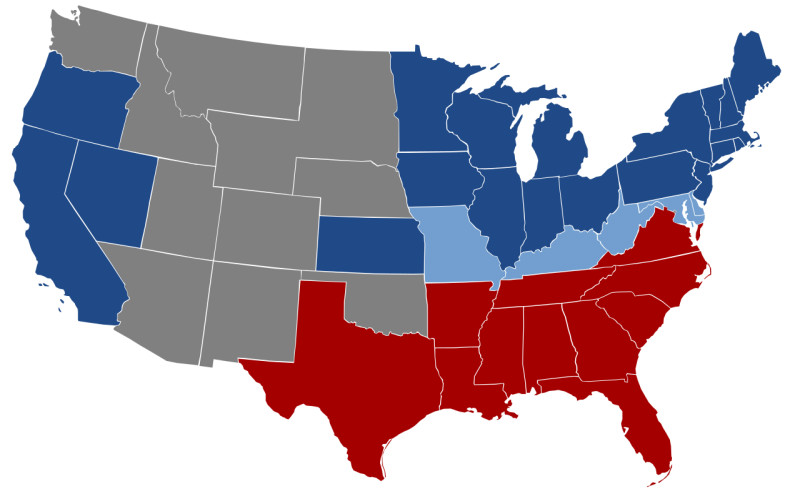
Civil War Union, Confederacy, and border states
The road to emancipation
Enslaved people forced the issue by fleeing to Union lines. Federal policy shifted step by step:
- Benjamin Butler at Fort Monroe called escaped enslaved people contraband of war.
- First Confiscation Act (1861) allowed seizure of enslaved labor used for the Confederacy.
- Second Confiscation Act (1862) freed enslaved people of rebels who came under Union control.
- Washington, D.C. abolished slavery in 1862 through compensated emancipation.
- Congress banned slavery in federal territories in 1862.
- Lincoln tried and failed to win compensated emancipation in border states.
The Emancipation Proclamation
- Lincoln drafted it in 1862.
- Seward told him to wait for a military win.
- Antietam led to the Preliminary Emancipation Proclamation on September 22, 1862.
- The Final Emancipation Proclamation took effect January 1, 1863.
It applied only to areas in rebellion. It did not free enslaved people in loyal slave states or some Union-held areas. Students miss this all the time. It was limited, but it still transformed the war because Union armies now carried freedom with them.
Its effects:
- weakened the Confederate labor system
- made slavery’s destruction an official Union goal
- hurt Confederate hopes for recognition abroad, especially in Britain
- made reunion with slavery intact much less likely
African Americans and the Destruction of Slavery
African Americans were not passive. They helped destroy slavery by:
- fleeing plantations
- denying labor to the Confederacy
- giving the Union labor, intelligence, and soldiers
The proclamation allowed Black enlistment. About 180,000 Black soldiers served in the Union Army and about 20,000 in the Navy, around one-tenth of Union forces.
Black military service
- 54th Massachusetts Infantry became the most famous Black regiment.
- Robert Gould Shaw commanded it.
- Their assault on Fort Wagner showed Black troops’ courage and answered racist doubts.
The memorial below honors Shaw and the men of the 54th Massachusetts, the regiment most students connect with Black military service in the Civil War.
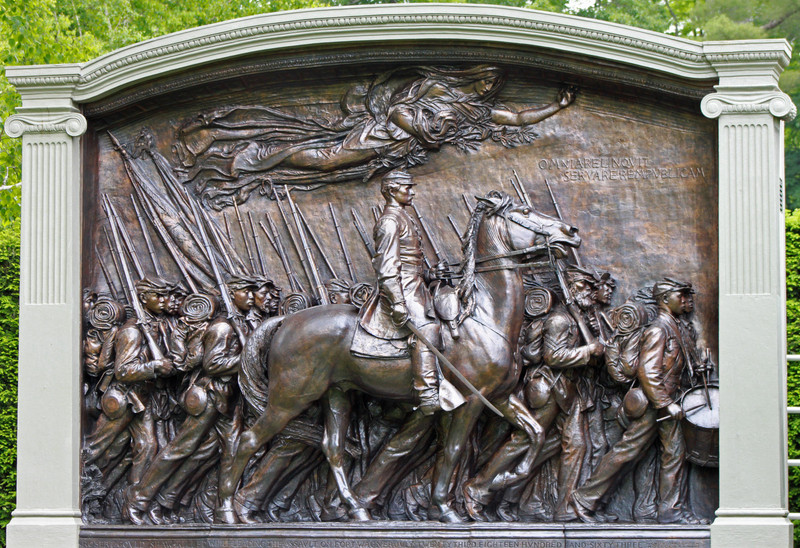
Robert Gould Shaw and 54th Massachusetts Memorial
Service still came with limits:
- segregated units
- white officers
- lower pay until equalized in 1864
- Confederates often refused to treat captured Black troops as normal POWs
Still, military service strengthened later claims to citizenship and suffrage.
Britain and France also mattered here. King Cotton diplomacy failed, and antislavery opinion in Britain made support for a slaveholding Confederacy harder after emancipation.
Wartime Power, Opposition, and Lincoln’s New National Vision
Lincoln’s war leadership expanded federal power and sparked backlash.
Civil liberties and executive power
- Lincoln suspended habeas corpus, the protection against unlawful detention.
- Ex parte Merryman challenged that move.
- The Habeas Corpus Suspension Act of 1863 backed presidential suspension.
- Ex parte Milligan after the war limited military trials of civilians where civil courts were open.
This left a lasting question about security vs civil liberties.
Home-front conflict and political opposition
- Enrollment Act of 1863 created a federal draft.
- The $300 commutation fee fed the complaint of a “rich man’s war, poor man’s fight.”
- The New York City Draft Riots in 1863 were violent and deeply racist.
- Peace Democrats, or Copperheads, wanted negotiation.
- Clement Vallandigham became their best-known figure.
- In 1864, George B. McClellan ran against Lincoln and Andrew Johnson on the National Union ticket.
- Sherman’s capture of Atlanta and Farragut at Mobile Bay helped Lincoln win reelection.
Lincoln’s speeches and national ideals
The Gettysburg Address redefined the nation as “conceived in Liberty” and dedicated to equality. Its “new birth of freedom” made the war a test of whether “government of the people, by the people, for the people” could survive.
The Second Inaugural Address named slavery as the cause of the war and called for reunion “with malice toward none,” tying justice to mercy.
Key Takeaways
Abraham Lincoln
Union president whose leadership shifted the war from preserving the Union alone toward preserving a nation committed to emancipation, equality, and democratic government
First Inaugural Address
Lincoln’s 1861 address denying the legality of secession while stating that he lacked authority or intent to abolish slavery in existing states
Border States
Delaware, Maryland, Kentucky, and Missouri, loyal slave states Lincoln handled cautiously to keep them from joining the Confederacy; West Virginia joined the Union in 1863
Suspension of Habeas Corpus
Lincoln’s wartime denial of some detainees’ right to have a court review their imprisonment, justified as necessary to suppress rebellion and protect the Union
Ex Parte Merryman
The 1861 ruling in which Roger B. Taney argued that the president could not suspend habeas corpus without congressional authorization; Lincoln rejected the order
Roger B. Taney
Chief justice who ruled in Ex parte Merryman that Lincoln lacked authority to suspend habeas corpus without Congress
Habeas Corpus Suspension Act of 1863
Congressional law expressly authorizing the president to suspend habeas corpus during the rebellion
Ex Parte Milligan
The 1866 decision holding that civilians could not be tried by military tribunals where ordinary civilian courts remained open
Benjamin Butler
Union general who refused to return escapees at Fort Monroe in 1861 and classified their labor as contraband of war
Contraband Policy
Policy treating enslaved people who reached Union lines as confiscated enemy resources rather than returning them to Confederate enslavers
First Confiscation Act
The 1861 law permitting the Union to seize enslaved people whose labor was used directly to support the Confederate war effort
Second Confiscation Act
The 1862 law declaring free enslaved people of Confederate rebels who came under Union control
Compensated Emancipation
A plan to pay enslavers for freeing enslaved people, enacted in Washington, D.C., but largely rejected by loyal slave-state representatives
Preliminary Emancipation Proclamation
Lincoln’s September 22, 1862 warning after Antietam that enslaved people in areas still rebelling on January 1 would be declared free
Emancipation Proclamation
Lincoln’s January 1, 1863 military order declaring enslaved people in areas still in rebellion free, authorizing Black enlistment, and making emancipation an official Union war aim
African American Military Service
About 180,000 Black men served in the Union Army and 20,000 in the Navy, adding manpower, weakening the Confederacy, and strengthening demands for citizenship
54th Massachusetts Infantry Regiment
Famous Black Union regiment led by white officers whose costly 1863 assault on Fort Wagner challenged racist doubts about Black soldiers
King Cotton Diplomacy
Confederate strategy of using European dependence on Southern cotton to gain recognition or intervention from Britain or France
Confederate Conscription Law of 1862
The first national conscription law in American history, adopted when voluntary enlistment could no longer meet Confederate military needs
Enrollment Act of 1863
Union law establishing a federal draft for most men ages 20 to 45 while allowing a substitute or a $300 commutation payment
Twenty Negro Law
Confederate draft exemption generally allowing one white man to remain on a plantation with at least 20 enslaved people
New York City Draft Riots
Violent July 1863 uprising against the Union draft that became racist attacks on Black New Yorkers, abolitionists, and the Colored Orphan Asylum
Peace Democrats / Copperheads
Northern Democrats who favored ending the war through negotiation and opposed policies such as emancipation, conscription, and military arrests
Clement Vallandigham
Leading Copperhead arrested and convicted for an antiwar speech, then ordered by Lincoln to be sent into the Confederacy
Richmond Bread Riot
April 1863 protest in which women and other Richmond residents looted stores because of severe food shortages and inflation
Election of 1864
Lincoln defeated George B. McClellan after Union military victories, affirming continued war, emancipation, and refusal to accept Confederate independence
George B. McClellan
Former Union general and 1864 Democratic presidential nominee who opposed Lincoln’s conduct of the war but rejected simply abandoning the Union effort
National Union Party
The 1864 coalition of Republicans and prowar Democrats that nominated Abraham Lincoln and Andrew Johnson on a national-unity platform
Gettysburg Address
Lincoln’s 1863 speech linking Union victory to equality, democratic self-government, and a national “new birth of freedom.”
Second Inaugural Address
Lincoln’s 1865 speech identifying slavery as the war’s fundamental cause while calling for reunion “with malice toward none; with charity for all.”
Notes
Abraham Lincoln
Union president whose leadership shifted the war from preserving the Union alone toward preserving a nation committed to emancipation, equality, and democratic government
First Inaugural Address
Lincoln’s 1861 address denying the legality of secession while stating that he lacked authority or intent to abolish slavery in existing states
Border States
Delaware, Maryland, Kentucky, and Missouri, loyal slave states Lincoln handled cautiously to keep them from joining the Confederacy; West Virginia joined the Union in 1863
Suspension of Habeas Corpus
Lincoln’s wartime denial of some detainees’ right to have a court review their imprisonment, justified as necessary to suppress rebellion and protect the Union
Ex Parte Merryman
The 1861 ruling in which Roger B. Taney argued that the president could not suspend habeas corpus without congressional authorization; Lincoln rejected the order
Roger B. Taney
Chief justice who ruled in Ex parte Merryman that Lincoln lacked authority to suspend habeas corpus without Congress
Habeas Corpus Suspension Act of 1863
Congressional law expressly authorizing the president to suspend habeas corpus during the rebellion
Ex Parte Milligan
The 1866 decision holding that civilians could not be tried by military tribunals where ordinary civilian courts remained open
Benjamin Butler
Union general who refused to return escapees at Fort Monroe in 1861 and classified their labor as contraband of war
Contraband Policy
Policy treating enslaved people who reached Union lines as confiscated enemy resources rather than returning them to Confederate enslavers
First Confiscation Act
The 1861 law permitting the Union to seize enslaved people whose labor was used directly to support the Confederate war effort
Second Confiscation Act
The 1862 law declaring free enslaved people of Confederate rebels who came under Union control
Compensated Emancipation
A plan to pay enslavers for freeing enslaved people, enacted in Washington, D.C., but largely rejected by loyal slave-state representatives
Preliminary Emancipation Proclamation
Lincoln’s September 22, 1862 warning after Antietam that enslaved people in areas still rebelling on January 1 would be declared free
Emancipation Proclamation
Lincoln’s January 1, 1863 military order declaring enslaved people in areas still in rebellion free, authorizing Black enlistment, and making emancipation an official Union war aim
African American Military Service
About 180,000 Black men served in the Union Army and 20,000 in the Navy, adding manpower, weakening the Confederacy, and strengthening demands for citizenship
54th Massachusetts Infantry Regiment
Famous Black Union regiment led by white officers whose costly 1863 assault on Fort Wagner challenged racist doubts about Black soldiers
King Cotton Diplomacy
Confederate strategy of using European dependence on Southern cotton to gain recognition or intervention from Britain or France
Confederate Conscription Law of 1862
The first national conscription law in American history, adopted when voluntary enlistment could no longer meet Confederate military needs
Enrollment Act of 1863
Union law establishing a federal draft for most men ages 20 to 45 while allowing a substitute or a $300 commutation payment
Twenty Negro Law
Confederate draft exemption generally allowing one white man to remain on a plantation with at least 20 enslaved people
New York City Draft Riots
Violent July 1863 uprising against the Union draft that became racist attacks on Black New Yorkers, abolitionists, and the Colored Orphan Asylum
Peace Democrats / Copperheads
Northern Democrats who favored ending the war through negotiation and opposed policies such as emancipation, conscription, and military arrests
Clement Vallandigham
Leading Copperhead arrested and convicted for an antiwar speech, then ordered by Lincoln to be sent into the Confederacy
Richmond Bread Riot
April 1863 protest in which women and other Richmond residents looted stores because of severe food shortages and inflation
Election of 1864
Lincoln defeated George B. McClellan after Union military victories, affirming continued war, emancipation, and refusal to accept Confederate independence
George B. McClellan
Former Union general and 1864 Democratic presidential nominee who opposed Lincoln’s conduct of the war but rejected simply abandoning the Union effort
National Union Party
The 1864 coalition of Republicans and prowar Democrats that nominated Abraham Lincoln and Andrew Johnson on a national-unity platform
Gettysburg Address
Lincoln’s 1863 speech linking Union victory to equality, democratic self-government, and a national “new birth of freedom.”
Second Inaugural Address
Lincoln’s 1865 speech identifying slavery as the war’s fundamental cause while calling for reunion “with malice toward none; with charity for all.”
