Topic 7.4 Notes – The Progressives
What Progressivism Was
Progressivism grew out of frustration with the Gilded Age. Laissez-faire government had not stopped monopolies, machine corruption, unsafe work, bad housing, or widening inequality. Progressives thought modern problems needed modern solutions.
Different reformers wanted different things, but they usually shared faith in active government, investigation, and expert knowledge.
- Political reform tried to weaken party machines and give voters more power.
- Administrative reform trusted trained experts to run government efficiently.
- Economic reform aimed to regulate big business and protect workers and consumers.
- Social and moral reform targeted poverty, public health, education, alcohol, and city conditions.
- Conservation and preservation dealt with forests, land, water, and wilderness.
A lot of Progressives were middle class, and many were women. Key influences included the Social Gospel, muckraking journalists, settlement-house workers, labor activists, and African American reformers.
The tension that shows up everywhere is this. Progressives agreed old government was too weak, but they split over democracy vs. expertise, helping people vs. controlling them, and inclusion vs. exclusion.
Reformers and What They Tried to Fix
Public exposure drove reform. Once people could see corruption or suffering, pressure for laws grew.
That was especially true of urban poverty and overcrowded housing, the kind of conditions reformers tried to bring into public view.
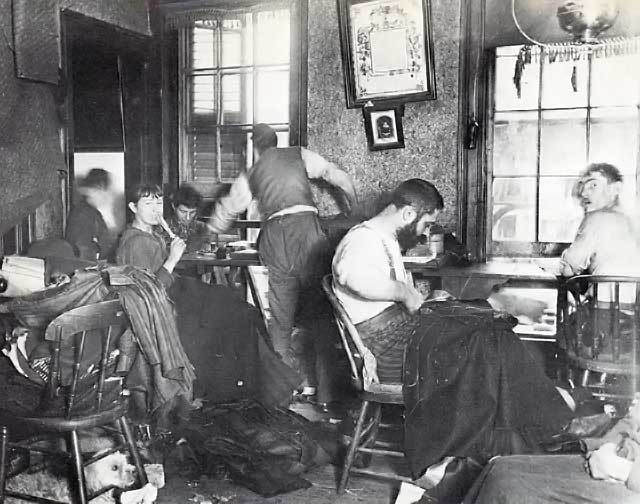
Tenement and sweatshop conditions in an immigrant neighborhood
- Ida Tarbell, History of the Standard Oil Company → exposed monopoly abuses.
- Lincoln Steffens, The Shame of the Cities → exposed urban political corruption.
- Jacob Riis, How the Other Half Lives → showed tenements, poverty, and poor sanitation.
- Upton Sinclair, The Jungle → exposed meatpacking conditions and pushed consumer reform.
- Ida B. Wells → documented lynching as racial terrorism.
Settlement houses
Hull House, founded by Jane Addams and Ellen Gates Starr, put reformers inside immigrant neighborhoods.
Services included childcare, education, English classes, health care, and legal aid. They also pushed housing, sanitation, playground, compulsory education, and public health reforms. The built-in tension was helping immigrants while also trying to Americanize them.
Labor reform
The Triangle Shirtwaist Factory fire made unsafe work impossible to ignore.
- Reforms included factory inspection, workers’ compensation, child labor laws, maximum hours, and minimum wages.
- Lochner v. New York struck down a hours law using “liberty of contract.”
- Muller v. Oregon upheld women’s hours laws using the Brandeis brief and social-science evidence.
- Keating-Owen Child Labor Act tried to limit child labor federally, but Hammer v. Dagenhart struck it down.
Political and Federal Progressive Reform
Political reform tried to break machine power, but it also shifted power to experts.
- Direct primary let voters choose party nominees.
- Initiative, referendum, and recall expanded direct democracy.
- The Australian secret ballot weakened party pressure and intimidation.
- The Seventeenth Amendment created direct election of senators.
- Robert M. La Follette and the Wisconsin Idea linked government to university experts.
Progressive presidents
At the national level, Progressive reform is usually easiest to track through the three presidents below. Roosevelt in particular built a reputation as a “trust buster,” which is exactly what the cartoon here is highlighting.
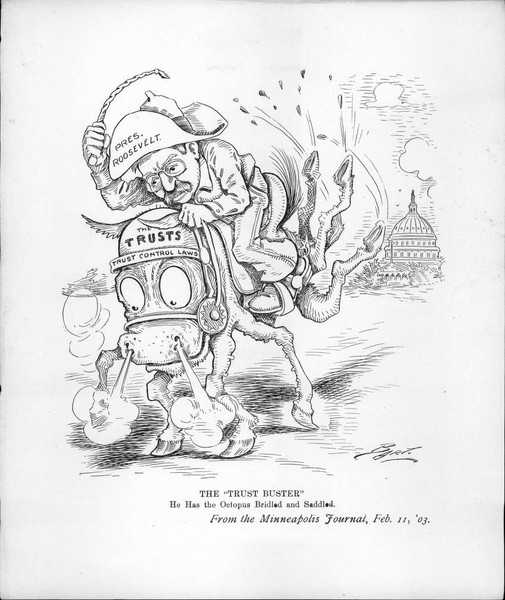
Roosevelt as a “trust buster”
| President | Main idea | Key actions |
|---|---|---|
| Theodore Roosevelt | Square Deal | Northern Securities, 1902 coal strike mediation, Elkins Act, Hepburn Act, Meat Inspection Act, Pure Food and Drug Act |
| William Howard Taft | continued regulation | more antitrust suits, Mann-Elkins Act, split Republicans over Payne-Aldrich Tariff and Ballinger-Pinchot |
| Woodrow Wilson | New Freedom | Underwood Tariff, Federal Reserve Act, Federal Trade Commission Act, Clayton Antitrust Act |
The Progressive amendment set is worth memorizing together:
- Sixteenth = income tax
- Seventeenth = direct election of senators
- Eighteenth = Prohibition, enforced by the Volstead Act
- Nineteenth = women’s suffrage
Women, Race, Immigration, and the Limits of Reform
Women drove much of reform work.
- Women’s Christian Temperance Union and Anti-Saloon League backed temperance and Prohibition.
- Carrie Chapman Catt and NAWSA used state-by-state and lobbying strategies.
- Alice Paul and the National Woman’s Party used more confrontational tactics.
The Nineteenth Amendment expanded voting, but Black women in the South still faced disfranchisement.
Progressivism had sharp racial limits. Many white Progressives ignored segregation or supported it. Woodrow Wilson segregated federal offices. Booker T. Washington emphasized vocational advancement, while W. E. B. Du Bois demanded immediate equality. The Niagara Movement and NAACP pushed African American reform.
Immigration showed the same split. Some Progressives helped immigrants through schools and settlement houses. Others backed restriction, literacy tests, and forced Americanization. The Immigration Act of 1917 added a literacy test. Eugenics showed the dark side of Progressive faith in expertise.
Conservation, Preservation, and Progressive Legacy
Progressives agreed resources needed protection, but they disagreed on use.
- Conservationists like Theodore Roosevelt and Gifford Pinchot wanted scientific management and sustainable use.
- Preservationists like John Muir and the Sierra Club wanted wilderness protected from development.
Hetch Hetchy is the clearest example of conservation vs. preservation, and this pre-dam view of the valley helps show what preservationists were trying to protect.
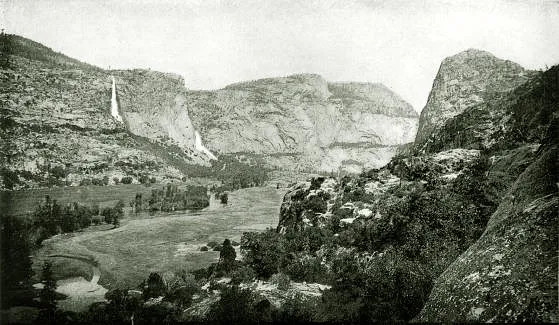
Hetch Hetchy Valley before damming
Key examples include the U.S. Forest Service, Antiquities Act, expanded forests, parks, monuments, and wildlife refuges, and the National Park Service in 1916.
Key Takeaways
Progressive Era
1890s–1920 reform era that used investigation, organization, expertise, and active government to address problems of industrial and urban society
Social Gospel
Movement applying Christian ethics to poverty, inequality, and other social problems
Muckrakers
Progressive investigative journalists who exposed political corruption, social injustice, and abuses of economic power
Ida Tarbell
Muckraker whose History of the Standard Oil Company exposed the company’s monopolistic and predatory practices
Lincoln Steffens
Muckraker whose The Shame of the Cities exposed bribery, business influence, and urban political corruption
Jacob Riis
Reformer whose How the Other Half Lives used writing and photography to expose poverty and unsanitary New York tenements
Upton Sinclair
Socialist author of The Jungle, whose account of meatpacking exploitation and filth helped inspire federal food-safety laws
Ida B. Wells
Journalist and activist whose investigations exposed lynching as racial terrorism and challenged its false justifications
Settlement Houses
Neighborhood centers where reformers provided education, health, legal, and social services while investigating urban conditions
Hull House
Chicago settlement house founded in 1889 by Jane Addams and Ellen Gates Starr to serve immigrants and advance urban reform
Jane Addams
Hull House cofounder and leading Progressive advocate of settlement work, social welfare, and urban reform
Americanization
Programs teaching English, citizenship, and U.S. customs that aided some immigrants but also pressured them to abandon their cultures
Triangle Shirtwaist Factory Fire
1911 New York factory fire that killed 146 workers and spurred stronger fire codes, inspections, and workplace-safety laws
Lochner v. New York
1905 decision striking down a bakery-hours law as an unconstitutional interference with liberty of contract
Muller v. Oregon
1908 decision upholding maximum hours for women, permitting protective legislation while reinforcing maternalist assumptions
Brandeis Brief
Louis Brandeis’s evidence-based legal brief using social-science data to defend Oregon’s maximum-hour law in Muller
Keating–Owen Child Labor Act
1916 law restricting interstate trade in goods made by child labor, later invalidated by the Supreme Court
Hammer v. Dagenhart
1918 decision invalidating the Keating–Owen Act and limiting federal power to regulate child labor through interstate commerce
Direct Primary
Election in which voters, rather than party leaders, choose a party’s nominees
Initiative
Process allowing citizens to place a proposed law directly on the ballot
Referendum
Process allowing voters to approve or reject legislation directly
Recall
Process allowing voters to remove an elected official before the end of the official’s term
Australian Ballot (Secret Ballot)
Government-printed ballot marked privately to reduce party intimidation and control over voters
Commission Government
Municipal system placing city departments under a small board of commissioners to promote efficient, expert administration
City-Manager Government
Municipal system in which an elected council appoints a trained professional to administer city government
Robert M. La Follette
Wisconsin Progressive who promoted direct primaries, corporate regulation, tax reform, workers’ compensation, and expert policymaking
Wisconsin Idea
La Follette’s policy of using University of Wisconsin experts to research and design state reforms
Theodore Roosevelt
Progressive president who promoted the Square Deal, mediated labor disputes, regulated corporations, protected consumers, and expanded conservation
Square Deal
Theodore Roosevelt’s program promising fair treatment for business, labor, and the public through regulation and active federal mediation
Northern Securities Case
Roosevelt antitrust case resulting in the 1904 dissolution of a powerful railroad holding company
Anthracite Coal Strike
1902 strike in which Roosevelt threatened federal intervention and mediated a settlement granting miners higher wages and shorter hours
Elkins Act
1903 law strengthening federal enforcement against discriminatory railroad rebates
Hepburn Act
1906 law expanding the Interstate Commerce Commission’s authority to regulate railroad rates
Meat Inspection Act
1906 law requiring federal inspection and sanitary standards in meat-processing facilities
Pure Food and Drug Act
1906 law prohibiting adulterated or fraudulently labeled food and medicine
William Howard Taft
Progressive-era president who pursued numerous antitrust cases but alienated reform Republicans over tariffs and conservation
Mann–Elkins Act
1910 law strengthening railroad regulation and extending Interstate Commerce Commission authority to communications companies
Payne–Aldrich Tariff
1909 tariff signed by Taft that failed to deliver the major reductions Progressive Republicans expected
Ballinger–Pinchot Controversy
Dispute in which Taft supported Interior Secretary Ballinger and dismissed conservationist Gifford Pinchot, deepening the Republican split
Progressive Party (Bull Moose Party)
Party formed by Theodore Roosevelt in 1912 after losing the Republican nomination to Taft
New Nationalism
Roosevelt’s 1912 program accepting large corporations but demanding strong federal regulation and social-welfare measures
Woodrow Wilson
Progressive-era president whose New Freedom reduced tariffs, reformed banking, and strengthened federal regulation while his administration segregated federal offices
New Freedom
Wilson’s program to restore competition through lower tariffs, banking reform, antitrust action, and later continuing federal regulation
Underwood Tariff
1913 law substantially reducing tariff rates
Federal Reserve Act
1913 law creating regional Federal Reserve banks under federal supervision to manage currency, credit, and banking instability
Federal Trade Commission Act
1914 law creating the Federal Trade Commission to investigate and prohibit unfair business practices
Clayton Antitrust Act
1914 law strengthening antitrust enforcement and limiting the use of antitrust law and injunctions against labor unions
Sixteenth Amendment
1913 amendment authorizing a federal income tax
Seventeenth Amendment
1913 amendment establishing direct popular election of United States senators
Eighteenth Amendment
1919 amendment prohibiting the manufacture, sale, and transportation of intoxicating liquor
Volstead Act
Law implementing and enforcing national Prohibition under the Eighteenth Amendment beginning in 1920
Nineteenth Amendment
1920 amendment prohibiting denial of voting rights on the basis of sex, though racial barriers still restricted many women
Temperance Movement
Reform movement seeking to reduce or prohibit alcohol because of its perceived effects on families, poverty, labor, and political corruption
Women’s Christian Temperance Union
Women-led organization connecting alcohol prohibition with protection of families from domestic violence and lost wages
Anti-Saloon League
Organization that used concentrated political lobbying to build support for alcohol prohibition
National American Woman Suffrage Association
Suffrage organization associated with Carrie Chapman Catt that used lobbying, state campaigns, and coordinated national organizing
Carrie Chapman Catt
NAWSA leader who pursued women’s suffrage through organized lobbying, state campaigns, and a national amendment strategy
Alice Paul
Militant suffrage leader who organized demonstrations and White House picketing through the National Woman’s Party
National Woman’s Party
Alice Paul’s suffrage organization, known for demonstrations and White House picketing
Booker T. Washington
Black leader who emphasized vocational education, economic advancement, and institution building while accommodating segregation temporarily
W. E. B. Du Bois
Black activist who demanded immediate civil and political equality and helped lead the Niagara Movement and found the NAACP.
Niagara Movement
Organization led by Du Bois that demanded immediate civil rights and opposed accommodation to segregation
National Association for the Advancement of Colored People
Interracial organization founded in 1909 that used litigation, publicity, and activism against lynching and discrimination
Eugenics
False theory that government could improve society by controlling reproduction according to supposedly hereditary fitness
Immigration Act of 1917
Law enacted over Wilson’s veto that imposed a literacy test on prospective immigrants
Conservation vs. Preservation
Conservation favored scientific, sustainable use of resources; preservation sought to protect wilderness from commercial development
Gifford Pinchot
Conservationist and first U.S. Forest Service chief who favored scientific management for long-term public use of resources
John Muir
Preservationist and Sierra Club leader who sought to protect wilderness for its spiritual, aesthetic, and ecological value
United States Forest Service
Federal agency created in 1905 to manage national forests according to conservationist principles
Antiquities Act
1906 law authorizing presidents to designate national monuments on federal lands with important natural, cultural, or scientific features
Hetch Hetchy Controversy
Dispute over San Francisco’s Yosemite dam, supported by conservationists for public use and opposed by preservationists as wilderness destruction
National Park Service
Federal agency created in 1916 to manage the expanding national park system
The Jungle
Upton Sinclair’s 1906 novel exposing meatpacking exploitation and filth, which helped prompt federal food-safety laws
Notes
Progressive Era
1890s–1920 reform era that used investigation, organization, expertise, and active government to address problems of industrial and urban society
Social Gospel
Movement applying Christian ethics to poverty, inequality, and other social problems
Muckrakers
Progressive investigative journalists who exposed political corruption, social injustice, and abuses of economic power
Ida Tarbell
Muckraker whose History of the Standard Oil Company exposed the company’s monopolistic and predatory practices
Lincoln Steffens
Muckraker whose The Shame of the Cities exposed bribery, business influence, and urban political corruption
Jacob Riis
Reformer whose How the Other Half Lives used writing and photography to expose poverty and unsanitary New York tenements
Upton Sinclair
Socialist author of The Jungle, whose account of meatpacking exploitation and filth helped inspire federal food-safety laws
Ida B. Wells
Journalist and activist whose investigations exposed lynching as racial terrorism and challenged its false justifications
Settlement Houses
Neighborhood centers where reformers provided education, health, legal, and social services while investigating urban conditions
Hull House
Chicago settlement house founded in 1889 by Jane Addams and Ellen Gates Starr to serve immigrants and advance urban reform
Jane Addams
Hull House cofounder and leading Progressive advocate of settlement work, social welfare, and urban reform
Americanization
Programs teaching English, citizenship, and U.S. customs that aided some immigrants but also pressured them to abandon their cultures
Triangle Shirtwaist Factory Fire
1911 New York factory fire that killed 146 workers and spurred stronger fire codes, inspections, and workplace-safety laws
Lochner v. New York
1905 decision striking down a bakery-hours law as an unconstitutional interference with liberty of contract
Muller v. Oregon
1908 decision upholding maximum hours for women, permitting protective legislation while reinforcing maternalist assumptions
Brandeis Brief
Louis Brandeis’s evidence-based legal brief using social-science data to defend Oregon’s maximum-hour law in Muller
Keating–Owen Child Labor Act
1916 law restricting interstate trade in goods made by child labor, later invalidated by the Supreme Court
Hammer v. Dagenhart
1918 decision invalidating the Keating–Owen Act and limiting federal power to regulate child labor through interstate commerce
Direct Primary
Election in which voters, rather than party leaders, choose a party’s nominees
Initiative
Process allowing citizens to place a proposed law directly on the ballot
Referendum
Process allowing voters to approve or reject legislation directly
Recall
Process allowing voters to remove an elected official before the end of the official’s term
Australian Ballot (Secret Ballot)
Government-printed ballot marked privately to reduce party intimidation and control over voters
Commission Government
Municipal system placing city departments under a small board of commissioners to promote efficient, expert administration
City-Manager Government
Municipal system in which an elected council appoints a trained professional to administer city government
Robert M. La Follette
Wisconsin Progressive who promoted direct primaries, corporate regulation, tax reform, workers’ compensation, and expert policymaking
Wisconsin Idea
La Follette’s policy of using University of Wisconsin experts to research and design state reforms
Theodore Roosevelt
Progressive president who promoted the Square Deal, mediated labor disputes, regulated corporations, protected consumers, and expanded conservation
Square Deal
Theodore Roosevelt’s program promising fair treatment for business, labor, and the public through regulation and active federal mediation
Northern Securities Case
Roosevelt antitrust case resulting in the 1904 dissolution of a powerful railroad holding company
Anthracite Coal Strike
1902 strike in which Roosevelt threatened federal intervention and mediated a settlement granting miners higher wages and shorter hours
Elkins Act
1903 law strengthening federal enforcement against discriminatory railroad rebates
Hepburn Act
1906 law expanding the Interstate Commerce Commission’s authority to regulate railroad rates
Meat Inspection Act
1906 law requiring federal inspection and sanitary standards in meat-processing facilities
Pure Food and Drug Act
1906 law prohibiting adulterated or fraudulently labeled food and medicine
William Howard Taft
Progressive-era president who pursued numerous antitrust cases but alienated reform Republicans over tariffs and conservation
Mann–Elkins Act
1910 law strengthening railroad regulation and extending Interstate Commerce Commission authority to communications companies
Payne–Aldrich Tariff
1909 tariff signed by Taft that failed to deliver the major reductions Progressive Republicans expected
Ballinger–Pinchot Controversy
Dispute in which Taft supported Interior Secretary Ballinger and dismissed conservationist Gifford Pinchot, deepening the Republican split
Progressive Party (Bull Moose Party)
Party formed by Theodore Roosevelt in 1912 after losing the Republican nomination to Taft
New Nationalism
Roosevelt’s 1912 program accepting large corporations but demanding strong federal regulation and social-welfare measures
Woodrow Wilson
Progressive-era president whose New Freedom reduced tariffs, reformed banking, and strengthened federal regulation while his administration segregated federal offices
New Freedom
Wilson’s program to restore competition through lower tariffs, banking reform, antitrust action, and later continuing federal regulation
Underwood Tariff
1913 law substantially reducing tariff rates
Federal Reserve Act
1913 law creating regional Federal Reserve banks under federal supervision to manage currency, credit, and banking instability
Federal Trade Commission Act
1914 law creating the Federal Trade Commission to investigate and prohibit unfair business practices
Clayton Antitrust Act
1914 law strengthening antitrust enforcement and limiting the use of antitrust law and injunctions against labor unions
Sixteenth Amendment
1913 amendment authorizing a federal income tax
Seventeenth Amendment
1913 amendment establishing direct popular election of United States senators
Eighteenth Amendment
1919 amendment prohibiting the manufacture, sale, and transportation of intoxicating liquor
Volstead Act
Law implementing and enforcing national Prohibition under the Eighteenth Amendment beginning in 1920
Nineteenth Amendment
1920 amendment prohibiting denial of voting rights on the basis of sex, though racial barriers still restricted many women
Temperance Movement
Reform movement seeking to reduce or prohibit alcohol because of its perceived effects on families, poverty, labor, and political corruption
Women’s Christian Temperance Union
Women-led organization connecting alcohol prohibition with protection of families from domestic violence and lost wages
Anti-Saloon League
Organization that used concentrated political lobbying to build support for alcohol prohibition
National American Woman Suffrage Association
Suffrage organization associated with Carrie Chapman Catt that used lobbying, state campaigns, and coordinated national organizing
Carrie Chapman Catt
NAWSA leader who pursued women’s suffrage through organized lobbying, state campaigns, and a national amendment strategy
Alice Paul
Militant suffrage leader who organized demonstrations and White House picketing through the National Woman’s Party
National Woman’s Party
Alice Paul’s suffrage organization, known for demonstrations and White House picketing
Booker T. Washington
Black leader who emphasized vocational education, economic advancement, and institution building while accommodating segregation temporarily
W. E. B. Du Bois
Black activist who demanded immediate civil and political equality and helped lead the Niagara Movement and found the NAACP.
Niagara Movement
Organization led by Du Bois that demanded immediate civil rights and opposed accommodation to segregation
National Association for the Advancement of Colored People
Interracial organization founded in 1909 that used litigation, publicity, and activism against lynching and discrimination
Eugenics
False theory that government could improve society by controlling reproduction according to supposedly hereditary fitness
Immigration Act of 1917
Law enacted over Wilson’s veto that imposed a literacy test on prospective immigrants
Conservation vs. Preservation
Conservation favored scientific, sustainable use of resources; preservation sought to protect wilderness from commercial development
Gifford Pinchot
Conservationist and first U.S. Forest Service chief who favored scientific management for long-term public use of resources
John Muir
Preservationist and Sierra Club leader who sought to protect wilderness for its spiritual, aesthetic, and ecological value
United States Forest Service
Federal agency created in 1905 to manage national forests according to conservationist principles
Antiquities Act
1906 law authorizing presidents to designate national monuments on federal lands with important natural, cultural, or scientific features
Hetch Hetchy Controversy
Dispute over San Francisco’s Yosemite dam, supported by conservationists for public use and opposed by preservationists as wilderness destruction
National Park Service
Federal agency created in 1916 to manage the expanding national park system
The Jungle
Upton Sinclair’s 1906 novel exposing meatpacking exploitation and filth, which helped prompt federal food-safety laws
