Topic 2.5 Notes – Interactions Between American Indians and Europeans
How American Indians and Europeans Interacted from 1607 to 1754
At first, Europeans were often weak. Disease had already devastated many Native communities after earlier contact, but colonists still depended on Native food, trade networks, and knowledge of the land to survive.
American Indians were never one unified side. Powhatan, Wampanoag, Haudenosaunee, Pueblo, Cherokee, and many others made their own choices based on local interests, enemies, and opportunities.
Interactions were mixed at the same time:
- Trade tied people together through furs, food, and military help in exchange for firearms, metal tools, cloth, and ammunition.
- Diplomacy mattered because Europeans needed Native allies and Native nations used Europeans against rival Native groups.
- Conversion efforts brought missionaries into Native communities, sometimes peacefully and sometimes as part of control.
- Intermarriage and kinship could strengthen alliances, especially in French areas.
- Land negotiation happened constantly, but both sides often meant different things by “agreement.”
- Displacement, enslavement, and war kept growing as colonial settlement expanded.
Why Relations Changed Over Time
The same relationship could include trade and tension at once. What changed most was the balance of power.
Land and political boundaries
British settlers wanted farmland, fenced it, brought livestock, and kept expanding plantations. That damaged hunting grounds and pushed Native peoples off land.
English colonists usually treated land as exclusive private property. Many Native communities understood land as shared use or limited access. So disputes were about ownership, but also about sovereignty, meaning who had the right to rule there.
Trade and shifting power
Trade gave Native nations useful goods, but it also reshaped Native politics.
- Firearms changed intertribal power and pushed Native nations into alliances with rival empires.
- The Beaver Wars show this clearly. Competition for furs and hunting territory fueled major conflict, especially involving the Haudenosaunee.
- Debt, alcohol, unfair exchange, and overhunting made Native communities more vulnerable over time.
Disease and demography
Smallpox, measles, and influenza caused catastrophic death and weakened leadership, families, and military strength. Disease did not guarantee European victory, but it made resistance harder while colonial migration kept rising.
Religion and culture
Missionaries tried to convert Native peoples and often attacked Native ceremonies. Native responses ranged from acceptance to syncretism to resistance. Exchange also went both ways. Europeans adopted Native crops, routes, and diplomacy.
Different Empires, Different Native Relations
Different empires created different patterns because they wanted different things.
French alliances
The French had fewer settlers and relied heavily on trade. New France allied with the Wendat (Huron), Algonquin, and other Great Lakes peoples. Coureurs de bois, intermarriage, kinship ties, and Jesuit missions all helped maintain alliances. These ties also pulled France into conflict with the Haudenosaunee.
Dutch and later British ties with the Haudenosaunee
The Dutch in New Netherland traded firearms with the Haudenosaunee Confederacy. Its five original nations were Mohawk, Oneida, Onondaga, Cayuga, and Seneca. The Tuscarora later became the sixth.
Under the Covenant Chain with British New York, the Haudenosaunee used diplomacy and imperial rivalry to protect their autonomy rather than simply submit.
Spanish rule in the Southwest
Spanish colonization pushed harder for labor and religious control. Missions, tribute, labor demands, suppression of Pueblo ceremonies, and Franciscan influence meant tighter control than in French or Dutch regions.
Major Conflicts That Show the Pattern
British relations often followed a pattern. Early cooperation gave way to settler growth, land disputes, war, and Native displacement.
- Jamestown and Powhatan: Jamestown depended on the Powhatan chiefdom under Wahunsenacawh. Pocahontas and John Rolfe represent a diplomatic moment, but the Anglo-Powhatan Wars, Opechancanough’s 1622 attack, and the 1646 settlement reduced Powhatan autonomy.
- Pequot War (1636-1638): English colonists and Native allies including the Mohegan and Narragansett destroyed Pequot power. The Mystic massacre and Treaty of Hartford are the names to know.
- Plymouth and Wampanoag: Massasoit made an early alliance with Plymouth. Metacom’s War (King Philip’s War), 1675-1676, became the clearest AP example of British-Native conflict over land, resources, and political boundaries.
- Pennsylvania and Lenni Lenape (Delaware): early peace under William Penn later collapsed in the Walking Purchase of 1737.
- Tuscarora War (1711): defeat pushed many Tuscarora north into the Haudenosaunee Confederacy.
- Yamasee War (1715-1717): caused by debt, abusive trade, enslavement, and land pressure.
The map below helps you visualize how widely King Philip’s War spread across southern New England, which is part of why it stands out as the best example of this larger pattern.
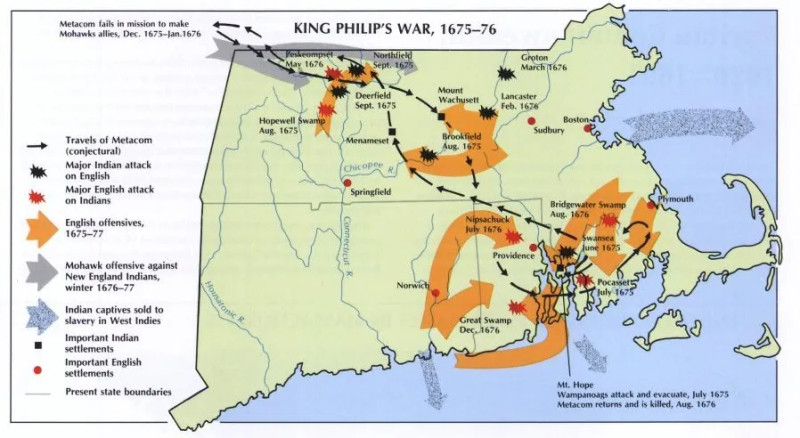
King Philip’s War in New England, 1675-1676
Native Resistance and the Big Takeaway
The Pueblo Revolt shows Native resistance at its strongest. In 1680, Popé organized Pueblo resistance against missions, labor demands, and religious repression. Pueblo forces drove the Spanish out of New Mexico for 12 years. Spain returned under Diego de Vargas in 1692, but afterward it tolerated more Pueblo practices and relied more on cooperation.
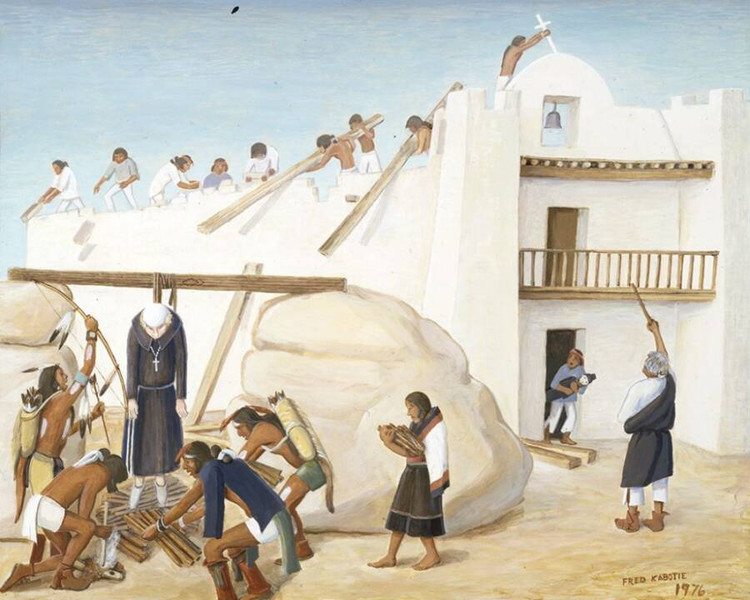
Painting of the Pueblo Revolt
That conflict is a good reminder that Native peoples were not passive in the face of European expansion. By 1754, Europeans had expanded a lot, but Native nations such as the Haudenosaunee, Cherokee, and Muscogee still shaped diplomacy and war.
Most written sources come from Europeans, so bias matters. Mary Rowlandson’s captivity narrative is the standard example. During Metacom’s War, she wrote from a Puritan, English point of view for an English audience, so her account tells you a lot about colonial fears and beliefs, not just Native actions.
Key Takeaways
French–American Indian Alliances
Fur-trade and military partnerships linking sparsely settled New France with the Wendat, Algonquin, and other Native peoples through commerce, kinship, and mutual defense
Haudenosaunee Confederacy (Iroquois Confederacy)
Powerful confederacy of the Mohawk, Oneida, Onondaga, Cayuga, Seneca, and later Tuscarora that used trade and imperial rivalry to preserve autonomy
Beaver Wars
Seventeenth-century wars in which the Haudenosaunee fought the Wendat and other French allies for hunting territory and control of the fur trade
Covenant Chain
Continuing series of diplomatic agreements that connected the Haudenosaunee with British colonies while allowing Haudenosaunee leaders to defend their autonomy
Wahunsenacawh (Chief Powhatan)
Leader of the Powhatan chiefdom who initially traded and negotiated with Jamestown while trying to contain the English within his regional political system
Pocahontas (Rebecca)
Powhatan’s daughter whose conversion and 1614 marriage to John Rolfe supported several years of peace without resolving English-Powhatan land conflicts
Opechancanough
Powhatan leader who organized the 1622 and 1644 attacks against expanding English settlement in Virginia
Anglo-Powhatan Wars
Series of Virginia conflicts ending in 1646 with surviving Powhatan communities subordinated, territorially restricted, and deprived of much political independence
Pequot War
1636–1637 war in which English colonists and Mohegan and Narragansett allies defeated the Pequot, killing, enslaving, dispersing, or subordinating survivors
Massasoit
Wampanoag leader who allied with Plymouth in 1621 for trade and mutual defense, including protection against the Narragansett
Metacom (King Philip)
Massasoit’s son and Wampanoag leader who headed a Native coalition resisting English land expansion and colonial authority in 1675–1676
Metacom’s War (King Philip’s War)
1675–1676 New England war over land and colonial authority that ended with Metacom’s death, Native displacement and enslavement, and greater English control
William Penn
Quaker founder of Pennsylvania whose negotiation, land purchases, and respect for Native political rights initially supported peaceful relations with the Lenni Lenape
Walking Purchase
1737 Pennsylvania land seizure using a disputed deed and trained runners to claim far more Lenape territory than the Lenape believed they had surrendered
Tuscarora War
1711 conflict caused by North Carolina encroachment, exploitative trade, debt, and Native enslavement; defeat drove many Tuscarora north to join the Haudenosaunee
Yamasee War
1715–1717 uprising against South Carolina caused by abusive trade, debt, land pressure, and enslavement fears that nearly destroyed the colony
Spanish Missions in the Southwest
Colonial institutions that pursued Native conversion while imposing labor, tribute, and suppression of Indigenous ceremonies, provoking resistance among Pueblo peoples
Popé
Tewa religious leader who organized Pueblo communities in the coordinated 1680 revolt that expelled the Spanish from New Mexico
Pueblo Revolt
Popé-led 1680 uprising that expelled Spain from New Mexico for twelve years and later prompted greater Spanish tolerance of Pueblo religion and leadership
Diego de Vargas
Spanish leader who began the reconquest of New Mexico in 1692, restoring Spanish rule and missions under a more accommodating colonial regime
Religious Syncretism
Blending Christian teachings with Native beliefs and practices rather than wholly accepting or rejecting European religion
Dutch–Haudenosaunee Trade
Fur-trade relationship in which the Dutch supplied the Haudenosaunee with manufactured goods and firearms, strengthening their position against rival Native nations
Notes
French–American Indian Alliances
Fur-trade and military partnerships linking sparsely settled New France with the Wendat, Algonquin, and other Native peoples through commerce, kinship, and mutual defense
Haudenosaunee Confederacy (Iroquois Confederacy)
Powerful confederacy of the Mohawk, Oneida, Onondaga, Cayuga, Seneca, and later Tuscarora that used trade and imperial rivalry to preserve autonomy
Beaver Wars
Seventeenth-century wars in which the Haudenosaunee fought the Wendat and other French allies for hunting territory and control of the fur trade
Covenant Chain
Continuing series of diplomatic agreements that connected the Haudenosaunee with British colonies while allowing Haudenosaunee leaders to defend their autonomy
Wahunsenacawh (Chief Powhatan)
Leader of the Powhatan chiefdom who initially traded and negotiated with Jamestown while trying to contain the English within his regional political system
Pocahontas (Rebecca)
Powhatan’s daughter whose conversion and 1614 marriage to John Rolfe supported several years of peace without resolving English-Powhatan land conflicts
Opechancanough
Powhatan leader who organized the 1622 and 1644 attacks against expanding English settlement in Virginia
Anglo-Powhatan Wars
Series of Virginia conflicts ending in 1646 with surviving Powhatan communities subordinated, territorially restricted, and deprived of much political independence
Pequot War
1636–1637 war in which English colonists and Mohegan and Narragansett allies defeated the Pequot, killing, enslaving, dispersing, or subordinating survivors
Massasoit
Wampanoag leader who allied with Plymouth in 1621 for trade and mutual defense, including protection against the Narragansett
Metacom (King Philip)
Massasoit’s son and Wampanoag leader who headed a Native coalition resisting English land expansion and colonial authority in 1675–1676
Metacom’s War (King Philip’s War)
1675–1676 New England war over land and colonial authority that ended with Metacom’s death, Native displacement and enslavement, and greater English control
William Penn
Quaker founder of Pennsylvania whose negotiation, land purchases, and respect for Native political rights initially supported peaceful relations with the Lenni Lenape
Walking Purchase
1737 Pennsylvania land seizure using a disputed deed and trained runners to claim far more Lenape territory than the Lenape believed they had surrendered
Tuscarora War
1711 conflict caused by North Carolina encroachment, exploitative trade, debt, and Native enslavement; defeat drove many Tuscarora north to join the Haudenosaunee
Yamasee War
1715–1717 uprising against South Carolina caused by abusive trade, debt, land pressure, and enslavement fears that nearly destroyed the colony
Spanish Missions in the Southwest
Colonial institutions that pursued Native conversion while imposing labor, tribute, and suppression of Indigenous ceremonies, provoking resistance among Pueblo peoples
Popé
Tewa religious leader who organized Pueblo communities in the coordinated 1680 revolt that expelled the Spanish from New Mexico
Pueblo Revolt
Popé-led 1680 uprising that expelled Spain from New Mexico for twelve years and later prompted greater Spanish tolerance of Pueblo religion and leadership
Diego de Vargas
Spanish leader who began the reconquest of New Mexico in 1692, restoring Spanish rule and missions under a more accommodating colonial regime
Religious Syncretism
Blending Christian teachings with Native beliefs and practices rather than wholly accepting or rejecting European religion
Dutch–Haudenosaunee Trade
Fur-trade relationship in which the Dutch supplied the Haudenosaunee with manufactured goods and firearms, strengthening their position against rival Native nations
