Topic 7.8 Notes – 1920s: Cultural and Political Controversies
Why the 1920s Became a Fight Over American Identity
In 1920, for the first time, most Americans lived in cities. Urban life brought jobs, department stores, offices, movies, radio, automobiles, and national advertising. It also made women, immigrants, and internal migrants more visible in public life.
World War I sharpened tensions. Wartime nationalism, the First Red Scare, labor strikes, and bomb scares made many people fear that change meant disorder. That is why so many 1920s debates connect. They were all arguments over who counted as American and what values government should enforce.
- Modernists tended to accept urban life, science, consumer culture, looser gender norms, and artistic experimentation.
- Traditionalists defended Protestant morality, rural and small-town values, older gender roles, and racial and ethnic hierarchy.
Migration and Urban Culture
Cities pulled in many groups at once. Immigrants came for work. African Americans left the South. Rural whites moved to industrial centers. Women found more jobs in clerical work, retail, teaching, nursing, and factories. Ethnic neighborhoods helped newcomers keep language, religion, newspapers, foodways, and political networks.
The Great Migration
African Americans moved north and midwest because the South offered Jim Crow, disfranchisement, racial violence, poor schools, and limited jobs. Northern cities offered factory work and somewhat greater freedom.
- Major destinations included New York, Chicago, Detroit, Cleveland, and Philadelphia.
- Life in the North still meant segregation, restrictive covenants, job discrimination, and white hostility.
- Red Summer of 1919 showed how racial tension exploded into violence.
- In Tulsa, 1921, white mobs destroyed Greenwood, known as “Black Wall Street.”
Black urban responses
The new Black urban culture produced different kinds of resistance and pride. Aaron Douglas's art captured that mix of struggle, modern city life, and hope for the future.
- Harlem Renaissance
Alain Locke’s The New Negro celebrated a “New Negro” identity built on racial pride and self-definition. Writers and artists included Langston Hughes, Claude McKay, Zora Neale Hurston, Countee Cullen, and Aaron Douglas. Musicians like Duke Ellington, Louis Armstrong, and Bessie Smith spread jazz and blues through clubs, records, and radio.
- Legal activism
The NAACP fought lynching. The Dyer Anti-Lynching Bill passed the House in 1922 but died in the Senate.
- Black nationalism
Marcus Garvey and the UNIA pushed Black pride, economic self-sufficiency, Pan-Africanism, and the Black Star Line. This differed from the NAACP’s integrationist approach.
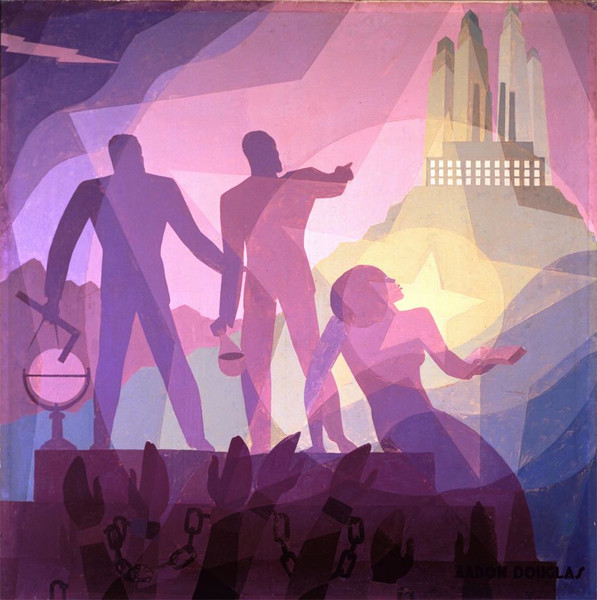
Aaron Douglas, Aspiration
Nativism and Immigration Restriction
Fear of immigrants grew out of the Bolshevik Revolution, strikes, anarchist bombings, and the Palmer Raids. Nativists mixed anti-radical fear with eugenics and “scientific racism,” targeting southern and eastern Europeans, Catholics, Jews, and Asians.
| Law or example | What it did |
|---|---|
| Emergency Quota Act (1921) | Set quotas at 3% of each nationality already in the U.S. based on the 1910 census |
| Immigration Act of 1924 | Also called Johnson-Reed Act or National Origins Act; cut quotas to 2% based on the 1890 census |
| Asian exclusion | Effectively barred Japanese immigration and reinforced older Asian exclusion |
| Western Hemisphere | No quotas, so Mexican labor migration continued |
| Border Patrol (1924) | Created to police borders |
| Indian Citizenship Act (1924) | Granted citizenship to Native Americans, but not equal rights or guaranteed voting access |
The quota map here makes the pattern visible. Northern and western Europe received larger allotments, and much of Asia faced exclusion under the new system.
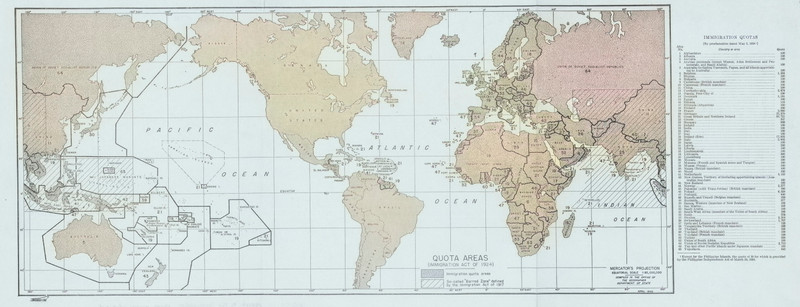
Immigration quotas under the 1924 law
Sacco and Vanzetti became symbols of anti-immigrant and anti-radical prejudice. The second Ku Klux Klan promoted “100 percent Americanism,” white Protestant supremacy, Prohibition, and anti-Black, anti-Catholic, antisemitic, and anti-immigrant politics. It had national power, especially in Indiana and Oregon, before scandals like the D. C. Stephenson case weakened it.
Moral and Cultural Controversies
Prohibition came from temperance reform, Progressivism, Protestant moral campaigns, and anti-immigrant feeling. The Eighteenth Amendment and Volstead Act tried to ban alcohol, but speakeasies, bootlegging, organized crime, corruption, and weak enforcement followed. Al Capone became the best-known example.
Religion and science clashed in the Scopes Trial of 1925. Tennessee’s Butler Act banned teaching evolution. John T. Scopes was prosecuted, with Clarence Darrow for the defense and William Jennings Bryan for the prosecution. Scopes was convicted. The larger impact was cultural because the press mocked fundamentalism nationwide.
Women’s roles were changing too. The Nineteenth Amendment gave women the vote. The flapper symbolized youth, consumption, and sexual independence, though most women did not live that lifestyle. Many women worked in clerical and service jobs but still earned less and hit barriers. Alice Paul proposed the Equal Rights Amendment in 1923, dividing reformers over equal treatment versus protective labor laws. Margaret Sanger pushed birth control activism.
Writers also criticized modern America. Ernest Hemingway and F. Scott Fitzgerald represented the Lost Generation. Sinclair Lewis’s Main Street and Babbitt, along with Fitzgerald’s The Great Gatsby, attacked materialism, conformity, and the emptiness under prosperity.
Why These Conflicts Matter
The 1920s expanded freedom and visibility for some people, especially in cities, while producing organized backlash. Government enforced cultural values through immigration quotas, Prohibition, anti-evolution laws, and unequal citizenship.
The 1928 election made the split obvious. Herbert Hoover faced Al Smith, whose Catholic faith, immigrant background, urban identity, and anti-Prohibition stance made him a target for rural and Protestant voters. The decade was both a Jazz Age and an age of exclusion.
Key Takeaways
1920 Census
First census showing an urban majority: about 51.2% of Americans lived in urban places, marking the shift toward an urban-industrial society
Modernists vs. Traditionalists
Modernists embraced science, urban culture, and changing social practices; traditionalists defended older religious teachings, social hierarchies, gender roles, and rural values
Great Migration
Movement of African Americans from the rural South to northern, midwestern, and western cities for jobs and greater freedom, despite continued racism and segregation
Tulsa Race Massacre
In 1921, a white mob destroyed much of Greenwood, Tulsa's prosperous Black district, illustrating violent resistance to successful Black urban communities
National Association for the Advancement of Colored People (NAACP)
Civil rights organization that pursued integration and legal equality and campaigned against segregation and lynching
Dyer Anti-Lynching Bill
Federal anti-lynching proposal that passed the House in 1922 but was defeated by southern senators
Harlem Renaissance
1920s flowering of African American art, literature, and music that expressed Black identity and pride and challenged degrading stereotypes
New Negro
Harlem Renaissance ideal emphasizing Black pride, cultural self-definition, and rejection of submissive roles imposed by white society
Alain Locke
Black intellectual who popularized the New Negro ideal in his 1925 anthology The New Negro
Langston Hughes
Harlem Renaissance poet who used Black speech, blues rhythms, working-class life, and racial pride in his writing
Aaron Douglas
Harlem Renaissance artist whose modernist silhouettes, geometric designs, and African imagery reconstructed Black history and migration
Jazz
Music rooted in African American blues and ragtime that gained national popularity through clubs, recordings, radio, and touring performers
Emergency Quota Act of 1921
Limited annual immigration from each European country to generally 3% of the foreign-born population from that country recorded in the 1910 census
Immigration Act of 1924 / Johnson-Reed Act / National Origins Act
Set European quotas at generally 2% of each nationality's foreign-born U.S. population in 1890, favoring northern and western Europeans and effectively excluding Japanese immigrants
Sacco and Vanzetti
Italian immigrant anarchists executed for a Massachusetts murder amid widespread claims that nativist and anti-radical prejudice denied them a fair trial
Second Ku Klux Klan
National 1920s movement promoting white Protestant supremacy, immigration restriction, Prohibition, and hostility toward Black people, Catholics, Jews, immigrants, and radicals
Prohibition
National ban on producing, selling, and transporting intoxicating liquor that reduced consumption but encouraged illegal markets, corruption, and organized crime
Eighteenth Amendment
Ratified in 1919, it prohibited the manufacture, sale, and transportation of intoxicating liquor but not possession or consumption
Volstead Act
Federal law that defined intoxicating liquor and provided enforcement for the Eighteenth Amendment beginning in 1920
Drys vs. Wets
Drys supported Prohibition, while wets opposed it as an intrusion on personal freedom and customary social practices
Al Capone
Chicago crime boss whose organization became the best-known example of organized crime profiting from illegal liquor during Prohibition
Fundamentalists vs. Religious Modernists
Fundamentalists defended biblical authority and often literal creation, while religious modernists sought to reconcile Christianity with science and historical scholarship
Butler Act
Tennessee law prohibiting public school teachers from teaching that humans evolved from lower forms of life
Scopes Monkey Trial
1925 test case in which John Scopes was convicted of teaching human evolution; his conviction was later overturned on a technicality without invalidating Tennessee's law
William Jennings Bryan
Former Democratic presidential candidate and fundamentalist who prosecuted John Scopes and opposed teaching human evolution
Clarence Darrow
Celebrated agnostic defense attorney who represented John Scopes and publicly questioned Bryan about biblical interpretation
Equal Rights Amendment (ERA)
Amendment proposed in 1923 to prohibit legal distinctions based on sex, dividing feminists over equal treatment versus protective labor laws
Flapper
Symbolic young urban woman with modern dress and more independent social behavior, representing changing gender roles more than most women's actual lives
Lost Generation
Post-World War I writers, including Ernest Hemingway and F. Scott Fitzgerald, who expressed disillusionment and criticized materialism and conformity
Indian Citizenship Act of 1924
Granted U.S. citizenship to all U.S.-born Native Americans not already citizens without ending dispossession, assimilation, tribal sovereignty, or voting barriers
Election of 1928
Herbert Hoover defeated Al Smith as rural Protestant opposition to Smith contrasted with his strong support among urban immigrant voters
Al Smith
Catholic, urban, anti-Prohibition Democratic nominee in 1928 who attracted immigrant voters but faced intense rural Protestant opposition
Nativism
Hostility toward immigrants and foreign influences that helped produce immigration quotas, Asian exclusion, and anti-radical campaigns in the 1920s
Marcus Garvey
Black nationalist leader who promoted racial pride, economic self-sufficiency, Pan-African solidarity, independent institutions, and sometimes emigration to Africa
Universal Negro Improvement Association (UNIA)
Garvey's mass organization promoting Black pride, economic self-sufficiency, global solidarity, and independent Black power
Eugenics
Theory that hereditary differences divided people into superior and inferior groups, used to support racial hierarchy and immigration restriction
Scientific Racism
Use of supposedly scientific claims about hereditary racial superiority and inferiority to justify prejudice and exclusion
Alice Paul
Women's rights activist who led the National Woman's Party and promoted the Equal Rights Amendment after suffrage
National Woman's Party
Women's rights organization led by Alice Paul that proposed the Equal Rights Amendment in 1923
Margaret Sanger
Birth-control advocate who promoted access to contraception and founded the organization that became the American Birth Control League in 1921
F. Scott Fitzgerald
Lost Generation writer who criticized materialism and explored the limits of the American dream in The Great Gatsby
The Great Gatsby
Fitzgerald's 1925 novel using wealth and social ambition to criticize materialism and examine the limits of the American dream
Notes
1920 Census
First census showing an urban majority: about 51.2% of Americans lived in urban places, marking the shift toward an urban-industrial society
Modernists vs. Traditionalists
Modernists embraced science, urban culture, and changing social practices; traditionalists defended older religious teachings, social hierarchies, gender roles, and rural values
Great Migration
Movement of African Americans from the rural South to northern, midwestern, and western cities for jobs and greater freedom, despite continued racism and segregation
Tulsa Race Massacre
In 1921, a white mob destroyed much of Greenwood, Tulsa's prosperous Black district, illustrating violent resistance to successful Black urban communities
National Association for the Advancement of Colored People (NAACP)
Civil rights organization that pursued integration and legal equality and campaigned against segregation and lynching
Dyer Anti-Lynching Bill
Federal anti-lynching proposal that passed the House in 1922 but was defeated by southern senators
Harlem Renaissance
1920s flowering of African American art, literature, and music that expressed Black identity and pride and challenged degrading stereotypes
New Negro
Harlem Renaissance ideal emphasizing Black pride, cultural self-definition, and rejection of submissive roles imposed by white society
Alain Locke
Black intellectual who popularized the New Negro ideal in his 1925 anthology The New Negro
Langston Hughes
Harlem Renaissance poet who used Black speech, blues rhythms, working-class life, and racial pride in his writing
Aaron Douglas
Harlem Renaissance artist whose modernist silhouettes, geometric designs, and African imagery reconstructed Black history and migration
Jazz
Music rooted in African American blues and ragtime that gained national popularity through clubs, recordings, radio, and touring performers
Emergency Quota Act of 1921
Limited annual immigration from each European country to generally 3% of the foreign-born population from that country recorded in the 1910 census
Immigration Act of 1924 / Johnson-Reed Act / National Origins Act
Set European quotas at generally 2% of each nationality's foreign-born U.S. population in 1890, favoring northern and western Europeans and effectively excluding Japanese immigrants
Sacco and Vanzetti
Italian immigrant anarchists executed for a Massachusetts murder amid widespread claims that nativist and anti-radical prejudice denied them a fair trial
Second Ku Klux Klan
National 1920s movement promoting white Protestant supremacy, immigration restriction, Prohibition, and hostility toward Black people, Catholics, Jews, immigrants, and radicals
Prohibition
National ban on producing, selling, and transporting intoxicating liquor that reduced consumption but encouraged illegal markets, corruption, and organized crime
Eighteenth Amendment
Ratified in 1919, it prohibited the manufacture, sale, and transportation of intoxicating liquor but not possession or consumption
Volstead Act
Federal law that defined intoxicating liquor and provided enforcement for the Eighteenth Amendment beginning in 1920
Drys vs. Wets
Drys supported Prohibition, while wets opposed it as an intrusion on personal freedom and customary social practices
Al Capone
Chicago crime boss whose organization became the best-known example of organized crime profiting from illegal liquor during Prohibition
Fundamentalists vs. Religious Modernists
Fundamentalists defended biblical authority and often literal creation, while religious modernists sought to reconcile Christianity with science and historical scholarship
Butler Act
Tennessee law prohibiting public school teachers from teaching that humans evolved from lower forms of life
Scopes Monkey Trial
1925 test case in which John Scopes was convicted of teaching human evolution; his conviction was later overturned on a technicality without invalidating Tennessee's law
William Jennings Bryan
Former Democratic presidential candidate and fundamentalist who prosecuted John Scopes and opposed teaching human evolution
Clarence Darrow
Celebrated agnostic defense attorney who represented John Scopes and publicly questioned Bryan about biblical interpretation
Equal Rights Amendment (ERA)
Amendment proposed in 1923 to prohibit legal distinctions based on sex, dividing feminists over equal treatment versus protective labor laws
Flapper
Symbolic young urban woman with modern dress and more independent social behavior, representing changing gender roles more than most women's actual lives
Lost Generation
Post-World War I writers, including Ernest Hemingway and F. Scott Fitzgerald, who expressed disillusionment and criticized materialism and conformity
Indian Citizenship Act of 1924
Granted U.S. citizenship to all U.S.-born Native Americans not already citizens without ending dispossession, assimilation, tribal sovereignty, or voting barriers
Election of 1928
Herbert Hoover defeated Al Smith as rural Protestant opposition to Smith contrasted with his strong support among urban immigrant voters
Al Smith
Catholic, urban, anti-Prohibition Democratic nominee in 1928 who attracted immigrant voters but faced intense rural Protestant opposition
Nativism
Hostility toward immigrants and foreign influences that helped produce immigration quotas, Asian exclusion, and anti-radical campaigns in the 1920s
Marcus Garvey
Black nationalist leader who promoted racial pride, economic self-sufficiency, Pan-African solidarity, independent institutions, and sometimes emigration to Africa
Universal Negro Improvement Association (UNIA)
Garvey's mass organization promoting Black pride, economic self-sufficiency, global solidarity, and independent Black power
Eugenics
Theory that hereditary differences divided people into superior and inferior groups, used to support racial hierarchy and immigration restriction
Scientific Racism
Use of supposedly scientific claims about hereditary racial superiority and inferiority to justify prejudice and exclusion
Alice Paul
Women's rights activist who led the National Woman's Party and promoted the Equal Rights Amendment after suffrage
National Woman's Party
Women's rights organization led by Alice Paul that proposed the Equal Rights Amendment in 1923
Margaret Sanger
Birth-control advocate who promoted access to contraception and founded the organization that became the American Birth Control League in 1921
F. Scott Fitzgerald
Lost Generation writer who criticized materialism and explored the limits of the American dream in The Great Gatsby
The Great Gatsby
Fitzgerald's 1925 novel using wealth and social ambition to criticize materialism and examine the limits of the American dream
