Topic 1.2 Notes – Native American Societies Before European Contact
How Native Societies Adapted to and Shaped Their Environments
North America in 1491 was not one Native culture. It was hundreds of politically independent societies with different languages, governments, economies, and settlement patterns.
The map below gives you the big picture. Native societies developed in distinct cultural regions, each shaped by local climate, resources, and geography.
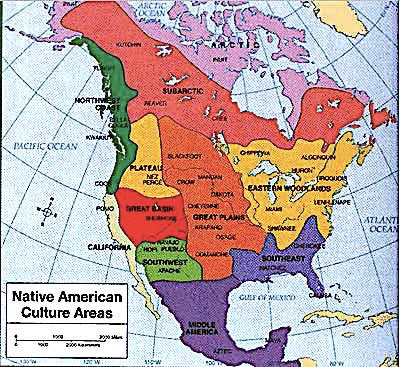
Native American cultural areas before European contact
The main pattern is environmental diversity. Different places offered different possibilities, so Native peoples built different systems to survive and thrive there. Geography mattered, but it never acted alone. Human choices, tools, and knowledge mattered too.
- Maize cultivation spread north from present-day Mexico and changed societies wherever it took hold. Reliable corn harvests could create food surpluses, which supported larger populations, permanent villages, specialized labor, trade, and social hierarchy.
- In arid places or regions with scattered resources, people often moved seasonally because staying in one place year-round made less sense.
- In fertile river valleys and eastern woodlands, many groups developed mixed economies that combined farming with hunting, fishing, and gathering. That made permanent villages more common.
- In the Northwest Coast and parts of California, rich fish, ocean, and forest resources supported settled life without intensive agriculture.
Native peoples also changed the land on purpose:
- Clearing and burning fields and forests
- Irrigation canals, reservoirs, and terraces
- Mound building, towns, and defensive works
- Fish weirs, food storage, and selective planting
The Main Regional Patterns
Southwest
The Southwest was dry, so water management was everything. Maize farming worked here because people built systems to control scarce water.
- Ancestral Pueblo peoples built stone and adobe settlements with kivas for ceremony.
- Chaco Canyon was a major ceremonial, political, and trade center.
- Mesa Verde is famous for cliff dwellings.
- Hohokam peoples in southern Arizona built impressive canal irrigation systems.
- Trade moved turquoise, shells, pottery, and macaw feathers across the region.
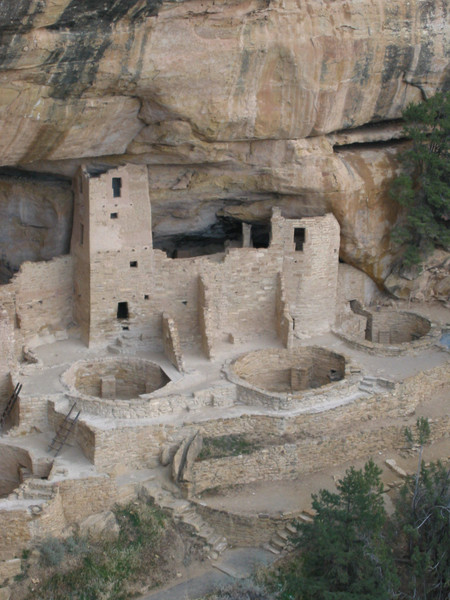
Mesa Verde cliff dwellings
Great Basin and western Great Plains
Low rainfall and scattered resources encouraged mobility.
- Shoshone and Paiute peoples in the Great Basin moved seasonally to gather seeds, roots, nuts, pine nuts, fish, rabbits, and game.
- In the western Plains, people hunted bison on foot before horses arrived.
- Portable dwellings and dogs with travois fit that mobile life.
- The horse-centered Plains culture belongs to a later period after European contact.
- River valleys in the eastern Plains could still support agriculture and more settled villages.
Mississippi River Valley, Northeast, and Atlantic seaboard
These regions had fertile soil, forests, rivers, and game, so many societies used mixed economies and lived in permanent or semipermanent villages.
- Mississippian societies in the Mississippi Valley and Southeast built mound centers.
- In the Northeast, many groups raised maize, beans, and squash alongside hunting and fishing.
Northwest Coast and California
Here, abundant natural resources supported settled communities without heavy farming.
- Chinook, Tlingit, Haida, and Coast Salish peoples relied on salmon, marine resources, cedar, and trade.
- Chumash in California used fishing, gathering, and exchange networks.
- Acorns were a staple food in many California societies.
- Controlled burning helped manage useful plants and hunting grounds.
Arctic and Subarctic
- Inuit, Cree, and Athabaskan-speaking peoples adapted through seasonal mobility, hunting, fishing, and specialized tools suited to cold environments.
Major Societies and What They Show
Some societies make the larger patterns easier to see.
| Society | What it shows |
|---|---|
| Cahokia | Largest urban center in precontact North America; maize surplus supported dense population, Monks Mound, plazas, hierarchy, organized labor |
| Haudenosaunee | Eastern Woodlands agriculture, longhouses, matrilineal kinship, and the League of the Iroquois as strong political organization |
| Algonquian-speaking peoples | Atlantic seaboard mixed economies varied by local environment |
| Northwest Coast peoples | Permanent plank-house communities, storage, trade, social ranking, potlatches, and totem poles without intensive agriculture |
Trade, Settlement, and the Big Comparison
These regions were connected long before Europeans. Trade carried marine shells inland, obsidian, Great Lakes copper, Southwestern turquoise, and pottery. Chaco Canyon and Cahokia were major network hubs, and rivers like the Mississippi were transportation highways.
Settlement existed on a spectrum.
- A permanent village could still send people out seasonally to hunt, fish, or trade.
- A mobile society still had planned seasonal rounds and defined territory.
The comparison to remember:
- Southwest = maize + irrigation + permanent settlements in arid land
- Great Basin/western Plains = aridity and dispersed resources favored mobility
- Mississippi/Northeast/Atlantic = mixed economies and many permanent villages
- Northwest Coast/California = settled life based on fishing, gathering, storage, and trade without intensive farming
Key Takeaways
Maize Cultivation
Corn farming spread north from present-day Mexico and supported food surpluses, population growth, permanent settlements, irrigation, specialization, and social differentiation
Three Sisters
Intercropping maize, beans, and squash so corn supported beans, beans replenished nitrogen, and squash retained moisture and suppressed weeds
Southwest
An arid region where maize farmers used canals, reservoirs, and terraces to support permanent settlements, larger populations, trade, and specialized labor
Ancestral Pueblo Peoples (Anasazi)
Southwestern maize farmers who built organized stone-and-adobe pueblos, multistory dwellings, kivas, and irrigation systems; ancestors of later Pueblo communities
Chaco Canyon
An Ancestral Pueblo center in New Mexico whose great houses, water management, and trade networks reflected agricultural, ceremonial, and political complexity
Mesa Verde
An Ancestral Pueblo center in Colorado known for cliff dwellings whose inhabitants farmed nearby mesas and migrated away by about 1300
Hohokam
A southern Arizona society that constructed extensive canals to carry river water to maize fields in an arid environment
Great Basin
An arid region where Shoshone, Paiute, and other peoples generally lived in small groups and moved seasonally among scattered plant and animal resources
Great Plains
Drier western grasslands favored mobile bison hunting, while wetter eastern river valleys supported maize farming, seasonal hunting, and longer-lasting villages
Mississippi River Valley and Southeast
Fertile floodplains, rivers, forests, fish, and game supported maize-based mixed economies, dense populations, permanent settlements, trade, and mound construction
Mississippian Societies
Maize-farming societies that built permanent towns around ceremonial and platform mounds and developed organized leadership, trade, and social hierarchies
Cahokia
The largest Mississippian urban center, near present-day St. Louis, where maize surpluses supported mounds, specialized labor, trade, hierarchy, and a dense population
Northeast and Atlantic Seaboard
Forests, rivers, fertile soils, fish, and game supported mixed farming, hunting, fishing, and gathering economies and many permanent or semipermanent villages
Haudenosaunee (Iroquois)
Northeastern maize farmers who lived in longhouse villages, organized kinship matrilineally, and gave clan mothers important social and political influence
Haudenosaunee Confederacy (League of the Iroquois)
A confederacy of the Mohawk, Oneida, Onondaga, Cayuga, and Seneca that coordinated diplomacy and collective decisions while preserving substantial national autonomy
Northwest Coast
Abundant salmon, ocean resources, and cedar supported permanent villages, food storage, trade, specialization, and social ranking without intensive agriculture
Potlatch
A Northwest Coast feast where hosts distributed goods to affirm status, obligations, and relationships within and among communities
California
Many societies relied on acorns, fishing, hunting, gathering, controlled burning, and trade; abundant predictable resources allowed some permanent villages without intensive farming
Controlled Burning
Deliberate low-intensity fires used to encourage useful plants, improve hunting grounds, open forests, and reduce dense undergrowth
Long-Distance Trade Networks
Exchange systems that moved shells, copper, obsidian, turquoise, pottery, foods, technologies, and ideas between regions and offset local resource limitations
Algonquian-Speaking Peoples
Many distinct Northeastern and Atlantic peoples whose economies combined agriculture, fishing, hunting, and gathering according to local conditions
Notes
Maize Cultivation
Corn farming spread north from present-day Mexico and supported food surpluses, population growth, permanent settlements, irrigation, specialization, and social differentiation
Three Sisters
Intercropping maize, beans, and squash so corn supported beans, beans replenished nitrogen, and squash retained moisture and suppressed weeds
Southwest
An arid region where maize farmers used canals, reservoirs, and terraces to support permanent settlements, larger populations, trade, and specialized labor
Ancestral Pueblo Peoples (Anasazi)
Southwestern maize farmers who built organized stone-and-adobe pueblos, multistory dwellings, kivas, and irrigation systems; ancestors of later Pueblo communities
Chaco Canyon
An Ancestral Pueblo center in New Mexico whose great houses, water management, and trade networks reflected agricultural, ceremonial, and political complexity
Mesa Verde
An Ancestral Pueblo center in Colorado known for cliff dwellings whose inhabitants farmed nearby mesas and migrated away by about 1300
Hohokam
A southern Arizona society that constructed extensive canals to carry river water to maize fields in an arid environment
Great Basin
An arid region where Shoshone, Paiute, and other peoples generally lived in small groups and moved seasonally among scattered plant and animal resources
Great Plains
Drier western grasslands favored mobile bison hunting, while wetter eastern river valleys supported maize farming, seasonal hunting, and longer-lasting villages
Mississippi River Valley and Southeast
Fertile floodplains, rivers, forests, fish, and game supported maize-based mixed economies, dense populations, permanent settlements, trade, and mound construction
Mississippian Societies
Maize-farming societies that built permanent towns around ceremonial and platform mounds and developed organized leadership, trade, and social hierarchies
Cahokia
The largest Mississippian urban center, near present-day St. Louis, where maize surpluses supported mounds, specialized labor, trade, hierarchy, and a dense population
Northeast and Atlantic Seaboard
Forests, rivers, fertile soils, fish, and game supported mixed farming, hunting, fishing, and gathering economies and many permanent or semipermanent villages
Haudenosaunee (Iroquois)
Northeastern maize farmers who lived in longhouse villages, organized kinship matrilineally, and gave clan mothers important social and political influence
Haudenosaunee Confederacy (League of the Iroquois)
A confederacy of the Mohawk, Oneida, Onondaga, Cayuga, and Seneca that coordinated diplomacy and collective decisions while preserving substantial national autonomy
Northwest Coast
Abundant salmon, ocean resources, and cedar supported permanent villages, food storage, trade, specialization, and social ranking without intensive agriculture
Potlatch
A Northwest Coast feast where hosts distributed goods to affirm status, obligations, and relationships within and among communities
California
Many societies relied on acorns, fishing, hunting, gathering, controlled burning, and trade; abundant predictable resources allowed some permanent villages without intensive farming
Controlled Burning
Deliberate low-intensity fires used to encourage useful plants, improve hunting grounds, open forests, and reduce dense undergrowth
Long-Distance Trade Networks
Exchange systems that moved shells, copper, obsidian, turquoise, pottery, foods, technologies, and ideas between regions and offset local resource limitations
Algonquian-Speaking Peoples
Many distinct Northeastern and Atlantic peoples whose economies combined agriculture, fishing, hunting, and gathering according to local conditions
