Topic 6.8 Notes – Immigration and Migration in the Gilded Age
Why People Moved in the Gilded Age
Industrialization needed workers everywhere you look: factories, mines, railroads, construction, meatpacking, textiles, and city services. That labor came from two directions at once. People immigrated from abroad, and people already in the U.S. moved from farms and small towns into cities. Both fed urbanization and workforce growth.
Push and pull worked together, which is exactly how this gets tested.
- Push factors sent people away from home: poverty, low wages, land scarcity, farm problems, disrupted traditional jobs, political instability, forced military service, religious or ethnic persecution, and little chance to move up.
- Pull factors drew them in: higher wages, steady industrial jobs, land in parts of the Midwest and West, political and religious freedom, social mobility, and family networks already here.
Chain migration made movement less risky. Earlier migrants sent letters, money, and job information, so relatives and neighbors followed them to the same cities, neighborhoods, and even occupations. That pattern helps explain why migration often moved along established routes from European ports into major U.S. cities and then farther inland.
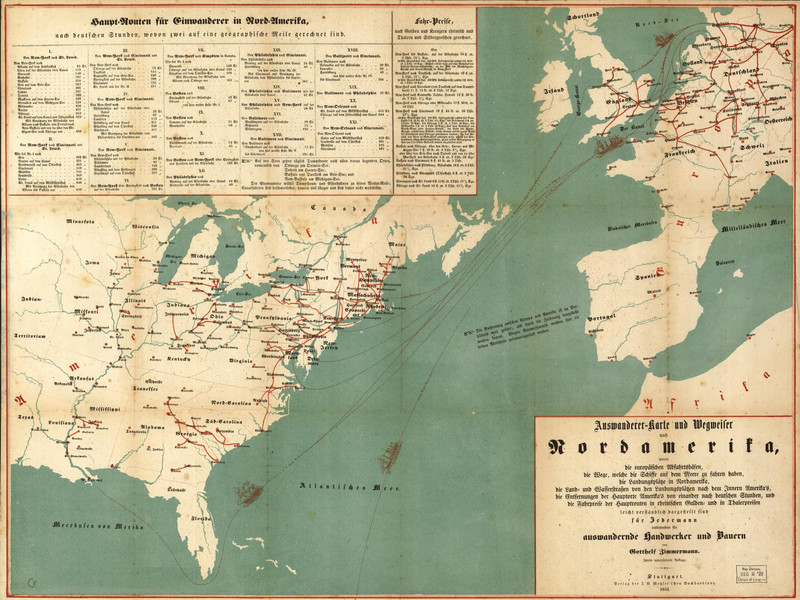
Immigrant routes to the United States
Key examples:
- Eastern European Jews were pushed by pogroms and legal discrimination in the Russian Empire.
- Southern Italians were pushed by rural poverty and unequal landholding.
- Chinese migrants were pushed by hardship and upheaval and pulled by railroad, mining, farm, and service jobs.
Where Migrants Came From and Where They Settled
The source of immigration shifted over time, which matters because APUSH likes to ask about old immigrants versus new immigrants.
| Group | Main origins | Common destinations |
|---|---|---|
| Old immigrants | Irish, Germans, British, Scandinavians | Northeastern cities; Germans and Scandinavians also in Midwest and Great Plains farming communities |
| New immigrants | Italians, Greeks, Poles, Russians, people from the Austro-Hungarian Empire and Balkans, eastern European Jews | Northeastern and Midwestern industrial cities |
That shift toward southern and eastern Europe became much more noticeable in the 1880s and 1890s.
Entry points mattered too:
- Castle Garden was New York’s main reception center before Ellis Island.
- Ellis Island opened in 1892 and became the major federal processing station for European immigrants.
- San Francisco was a major Pacific entry point for Asian immigrants.
- Angel Island is outside this period for this topic because it opened in 1910.
Major settlement areas included New York, Boston, Philadelphia, Pittsburgh, Cleveland, and Chicago. Some migrants stayed temporarily as circular laborers. Others settled permanently and later brought family.
Internal Migration and the Expanding Industrial Workforce
Industrialization changed life inside the U.S. too. Mechanization, debt, and unstable farm prices pushed rural Americans toward city jobs.
African Americans moved within and out of the South after emancipation, but freedom came with new barriers:
- sharecropping debt
- Jim Crow
- disfranchisement
- racial violence
- restricted opportunity
Destinations included Atlanta, Birmingham, Richmond, Kansas, and some northern and midwestern cities. The Exoduster movement of 1879 sent thousands of Black migrants to Kansas for land, safety, and independence. This was a precursor to the later Great Migration, not the same thing.
The industrial workforce became more diverse by nationality, language, religion, race, gender, and skill. Women and girls were especially important in domestic service, garment work, textiles, laundries, food processing, boardinghouses, and family businesses. Migrant labor did not just fill jobs. It helped cities and industry keep expanding.
Ethnic Neighborhoods and New Urban Communities
Fast-growing cities developed neighborhoods shaped by ethnicity, race, and class. These ethnic enclaves helped migrants survive and adjust.
Common examples included:
- Little Italys
- Chinatowns
- German districts
- Irish wards
- Jewish neighborhoods
The classic case is New York’s Lower East Side. It became a dense eastern European Jewish neighborhood tied to garment work, synagogues, pushcart markets, Yiddish newspapers, theaters, and mutual-aid groups.
African Americans also built urban communities around Black churches, businesses, newspapers, and voluntary associations, though housing discrimination narrowed their choices.
These neighborhoods preserved culture and helped people adapt. They were practical support systems, not just isolation. Life there was still harsh. Tenements were crowded, badly ventilated, unsanitary, disease-prone, and dangerous in fires.
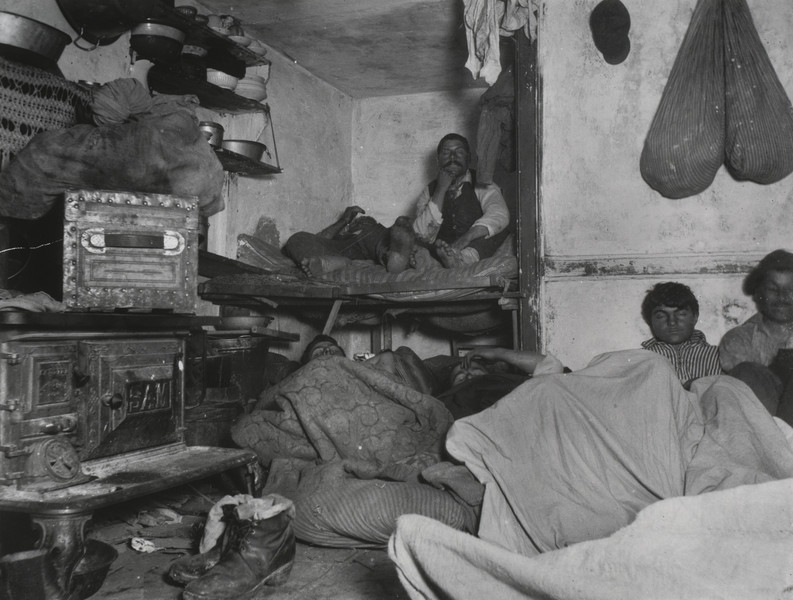
Crowded tenement interior
Two sources capture this tension between opportunity and hardship:
- Emma Lazarus, “The New Colossus” (1883) presents America as refuge and opportunity.
- Jacob Riis, How the Other Half Lives (1890) exposes poverty and dangerous tenement conditions.
Key Takeaways
Immigration
Movement into the United States from another country; it expanded and diversified the Gilded Age industrial workforce and urban population
Internal Migration
Movement from one part of the United States to another, especially from rural areas and the South toward growing cities and western communities
Urbanization
The growth of cities and of the proportion of people living in urban areas, accelerated by immigration, internal migration, and industrial employment
Push Factors vs. Pull Factors
Push factors drive people from an origin, such as poverty or persecution; pull factors attract them to a destination, such as jobs, freedom, land, or family networks
Chain Migration
Migration in which earlier migrants provide relatives or neighbors with information, money, passage, housing, or jobs, drawing them to the same communities
Pogroms
Organized or officially tolerated anti-Jewish violence that helped push many Jews from the Russian Empire and eastern Europe to emigrate
Old Immigrants vs. New Immigrants
Old immigrants generally came from northern and western Europe; new immigrants increasingly came from southern and eastern Europe in the 1880s and 1890s
Ellis Island
Federal immigration station opened in New York Harbor in 1892 and became the best-known processing point for European immigrants
Exoduster Movement
The 1879 migration of thousands of African Americans from the South to Kansas seeking land, political independence, and safety from racial oppression
Ethnic Enclave
A neighborhood concentrated around one ethnic or national group that supplied housing, jobs, mutual aid, familiar languages, religion, businesses, and cultural institutions
Lower East Side
Dense New York immigrant district, especially associated with eastern European Jews, garment work, tenements, markets, synagogues, newspapers, and mutual aid
Tenements
Multifamily urban rental buildings divided into small apartments, often overcrowded, poorly ventilated, unsanitary, and vulnerable to disease and fire
Emma Lazarus
Author of the 1883 poem “The New Colossus,” which portrayed the United States as a refuge for poor, displaced, and oppressed immigrants
The New Colossus
Emma Lazarus’s 1883 poem presenting the United States as a welcoming refuge for poor, displaced, and oppressed immigrants
Jacob Riis
Immigrant and reform-minded journalist whose 1890 work How the Other Half Lives exposed poverty and overcrowding in New York tenements
How the Other Half Lives
Jacob Riis’s 1890 work using writing and photographs to expose poverty and overcrowding in New York tenements
Asian Immigration
Migration across the Pacific, especially by Chinese workers drawn to western mining, railroads, agriculture, manufacturing, and services and, later, Japanese migrants to Hawaii and the Pacific Coast
African American Migration in the Gilded Age
Movement within and out of the South driven by sharecropping debt, Jim Crow, and racial violence and pulled by land, wages, urban work, and greater safety
Notes
Immigration
Movement into the United States from another country; it expanded and diversified the Gilded Age industrial workforce and urban population
Internal Migration
Movement from one part of the United States to another, especially from rural areas and the South toward growing cities and western communities
Urbanization
The growth of cities and of the proportion of people living in urban areas, accelerated by immigration, internal migration, and industrial employment
Push Factors vs. Pull Factors
Push factors drive people from an origin, such as poverty or persecution; pull factors attract them to a destination, such as jobs, freedom, land, or family networks
Chain Migration
Migration in which earlier migrants provide relatives or neighbors with information, money, passage, housing, or jobs, drawing them to the same communities
Pogroms
Organized or officially tolerated anti-Jewish violence that helped push many Jews from the Russian Empire and eastern Europe to emigrate
Old Immigrants vs. New Immigrants
Old immigrants generally came from northern and western Europe; new immigrants increasingly came from southern and eastern Europe in the 1880s and 1890s
Ellis Island
Federal immigration station opened in New York Harbor in 1892 and became the best-known processing point for European immigrants
Exoduster Movement
The 1879 migration of thousands of African Americans from the South to Kansas seeking land, political independence, and safety from racial oppression
Ethnic Enclave
A neighborhood concentrated around one ethnic or national group that supplied housing, jobs, mutual aid, familiar languages, religion, businesses, and cultural institutions
Lower East Side
Dense New York immigrant district, especially associated with eastern European Jews, garment work, tenements, markets, synagogues, newspapers, and mutual aid
Tenements
Multifamily urban rental buildings divided into small apartments, often overcrowded, poorly ventilated, unsanitary, and vulnerable to disease and fire
Emma Lazarus
Author of the 1883 poem “The New Colossus,” which portrayed the United States as a refuge for poor, displaced, and oppressed immigrants
The New Colossus
Emma Lazarus’s 1883 poem presenting the United States as a welcoming refuge for poor, displaced, and oppressed immigrants
Jacob Riis
Immigrant and reform-minded journalist whose 1890 work How the Other Half Lives exposed poverty and overcrowding in New York tenements
How the Other Half Lives
Jacob Riis’s 1890 work using writing and photographs to expose poverty and overcrowding in New York tenements
Asian Immigration
Migration across the Pacific, especially by Chinese workers drawn to western mining, railroads, agriculture, manufacturing, and services and, later, Japanese migrants to Hawaii and the Pacific Coast
African American Migration in the Gilded Age
Movement within and out of the South driven by sharecropping debt, Jim Crow, and racial violence and pulled by land, wages, urban work, and greater safety
