Topic 5.11 Notes – Failure of Reconstruction
What the Failure of Reconstruction Was
Reconstruction changed the law more deeply than almost any period in U.S. history. The problem was that constitutional change did not become consistent reality in the South.
- The 13th Amendment abolished slavery.
- The 14th Amendment made formerly enslaved people citizens and promised due process and equal protection.
- The 15th Amendment barred denying the vote based on race.
That was a huge shift in what it meant to be American. Citizenship now came from the nation, not just from states or white status.
But failure means those rights were not enforced well enough to stop white supremacy from rebuilding itself. Keep both sides in your head:
- Change
- slavery stayed abolished
- secession stayed defeated
- the 14th and 15th Amendments stayed in the Constitution
- Continuity
- white Southern leaders kept trying to define political membership as white-only
- Black rights existed on paper more than in practice
This tension shows up on AP questions a lot. National ideals became more inclusive. Southern reality stayed deeply racist.
Why Freedom Fell Short Economically
Freedom meant more than leaving slavery. Freedpeople wanted land, control over their labor, stable families, and independence. Land mattered because without it, many had to depend on white landowners again.
Land redistribution failed
- Sherman’s Special Field Order No. 15 set aside coastal land for freed families. This helped create the promise of “40 acres and a mule.”
- President Andrew Johnson restored much of that land to pardoned Confederates.
- Former plantation owners kept most Southern land.
The map highlights the coastal strip in South Carolina, Georgia, and Florida that was briefly reserved for freed families.
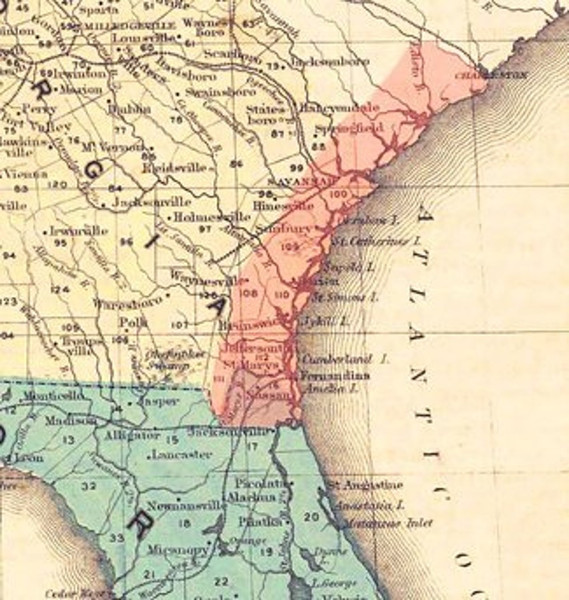
Sherman’s Special Field Order No. 15 map
Sharecropping and the crop-lien system
This became the main postwar labor system.
- A landowner gave a family land to farm for a share of the crop, often half.
- The family needed seed, tools, and food before harvest.
- A merchant or planter advanced those goods on credit.
- The future cotton crop became collateral through a crop lien.
- At harvest, debts and high interest were deducted.
- Falling cotton prices and dishonest accounting often left families still in debt.
That trapped many Black families, and poor whites too, in a cycle of dependency.
- It was not slavery. Families were not property and had some control over daily life.
- It was still exploitative. People stayed landless, tied to cotton, and often stuck in debt peonage. Cotton farming also wore out the soil.
Convict leasing
The 13th Amendment banned slavery except as punishment for crime. Southern states used that opening.
- Black people were often arrested under vagrancy laws and other discriminatory enforcement.
- Prisoners were leased to mines, railroads, plantations, and private businesses.
- This recreated forced labor through the criminal justice system.
How White Supremacy Destroyed Reconstruction Politics
Southern whites resisted almost immediately.
Black Codes
These laws came right after the war and tried to control freedpeople’s labor and movement.
- restricted contracts, jobs, and travel
- used vagrancy laws to force labor
Black Codes came before Jim Crow. Think labor control first, segregation system later.
Republican coalition in the South
Reconstruction governments rested on a coalition of:
- African American voters
- white Southern Republicans called scalawags
- Northern migrants called carpetbaggers
Those last two terms were insults used by opponents.
White supremacist violence
Groups including the Ku Klux Klan, White League, and Red Shirts attacked:
- Black voters and officeholders
- teachers and ministers
- white Republicans
Political cartoons from the era often framed this violence as an assault on freedpeople, education, and Reconstruction itself.
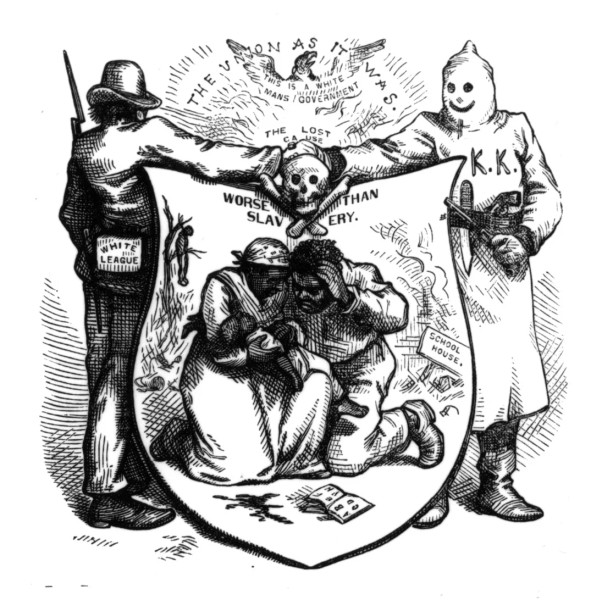
Reconstruction-era cartoon on white supremacist violence
Congress responded with the Enforcement Acts of 1870 and 1871 and the Ku Klux Klan Act of 1871. Grant used federal power against terrorism, but protection did not last.
- Colfax Massacre (1873) showed how far white supremacists would go to overturn Black political power.
- Mississippi Plan (1875) used intimidation, fraud, and violence to suppress Republican voting.
- Redeemers claimed to restore Redemption, meaning white Democratic rule.
- By 1877, Democrats had regained the former Confederate state governments.
Why the North Retreated and Reconstruction Ended
Reconstruction depended on Northern willingness to keep enforcing it. That commitment faded.
- The Panic of 1873 shifted attention to the economy.
- Racism existed in the North too.
- Many voters got tired of military enforcement.
- Gilded Age corruption hurt Republicans.
Scandals you need to know:
| Scandal | What it was |
|---|---|
| Credit Mobilier | railroad bribery scandal |
| Whiskey Ring | tax fraud involving liquor interests |
| William Belknap scandal | Secretary of War took kickbacks |
The election of 1876 between Rutherford B. Hayes and Samuel J. Tilden was disputed in Florida, Louisiana, and South Carolina.
The Compromise of 1877 settled it politically:
- Democrats accepted Hayes
- Republicans withdrew remaining federal troops
That ended federal Reconstruction and opened the door to white Democratic home rule.
How Rights Were Stripped Away and What Lasted
After Reconstruction ended, Southern governments and the courts kept narrowing Black rights.
Supreme Court decisions
- Slaughter-House Cases (1873) narrowed the 14th Amendment.
- United States v. Cruikshank (1876) limited federal action against private racial violence.
- Civil Rights Cases (1883) struck down parts of the Civil Rights Act of 1875.
- Plessy v. Ferguson (1896) upheld separate but equal.
- Brown v. Board of Education (1954) later overturned school segregation.
Disfranchisement and Jim Crow
Southern states used:
- poll taxes
- literacy or understanding tests
- grandfather clauses
- white-only primaries
- complex registration rules, fraud, intimidation, and violence
Jim Crow segregation spread through schools, railroads, public transportation, and public facilities. “Separate but equal” was the legal claim. In practice, facilities were unequal.
Memory and legacy
The Lost Cause painted the Confederacy as noble and pushed slavery into the background. White national reconciliation often happened by ignoring Black rights. Appeals to states’ rights and home rule became defenses of white supremacy.
Still, the 14th and 15th Amendments lasted. They became the legal foundation for the Civil Rights Act of 1964 and the Voting Rights Act of 1965.
Key Takeaways
Thirteenth Amendment
Abolished slavery and involuntary servitude except as punishment for crime; its exception enabled racialized forced labor through convict leasing
Fourteenth Amendment
Established birthright citizenship and barred states from denying due process or equal protection, later becoming a foundation of civil rights victories
Fifteenth Amendment
Prohibited denial of voting rights because of race, color, or previous servitude, but discriminatory rules and violence later evaded it
Convict Leasing
State or local governments leased prisoners, disproportionately Black, to private employers for brutal forced labor
Special Field Order No. 15 / “40 Acres and a Mule”
Sherman’s 1865 order reserved some abandoned coastal land for freed families, but Johnson later restored much of it to former Confederates
Sharecropping
A landless family farmed an owner’s land for a share of the crop, leaving many Black and poor white farmers dependent and indebted
Crop-Lien System
Farmers pledged future crops for high-interest credit, often ending the year in debt and tied to the same land or creditor
Black Codes
Postwar Southern laws that restricted freedpeople’s movement, occupations, labor, and civil status to preserve white control
Vagrancy Laws
Laws allowing officials to arrest people deemed unemployed or without lawful residence and compel those unable to pay fines to labor
Jim Crow
The post-Reconstruction system of legally enforced segregation, disfranchisement, discrimination, and racial subordination
Scalawags vs. Carpetbaggers
Derogatory Democratic labels for white Southern Republicans and Northerners who moved South after the Civil War, respectively
Ku Klux Klan
White supremacist organization founded in 1866 that used terrorism to suppress Black voting, remove Republicans, and restore white Democratic rule
Ulysses S. Grant
Republican president whose administration used the Enforcement Acts to suppress the original Klan, though scandals and declining Northern commitment weakened Reconstruction
Colfax Massacre
An 1873 Louisiana attack in which armed white men killed more than 100 Black men defending Republican control of a courthouse after a disputed election
Mississippi Plan
The Democratic campaign of 1875 using intimidation, economic pressure, fraud, and violence to suppress Republican and Black voting
Redeemers / Redemption
White Southern Democrats who claimed to “redeem” the South by ending Republican rule and restoring Democratic control and white supremacy
Panic of 1873
A financial panic that began a severe depression and shifted Northern attention away from enforcing African American rights in the South
Election of 1876
Disputed presidential contest between Republican Rutherford B. Hayes and Democrat Samuel J. Tilden whose resolution led to Reconstruction’s end
Compromise of 1877
Informal settlement accepting Hayes as president while Republicans withdrew remaining federal support from Southern Reconstruction governments
Slaughter-House Cases
The 1873 decision narrowly interpreting the Fourteenth Amendment’s Privileges or Immunities Clause and limiting federal protection of civil rights
United States v. Cruikshank
The 1876 decision overturning Colfax convictions and holding that the Fourteenth Amendment restricted state action, not purely private violence
Civil Rights Act of 1875
Federal law prohibiting racial discrimination in public accommodations, largely invalidated by the Supreme Court in 1883
Civil Rights Cases
The 1883 decisions striking down key parts of the Civil Rights Act of 1875 because the Fourteenth Amendment did not reach private discrimination
Plessy v. Ferguson
The 1896 decision upholding state-mandated segregation under “separate but equal,” giving constitutional legitimacy to Jim Crow
Poll Tax
A required payment before voting that disproportionately disfranchised African Americans and poor citizens
Literacy or Understanding Test
A voting requirement administered subjectively by white registrars, who applied it more harshly to Black applicants
Grandfather Clause
A rule exempting men from voting restrictions if their ancestors could vote before 1867, protecting many whites while excluding most Black citizens
White Primary
A Democratic primary restricted to whites, effectively excluding Black voters where the Democratic nominee was certain to win
Home Rule
Redeemer demand for freedom from federal supervision, which in practice allowed white Southern governments to suppress Black political rights
Lost Cause
Interpretation portraying the Confederacy as a noble defense of home and constitutional principles while minimizing slavery and freedpeople’s rights
Enforcement Acts
Federal laws of 1870–1871 authorizing action against conspiracies that interfered with civil and voting rights
Ku Klux Klan Act
An 1871 law allowing the president to use federal troops and suspend habeas corpus where organized terrorism obstructed law enforcement
William T. Sherman
Union general whose Special Field Order No. 15 reserved some abandoned Southern coastal land for settlement by freed families
Andrew Johnson
President who restored much confiscated or abandoned Southern land to pardoned former Confederates, undermining freedpeople’s hopes for landownership
Notes
Thirteenth Amendment
Abolished slavery and involuntary servitude except as punishment for crime; its exception enabled racialized forced labor through convict leasing
Fourteenth Amendment
Established birthright citizenship and barred states from denying due process or equal protection, later becoming a foundation of civil rights victories
Fifteenth Amendment
Prohibited denial of voting rights because of race, color, or previous servitude, but discriminatory rules and violence later evaded it
Convict Leasing
State or local governments leased prisoners, disproportionately Black, to private employers for brutal forced labor
Special Field Order No. 15 / “40 Acres and a Mule”
Sherman’s 1865 order reserved some abandoned coastal land for freed families, but Johnson later restored much of it to former Confederates
Sharecropping
A landless family farmed an owner’s land for a share of the crop, leaving many Black and poor white farmers dependent and indebted
Crop-Lien System
Farmers pledged future crops for high-interest credit, often ending the year in debt and tied to the same land or creditor
Black Codes
Postwar Southern laws that restricted freedpeople’s movement, occupations, labor, and civil status to preserve white control
Vagrancy Laws
Laws allowing officials to arrest people deemed unemployed or without lawful residence and compel those unable to pay fines to labor
Jim Crow
The post-Reconstruction system of legally enforced segregation, disfranchisement, discrimination, and racial subordination
Scalawags vs. Carpetbaggers
Derogatory Democratic labels for white Southern Republicans and Northerners who moved South after the Civil War, respectively
Ku Klux Klan
White supremacist organization founded in 1866 that used terrorism to suppress Black voting, remove Republicans, and restore white Democratic rule
Ulysses S. Grant
Republican president whose administration used the Enforcement Acts to suppress the original Klan, though scandals and declining Northern commitment weakened Reconstruction
Colfax Massacre
An 1873 Louisiana attack in which armed white men killed more than 100 Black men defending Republican control of a courthouse after a disputed election
Mississippi Plan
The Democratic campaign of 1875 using intimidation, economic pressure, fraud, and violence to suppress Republican and Black voting
Redeemers / Redemption
White Southern Democrats who claimed to “redeem” the South by ending Republican rule and restoring Democratic control and white supremacy
Panic of 1873
A financial panic that began a severe depression and shifted Northern attention away from enforcing African American rights in the South
Election of 1876
Disputed presidential contest between Republican Rutherford B. Hayes and Democrat Samuel J. Tilden whose resolution led to Reconstruction’s end
Compromise of 1877
Informal settlement accepting Hayes as president while Republicans withdrew remaining federal support from Southern Reconstruction governments
Slaughter-House Cases
The 1873 decision narrowly interpreting the Fourteenth Amendment’s Privileges or Immunities Clause and limiting federal protection of civil rights
United States v. Cruikshank
The 1876 decision overturning Colfax convictions and holding that the Fourteenth Amendment restricted state action, not purely private violence
Civil Rights Act of 1875
Federal law prohibiting racial discrimination in public accommodations, largely invalidated by the Supreme Court in 1883
Civil Rights Cases
The 1883 decisions striking down key parts of the Civil Rights Act of 1875 because the Fourteenth Amendment did not reach private discrimination
Plessy v. Ferguson
The 1896 decision upholding state-mandated segregation under “separate but equal,” giving constitutional legitimacy to Jim Crow
Poll Tax
A required payment before voting that disproportionately disfranchised African Americans and poor citizens
Literacy or Understanding Test
A voting requirement administered subjectively by white registrars, who applied it more harshly to Black applicants
Grandfather Clause
A rule exempting men from voting restrictions if their ancestors could vote before 1867, protecting many whites while excluding most Black citizens
White Primary
A Democratic primary restricted to whites, effectively excluding Black voters where the Democratic nominee was certain to win
Home Rule
Redeemer demand for freedom from federal supervision, which in practice allowed white Southern governments to suppress Black political rights
Lost Cause
Interpretation portraying the Confederacy as a noble defense of home and constitutional principles while minimizing slavery and freedpeople’s rights
Enforcement Acts
Federal laws of 1870–1871 authorizing action against conspiracies that interfered with civil and voting rights
Ku Klux Klan Act
An 1871 law allowing the president to use federal troops and suspend habeas corpus where organized terrorism obstructed law enforcement
William T. Sherman
Union general whose Special Field Order No. 15 reserved some abandoned Southern coastal land for settlement by freed families
Andrew Johnson
President who restored much confiscated or abandoned Southern land to pardoned former Confederates, undermining freedpeople’s hopes for landownership
