Topic 8.13 Notes – The Environment and Natural Resources from 1968 to 1980
How Environmentalism Became a National Political Issue
Modern environmentalism grew out of older conservation and preservation, but it aimed at something broader. Earlier reformers protected forests, parks, and natural resources. By the late 1960s, people were worried about pollution, chemicals, ecosystems, and human health.
Postwar growth created the problem:
- Suburbanization spread highways, lawns, cars, and construction into more land.
- Automobiles filled cities with smog and tied daily life to oil.
- Industrial waste and sewage polluted rivers and lakes.
- Pesticides raised fears about long-term chemical harm.
- Habitat loss came from development, dams, roads, and drilling.
Silent Spring
Rachel Carson’s Silent Spring helped turn those fears into a national argument. She showed how DDT moved through food chains, becoming more concentrated as it passed through ecosystems. That mattered because it taught Americans that nature was interconnected and that new technology could create hidden damage. This is why the book matters so much on tests. It challenged the idea that modern chemicals were automatically safe and helped lay the groundwork for later pesticide regulation and EPA action.
Why 1969 hit so hard
A few visible disasters made the issue impossible to ignore.
- Santa Barbara oil spill (1969) covered California beaches with oil and killed wildlife.
- Cuyahoga River fire (1969) became a symbol of industrial water pollution.
- Apollo 8 Earthrise (1968) showed Earth as small, finite, and fragile.
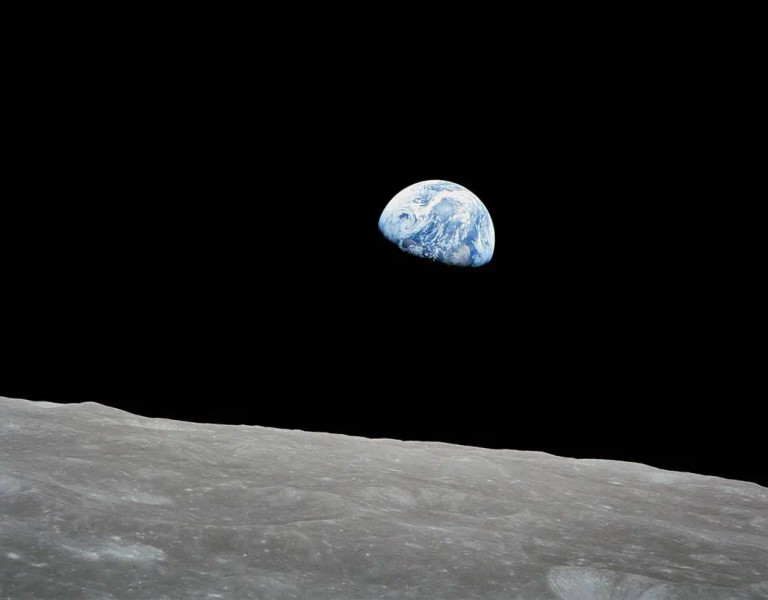
Apollo 8 “Earthrise” photograph, 1968
That image gave environmental concern a powerful emotional frame. Earth looked limited, shared, and vulnerable.
Earth Day 1970
Earth Day turned concern into mass politics. Senator Gaylord Nelson launched it, and Denis Hayes organized it. Around 20 million people participated. Conservationists, anti-pollution activists, students, scientists, public-health advocates, and local community groups all showed up. That coalition is the point. Environmentalism had become mainstream.
The New Federal Environmental System
Once public pressure became national, the federal government built a permanent regulatory system.
NEPA and the EPA
The National Environmental Policy Act of 1970 required environmental impact statements for major federal actions. NEPA is often misunderstood. It does not automatically stop projects. It forces agencies to study and disclose environmental effects.
The Environmental Protection Agency was created by Nixon in 1970 through executive reorganization. The EPA centralized enforcement of federal pollution rules.
Major laws
| Law | What it did |
|---|---|
| Clean Air Act Amendments (1970) | Set national air-quality standards and emissions rules for industry and cars |
| Clean Water Act (1972) | Strengthened federal water regulation and created permits for point-source pollution; Congress overrode Nixon’s veto |
| Endangered Species Act (1973) | Protected species and critical habitats |
| Safe Drinking Water Act (1974) | Set national standards for public water systems |
| Toxic Substances Control Act (1976) | Gave EPA oversight of industrial chemicals |
| Resource Conservation and Recovery Act (1976) | Regulated hazardous waste from “cradle to grave” |
A classic case under the Endangered Species Act was TVA v. Hill (1978), where the snail darter blocked the nearly completed Tellico Dam. The larger meaning is that species protection could now outweigh development.
Hazardous Waste, Land Use, and Resource Conflicts
Love Canal made hazardous waste personal. In Niagara Falls, toxic chemicals buried under a neighborhood and school leaked into the area. Lois Gibbs led grassroots activism, and Carter declared a federal emergency in 1978. This led to CERCLA (1980), better known as Superfund, which gave the federal government cleanup power over abandoned toxic sites.
Land protection also expanded:
- Wild and Scenic Rivers Act (1968) protected selected rivers.
- National Trails System Act (1968) created national scenic and recreation trails.
- Alaska National Interest Lands Conservation Act (1980) protected huge areas of Alaska.
Alaska shows the core conflict of the era. The Trans-Alaska Pipeline Authorization Act (1973) backed domestic oil production to reduce foreign dependence, but opponents warned about spills, wildlife, and Arctic ecosystems. The map traces the pipeline from the North Slope to Valdez and helps show why it became such a visible symbol of that debate.
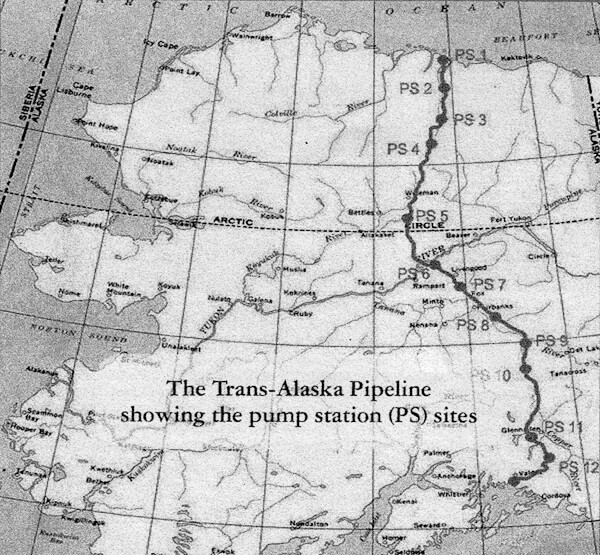
Trans-Alaska Pipeline route
Oil Crises and the Rise of National Energy Policy
Energy policy grew because Americans used more oil than U.S. wells could supply.
The 1973 oil crisis
During the Yom Kippur War, Arab oil producers in OAPEC embargoed the U.S. after U.S. aid to Israel. Prices quadrupled, gas lines formed, and the economy suffered inflation and recession.
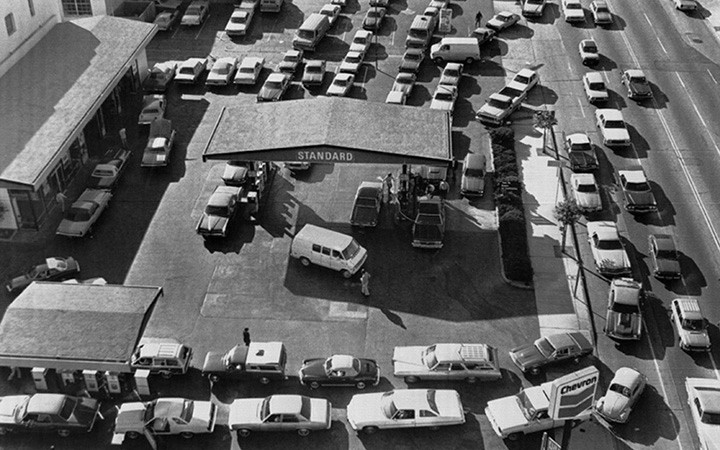
Gas lines during the 1970s oil shocks
That meant a very visible shortage for ordinary Americans, with long lines at gas stations becoming one of the most familiar images of the crisis.
Federal responses came in sequence:
- Nixon’s Project Independence called for less reliance on foreign oil.
- Emergency Highway Energy Conservation Act (1974) created the 55 mph speed limit.
- Ford’s Energy Policy and Conservation Act (1975) created CAFE fuel-efficiency standards and the Strategic Petroleum Reserve.
Carter, the second oil shock, and nuclear power
Carter made energy a national mission, calling it the “moral equivalent of war.” He created the Department of Energy (1977) and backed the National Energy Act (1978), which promoted conservation, natural gas changes, and alternative energy. His White House solar panels became a symbol of that push.
The Iranian Revolution (1979) caused a second oil shock with new shortages and price spikes. Carter’s “crisis of confidence” speech tied energy problems to a wider national mood.
Nuclear power looked like an alternative to oil and coal, but Three Mile Island (1979) made people fear accidents, waste, and weak regulation. It did not end nuclear power, but it sharply increased skepticism and safety oversight.
Key Takeaways
Modern Environmental Movement
Broad movement linking pollution, public health, wildlife, and finite resources, using activism and federal regulation to protect interconnected ecosystems
Santa Barbara Oil Spill
1969 offshore drilling blowout that polluted California beaches, killed wildlife, and energized opposition to unrestricted offshore drilling
Cuyahoga River Fire
Highly publicized 1969 fire fueled by oil and industrial waste in an Ohio river, symbolizing uncontrolled water pollution
Earth Day
First held April 22, 1970; mobilized about 20 million Americans and demonstrated that environmentalism had become a mainstream national movement
Gaylord Nelson
Wisconsin senator who conceived the first Earth Day as a national environmental teach-in
National Environmental Policy Act (NEPA)
1970 law requiring federal agencies to study and disclose the environmental effects of major federal actions before proceeding
Environmental Impact Statement (EIS)
NEPA-required analysis of a major federal action's likely environmental effects and alternatives; it informs review but does not automatically prohibit a project
Environmental Protection Agency (EPA)
Federal agency created by Nixon in 1970 to consolidate and enforce national regulation of air, water, pesticides, chemicals, and other hazards
Richard Nixon
President who signed NEPA, created the EPA, supported major environmental regulation, and launched Project Independence after the 1973 oil crisis
Clean Air Act Amendments of 1970
Authorized national air-quality standards and required state plans plus emissions controls for industries and motor vehicles
Clean Water Act
1972 law restricting pollutant discharges, requiring permits for point sources, and funding municipal sewage-treatment facilities
Endangered Species Act
1973 law protecting threatened and endangered species and habitats, even when protection could halt development projects
Safe Drinking Water Act
1974 law authorizing national health standards for public drinking-water systems
Toxic Substances Control Act
1976 law authorizing the EPA to gather information about industrial chemicals and regulate those presenting unreasonable risks
Resource Conservation and Recovery Act (RCRA)
1976 law establishing federal control of solid and hazardous waste from creation through transport, treatment, storage, and final disposal
Love Canal
New York neighborhood built near a chemical dump where leaking toxins and resident activism led to evacuations and demands for federal cleanup
Lois Gibbs
Love Canal resident who organized affected families and used media and political pressure to secure federal action and relocation assistance
Comprehensive Environmental Response, Compensation, and Liability Act (Superfund)
1980 law funding federal cleanup of abandoned hazardous-waste sites and seeking cleanup costs from responsible parties
Wild and Scenic Rivers Act
1968 law protecting selected free-flowing rivers from development that would destroy their scenic or ecological character
National Trails System Act
1968 law creating a national network of scenic and recreational trails
Trans-Alaska Pipeline Authorization Act
1973 law facilitating an oil pipeline from Alaska's North Slope to Valdez to expand domestic energy production
Alaska National Interest Lands Conservation Act
1980 law protecting more than 100 million acres of Alaska through parks, refuges, wilderness areas, and other designations
1973 Oil Crisis / Arab Oil Embargo
Arab oil exporters embargoed the United States after it aided Israel, quadrupling oil prices, causing shortages and gasoline lines, and contributing to inflation and recession
Project Independence
Nixon's 1973 initiative calling for conservation and greater domestic production to reduce reliance on imported energy
Emergency Highway Energy Conservation Act
1974 measure encouraging states to adopt a 55-mile-per-hour maximum speed limit to conserve fuel
Energy Policy and Conservation Act
1975 law establishing automobile fuel-economy requirements and an emergency federal petroleum stockpile
Corporate Average Fuel Economy (CAFE) Standards
Federal requirements that automobile manufacturers improve the average fuel efficiency of their new vehicle fleets
Strategic Petroleum Reserve
Emergency federal stockpile of crude oil created to reduce the effects of severe interruptions in imported petroleum
Jimmy Carter
President who made energy conservation a national priority, created the Department of Energy, signed the National Energy Act, and responded to Love Canal
Department of Energy
Cabinet department created by Carter in 1977 to coordinate federal energy planning and programs
National Energy Act
1978 package promoting conservation and efficiency, changing natural-gas pricing and regulation, and supporting alternative energy
Second Oil Shock
1979 oil disruption after the Iranian Revolution; fear and stockpiling worsened shortages and price increases, intensifying inflation and energy insecurity
Crisis of Confidence Speech / Malaise Speech
Carter's July 1979 address linking the energy crisis to excessive consumption and a broader loss of national purpose; he never used the word malaise
Nuclear Power Debate
Supporters stressed energy security and low routine air pollution; opponents stressed accident risks, radioactive waste, costs, and regulatory difficulties
Three Mile Island
1979 Pennsylvania nuclear accident involving a partial core meltdown that caused no established immediate radiation deaths but intensified opposition and safety regulation
Denis Hayes
Environmental activist who coordinated the first Earth Day in 1970
Notes
Modern Environmental Movement
Broad movement linking pollution, public health, wildlife, and finite resources, using activism and federal regulation to protect interconnected ecosystems
Santa Barbara Oil Spill
1969 offshore drilling blowout that polluted California beaches, killed wildlife, and energized opposition to unrestricted offshore drilling
Cuyahoga River Fire
Highly publicized 1969 fire fueled by oil and industrial waste in an Ohio river, symbolizing uncontrolled water pollution
Earth Day
First held April 22, 1970; mobilized about 20 million Americans and demonstrated that environmentalism had become a mainstream national movement
Gaylord Nelson
Wisconsin senator who conceived the first Earth Day as a national environmental teach-in
National Environmental Policy Act (NEPA)
1970 law requiring federal agencies to study and disclose the environmental effects of major federal actions before proceeding
Environmental Impact Statement (EIS)
NEPA-required analysis of a major federal action's likely environmental effects and alternatives; it informs review but does not automatically prohibit a project
Environmental Protection Agency (EPA)
Federal agency created by Nixon in 1970 to consolidate and enforce national regulation of air, water, pesticides, chemicals, and other hazards
Richard Nixon
President who signed NEPA, created the EPA, supported major environmental regulation, and launched Project Independence after the 1973 oil crisis
Clean Air Act Amendments of 1970
Authorized national air-quality standards and required state plans plus emissions controls for industries and motor vehicles
Clean Water Act
1972 law restricting pollutant discharges, requiring permits for point sources, and funding municipal sewage-treatment facilities
Endangered Species Act
1973 law protecting threatened and endangered species and habitats, even when protection could halt development projects
Safe Drinking Water Act
1974 law authorizing national health standards for public drinking-water systems
Toxic Substances Control Act
1976 law authorizing the EPA to gather information about industrial chemicals and regulate those presenting unreasonable risks
Resource Conservation and Recovery Act (RCRA)
1976 law establishing federal control of solid and hazardous waste from creation through transport, treatment, storage, and final disposal
Love Canal
New York neighborhood built near a chemical dump where leaking toxins and resident activism led to evacuations and demands for federal cleanup
Lois Gibbs
Love Canal resident who organized affected families and used media and political pressure to secure federal action and relocation assistance
Comprehensive Environmental Response, Compensation, and Liability Act (Superfund)
1980 law funding federal cleanup of abandoned hazardous-waste sites and seeking cleanup costs from responsible parties
Wild and Scenic Rivers Act
1968 law protecting selected free-flowing rivers from development that would destroy their scenic or ecological character
National Trails System Act
1968 law creating a national network of scenic and recreational trails
Trans-Alaska Pipeline Authorization Act
1973 law facilitating an oil pipeline from Alaska's North Slope to Valdez to expand domestic energy production
Alaska National Interest Lands Conservation Act
1980 law protecting more than 100 million acres of Alaska through parks, refuges, wilderness areas, and other designations
1973 Oil Crisis / Arab Oil Embargo
Arab oil exporters embargoed the United States after it aided Israel, quadrupling oil prices, causing shortages and gasoline lines, and contributing to inflation and recession
Project Independence
Nixon's 1973 initiative calling for conservation and greater domestic production to reduce reliance on imported energy
Emergency Highway Energy Conservation Act
1974 measure encouraging states to adopt a 55-mile-per-hour maximum speed limit to conserve fuel
Energy Policy and Conservation Act
1975 law establishing automobile fuel-economy requirements and an emergency federal petroleum stockpile
Corporate Average Fuel Economy (CAFE) Standards
Federal requirements that automobile manufacturers improve the average fuel efficiency of their new vehicle fleets
Strategic Petroleum Reserve
Emergency federal stockpile of crude oil created to reduce the effects of severe interruptions in imported petroleum
Jimmy Carter
President who made energy conservation a national priority, created the Department of Energy, signed the National Energy Act, and responded to Love Canal
Department of Energy
Cabinet department created by Carter in 1977 to coordinate federal energy planning and programs
National Energy Act
1978 package promoting conservation and efficiency, changing natural-gas pricing and regulation, and supporting alternative energy
Second Oil Shock
1979 oil disruption after the Iranian Revolution; fear and stockpiling worsened shortages and price increases, intensifying inflation and energy insecurity
Crisis of Confidence Speech / Malaise Speech
Carter's July 1979 address linking the energy crisis to excessive consumption and a broader loss of national purpose; he never used the word malaise
Nuclear Power Debate
Supporters stressed energy security and low routine air pollution; opponents stressed accident risks, radioactive waste, costs, and regulatory difficulties
Three Mile Island
1979 Pennsylvania nuclear accident involving a partial core meltdown that caused no established immediate radiation deaths but intensified opposition and safety regulation
Denis Hayes
Environmental activist who coordinated the first Earth Day in 1970
